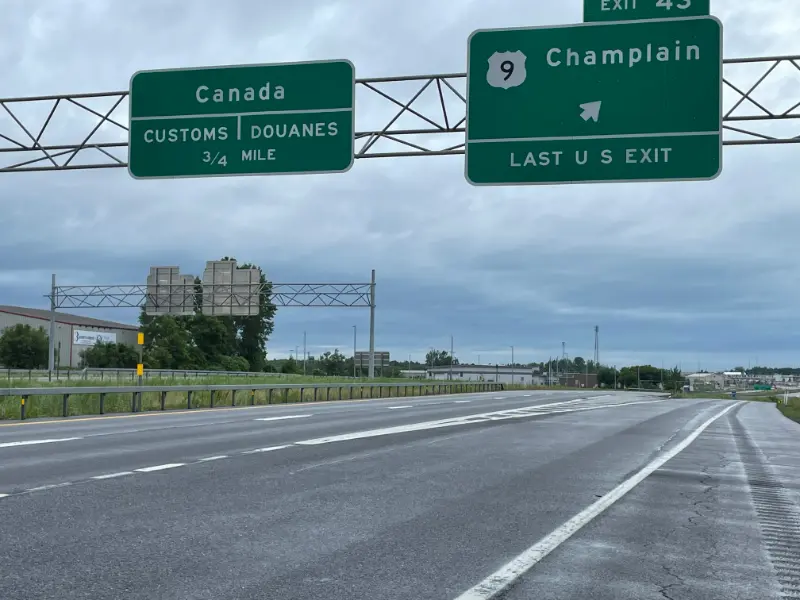
The freedom of collecting a rental car in one country and exploring the next can make a road trip memorable, but an international border is not merely another turn on a navigation screen. Rental contracts, vehicle registration, insurance territory, road tolls, environmental restrictions and driver documents all need checking. A car may be legal to drive in both countries yet prohibited from crossing under the rental agreement. Even when a border has no visible checkpoint, the contract still matters. This guide shows how to plan a cross-border rental with realistic routes, written permission, transparent costs and thoughtful alternatives for travellers who would rather avoid a stressful driving day.
Establish whether the rental company allows the exact route
Begin with the actual country sequence, not simply the starting and ending cities. A vehicle collected in one country and returned there after visiting two neighbours creates different contractual questions from a one-way drop-off abroad. Rental brands operate through different local franchise or corporate arrangements; permission from a company’s general website is not always approval for a specific office or vehicle category. Name every planned border at booking and ask which destinations, transit countries and ferry routes are permitted. Make sure the response is recorded in the booking conditions or a written confirmation that the collecting branch will honour.
Some operators prohibit taking premium cars, certain electric vehicles or particular categories into specific countries. Others permit travel but charge a cross-border fee or require additional equipment and paperwork. A border may also divide the operating areas of roadside-assistance providers. If you discover an exclusion only after picking up the keys, you may face the choice of changing the itinerary or breaching the contract. Neither is pleasant while a family waits in a crowded rental hall. Resolve restrictions before paying for non-refundable accommodation across the border.
Understand insurance territory and financial responsibility
Basic third-party liability coverage and optional damage protection are different things. Even where compulsory liability insurance applies across a regional area, the rental company’s additional damage waiver, theft cover and roadside-assistance arrangements may have their own territorial restrictions. Ask how the excess changes outside the pickup country, whether glass and tyres are covered, and what happens after a breakdown beyond the permitted border. The European Commission’s Your Europe guidance specifically advises customers to tell the rental firm before taking a hired vehicle into another country so that documents and cover can be arranged.
Do not assume that a credit card’s rental-car benefit replaces the supplier’s required insurance or satisfies local law. Such benefits often have country, duration, vehicle-category and claim-procedure conditions. Keep the rental contract, emergency phone numbers, insurance certificate and any border permission accessible offline. When travelling outside a regional common insurance area, ask whether a Green Card or equivalent proof is required and who provides it. If an accident occurs, prioritise everyone’s safety and use local emergency services, then follow the documented rental and insurance reporting procedures.
Check licences, age rules and authorisation documents
The driver must hold a licence legally recognised at the destination, and some countries require an international driving permit in addition to a valid home licence. An international permit is generally a translation or supporting document, not a replacement licence. Check official information for every country, not just the location where the keys are issued. Rental companies may impose additional age, licence-holding-period or extra-driver rules that go beyond local legal minimums. If two adults will share the driving, both may need to be named and present during collection.
Border officials or traffic police may request original travel documents, proof of permission to use the vehicle and evidence of insurance. Keep passports or accepted travel documents ready and do not leave them unsecured inside the car during stops. Requirements for minors, assistance animals or non-resident drivers can be separate from vehicle rules. If the journey leaves and re-enters a customs territory, there may be more complex temporary importation or vehicle-registration questions. The cheapest booking is not a bargain if the car and driver paperwork are unsuitable for the planned route.
One-way international returns and hidden costs
Returning a vehicle in a different country may trigger a high international one-way fee because the supplier must reposition it or manage separate fleet arrangements. The price can dwarf the advertised daily rental rate. A more economical route may be to return the vehicle before crossing and continue by train, or to make a loop back to the original office. Compare the complete calculation: vehicle rate, border permission, optional cover, one-way fee, tolls, fuel or electricity, parking, accommodation and time. Check whether the pickup and return stations close early on Sundays or public holidays.
Avoid confusing airport rental taxes with charges for entering another state or country. Ask the supplier to provide a line-item final quote. At return, photograph the vehicle and obtain any available signed condition report. Fuel-policy misunderstandings become more complicated when prices and currencies change. If a full-to-full policy applies, keep proof of the last authorised fuel stop. For electric cars, verify that return battery requirements and charging cards remain practical across the planned territory; a cable supplied at pickup does not guarantee access to every public charging network.
Know tolls, vignettes and environmental-zone restrictions
Road charging systems differ: some motorways have staffed toll booths, others require advance vignettes, and some use electronic plate recognition. A car fitted with one country’s electronic toll device may not be enrolled in the next country’s programme. Ask which vignettes are already included in the rental and how cross-border charges will be billed. In some countries you must register before driving on the road; in others you pay after passage. Use official toll operator websites to avoid overpaying through unnecessary intermediaries.
Low-emission zones, city-centre permits, congestion charges and winter-equipment rules can cause problems even on a route without a formal border inspection. A registration plate may need an exemption or permit before entering a restricted urban area. Check whether the rental vehicle has compliant tyres, warning equipment or other legally required items for the season. Do not trust a general navigation app to understand every local regulation. Build your itinerary around routes where you can verify requirements rather than taking a shortcut through an unfamiliar restricted district.
Plan realistic border crossing time
Within some regional travel areas, land borders can feel routine; elsewhere, crossing may involve lengthy queues, passport checks, customs declarations or temporary closures. Check whether your particular nationality has permission to enter each country and whether the vehicle may accompany you. Transit rules may differ from the ultimate destination. Add time for border controls and rest breaks instead of using an optimistic driving-time estimate as a guaranteed arrival time. If crossing a border on a ferry, separately verify the rental company’s ferry permission and the operator’s vehicle check-in rules.
A humane schedule matters. A family with children needs regular food and toilet breaks, and a traveller with mobility needs may need to identify accessible rest stops in advance. On a long summer drive, avoiding the busiest crossing period can be more valuable than leaving before dawn with everyone exhausted. Keep the tank or battery comfortably above minimum before reaching an isolated crossing. Download offline maps and a copy of the written rental approval. Mobile service may change providers at the border, and navigation can be unreliable precisely when local signage matters most.
What to do if the rental car breaks down abroad
Pull over only where it is lawful and safe, switch on the appropriate warning signals and follow local safety guidance. For motorways, moving occupants to a protected area when safely possible takes priority over searching for a repair number on the shoulder. Call emergency services when the situation warrants it, then the provider’s designated assistance line. Ask whether assistance may come across the border or whether the operator will arrange a transfer to an authorised workshop. Do not allow an unofficial repair without understanding the rental terms, especially if doing so could void the damage waiver.
Keep proof of the incident, photographs when safe, reference numbers and receipts. If the rental company offers a replacement car, confirm in writing that the new vehicle has the same cross-border permission. Do not automatically drive it into a neighbouring country simply because the original booking allowed that route. If a long delay affects hotels or activities, contact providers early and keep a timeline of written responses. A calm plan focuses on safety and documentation before compensation questions; coverage depends on the actual contract and relevant law.
A better itinerary for different travellers
For first-time international drivers, a loop with one or two carefully chosen borders is more manageable than a five-country sprint. Spend more nights in fewer places, park outside difficult historic centres and use local public transport for crowded city visits. Families can plan a midday break near a park or service area. Older travellers may prefer daylight driving and pre-booked accessible accommodation with parking close to the entrance. Travellers who cannot comfortably use standard vehicle seats should verify appropriate restraints and vehicle dimensions long before collection.
A cross-border rental is not always the best mobility solution. Train travel can avoid traffic restrictions and parking charges; short local rentals on either side of the border may work better than paying a high international return fee. Consider access to rural villages and luggage needs rather than choosing a car by habit. If using a rental car does not substantially improve the holiday, reducing the number of driving days may create more time for sightseeing, meals and conversations with local people.
Booking checklist and mistakes to avoid
Write a route containing every country of travel, vehicle collection and return location, and any ferry. Confirm operator permission and territorial insurance in writing. Verify all driver documents and age requirements, add cross-border and one-way fees to the quote, and save the local breakdown line. Check toll registration, environmental zones, seasonal tyres and border schedules. Photograph the car at pickup and return. These steps are much easier to complete at home than while negotiating a change at a busy foreign rental desk.
The most damaging mistake is treating a rental agreement as though it grants unlimited international travel. Other recurring mistakes include relying only on mandatory liability cover, leaving a second driver undeclared, assuming toll equipment works across borders, and planning arrival immediately before an inflexible event. Separate the questions “Can I legally drive here?” and “Does my specific rental agreement allow this car here?” Both must be answered before the journey is genuinely ready.
Frequently asked questions
Can I take any European rental car across an EU border?
No. The European Union has regional driving and consumer rules, but vehicle rental restrictions depend on the supplier, office, car and countries involved. Ask the company before booking, secure written permission and check insurance and roadside cover. Even a border without routine checks does not erase the agreement.
Is third-party insurance enough?
It is a separate question from optional vehicle damage protection, theft coverage or roadside assistance. Check contractual territory and exclusions for all components. If the trip involves a country outside the normal insurance area, ask about additional certificates or arrangements. Do not infer that a credit card automatically fills every gap.
Is an international driving permit always required?
No. Recognition of licences differs by issuing country and destination. Some foreign drivers need a permit or translation; others do not. Consult official driving authorities and the rental supplier for every country on the route. Carry your valid licence in any case.
Can I return the car in another country?
Sometimes, but only where the particular company and branch support it. International one-way fees can be considerable and available vehicle classes may be limited. Compare the written total against returning the car to its original location or using trains for the border segment.
What if the contract does not allow one of my planned countries?
Change the route, supplier or transport mode before crossing. Ask whether written supplementary permission is possible and what it costs; do not rely on informal verbal assurances. Driving into an excluded country can leave you with substantial contractual and financial exposure.
The decision that makes a cross-border road trip worthwhile
A good international rental itinerary treats roads as connections between experiences, not as a challenge to collect as many border signs as possible. Secure permission, understand the costs, leave schedule margins and be prepared to travel without the car where that makes more sense. When the legal and logistical details are settled, you can enjoy the landscapes, market towns and small places that are the real reason for taking the road.
Quick planning table
| What to check | Recommended action |
|---|---|
| Cross-border authorisation | List every destination and obtain written supplier consent |
| Cover and paperwork | Check damage waiver, assistance and vehicle documentation |
| Road charges | Verify vignettes, toll devices and low-emission zones |
| Return plan | Compare original-location return against international one-way fees |
Official resources and further reading
Regulations, access and operating conditions may change. Check the relevant official source and provider for the exact destination and dates.