
The Canary Islands are often marketed as one destination, but each island is large and distinct enough to support a full holiday. Trying to include Tenerife, Gran Canaria, Lanzarote and Fuerteventura in ten days creates an airport-and-ferry itinerary rather than an island trip. A better first visit pairs two islands with direct transport and gives each enough time for both landscape and rest.
This route uses Tenerife and Gran Canaria because they offer a broad mix: volcanic terrain, historic towns, beaches, mountain roads and urban life. It is intentionally not a “best islands” ranking. Travellers seeking mainly lava landscapes may prefer Lanzarote, while beach-first travellers may choose Fuerteventura. The planning principle is the same: two islands are enough for ten days.
Quick trip summary
- Split ten days roughly 5/5 between Tenerife and Gran Canaria.
- Rent a car for selected days rather than automatically for the entire stay if you choose a walkable resort or city base.
- Treat mountain roads as sightseeing time; short distances can take much longer than expected.
- Choose one major volcanic or mountain day on each island and keep a weather fallback.
- Use the inter-island transfer as a half-day, not as a free sightseeing day.
Who this itinerary is for — and when to change it
This route is designed for a first or early visit with a moderate pace. It assumes that you want the destination’s defining experiences without turning every day into an early start, late arrival and luggage transfer. Couples, solo travellers, families and mixed-age groups can use the same geographic structure, but the number of activities inside each day should change with mobility, climate, jet lag and personal interests.
Before booking every attraction, identify the two experiences you would regret missing. Protect those first, then build the rest of the trip around them. Weather-dependent mountains, deserts, coastlines and wildlife experiences deserve flexible placement, while museums and neighbourhood days can often move more easily.
Where to stay: choose the base before the hotel
Accommodation is a transport decision as much as a comfort decision. Check how you will reach the first activity in the morning, how you will return after dinner, whether the property has lifts or parking, and what happens with luggage on transfer days. A cheaper room that creates two difficult journeys every day can cost more in taxis, time and energy than a slightly more expensive base in the right place.
| Base | Why it works — and the trade-off |
|---|---|
| Tenerife: La Laguna / Santa Cruz | Good for culture, food and the greener north; longer drive to some southern beaches. |
| Tenerife: Costa Adeje / Los Cristianos | Best for resort convenience, family facilities and southern weather; farther from northern towns. |
| Gran Canaria: Las Palmas | Strong for city life, Las Canteras beach and restaurants; mountain day trips remain possible. |
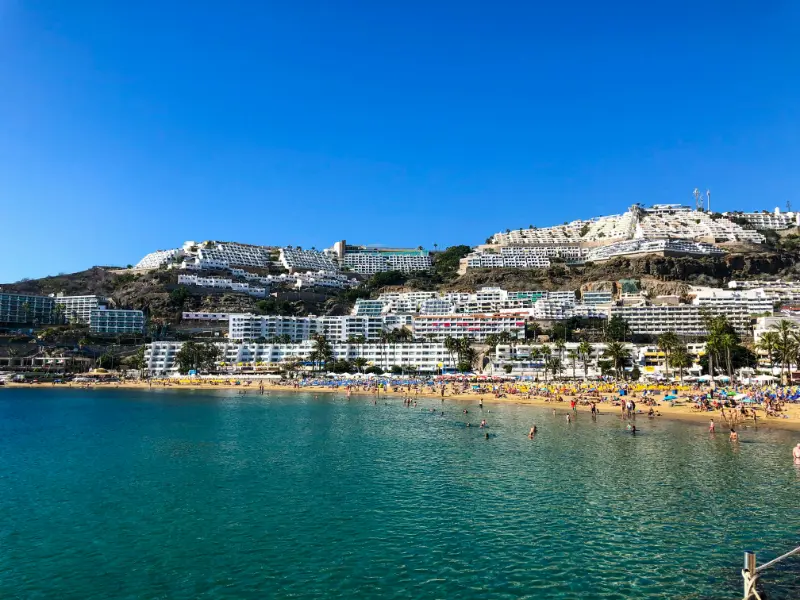
| Gran Canaria: Maspalomas / Meloneras | Best for resort pools, dunes and winter sun; less central for the island’s northern cultural sights. |
The four decisions that shape this trip most
| Decision | Best default | When to change it |
|---|---|---|
| Number of islands | Two | Use one island for a slower trip; add a third only with 14+ days. |
| Rental car | 3–4 days per island if needed | Skip on city/resort days when buses, taxis and walking are easier. |
| Teide / mountain day | Weather-dependent priority | Keep another day flexible because wind/cloud can change visibility and access. |
| Beach base | Choose north/city or south/resort consciously | Do not assume one coast provides the best compromise for every activity. |
Make these decisions before filling the calendar with attractions. They determine how many hotel changes, early starts and long journeys the trip contains. Once the structure is right, individual sightseeing choices become much easier to adjust.
A realistic day-by-day route
Days 1–2: settle into Tenerife and choose your island personality
Use arrival day around the hotel area. If you are in the south, make it a beach/pool afternoon; in the north, choose a town walk.
Use the first full day for the opposite side of Tenerife’s character: La Laguna and northern landscapes from a southern base, or a warmer coastal day from a northern base.
Avoid collecting scenic viewpoints by car. Choose a few and leave time to stop safely, eat and walk.
Days 3–5: Teide, one coast and a flexible weather day
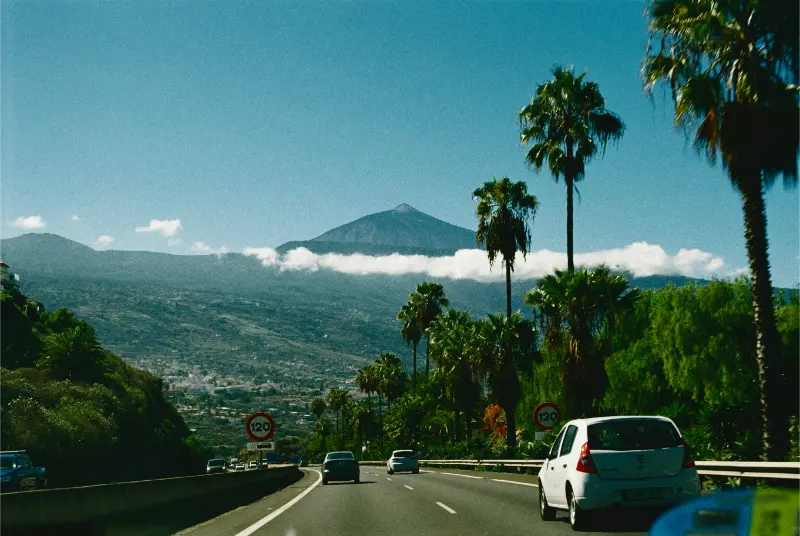
Use the clearest suitable day for Teide National Park and surrounding volcanic landscapes. Check current official access and cable-car/permit requirements for any specific summit activity.
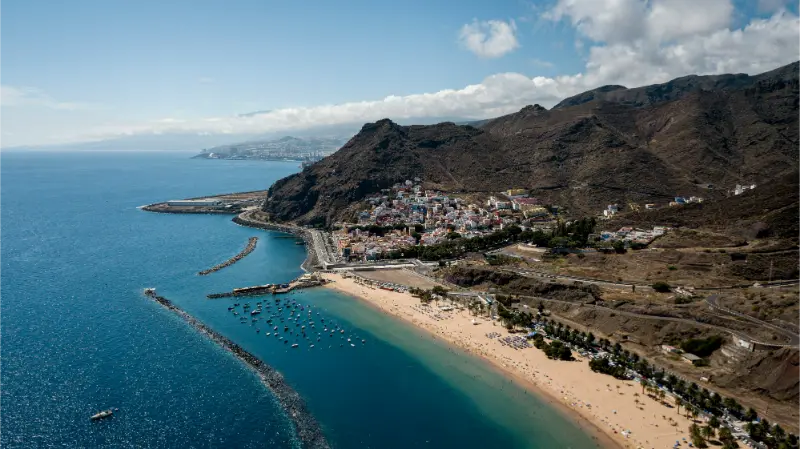
Give another day to a coast that contrasts with your base—whale-watching, a beach, Anaga or a north-coast town depending on interests and conditions.
Keep the final Tenerife day intentionally flexible. It can absorb cloud on the mountain, wind at sea or simply become a slow pool day before the island transfer.
Day 6: transfer to Gran Canaria
Fly or take the ferry according to your bases and total door-to-door time. Do not compare only the scheduled journey duration.
Pick up a car only if you need it immediately; city parking in Las Palmas may make a delayed rental smarter.
Spend the evening within walking distance of your new base.
Pace check: if this stage runs late, remove the lowest-priority activity rather than stealing time from meals, sleep or the next transfer. A resilient itinerary should become simpler when something changes, not more frantic.
Days 7–9: Gran Canaria’s city, mountains and coast
Use one day for Las Palmas and Las Canteras if you are staying south, or as an easy home day if you are based in the city.
Use one full day for the interior, choosing a realistic mountain loop with villages and viewpoints. Winding roads make a short kilometre total feel much longer.
Use the remaining day for Maspalomas, a beach, a family attraction or a quieter coastal area. Do not force another mountain drive if the group wants rest.
Day 10: departure without crossing the island twice
Keep the last morning near your base or airport route.
Return the car with time for fuel and inspection, especially in busy holiday periods.
If your international flight departs from a different island, strongly consider transferring the previous day rather than relying on a same-day inter-island connection.
Transport reality: plan door to door
Both Tenerife and Gran Canaria have extensive bus networks and airports, while ferries connect the islands. A rental car is valuable for mountain roads and dispersed viewpoints, but it can be unnecessary on resort days or in Las Palmas. Evaluate each island separately. Road distance is deceptive because volcanic topography creates curves, elevation and slow scenic sections. Check official island tourism and transport sources for current road, trail and cable-car access, especially when mountain weather is involved.
Door-to-door time is the number that matters. Add hotel checkout, reaching the station, airport or pier, waiting, boarding, collecting luggage, local transport at the other end and the possibility that everyone needs food immediately after arrival. This is why a “two-hour flight” or “three-hour train” can consume most of a day. Our guide to building realistic 7-, 10- and 14-day itineraries explains how to treat transfer days honestly.
Food strategy: make meals part of the route
The islands are easy for mixed preferences because resort areas, cities and small towns provide very different dining styles. Plan at least one meal around Canarian dishes rather than eating only in international resort strips. On mountain days, carry water and snacks because opening hours in small villages may not match your driving schedule. If you stay in an apartment, a simple supermarket breakfast can make early scenic starts much easier.
One planned meal per day is usually enough. Keep another meal flexible so it can respond to where you actually are, not where an old itinerary expected you to be. With children, older travellers or very hot weather, eating before everyone becomes exhausted is often more important than reaching a restaurant that looked perfect months earlier.
When to go and how the season changes the plan
The Canaries are popular for mild winter weather, but “eternal spring” does not mean identical conditions across each island. Northern slopes, mountains and trade-wind zones can be cool or cloudy while southern resorts are sunny. Higher elevations can be dramatically colder than the coast. Pack a warm layer for Teide or mountain viewpoints even if beach temperatures feel summery.
Instead of searching for one universal best month, decide which compromise you prefer: better weather, fewer visitors, lower prices, longer daylight, beach conditions or seasonal scenery. No month maximises everything. Recheck short-term weather and official access information shortly before each critical outdoor day.
Budget: where spending actually improves the trip
Accommodation varies enormously between resort zones, city hotels and apartments. The biggest avoidable expense is renting a car for days when it remains parked, especially where hotel parking costs extra. Inter-island transport also adds baggage and transfer costs, which is another reason to limit the trip to two islands. Families can often save by choosing an apartment for part of the stay and using restaurants selectively.
The most useful upgrades are often logistical rather than luxurious: a hotel that removes a daily transfer, a direct ride after a long flight, a flexible ticket, an additional night in a weather-dependent region or a guide where interpretation genuinely adds value. Cut low-value extras before cutting the pieces that keep the route reliable.

Common mistakes to avoid
- Trying to visit three or four islands in ten days.
- Assuming coastal sunshine guarantees clear mountain conditions.
- Underestimating driving time on winding interior roads.
- Renting a car for an entire city-based stay without checking parking.
- Planning a same-day island transfer immediately before an expensive international flight.
Most difficult trips are not ruined by one large mistake. They become tiring through a sequence of optimistic assumptions: a transfer that “should” be quick, a hotel that is “only” a kilometre away, a famous walk assumed to suit everyone and a dinner reservation across town after an already long day. Leave margin before you need it.
Families, older travellers and mixed-age groups
Tenerife and Gran Canaria are both strong family destinations because beaches, pools, walks, towns and attractions can be mixed without a rigid schedule. Small children may prefer one longer resort base and fewer car days. Older travellers should pay attention to hotel gradients and the steepness of historic centres or mountain viewpoints. Scenic driving is enjoyable only if the driver is comfortable with curves and elevation; otherwise, organised excursions can be a better choice.
For mixed-age groups, agree which experiences everyone will share and which can be optional. Splitting for two hours is often healthier than forcing the entire group through one person’s priority. Build seating, toilets, shade, step-free access and realistic meal times into the plan with the same seriousness as headline attractions. Our guide to travelling with parents and older adults develops this approach in more detail.
If you have more or less time
With fourteen days, add Lanzarote or Fuerteventura, or simply give a full week to each island. With seven days, choose one island and explore it properly. A single-island week usually feels richer than a two-island sprint because weather can move activities without forcing a transport change.
When shortening the trip, remove an entire base before cutting every destination to one night. When lengthening it, add depth before distance. An extra morning in a place you already understand often produces a better memory than another multi-hour transfer to a new pin on the map.
Useful official resources
Opening hours, transport timetables, road conditions, trail rules and visitor procedures can change. Use official sources for the details that affect your exact travel dates and recheck them shortly before departure.
Final planning checklist
- Confirm passport, visa, entry and transit requirements for your nationality and route.
- Book the genuinely scarce transport or accommodation segment before secondary attractions.
- Check the exact luggage journey between bases, including stairs, ferries, station exits and rental-car rules.
- Save offline copies of essential reservations, insurance details and each accommodation address.
- Recheck weather, road, park, trail or transport notices shortly before each critical day.
- Keep at least one flexible half-day that can absorb rain, fatigue, a delay or a cancellation.
- Choose clothing and footwear for the actual surfaces and climate, not only for photographs.
- Leave a generous buffer before international flights and other connections that are expensive to miss.
The purpose of a good itinerary is not to prove that you covered the maximum distance. It is to make the important experiences easier to enjoy and to leave enough energy for the unexpected parts that become the best memories. Use this route as a framework, then remove anything that does not fit your interests, mobility or travel rhythm.