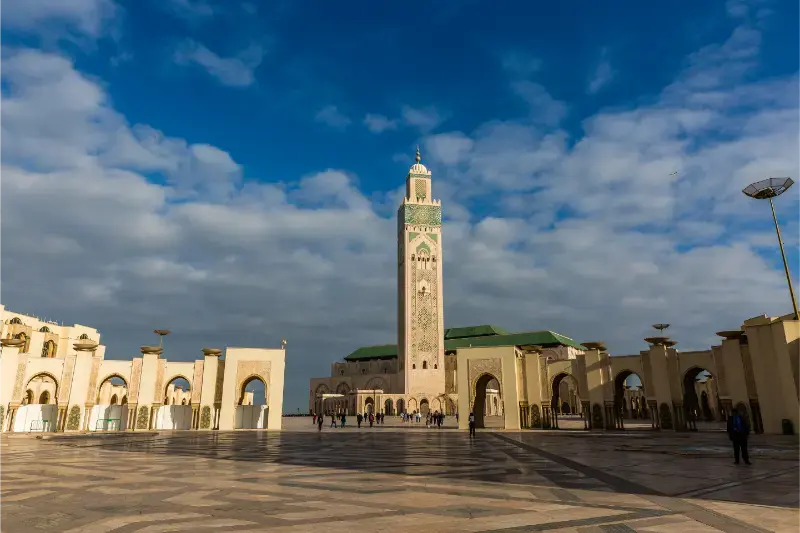
Casablanca Casablanca is easy to misunderstand if you arrive expecting a preserved medina like Fez or Marrakech. Morocco’s economic capital is more interesting as a living modern city shaped by Art Deco, Atlantic light, business districts, neighbourhood markets, religious architecture and 20th-century urban history. Three days is enough to see those layers without pretending the city is something it is not.
If this stop is part of a wider journey, compare the pacing with Morocco Atlantic Coast in 9 Days: Casablanca, Rabat and Essaouira Without Returning to Marrakech. The broader itinerary is better for deciding how long to stay and what comes before or after; this city guide is designed to make the days on the ground work well.
Quick trip summary
| Ideal stay | 3 days for a first visit |
|---|---|
| Best approach | Group each day by neighbourhood or geographic zone and protect one flexible block |
| Transport strategy | Walk where the experience is concentrated; use public transport or a taxi to remove unrewarding distance |
| Who it suits | First-time visitors, couples, solo travellers, families and slower-paced travellers |
| Most common mistake | Trying to fit technically possible transfers into every available hour |
How to plan Casablanca before you book
A strong short stay starts with three decisions: where you will sleep, which one or two experiences really need a reservation, and what you will deliberately leave flexible. That sounds simple, but it prevents the most common city-break problem: a schedule that only works if every queue, meal, transfer and weather forecast behaves perfectly.
Think in geographic clusters rather than popularity rankings. Put nearby sights on the same day, then reserve the other half of the day for a neighbourhood, meal, park, waterfront or weather-dependent option. This creates room for the moments that usually become the best part of a trip: a market that takes longer than expected, a viewpoint with unusually clear light, or a café where you decide not to rush.
Where to stay
The central areas around the main boulevards are practical for architecture, restaurants and transport. Gauthier and nearby districts offer a strong dining and café scene, while the Corniche suits travellers who want ocean views and do not mind using taxis more often. Habous is atmospheric for daytime exploration but is less convenient as a universal base. Choose a hotel with straightforward vehicle access because Casablanca distances are larger than they first appear.
For a multi-age trip, hotel access matters almost as much as the neighbourhood name. Check the walk from the nearest useful stop, hills or stairs, late-evening transport, lifts inside the building and whether a taxi can actually reach the entrance. A slightly more expensive room can be better value if it removes two difficult transfers every day.
Arrival and the first few hours
Mohammed V International Airport is outside the city, with rail and road connections that should be checked against your arrival time and exact hotel location. Casablanca also has important rail links to Rabat, Marrakech and other Moroccan cities. If you are landing after a long international flight, keep the first evening simple rather than immediately crossing the city for dinner.
Save the hotel address offline before travelling and know the simplest first transfer before you land. Arrival day is the wrong time to improvise a complicated chain of local transport with heavy luggage. Once you have checked in, use a nearby walk or meal to understand the immediate area rather than crossing the destination for a single famous sight.
Getting around without wasting the trip in transit
Casablanca’s tram system is useful on selected corridors, while taxis fill many gaps. Walking works within neighbourhoods, not necessarily between all major sights. Group Hassan II Mosque with the nearby waterfront, central Art Deco streets with downtown exploration, and Habous with adjacent areas. This neighbourhood logic matters more than trying to visit attractions in popularity order.
Check live service information on the day because construction, events, weather and local disruptions can change the practical route even when the map is unchanged. When choosing between a cheaper transfer and a faster one, consider the value of your limited holiday time and the energy of the whole group, not just the fare.
A realistic 3-day itinerary
Day 1 – Hassan II Mosque and Atlantic Casablanca
Make Hassan II Mosque the main anchor and check current visitor-tour arrangements before arriving. Spend time along the nearby waterfront and Corniche rather than leaving immediately after the visit. The scale, ocean setting and modern religious architecture deserve more than a quick photo stop.
Day 2 – Art Deco centre and city life
Walk selected central boulevards with attention to façades, arcades and the mix of European and Moroccan design. Add markets, cafés and one cultural site rather than rushing across the metropolis. Casablanca’s urban interest is cumulative: individual buildings matter less than seeing how the city centre fits together.
Day 3 – Habous and a flexible neighbourhood afternoon
Explore Habous at a measured pace, combining courtyards, shops and food with nearby points of interest. Use the final afternoon for a museum, another architectural area or the seafront depending on weather and what you missed. If you are continuing to Rabat, protect the train connection rather than adding a distant last stop.
Best time to visit
Spring and autumn are comfortable for urban walking, while summer temperatures along the coast can be moderated by the Atlantic compared with inland Morocco. Winter is generally manageable but can bring rain. Religious calendars and local holidays can affect opening patterns, so verify access to major sites before fixing the day order.
The best month depends on what you value most: comfortable walking, long daylight, low accommodation prices, swimming, festivals, snow, autumn colour or quieter museums. Instead of searching for one universally “best” season, choose the trade-off that matches your trip and then build the daily schedule around those conditions.
What to book first
The most important advance check is the current visitor procedure for Hassan II Mosque, including tour times and dress expectations. Book accommodation and any special restaurant that matters to you, but leave ordinary neighbourhood exploration flexible. For onward trains, check schedules directly rather than relying on an old itinerary.
Before departure, recheck official opening days, transport notices, reservation procedures and any seasonal closures. These operational details change more quickly than the logic of the itinerary. Keep screenshots or confirmations offline, but let the current official source override an old saved timetable.
Food strategy: make meals part of the route
Casablanca is a good city for Moroccan classics, seafood and modern dining. Use meals to explore different neighbourhoods rather than searching only around the most famous tourist sites. A market or bakery breakfast, a relaxed Moroccan lunch and an Atlantic seafood dinner can show more range than a sequence of formal restaurants.
A useful rule is to travel for a special meal only when the meal itself is one of the day’s main experiences. Otherwise, eat well near the area you are already exploring. This reduces backtracking and gives you more time to notice ordinary local places rather than spending the afternoon commuting between recommendations.
Travelling with children
Families can enjoy the mosque exterior and guided visit, seaside areas and Habous, but long architecture walks need breaks. Use trams and taxis to reduce unrewarding distance and choose a hotel where a midday reset is possible. The Corniche can provide a useful open-air contrast to dense city streets.
With children, reduce transitions before reducing highlights. One major attraction plus one flexible outdoor or neighbourhood block is often stronger than three timed entries. Keep snacks, water, toilets and the easy route back to the hotel in mind before starting a long afternoon.
Travelling at a slower pace or as a senior
Casablanca is large, so strategic taxis can make a major difference. Choose a central hotel with lifts and simple vehicle access, and avoid planning long cross-city walks merely because attractions appear on the same map. Confirm accessibility for any guided mosque visit or museum that is a priority.
A slower itinerary should not mean seeing only the first attraction near the hotel. Use transport to remove the least interesting walking and save energy for the historic streets, museums, landscapes and meals that make the destination distinctive. Seating, shade, weather and surface conditions are practical planning factors, not minor details.
Budget planning
Casablanca covers a wide range of hotel and dining prices. Transport costs grow when you choose a seafront hotel far from daytime sightseeing, so compare nightly price with daily taxi use. Many of the city’s best urban experiences are walks and neighbourhood observations, leaving room in the budget for one guided architectural or mosque-focused experience.
Keep a modest daily reserve for an easier taxi, extra water, a weather-driven change, an unexpected admission or a meal when the original plan fails. A resilient budget is more useful than allocating every euro, dollar or local-currency unit before departure. Compare the total daily cost of each accommodation option rather than the room price alone.
Weather backup plan
Keep at least one indoor or low-commitment block movable. The best backup is usually in the same part of the city, so a storm, heat wave, strong wind or poor visibility does not force an entirely new transport plan. Put exposed viewpoints, beaches, mountain trips and long walks on days that can swap with museums, markets or neighbourhood time.
Connectivity, payments and small practical details
Download the essential map area, hotel address, tickets and the next important transfer before leaving reliable Wi-Fi. Carry a small power bank and keep a backup payment method separate from the main wallet. Cards may be widely accepted without being universal, so a modest amount of local cash can still be useful for small purchases, markets or transport.
What to pack
Comfortable shoes matter more than an extra outfit. Add a compact day bag, water, sun protection, a light layer and rain protection appropriate to the season. If the itinerary includes altitude, coast, mountains or exposed viewpoints, pack for the conditions there rather than assuming the city-centre forecast tells the whole story.
Common mistakes to avoid
- Expecting Casablanca to feel like the medinas of Marrakech or Fez.
- Visiting Hassan II Mosque without checking current visitor access and tour procedures.
- Crossing the city repeatedly instead of grouping neighbourhoods.
- Spending only one airport night and concluding there is nothing to see.
- Choosing a seafront hotel without accounting for daily transport to central sights.
Responsible travel and local etiquette
Treat markets, places of worship, residential streets and working neighbourhoods as real community spaces rather than scenery. Follow posted instructions, keep entrances and pavements passable, ask before photographing people in sensitive settings and support local businesses when it fits naturally into the day.
In natural or archaeological settings, stay within marked routes and respect closures even if another visitor appears to ignore them. Barriers often protect fragile places as well as visitors. Good travel behaviour is mostly about paying attention to the space you are entering rather than memorising a list of rules.
If you have less or more time
With one day, focus on Hassan II Mosque, the waterfront and a short central walk. Two days adds Art Deco streets and Habous. With four or five days, Casablanca works well as a base for a deliberate Rabat day or deeper architectural exploration, but a broader Morocco itinerary may be better served by moving onward.
Safety and decision-making on the day
Use normal big-city awareness, especially around crowded markets, transport hubs and busy roads. Take official or reputable transport, agree on taxi expectations where needed and keep valuables controlled. Respect visitor rules at religious sites and follow current local advice rather than relying on stereotypes about entire districts.
Set a practical turnaround time on excursion and departure days. Missing a secondary attraction is cheaper than missing a flight, travelling exhausted late at night or forcing an outdoor plan after conditions have changed. Current local advice is more useful than blanket claims that an entire destination is either completely safe or completely unsafe.
Useful official and planning resources
Opening hours, fees, transport schedules and access rules change more often than the basic geography. Recheck the official source shortly before departure.
Final planning checklist
- Confirm passport, visa, transit and health requirements for your nationality.
- Reserve the attraction, tour or transport that controls the rest of the itinerary.
- Save your accommodation address and first-day route offline.
- Recheck weather, closures and transport notices before each critical day.
- Keep at least one half-day that can absorb a delay or become simple rest.
- Leave a generous buffer before flights, trains, ferries and other costly connections.
A strong trip to Casablanca should feel as though you understood how the place fits together, not merely that you collected its famous names. Protect the fixed reservations that matter, group the rest by geography and remove anything that creates more transit than experience.