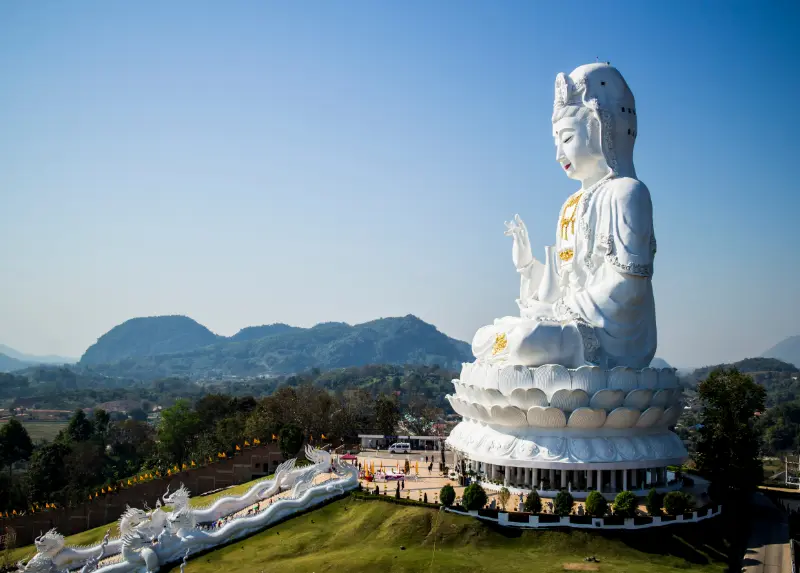
Chiang Rai Chiang Rai deserves more than a rapid temple circuit between Chiang Mai and the border. Four days allow the White Temple, Blue Temple and Baan Dam to sit alongside markets, local food and one carefully chosen mountain or Doi Tung-area day. The key is avoiding the common mistake of turning every day into a long private-car excursion.
If Chiang Rai is part of a wider journey, compare the pace with Northern Thailand in 9 Days: Chiang Mai and Chiang Rai Without Adding Too Many Mountain Stops. This city guide is designed to add local depth rather than duplicate the broader route.
Quick trip summary
- Ideal stay: 4 days for a first visit.
- Best planning rule: group each day geographically and keep one weather or delay buffer.
- Best for: first-time visitors, couples, solo travellers, families and slower-paced travellers.
- Main risk: adding too many transfers, reservations or day trips to a compact stay.
Why 4 days works
Chiang Rai becomes easier to understand when the trip is divided into geographic themes rather than a master list of attractions. One main anchor per half-day is normally enough. That leaves space for meals, queues, unexpected closures, weather changes and the simple act of noticing a neighbourhood rather than photographing it and leaving.
The first priority is to protect anything that is genuinely capacity-limited or weather-dependent. The second is to keep minor sights flexible. This distinction matters because travellers often overbook a city break with reservations that create stress but add little value.
Where to stay
| Area | Why choose it |
|---|---|
| Central Chiang Rai | Best for the night bazaar, bus links, restaurants and travellers without a car. |
| Kok River area | Quieter and greener, often with resort-style accommodation, though transport to evening food areas may be needed. |
| North of centre | Useful for some temple routes and larger properties, but check exact distance before assuming a walkable stay. |
| Countryside stay | Good for travellers prioritising scenery and quiet, but only if transfers are organised and city access is not important every evening. |
Choose location before hotel style. Map the first morning, the likely dinner area and the departure route. A beautiful room that forces two extra rides every day can be more expensive in time and energy than a slightly dearer hotel in the right district. Families and seniors should also check lifts, stairs, steep streets and the distance from the nearest practical transport stop.
A realistic 4-day itinerary
Day 1: centre, market and city temples
Begin with central Chiang Rai rather than immediately leaving town. Visit a local temple or museum, explore markets and use the evening for the night bazaar. This gives context before the more famous contemporary temple sites.
Day 2: White Temple, Blue Temple and Baan Dam selectively
Group the major art-and-temple attractions geographically with a driver, tour or carefully planned transport. Do not force every photogenic site into the route. Leave enough time to look rather than only queue for photos.
Day 3: Doi Tung or another mountain-area day
Choose one mountain focus such as Doi Tung and its gardens, or another nature/cultural area that suits current road and weather conditions. The Tourism Authority of Thailand highlights several mountain attractions, but trying to combine all of them in one day creates more driving than experience.
Day 4: slower local day or Golden Triangle only if it matters
Use the final day for cafés, markets, river time or a selective Golden Triangle excursion. The border region is interesting, but it should not be automatic; travellers with limited interest in border history may gain more from a relaxed local day.
Arrival strategy
Chiang Rai has an airport and bus links to Chiang Mai and other northern destinations. Road travel from Chiang Mai is common but takes enough time that arrival and departure days should remain light. If flying onward, avoid returning from a distant mountain excursion immediately before the flight.
Arrival day should carry less risk than the rest of the trip. Save the accommodation address offline, know the first transport option before landing and avoid a non-refundable attraction immediately after a flight, train or border crossing. If the journey is delayed, remove a secondary sight rather than beginning the holiday by rushing with luggage.
Getting around efficiently
The centre is manageable, but major attractions are spread out. Songthaews, taxis, ride services, private drivers and tours can all be useful. For mountain days, prioritise a safe vehicle and a realistic route over the cheapest possible transport.
Compare routes door to door, not station to station. Waiting time, stairs, the walk to the stop, transfers and the final approach can make the nominally fastest option worse for a family, a senior traveller or anyone carrying luggage. Use transport to remove unrewarding distance, then spend walking energy where the surroundings are actually worth seeing.
Best time to visit
Cooler months are popular for mountain views and outdoor travel. Hot-season heat and seasonal haze can reduce the value of viewpoints, while wet-season landscapes are lush but roads and outdoor plans need flexibility. Check current air-quality and weather conditions rather than relying only on historical averages.
Seasonal planning should also consider daylight, local holidays, school breaks and whether your most important experience depends on clear skies, calm water, mountain access or outdoor seating. A shoulder-season trip is not automatically better if the one thing you came to do is operating on a reduced schedule.
What to book before arrival
Pre-book only the elements that can break the itinerary if unavailable: a capacity-limited landmark, a specific long-distance connection, a weather-sensitive tour with limited spaces or an airport transfer at an awkward hour. Leave ordinary museums, cafés and neighbourhood walks flexible unless official guidance indicates otherwise.
For timed tickets, build at least 30 to 60 minutes of margin around meals and local transport. A city itinerary should not become a chain of appointments where one slow queue ruins the rest of the day.
Food strategy
Northern Thai food is a major reason to slow down. Seek khao soi, local curries, grilled dishes, market snacks and coffee from the broader northern region. Spread tastings across the stay instead of turning one evening into an oversized food checklist.
Meals should also function as rest. A very good restaurant ten minutes from where you already are can be a better travel decision than a famous address requiring forty minutes of extra transport. Keep breakfast reliable, lunch practical and one or two dinners memorable rather than turning every meal into logistics.
Travelling with children
With children, reduce transitions before reducing highlights. One major visit plus a park, market, waterfront or easy interactive stop often works better than three formal attractions. Carry snacks and water, know where the nearest easy transport option is, and leave the late afternoon flexible enough for a hotel break.
For babies and toddlers, check stroller conditions rather than assuming “walkable” means smooth. Cobblestones, stairs, heat, snow, crowded markets and historic entrances can change the best route completely. A short taxi or public-transport hop can preserve enough energy to enjoy the destination rather than merely complete it.
Travelling as a senior or at a slower pace
Slower travel often improves a city itinerary because it forces better geographic choices. Use lifts, trams, metro, taxis or door-to-door transfers to remove unrewarding distance, then spend walking energy on the streets, parks, markets and viewpoints that make Chiang Rai distinctive.
Check hotel lifts, shower access and the exact approach to major attractions if mobility is limited. “Accessible” can mean different things in a modern museum, a historic church and a centuries-old street. When in doubt, verify the specific entrance rather than relying on a general city label.
Budget planning
Build the budget in layers: accommodation, arrival and departure transport, local movement, fixed attractions or excursions, food and a reserve for changes. The cheapest hotel is not always the cheapest trip if it creates repeated taxi or transit costs. A city card is useful only when its zones and included attractions match the itinerary you will actually follow.
Keep a small contingency for weather or fatigue. A taxi in heavy rain, an indoor attraction, a shuttle or a different departure time can protect a travel day. Saving money is valuable; sacrificing the main experience to avoid every small practical cost usually is not.
Weather backup plan
Before each day, identify one outdoor anchor and one indoor alternative. Move museums, markets, cafés or covered heritage visits into the worst weather window and protect the experience that most needs good conditions. Do not read only the temperature: wind, humidity, visibility, rain intensity, snow, sea state or air quality can matter far more.
Accessibility and mobility
Accessibility can differ sharply between modern transport, historic streets, older hotels and individual attractions. If step-free access matters, verify the exact station exit, hotel entrance and attraction route. Cobblestones, steep lanes, sand, stairs, altitude or heat may be the real constraint even when a destination is broadly described as accessible.
Connectivity, payments and practical details
Download an offline map, keep screenshots or offline copies of critical tickets and carry a backup payment method. A local eSIM or data plan can make live transport easier, but the day should not fail because a phone battery dies. Keep a modest amount of local currency where small businesses or transport may still require it.
What to pack
Comfortable walking shoes, weather layers, sun protection and a small day bag matter more than extra outfits. Add personal medication, a refillable bottle where practical and a compact power bank if tickets and navigation are digital. Pack for the destination’s real conditions, not only the headline temperature.
Common mistakes to avoid
- Treating Chiang Rai as only a one-day temple tour from Chiang Mai.
- Combining the White Temple, Doi Tung and Golden Triangle in one rushed circuit.
- Ignoring seasonal haze when planning mountain viewpoints.
- Choosing remote accommodation without arranging evening transport.
- Photographing religious spaces without respecting dress and local instructions.
Responsible travel and local etiquette
Residential streets, markets, places of worship, memorials and working neighbourhoods are real parts of a community rather than scenery. Follow local instructions, keep doorways and pavements passable, ask before photographing people in sensitive settings and spend with local businesses when it fits naturally.
In natural areas, stay on marked routes, respect closures and follow current safety guidance. A weather closure, red flag, poor air-quality alert or transport suspension is not an invitation to find an unofficial alternative.
If you have less or more time
With one day less, remove the most distant excursion or the day with the most transport rather than compressing every highlight. With one or two extra days, add neighbourhood depth, a slower museum block or one nearby excursion that offers something genuinely different. The extra time should make the trip calmer, not simply increase the number of pins on the map.
Safety and decision-making on the day
Use ordinary situational awareness, keep valuables controlled in crowded places, use clearly identified transport and follow current local advice about specific streets, weather or transport hubs. Conditions can vary by neighbourhood and time of day, so current local guidance is more useful than blanket labels.
Set a practical turnaround time for excursion and departure days. Missing a secondary attraction is cheaper than missing a flight, train or tour, and safer than forcing a route after conditions have changed.
Current planning note
Thailand’s official tourism authority highlights Wat Rong Khun, Baan Dam, Doi Tung and mountain landscapes around Chiang Rai, confirming that the province is much broader than a single temple circuit.
Useful official resource
Opening hours, fees, access rules and transport schedules change. Recheck the official source shortly before departure.
Final planning checklist
- Confirm passport, visa, transit and health requirements for your nationality.
- Reserve the attraction or transport that controls the rest of the itinerary.
- Save the accommodation address and first-day route offline.
- Recheck weather, closures and transport notices before each critical day.
- Keep at least one half-day flexible enough to absorb a delay.
- Leave a generous buffer before flights and other expensive connections.
A strong trip to Chiang Rai should feel as though you understood how the place fits together, not merely that you collected its famous names. Protect the reservations that matter, group the rest by geography and remove anything that creates more transit than experience.