
The Great Ocean Road is often sold as a single spectacular drive, but the quality of the trip depends on where you sleep and how much road time you accept each day. Trying to leave Melbourne, stop at every beach, reach the Twelve Apostles, continue to Port Campbell and return to the city in one day can produce impressive photographs and a very tiring holiday. A week gives you enough time to enjoy Melbourne first, then drive the coast with two or three sensible overnight bases.
This route is built for first-time visitors who want a mix of city, surf-coast scenery, rainforest, limestone formations and small coastal towns. It does not treat every lookout as mandatory. Instead, it identifies the stretches where stopping often makes sense and the sections where simply enjoying the road is the better choice.
Quick trip summary
- Spend at least two nights in Melbourne before collecting a rental car.
- Use Torquay/Lorne and Port Campbell as the main coastal bases instead of changing hotels at every town.
- Drive the Great Ocean Road in daylight; wildlife, bends, weather and viewpoints make night driving a poor trade-off.
- Choose a few major coastal formations rather than stopping at every signed lookout.
- Return inland toward Melbourne if it saves time; you do not need to retrace every kilometre of the coastal road.
Who this itinerary is for — and when to change it
This route is designed for a first visit with a moderate pace. It assumes you want the destination’s defining experiences without turning every day into an early start, late arrival and luggage transfer. Couples, solo travellers, families and mixed-age groups can all use the same geographic structure, but the number of activities inside each day should change with mobility, heat, jet lag and personal interests.
The easiest way to personalize it is to identify your two non-negotiable experiences before booking hotels. Protect those first, then let the rest of the itinerary support them. If a weather-dependent activity matters more than a museum or city walk, give it the flexible day rather than hoping the forecast behaves exactly as expected.
Where to stay: choose the base before the hotel
Accommodation is a transport decision as much as a comfort decision. Check how you will reach the first activity in the morning, how you will return after dinner, whether the property has stairs or parking, and what happens with luggage on transfer days. A cheaper room that creates two difficult journeys every day can cost more in taxis, time and energy than a slightly more expensive base in the right place.
| Base | Why it works — and the trade-off |
|---|---|
| Melbourne CBD / Southbank | Best for first-time city sightseeing, trams, dining and a car-free start. Parking a rental car here adds cost without much benefit. |
| Torquay | Good first coastal base near Bells Beach and the start of the Great Ocean Road, especially if you arrive late from Melbourne. |
| Lorne | More atmospheric for an overnight stop, with beach, cafés and access to Otway waterfalls. Accommodation can be expensive in busy periods. |
| Port Campbell | The most practical base for the Twelve Apostles and nearby limestone formations, especially for early or late visits. |
The four decisions that shape this trip most
| Decision | Best default | When to change it |
|---|---|---|
| Rental car pickup | Morning of Day 3 | Collecting earlier usually means paying to park it in Melbourne. |
| First coast night | Lorne | Choose Torquay if you want a shorter first drive or arrive after lunch. |
| Twelve Apostles timing | Late afternoon + next morning | Use one of these windows depending on weather and crowd levels; do not chase a perfect sunset forecast. |
| Return route | Inland via Colac | Use the coastal road again only if you deliberately want different stops on the way back. |
Make these decisions before filling the calendar with attractions. They determine how many hotel changes, early starts and long journeys the trip contains. Once the structure is right, individual sightseeing choices become much easier to adjust.
A realistic day-by-day route
Days 1–2: Melbourne without a car
Use the first day to recover from travel and learn the central grid, riverfront and laneways. Melbourne’s public transport and walkable core mean a rental car is more burden than advantage here.
On the full day, choose one cultural anchor—museum, gallery, market or sporting precinct—then add a neighbourhood such as Fitzroy, Carlton, St Kilda or South Yarra according to your interests.
Keep the second evening relatively light if you will drive the next morning. Long-haul jet lag and left-side driving are not a good combination.
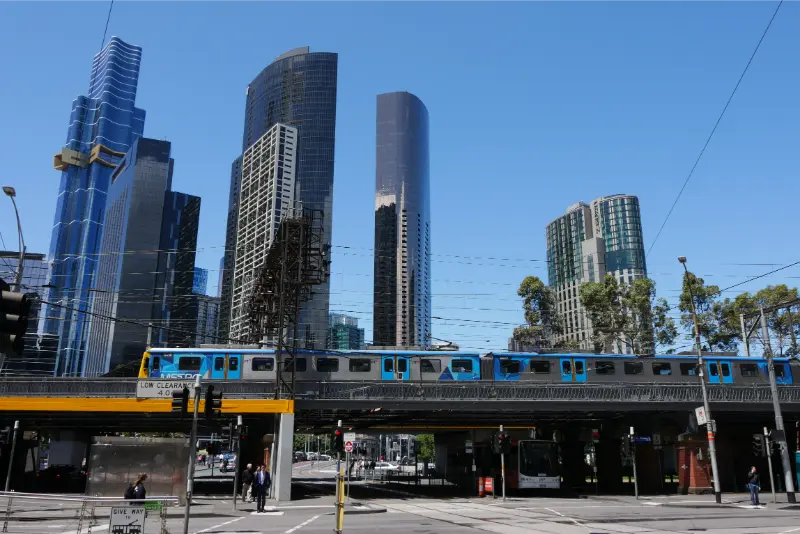
Day 3: Melbourne to the Surf Coast and Lorne
Collect the car after breakfast and head toward Torquay. Spend time at one or two beaches or surf viewpoints rather than trying to stop at every sign.
Continue through Anglesea toward Lorne. The road becomes more scenic and curving, so allow far more time than the raw distance suggests.
Sleep in Lorne or nearby and finish driving before dark if possible. This is where a relaxed road trip starts to feel different from a day tour.
Day 4: Lorne, the Otways and Port Campbell
Leave time for a short rainforest or waterfall walk in the Great Otway area. Coastal scenery gets the publicity, but the forest is one of the best contrasts on the route.
Continue toward Apollo Bay, then west. Stop for viewpoints that genuinely appeal to you, but keep enough daylight for the limestone coast near Port Campbell.
Check into Port Campbell before or after your first Twelve Apostles visit depending on weather. Do not force a sunset if wind, rain or fatigue make the experience unpleasant.
Day 5: limestone coast without rushing
Use the morning for the Twelve Apostles and nearby formations such as Loch Ard Gorge, then choose one or two additional stops farther west.
The coast is exposed. Strong wind, spray and rapidly changing weather can make short walks feel much longer, so keep waterproof layers accessible in the car.
Return to Port Campbell for a second night instead of packing again. The extra night also creates a useful weather buffer.
Day 6: Port Campbell back toward Melbourne
Return inland via Colac unless there is a specific coastal stop you want to repeat. This makes the driving day more efficient and gives you time for a relaxed lunch or one final nature stop.
If your international flight is the next morning, sleep in Melbourne rather than on the coast.
Return the rental car according to the company’s fuel and inspection rules and photograph the vehicle condition before handing it back.
Day 7: Melbourne buffer or departure
Use a late departure day for a market, garden, café district or riverside walk close to your airport transport.
If you are continuing elsewhere in Australia, treat today as a genuine transfer day rather than squeezing in a distant excursion.
A buffer day at the end protects the whole road trip from a weather delay or slower-than-expected coastal drive.
Pace check: if this stage runs late, remove the lowest-priority activity rather than stealing time from meals, sleep or the next transfer. A resilient itinerary should become simpler when something changes, not more frantic.
Transport reality: plan door to door
The Great Ocean Road is straightforward in concept but slower in practice because of bends, viewpoints, towns and frequent stopping. Drive on the left, check the rental company’s rules for additional drivers and after-dark driving, and never assume the speed limit is the appropriate speed in poor weather. Victoria’s official tourism information and Parks Victoria are useful for current access details, while road authorities should be checked for closures or major works. Keep fuel above half a tank when moving through quieter sections rather than waiting for the cheapest station.
Door-to-door time is the number that matters. Add hotel checkout, reaching the station/airport/pier, waiting, boarding, collecting luggage, local transport at the other end and the possibility that everyone needs food immediately after arrival. This is why a “two-hour flight” or “three-hour drive” can consume most of a day. Our guide to building realistic 7-, 10- and 14-day itineraries explains how to treat transfer days honestly.
Food strategy: make meals part of the route
Melbourne is where you can plan one or two destination meals; on the road, flexibility matters more. Coastal towns can become busy at lunch, and kitchen closing times may be earlier than you expect after a long sightseeing day. Buy water and simple backup food before leaving larger towns. In Port Campbell, reserve dinner in peak season if you have a particular restaurant in mind because the town’s dining capacity is limited compared with Melbourne.
One planned meal per day is usually enough. Keep the other meal flexible so it can respond to where you actually are, not where an old itinerary expected you to be. With children, older travellers or very hot weather, eating before everyone becomes tired is often more important than reaching the “best” restaurant on a list.

When to go and how the season changes the plan
Victoria’s south coast can produce several types of weather in one day. Summer gives longer daylight but also busier roads and accommodation; winter is quieter and dramatic but brings shorter days and stronger exposure to wind and rain. Shoulder seasons can be excellent if you pack layers. The road should be planned around daylight and current conditions, not simply around an online map estimate.
Instead of searching for one universal best month, decide which compromise you prefer: better weather, fewer visitors, lower prices, long daylight, swimming conditions or seasonal wildlife. No month maximizes everything. Recheck short-term weather and official access information shortly before the relevant day, especially for roads, trails, boats and outdoor attractions.
Budget: where spending actually improves the trip
The major costs are car rental, fuel, accommodation and Melbourne hotels. A one-way rental is usually unnecessary for this route because the inland return is efficient. Spend more on a well-located Port Campbell night if it lets you see the limestone coast at two different times without a long commute. Save by starting the car rental only when you leave Melbourne and by comparing excess-reduction and insurance options carefully rather than choosing solely on the headline daily rate.
The most useful upgrades are often logistical rather than luxurious: a hotel that removes a daily transfer, a direct ride after a long flight, a flexible ticket, an additional night in a weather-dependent region or a guide where interpretation genuinely adds value. Cut low-value extras before cutting the pieces that keep the route reliable.
Common mistakes to avoid
- Attempting Melbourne–Twelve Apostles–Melbourne as a relaxed sightseeing day.
- Driving the curving coastal sections after dark simply to reach a cheaper hotel.
- Stopping at every lookout and arriving at the places you care about when everyone is exhausted.
- Keeping the rental car in central Melbourne for days when you do not need it.
- Planning a flight connection immediately after a long return drive from Port Campbell.
Most difficult trips are not ruined by one large mistake. They become tiring through a sequence of small optimistic assumptions: a transfer that “should” be quick, a hotel that is “only” a kilometre away, a famous walk that is assumed to suit everyone and a dinner reservation across town after an already long day. Leave margin before you need it.
Families, older travellers and mixed-age groups
Families benefit from beach stops, short forest walks and the simple excitement of a road trip, but young children need regular breaks that are not “photo stops.” Older travellers should choose viewpoints with shorter paths and stable surfaces, and remember that wind can make exposed cliff areas tiring. Everyone benefits from two nights in Port Campbell because it removes one packing cycle and reduces pressure to see the coast in a single weather window.
For mixed-age groups, agree which experiences everyone will share and which can be optional. Splitting for two hours is often healthier than forcing the entire group through one person’s priority. Build seating, toilets, shade, step-free access and realistic meal times into the plan with the same seriousness as headline attractions. Our guide to travelling with parents and older adults covers this approach in more detail.
If you have more or less time
With nine or ten days, add Phillip Island before or after the road trip, or continue west toward Warrnambool with more time for the Shipwreck Coast. With five days, keep two Melbourne nights, one Lorne night and one Port Campbell night, then return to the city. Do not compress the route by sleeping farther and driving later; remove a stop instead.
When shortening the trip, remove an entire base before cutting every destination to one night. When lengthening it, add depth before distance. An extra morning in a place you already understand often produces a better memory than another three-hour transfer to a new pin on the map.
Useful official resources
Opening hours, park rules, transport timetables, road conditions and visitor procedures can change. Use official sources for the details that affect your exact travel dates and recheck them shortly before departure.
Final planning checklist
- Confirm passport, visa, entry and transit requirements for your nationality and route.
- Book the genuinely scarce transport or accommodation segment before secondary attractions.
- Check the exact luggage journey between bases, including stairs, ferries, station exits and rental-car rules.
- Save offline copies of essential reservations, insurance details and each accommodation address.
- Recheck weather, road, park, trail or transport notices shortly before each critical day.
- Keep at least one flexible half-day that can absorb rain, fatigue, a delay or a cancellation.
- Choose clothing and footwear for the actual surfaces and climate, not only for photographs.
- Leave a generous buffer before international flights and other connections that are expensive to miss.
The purpose of a good itinerary is not to prove that you covered the maximum distance. It is to make the important experiences easier to enjoy and to leave enough energy for the unexpected parts that become the best memories. Use this route as a framework, then remove anything that does not fit your interests, mobility or travel rhythm.