If this stop is part of a wider journey, use India’s Golden Triangle in 10 Days: Delhi, Agra and Jaipur for the broader planning decisions and this guide for the destination-level details.
Quick trip summary
- Ideal stay: 4 days for a first visit.
- Best approach: one major experience per half-day, with at least one flexible block for weather, fatigue or transport changes.
- Good for: first-time visitors, couples, families, senior travellers and independent travellers who prefer a realistic pace.
- Main planning risk: treating map distance as if transfers, queues, terrain, heat and meals took no time.
Is this the right trip for you?
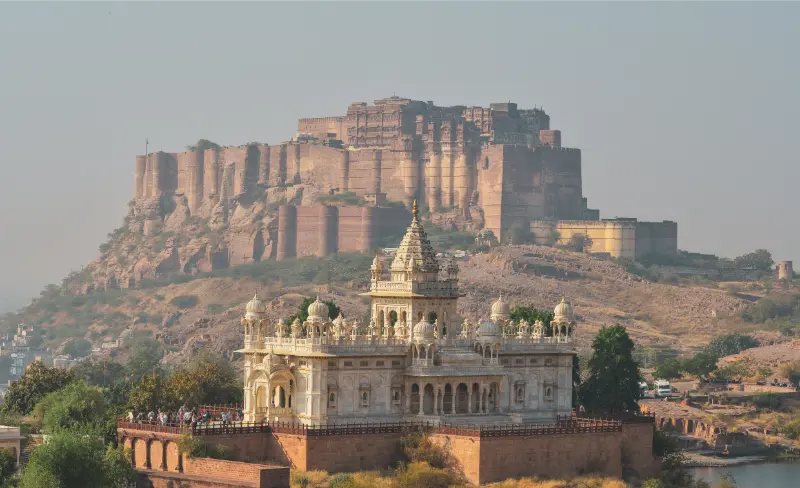
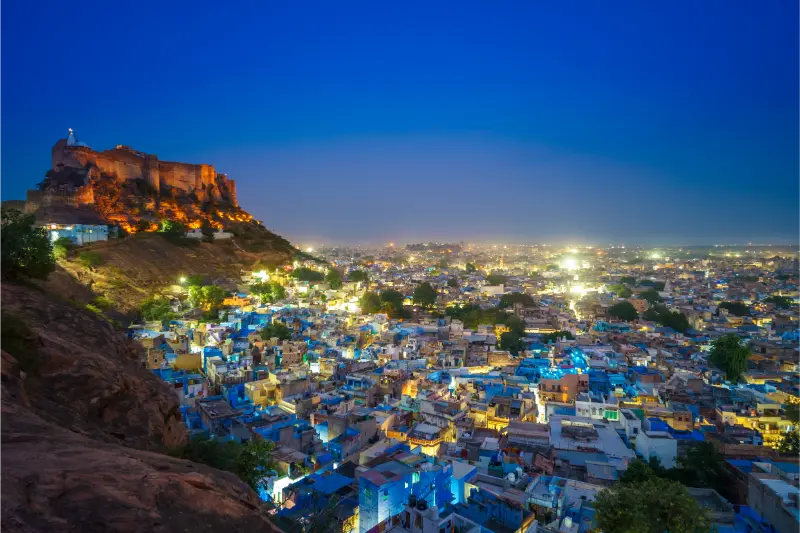
Jodhpur is one of Rajasthan’s most satisfying cities when you give it enough time to move beyond the famous blue-house photographs. Mehrangarh Fort dominates the skyline, the old city compresses markets, temples and lanes into a dense walkable core, and the wider urban area adds palaces, gardens and access to the desert landscape. Four days lets you absorb the fort properly, explore the old city at different times of day and add one excursion without turning Rajasthan into a sequence of long transfers.
Jodhpur rewards a little patience. You can see Mehrangarh Fort from much of the city, but the pleasure of staying longer is discovering the streets below it: small workshops, quiet courtyards and the bustle around the Clock Tower. Make the fort your big first-day visit, then give the old neighbourhoods their own unhurried morning.
Where to stay
| Area | Why choose it |
|---|---|
| Clock Tower / old city edge | Best for atmosphere, markets and easy access to the Blue City; expect noise, narrow lanes and limited vehicle access. |
| Ratanada | A practical middle ground with hotels, restaurants and easier road access while remaining reasonably close to the old city. |
| Paota | Useful for transport connections and travellers who value straightforward taxis over heritage ambience. |
| Palace / Circuit House side | Quieter, more spacious and often more comfortable for families or senior travellers, but you will use taxis more often. |
Staying close to the Clock Tower puts markets and old-city walks within easy reach, but it can also mean lively streets and late-night noise. A hotel outside the narrow lanes may be easier for taxis and luggage. Compare the actual approach to the property, not just the rooftop view of Mehrangarh in the photographs.
Ask your hotel where a car or auto-rickshaw can stop. Some guesthouses sit up steep lanes that are charming with a camera and less charming with heavy bags in the heat. If you are arriving late, arrange the final pickup or walking directions before you set off, ideally with a map you can use offline.
How to get there
Jodhpur has rail and air connections with major Indian cities, and trains are often the most useful choice on a Rajasthan itinerary. Road transfers from Jaipur, Udaipur or Jaisalmer can also work, but distances are long enough that an apparently simple route consumes much of a day. Arrive with the exact hotel access point saved offline because vehicles may not reach every old-city lane.
Whether you arrive at Jodhpur Junction or the airport, keep the first afternoon simple. Go straight to the hotel, drink some water and get your bearings before setting out. A short visit to Sardar Market is a better first-day plan than racing to the fort after a delayed train or a long road journey.
Getting around
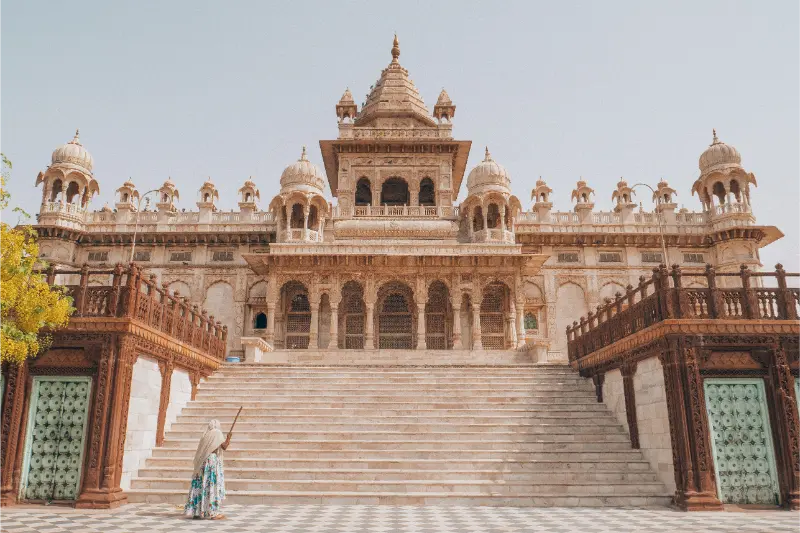
Auto-rickshaws and app-based or hotel-arranged cars handle most longer trips, while the old city is best explored on foot in short sections. Do not plan to cross Jodhpur repeatedly in midday traffic. Group Mehrangarh, Jaswant Thada and the nearby blue neighbourhoods together, then use a separate day for Umaid Bhawan Palace, Mandore or a village excursion.
Walking is the best way to appreciate the old lanes, though the slopes, traffic and uneven surfaces can make even a short distance tiring. Use an auto-rickshaw for the less interesting stretches and agree on the fare or booking method in advance. For Umaid Bhawan and Mandore, plan a vehicle instead of trying to connect everything on foot.
A realistic itinerary
Build your first two days around the old city and the fort, starting outside before the afternoon heat gathers. Keep Umaid Bhawan and Mandore for a separate outing, and decide on the final-day excursion once you know how much energy you have. Exact opening arrangements can change, so check them before fixing a driver or guide.
Day 1 – Mehrangarh Fort and Jaswant Thada
Start early at Mehrangarh before the strongest heat. Give the fort several hours for courtyards, galleries, ramparts and city views rather than treating it as a photo stop. Continue to Jaswant Thada and then descend gradually toward the old city. Finish near the Clock Tower and Sardar Market when the streets become livelier in the late afternoon.
Day 2 – Blue City lanes and old Jodhpur
Use the morning for a guided or self-guided walk through selected blue neighbourhoods, temples and old lanes. The colour is only one part of the experience; look for water systems, domestic architecture and everyday street life. Keep the route compact, stop for lunch and return to the market area later rather than walking through the hottest hours.
Day 3 – Umaid Bhawan, Mandore and a slower evening
Visit the museum section of Umaid Bhawan Palace, then continue to Mandore Gardens for cenotaphs and a different layer of Marwar history. This is a taxi day rather than a walking day. Return before evening traffic becomes difficult and leave the last hours for a rooftop meal with a fort view.
Day 4 – Bishnoi villages or Osian
Choose one excursion. A reputable Bishnoi village experience can focus on craft traditions, rural landscapes and local communities; Osian offers temple architecture and a desert-edge setting. Avoid squeezing both into the same day unless transport is private and the purpose is clear. Return to Jodhpur with enough daylight margin for road delays.
If you choose Osian, the temples deserve time on their own; if you choose a Bishnoi village visit, make sure the operator explains who you will meet and how the visit benefits the hosts. Either outing involves travel beyond the city. Keep the evening free rather than promising yourself another long market walk immediately afterwards.
How many days do you really need?
With only three days, I would keep Mehrangarh, the old city and either Umaid Bhawan or Mandore, leaving the desert-edge outing for another trip. Five days allow a more leisurely pace: linger in a blue neighbourhood, return to a favourite café or spend an afternoon with a local guide instead of adding distant stops for the sake of it.
Four days feel comfortable in Jodhpur because the main experiences are varied, not because there is a perfect four-day checklist. You can devote a morning to the fort, another to the blue lanes and still have room for palaces or gardens. If you are crossing Rajasthan quickly, shorten the excursion day before trimming the time spent in the city itself.
Best time to visit
October to March is the most comfortable period for extended walking and fort visits. April to June can be extremely hot, requiring very early starts and long midday breaks. The monsoon changes the atmosphere but can bring humidity and transport disruption, so flexible planning matters more than an ambitious daily schedule.
For long walks through the old city, the cooler months are easier than the height of summer. If your dates overlap with a festival or holiday, expect a different rhythm around markets, hotels and transport. In the hotter months, plan early mornings and genuine afternoon breaks; carrying more water will not make a midday climb feel pleasant.
What deserves advance booking?
Reserve a well-reviewed hotel early in peak winter months and around major festivals. Mehrangarh itself is usually straightforward to visit, but specialist heritage walks, village experiences and private drivers are better arranged in advance if they are central to the trip. Train seats on popular Rajasthan routes should not be left until the last moment.
Reserve the parts that are difficult to arrange at short notice: a sought-after heritage hotel, a specialist guide or a trusted driver for Osian or a village visit. You can usually leave ordinary market walks and rooftop meals more flexible. It is much nicer to change the order of your days than to rush through the best part of town to meet a booking.
Food and drink
Jodhpur is a good place to explore Marwari flavours, from savoury snacks to sweets. Try local specialities gradually rather than making every meal heavy, especially in hot weather. Busy established shops are often a better bet for snacks than choosing purely by social-media popularity. Rooftop restaurants provide views, but quality varies, so recent reviews matter.
Stop for a proper lunch when the old lanes are at their hottest. Jodhpur’s savoury snacks and sweets are part of the visit, but you do not need to sample everything in one sitting. Choose places with a steady turnover of customers, carry drinking water and let dinner be an easy end to the day rather than another journey across town.
Families, senior travellers and mixed-age groups
Families should reduce midday walking and choose a hotel with reliable air-conditioning and easy vehicle access. The fort can fascinate children but involves uneven surfaces and stairs. Senior travellers will usually enjoy Jodhpur more with a driver for the dispersed sights and a carefully selected old-city walk rather than trying to cover every lane on foot.
Mehrangarh is spectacular, yet its stairs and exposed spaces can wear people out faster than expected. For families or a group with different walking abilities, agree on the galleries you most want to see and allow time to sit. One person can explore an extra courtyard while the others enjoy the view without having to keep up.
Accessibility
Historic Jodhpur is not a place to judge by the word ‘central’ on a hotel listing. Lanes may be steep or uneven, vehicle access can end before your door and parts of the fort involve steps. If step-free access matters, ask both the hotel and each attraction about the exact route, including the drop-off point and accessible toilets.
Budget: where to spend and where to save
Jodhpur can be good value, but transport and heritage-hotel upgrades change the budget quickly. Spend on location, a knowledgeable guide for one historic walk and reliable transport for an excursion. Save by keeping at least one full day centred on the old city, where many experiences are close together.
The cheapest room is not always the least expensive base if every outing needs a long taxi ride. On the other hand, paying extra for a fort view is worth it only if you will enjoy being there. Set aside some budget for a knowledgeable local guide or a reliable excursion vehicle, then balance the rest with inexpensive old-city days.
Safety and practical awareness
Heat, traffic and uneven surfaces are more common problems than dramatic security issues. Use normal precautions with valuables in markets, agree fares or use reputable transport, and be cautious with food and water according to your usual travel-health practices. Respect photography restrictions and ask before photographing people closely.
Keep your train details, accommodation address and the number of your driver available without mobile data. In crowded market lanes, carry only what you need and keep valuables close without becoming anxious about every interaction. Before travelling through Rajasthan, check the latest entry, health and transport advice from official sources rather than relying on an old itinerary.
One day trip or regional extension
Osian works well for temple architecture and a desert-edge landscape, while a carefully chosen Bishnoi village visit offers a different cultural focus. If Jaisalmer is already part of your route, do not add an expensive generic ‘desert experience’ in Jodhpur simply to duplicate what you will do later.
Osian and a Bishnoi village experience offer different reasons to leave Jodhpur. One is mainly about temples and the desert-edge landscape; the other should centre on respectful encounters with local people and crafts. Pick the experience you genuinely want and ask about travel time from your hotel, not an optimistic distance measured from the edge of the city.
How to handle bad weather or extreme heat
When Jodhpur is very hot, do not try to rescue the day by walking faster. Visit the fort or the older streets early, then spend the middle hours somewhere shaded or air-conditioned. A late-afternoon return to the market can be lovely. If rain interrupts an outing, check road conditions before committing to a trip outside the city.
Solo travel
Travelling alone makes the old city easy to explore at your own speed. Stay somewhere with a clear arrival route, particularly if your train comes in after dark, and consider a well-reviewed guide for the first walk through the smaller lanes. For longer outings, arrange transport with a reliable operator rather than improvising the return late in the day.
Evenings and nightlife
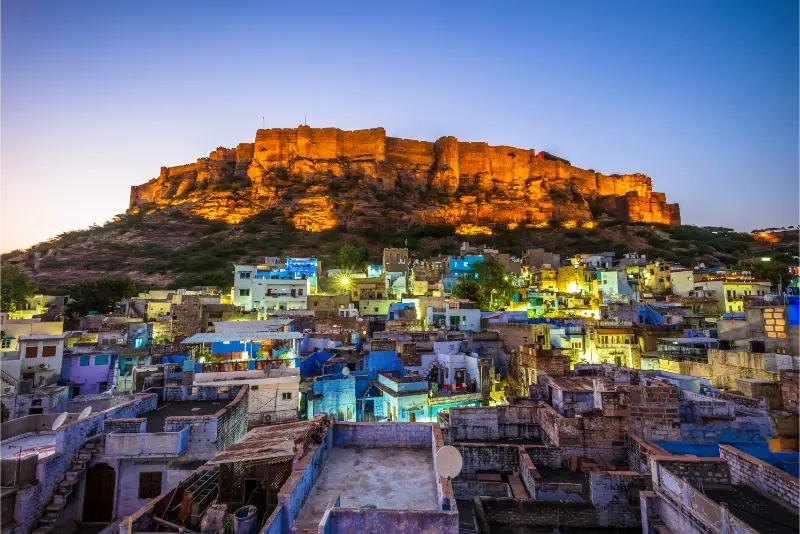
One evening, choose a rooftop where you can watch the fort change colour as the light fades. On another, wander around the Clock Tower while the shops are still busy and stop when something catches your eye. There is no need to schedule a performance or expensive dinner every night; Jodhpur is interesting enough at street level.
Photography without turning the trip into a photo shoot
The blue houses are people’s homes, not a purpose-built backdrop. Early light is beautiful in the lanes beneath Mehrangarh, but keep doorways clear and ask before pointing a camera into a courtyard or at someone working. The fort also gives sweeping views that tell the story of the city without asking residents to pose for strangers.
Shopping and souvenirs
The markets are good places to look at textiles, spices and small craftwork, but do not buy the first object labelled ‘traditional’ without asking who made it. Compare quality and prices calmly, especially for pieces that will be hard to pack. If you are considering antiques or animal-derived materials, check what you can legally take home first.
What to pack
Bring shoes with a reliable grip for the fort and the uneven old streets. A sun hat, refillable water bottle and light layers will be more useful than an elaborate outfit planned for photographs. Modest clothing helps at temples, and a small bag is easier to manage than a backpack that catches on people in crowded market lanes.
Common planning mistakes
A common Jodhpur mistake is expecting to visit the fort, wander the blue city, shop at Sardar Market and cross town to a palace in one uninterrupted day. The midday heat and old-city traffic make that tiring. Another mistake is booking an atmospheric guesthouse without checking how you will actually reach its entrance with luggage.
Keep one afternoon loose. If the fort takes longer than planned, or you find a workshop you want to spend time in, you can drop an optional market circuit without sacrificing the whole trip. That freedom is especially valuable in Jodhpur, where the best moments often happen when you are no longer looking at the next stop on the map.
Practical habits that make the trip easier
- Save offline maps and the exact names of stations, terminals, hotel entrances and meeting points.
- Carry a small amount of local cash even when cards are widely accepted.
- Check the last practical return option before starting a day trip.
- Download tickets and booking confirmations before leaving reliable Wi-Fi.
- Separate one payment card from your main wallet and keep backup contact details offline.
- Recheck weather, transport notices and opening hours on the morning of any fixed excursion.
Official information to check before you go
Opening days, transport, weather-sensitive access and event schedules can change. Recheck the details that control fixed reservations shortly before travel, especially during public holidays, major festivals or severe weather.
Final planning checklist
- Confirm passport, visa, entry and transit requirements for your nationality.
- Choose accommodation by the journeys you will repeat, not by price alone.
- Reserve only the attractions or excursions that genuinely control the day.
- Save offline copies of tickets, hotel details, insurance information and essential addresses.
- Check the exact airport, station, bus terminal, ferry pier or pickup point before arranging transfers.
- Keep one flexible half-day for weather, fatigue or something discovered after arrival.
- Recheck official opening information and local transport shortly before each fixed day.
Final thoughts
Jodhpur stays in the memory for more than its skyline. The view from Mehrangarh is remarkable, but so are the smaller details: a doorway in the blue lanes, the noise of the market and a relaxed dinner as the fort lights come on. Four days give you the chance to notice those things rather than racing between landmarks.