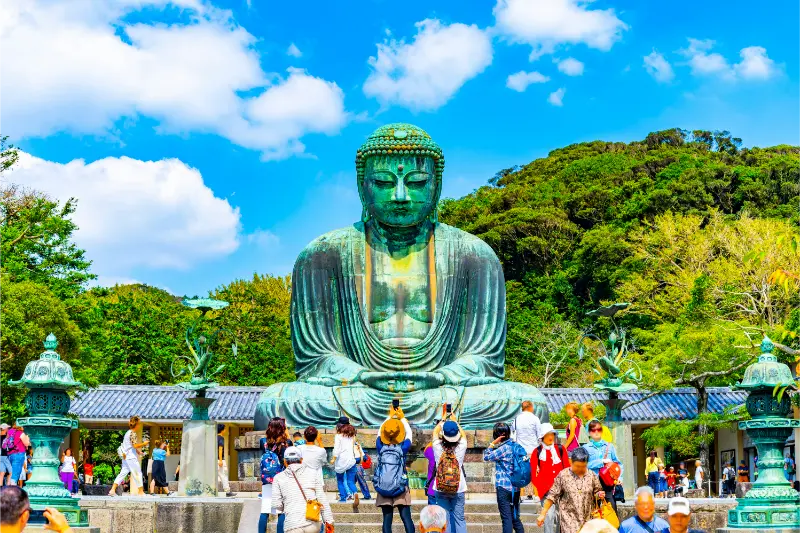
Kamakura offers a remarkable change of rhythm from Tokyo. Forested hills surround temples and shrines, the great bronze Buddha sits quietly outdoors, and a local railway links the old capital to a coastal strip where everyday beach life meets centuries of religious history. The city is close enough for a day trip, but its attractions are spread across different districts. Trying to visit every famous gate, temple and viewpoint in one day leaves more time spent moving than observing. This guide builds a workable Kamakura route, explains when an overnight stay is worthwhile and addresses crowded trains, temple etiquette, seasonal weather and accessibility for travellers of many ages.
| Suggested time | 1 day or overnight |
|---|---|
| Getting there | JR trains from Tokyo, Enoden for Hase |
| Key experiences | Great Buddha and shrine district |
| Plan ahead | Temple steps and busy weekend trains |
Start with Kamakura’s history rather than the biggest checklist
Kamakura once served as a centre of political power under Japan’s first shogunate, and its religious buildings still reflect its long historical importance. The city is not simply Kyoto in miniature: wooded hills, coastal geography and local neighbourhoods give it a distinctive character. The Japan National Tourism Organization highlights its temples, Great Buddha, Komachi-dori street and nearby coast. Decide whether your main interest is Buddhist art, shrines, small gardens or a mixed day that includes the sea. This single decision will prevent an exhausting zigzag between sites on opposite sides of town.
A useful approach is to group the central station area and Tsurugaoka Hachimangu separately from the Hase district, home to the Great Buddha and Hasedera. Each cluster can support a leisurely half-day with lunch and photo stops. Adding northern Zen temples or a hiking trail needs more time and often more walking. A child can enjoy a temple visit if it includes a concrete visual story; a senior visitor may appreciate one lovely garden rather than a sequence of steep staircases. Kamakura rewards careful attention to place, not the longest temple count.
Tsurugaoka Hachimangu and the heart of town
Tsurugaoka Hachimangu is a major shrine closely connected to Kamakura’s historical development. Approaching from the town’s central area helps visitors understand the formal axis linking street, gate and sacred precinct. Respect the shrine as an active religious setting: watch how worshippers use the space, keep photography discreet and follow posted instructions at prayer areas. Festivals can significantly change crowd patterns and access. In busy periods, a calm walk around the edges may be preferable to joining every queue for a photo.
The shrine area pairs naturally with Komachi-dori, a lively shopping street close to Kamakura Station. It is an appealing place to browse snacks, sweets and small crafts, yet it can be very crowded and is not a substitute for a real lunch break. Do not block narrow shopfronts or eat while moving where signs discourage it. With young children, establish a meeting point and keep them close in the busiest stretches. Travellers seeking a quieter visit can make the shrine the primary activity and explore the shopping street only briefly rather than spending their best morning hour in a dense flow of people.
Great Buddha and Hasedera in the Hase district
Kotoku-in’s Great Buddha, a bronze seated Amida statue dating from the thirteenth century, is Kamakura’s instantly recognisable sight. The Japan National Tourism Organization describes a visit via Hase Station on the Enoden line, followed by a short walk. The statue is remarkable in scale but not an enormous museum programme. Allow enough time to see it respectfully, learn about the history of its former hall and experience the atmosphere without a crowd-induced hurry. Admission and any permitted entry inside the statue are subject to current arrangements, which should be checked with the temple.
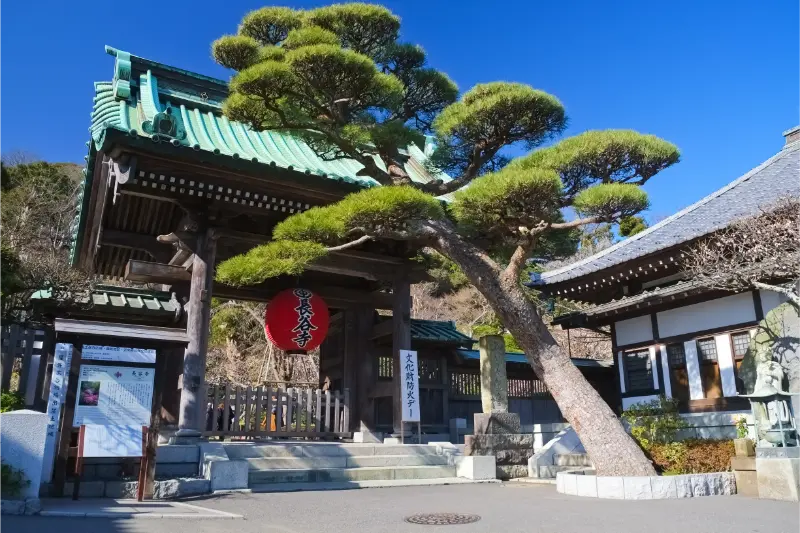
Hasedera, nearby, adds gardens, religious sculpture and coastal views, but its different levels mean that not everyone can comfortably visit every part. Treat it as a separate attraction with its own admission and access constraints. During seasonal flower displays, lines and visitor management measures may be significant. A family can choose a short focus—one statue, one viewpoint and a snack—rather than dragging tired children through every garden path. Travellers who use a mobility aid should verify current accessible routes and whether specific terraces require stair climbs. Neither temple is improved by rushing from one to the next for a quick photograph.
The Enoden railway and Kamakura’s coastal side
The Enoden electric railway connects the Kamakura area with Hase and routes toward Enoshima, moving between built-up streets and views of the coast. Riding it is part of the experience, especially if you enjoy small local trains, but it can be crowded on fine-weather weekends. Check whether a transport pass makes sense for the number of rides you will actually take. Standing on a packed train with a stroller or mobility limitation is not always pleasant; consider off-peak hours, local buses or a taxi for particular legs.
The nearby beaches, including the Yuigahama area, offer another side of Kamakura. Conditions and official swimming zones are seasonal, so do not interpret the presence of sand as a guarantee of supervised swimming. Watch currents, surf and posted lifeguard information. A gentle seaside stroll is valuable even when entering the water is inadvisable. If combining temples with Enoshima, remember that the island’s paths and stair-heavy viewpoints can turn a modest day into a lengthy outing. Choose coast or additional temples as the afternoon focus rather than attempting both without adequate time.
Northern Zen temples and hiking routes are optional
Kita-Kamakura and the northern temple area can appeal to travellers interested in Zen architecture, quiet gardens and a more reflective pace. A separate half-day here is usually better than squeezing it into the middle of the Great Buddha route. Nearby forest paths and hill walks provide another perspective on the city, but trails can be muddy, steep or temporarily closed after storms. Consult local notices before beginning and never follow an old travel post into a restricted area. Wear real walking shoes if you are leaving paved city streets.
These trails are not suitable for every age or mobility level, and that does not diminish the quality of a Kamakura visit. Someone travelling with a toddler can enjoy a courtyard and café while keen hikers explore a marked route separately. Decide on a clear meeting point and time rather than expecting instant mobile coverage on wooded slopes. In humid summer weather, insects, slippery roots and heat are practical concerns. In winter, shorter daylight changes what counts as a sensible late-afternoon start. The right trail is the one your group can complete safely with energy to spare.
Trains from Tokyo and how to group your stops
Direct rail services connect Tokyo and Kamakura, with journey times depending on the station and service. JNTO describes Kamakura as less than an hour from central Tokyo on a typical route, but door-to-door time is longer once you include the platform, transfer and final walk. For a classic first visit, arrive at Kamakura Station, see the central shrine area, eat lunch and take the Enoden to Hase for the Great Buddha and Hasedera. Return directly after the temples if everyone is tired, or add a modest coastal walk if conditions are pleasant.
Visitors staying overnight can reverse the order and start with Hase early before day-trip trains become busy. Check train frequency and any disruptions rather than assuming all Japanese local lines operate exactly like a Tokyo metro line. On major holidays and weekends, queue management may change boarding and sightseeing patterns. Do not bring bulky luggage to temples if you can leave it at your hotel or an available station locker, remembering that lockers can fill. Travellers who cannot stand for long periods should consider quieter departure times and breaks between transport legs.
Stay overnight or return to Tokyo?
A day trip works well if you keep the plan to two clusters. Overnight accommodation is valuable for visitors who want early temple hours, an unhurried coastal dinner or a separate morning for northern temples. Staying near Kamakura Station makes transport simple; Hase or the coast may feel more relaxed but involves different access to the railway network. Check actual walking distances, noise, stairs and the availability of lifts. Traditional-style accommodation can be atmospheric, yet futon bedding or bathrooms with a high step may not be appropriate for everybody.
Families should ask about room size and whether a baby cot can be provided, while older travellers may prioritise a conventional bed and an elevator. Couples wanting the quietest evening should choose a location away from the busiest restaurant strips. Food costs vary widely, so mix casual noodle meals or set lunches with a special dinner only if it interests you. Japanese dining establishments may have narrow entries and steps; confirm accessibility and dietary suitability when necessary. A hotel chosen for comfort often has greater impact than another attraction added to the itinerary.
Seasons, etiquette and accessibility reality
Kamakura is attractive in many seasons: spring blossoms, hydrangeas around early summer, autumn leaves and quiet winter days each change the experience. Seasonal highlights also concentrate crowds. Summer can be hot and humid, and heavy rain may reduce the appeal of outdoor temple paths. Carry water, sun protection and a small towel, and avoid scheduling a long exposed walk during the hottest hours. Check major events and opening hours directly because an attractive seasonal photograph does not tell you how crowded a temple will be on your date.
Accessibility varies substantially among temples, gardens and historic stairways. Ask the specific site about wheelchairs, entrance surfaces, restrooms and any lift or alternative route before relying on general tourism claims. For a multigenerational group, one temple with comfortable transport and adequate rest can be more enjoyable than visiting five. Respect photography restrictions, do not enter private or sacred areas, and avoid feeding wildlife. Kamakura is most memorable when its religious character, everyday life and coastal scenery are treated as parts of the same living city.
Frequently asked questions
Is Kamakura a day trip from Tokyo?
Yes. Group the central shrine district and Hase temples and avoid cramming northern temples and Enoshima into the same day.
How do I reach the Great Buddha?
Travel to Kamakura, then use the local Enoden toward Hase Station and walk to Kotoku-in; check current transport routes.
Should I also visit Enoshima?
It can be added, but it makes a fuller day and involves additional transport and walking. Consider a separate excursion or overnight stay.
Are Kamakura temples accessible to everyone?
Access varies. Some terraces and gardens have significant stairs, so verify individual temple arrangements before travel.
Is there a good time to avoid crowds?
Weekdays outside major holidays can be calmer. Early visits to major temples may help, but flowering seasons can be very busy.
More trip ideas from Travel Is Wonderful
- Tokyo for First-Time Visitors: A 5-Day Plan That Makes the City Feel Manageable
- Yokohama in 4 Days: Minato Mirai, Chinatown and Port History Without Treating It as a Tokyo Evening Trip
- Hakone in 3 Days: Onsen, Lake Ashi and Owakudani Without Rushing Back to Tokyo
- Nikko in 4 Days: World Heritage Shrines, Lake Chuzenji and Okunikko Without a Tokyo Day-Trip Rush
Official resources and latest conditions
Opening hours, prices, transport and safety restrictions may change. Use these official resources for current information before booking and follow local staff and government notices when travelling.
Last reviewed: October 11, 2026.