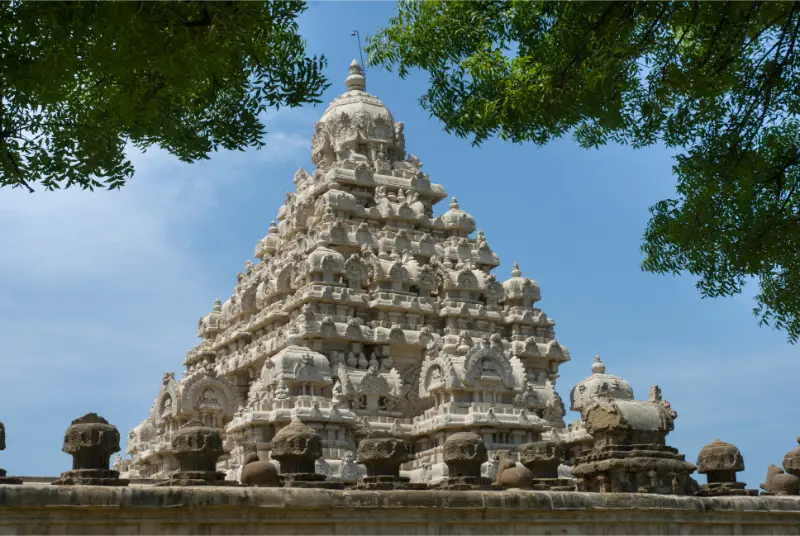
Kanchipuram, also spelled Kancheepuram, is a major temple city in Tamil Nadu with a cultural life far deeper than a quick day trip from Chennai suggests. Sacred architecture, active Hindu worship, Pallava-era stone carving and renowned silk weaving remain part of the city's everyday identity. The city is often marketed as the 'city of a thousand temples,' a traditional description rather than a promise that a visitor can see that number of monuments. A meaningful visit is about choosing a small set of shrines, understanding their differing religious associations and leaving time for a weaving workshop or cooperative. Temples are not interchangeable attractions: rituals, visitor access and dress expectations vary. Summer heat and crowded festival periods require careful planning, especially for children or older travelers. Two days offer a more respectful pace than a rushed sequence of short photo stops. Chennai is a practical gateway, but be realistic about road traffic and the last transfer to your accommodation.
| At a glance | Planning advice |
|---|---|
| Suggested time | 1–2 days |
| Where to stay | Town hotel or Chennai base |
| Accessibility and comfort | Heat, temple dress rules and variable access |
| Best approach | Choose a realistic pace; confirm transport and opening rules |
Understand why the city matters
Kanchipuram developed as a center of religion, learning, patronage and craft across many centuries. The Pallavas helped shape its architectural heritage, while later dynasties added major temple gateways, halls and institutions. Its Hindu traditions include significant Shaiva, Vaishnava and Shakta places of worship. This is why one monument rarely explains the whole city. In a single day, the temptation to visit every famous tower can make the experience feel repetitive; instead, select temples with distinct stories and architectural forms. Before your first visit, learn a few basic terms such as gopuram for an entrance tower and mandapa for a pillared hall. They will make it easier to interpret what you are seeing. Remember that pilgrims may have very different purposes from tourists; the right etiquette is to give worshippers room, respect queues and avoid treating rituals as entertainment staged for photographs.
Kailasanathar Temple and Pallava sculpture
Kailasanathar Temple is especially valuable for understanding early stone architecture in the city. The Kancheepuram district administration identifies it as a major Pallava-period temple dedicated to Shiva, with sandstone elements and distinctive carved surfaces. Look beyond its overall silhouette to the sculpted panels, smaller shrines and relationships between enclosed spaces. A guide who can explain iconography will provide more value than someone simply leading you from one photo point to another. Parts of the site may have fragile surfaces or restricted access, so follow posted instructions rather than touching carvings. This is a good first stop for visitors interested in art because it provides a reference point for later, larger temple complexes. Children can be encouraged to count motifs or compare relief styles, but should never climb decorative elements. The ground can be hot in the middle of the day, particularly where footwear must be removed.
Ekambareswarar and the scale of a temple complex
Ekambareswarar Temple is one of the city's important Shaiva sites. Its impressive gateways and broad sacred complex make it different in atmosphere from the more intimate architectural study at Kailasanathar. Visit respectfully, ideally at a time when the heat is manageable and you can observe without disrupting ceremonies. The scale can be confusing; ask locally about the main visitor route and the areas that are open to non-worshipping visitors. Do not assume all sanctums admit everyone, as entry policies can vary by temple and identity or ritual requirements. Photography may be limited, especially around inner sanctums. If you are accompanying children, prepare them for removing shoes, quiet behavior and potentially waiting while worship services take place. You can appreciate the architecture and trees within the complex without entering every shrine. Keep a small bag for footwear if storage arrangements are unclear and follow local instructions.
Kamakshi Amman and the role of living worship
Kamakshi Amman Temple is dedicated to the goddess and remains a deeply important place of worship. The experience is shaped by ritual rhythms rather than a predictable museum schedule. Arrive prepared to wait, dress modestly and accept that some sections may not be accessible for sightseeing. Major festival dates can draw substantial crowds, which may be meaningful for pilgrims but tiring for travelers seeking a quiet architectural visit. If you have sensory or mobility needs, ask about queue arrangements before joining a busy line. It is inappropriate to push ahead for a photograph, and prohibited photography should be respected even if other visitors ignore signs. A traveler can gain insight into religious life from observing the public spaces respectfully without entering the most crowded area. Do not make confident promises about a fixed opening time based on old travel articles: worship schedules and special events can change access with little notice.
Varadaraja Perumal and other Vaishnava traditions
Varadaraja Perumal Temple is a major Vaishnava site and offers a useful contrast to the Shiva temples. Its halls, pillars and religious traditions reward a carefully timed visit with appropriate guidance. The official India tourism portal identifies it among Kanchipuram's key shrines and notes its place among the Divya Desam sites. The city's other Vishnu temples, including Vaikunta Perumal, offer further architectural interest, but your day should not become a race between distant complexes. Decide first whether your priority is learning about religious traditions or photographing exteriors; these are different kinds of visits, and access may differ. Ask a recognized guide to explain how architectural additions reflect later dynasties, rather than assuming all stonework comes from the same period. Families will generally enjoy two well-chosen temples more than five rushed stops, especially when footwear changes and heat breaks are involved.
Kanchipuram silk: buying thoughtfully
The city is famous for richly woven silk sarees, often called Kanjeevaram or Kanchipuram silk. Their cultural and economic importance goes beyond shopping: weaving supports specialist skills, households, design traditions and trading networks. If you want to visit a workshop, arrange it with a reputable cooperative or producer; do not walk uninvited into someone's home or working room. Look at how the loom works and ask about yarn, borders, motifs, dyes and time needed to finish a saree. The official India tourism portal recommends checking authenticity marks and geographical indication information when buying. A high price alone proves little. Ask for a detailed receipt, fiber description, care instructions and an explanation of zari material. Be cautious about sales pitches built around supposedly compulsory stops arranged by a driver. Even if you buy nothing, paying for an ethical demonstration where available is more respectful than treating a craftsperson's labor as free entertainment.
How to reach Kanchipuram from Chennai
Chennai International Airport is the most useful major gateway, and Kanchipuram has regional rail and road links. The journey by road can be heavily affected by city traffic; allow a buffer instead of relying on the shortest time shown by a navigation app. A private driver is practical for families or travelers visiting several temples separated by traffic, but establish the fare, route and waiting arrangements in advance. Bus and train options may be economical but involve more navigation, especially with luggage. If choosing a day trip, begin early enough to avoid arriving at temples just before midday closure or a shift in worship hours. Travelers without a car should cluster sites geographically and use licensed local transport between more distant complexes. Do not assume a temple city is entirely pedestrian-friendly: busy intersections, road surfaces and heat can make even short distances uncomfortable.
Where to stay and how many days
A hotel in Kanchipuram suits visitors who want to attend early temple periods or learn about weaving without a rushed return. Check air conditioning, reliable drinking water, elevator access and practical distance to the sites you care about. Properties near major roads can be noisy, so request a quiet room if sleep matters. Chennai offers a broader selection of hotels and international connections, but a daily round-trip from the city reduces time available on the ground. One long day can cover two major temples and a short weaving stop; two days allow deeper visits and rest during the hottest hours. If traveling with a multigenerational group, consider a private vehicle for transfers and one flexible afternoon rather than scheduling every shrine in advance. Ask accommodations whether early breakfast is available when planning morning worship-related visits.
Food and respectful eating choices
Kanchipuram's food options include South Indian tiffin dishes, rice meals, filter coffee and regional vegetarian cooking, although offerings vary by neighborhood. Idli, dosa and savory snacks can be convenient for a quick breakfast; remember that chutneys and sambar ingredients vary, which matters for allergies. Many temple-oriented eating areas are primarily vegetarian, but do not assume every restaurant maintains the same kitchen practices. Drink safe water and wash hands before meals, especially when traveling in high heat. During major festivals, restaurants near temples can be crowded. Plan lunch in a place with shade and seating rather than waiting until the entire group is exhausted. If a family member has severe dietary restrictions, identify a dependable establishment beforehand and carry a backup snack. The best meal may be a simple thali served at a convenient time, not an elaborate dinner after a long day of queues.
Dress, etiquette and photography
Modest dress that covers shoulders and knees is a sensible starting point, but individual temples can have more specific rules. Footwear commonly must be removed before entering designated spaces, so choose shoes that are easy to take off and carry socks only where permitted. Do not assume photography is allowed inside every complex; signs and attendants take precedence over advice from other tourists. Ask before photographing people performing rituals. Some sanctums restrict entry based on temple practice, and these restrictions need to be respected without argument. Carry small denominations of cash for legitimate offerings or services if you wish, but do not feel obliged to pay informal intermediaries who approach you aggressively. When hiring a guide, clarify the cost and scope before the tour. A respectful visitor can learn a great deal from public architecture and conversation without attempting access to every sacred interior.
Planning for families, seniors and disabilities
The biggest challenge is often the combination of heat, bare feet on hot surfaces, temple queues and traffic between sites. Start early, include shaded breaks and limit yourself to two or three primary stops per day. Older visitors may want a comfortable car transfer and a clear explanation of where they can sit, while families with small children should avoid carrying strollers through crowded sanctum areas. Accessibility varies significantly; gateways may be broad but internal platforms or ritual spaces may have steps. Contact temple administration or a knowledgeable local guide about the specific entrance and route. Do not presume that a temple has step-free access because an exterior courtyard looks level. Travelers with sensory sensitivities should also be aware that bells, chanting and crowds can become intense during festivals. It is entirely acceptable to view a temple from permitted public areas and leave if conditions are overwhelming.
A measured two-day plan
On the first morning, focus on Kailasanathar and one major nearby temple, using a guide if possible to compare architectural periods. Break for lunch and avoid walking across hot exposed roads at midday. In the late afternoon, visit a silk cooperative or arranged weaving demonstration and discuss materials and provenance. On day two, make Kamakshi Amman and Varadaraja Perumal your principal stops, fitting them around official worship schedules. If queues are very long, choose a calmer exterior or a museum instead of insisting on entering every sanctum. This plan gives the city space to reveal its religious and craft identities. It also leaves enough time for a meal, traffic delays and a respectful approach to festivals. If you can spend only one day, reduce the itinerary rather than shortening every experience to twenty minutes.
When to travel and final checks
Tamil Nadu's hotter months can make midday temple visits demanding. Cooler periods are generally more comfortable, but festivals may create crowding and accommodation pressure. Monsoon rain can affect roads and walking surfaces; check local forecasts and seasonal patterns for your precise dates. Before leaving, consult the district administration and temple-specific notices, verify current access for non-worshipping visitors and confirm a legitimate workshop if silk weaving is important to you. Do not present quoted temple times from past years as permanent. Kanchipuram rewards curiosity and patience more than speed. The best outcome is a visit that respects the living city, recognizes its artisans and appreciates the different religious traditions without reducing them to a series of impressive towers.
Frequently asked questions
Is one day enough for Kanchipuram?
You can visit a few highlights in a day from Chennai, but two days are more comfortable for temples, craft heritage and breaks.
Can non-Hindu visitors enter all temple areas?
No single rule covers every complex. Some sanctums or ritual spaces may be restricted; follow local instructions and respect worshippers.
How can you shop for genuine Kanchipuram silk?
Choose an established producer or cooperative, request a receipt and check reliable certification or geographical-indication information rather than judging solely by price.
Is Kanchipuram suitable for older visitors?
Yes with careful planning, transport between temples and attention to heat, queues and the step-free routes available at individual sites.
More travel ideas
- Tamil Nadu in 10 Days: Chennai, Mamallapuram, Thanjavur and Madurai Without Rushing Temple Country
- Chennai in 5 Days: Mylapore, Marina and Tamil Culture Without Spending the Trip in Traffic
- Chettinad, Tamil Nadu: Historic Mansions, Athangudi Tiles and the Food of Karaikudi
- Puducherry in 4 Days: White Town, Promenade and Auroville Without Turning It Into a Chennai Day Trip