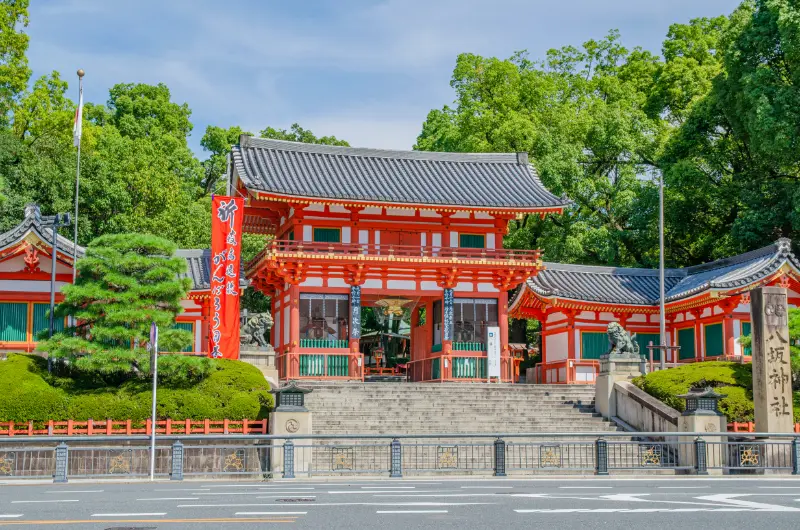
Kyoto deserves a trip built around geography and real travel time rather than a checklist. Kyoto has hundreds of temples and shrines, and the hardest part of a first trip is accepting that seeing more of them does not automatically create a better experience. Five days lets you group Higashiyama, Arashiyama, northern Kyoto and Fushimi sensibly, start early when it matters and still leave time for ordinary streets, food and gardens away from the busiest photo spots.
If this destination is part of a longer journey, compare the pacing with Japan Beyond Tokyo in 10 Days: Kyoto, Nara, Hiroshima and Osaka Without Constant Packing. The useful question is not how many famous names fit on the map, but how much usable holiday time remains after transfers, check-in, meals, weather and rest.
Quick trip summary
- Recommended time: 5 days.
- Best planning principle: group each day by geography and protect only the reservations that control access.
- Best for: independent travellers, couples, families and slower-paced visitors who prefer a realistic rhythm.
- Keep flexible: at least one half-day or one major activity that can move with weather, traffic or energy.
- Book first: the accommodation location, scarce transport and any permit, timed entry or signature experience that shapes the rest of the trip.
Is Kyoto the right trip for you?
Kyoto is ideal for travellers interested in traditional architecture, gardens, crafts, food and walking through historic districts. It can be frustrating for anyone who plans solely around viral locations because crowd patterns are intense and buses can be slow. Families and senior travellers can enjoy the city very well if daily routes are shorter and taxis or rail are used strategically.
The practical test is simple: decide what would make you disappointed if you missed it, then build the trip around that one or two priorities. Everything else should earn its place by fitting the same area of the day. This is especially important when travelling with children, older relatives or anyone who enjoys a slower pace.
Where to stay: choose location before hotel style
| Base | Why choose it |
|---|---|
| Kyoto Station area | Best for rail day trips, airport connections and easy access to buses and subways; practical rather than atmospheric. |
| Downtown / Kawaramachi | Best for restaurants, evening walks and a central position between east and west sightseeing areas. |
| Gion / Higashiyama edge | Best for early and late access to historic streets, but often more expensive and not always the most efficient for western Kyoto. |
A more attractive room is not always a better travel decision. Before booking, map the first activity of the morning, the likely dinner area and the departure route. If the hotel adds two unnecessary transfers every day, the hidden cost is time as well as money.
A realistic 5-day itinerary
Day 1: southern Higashiyama and Gion
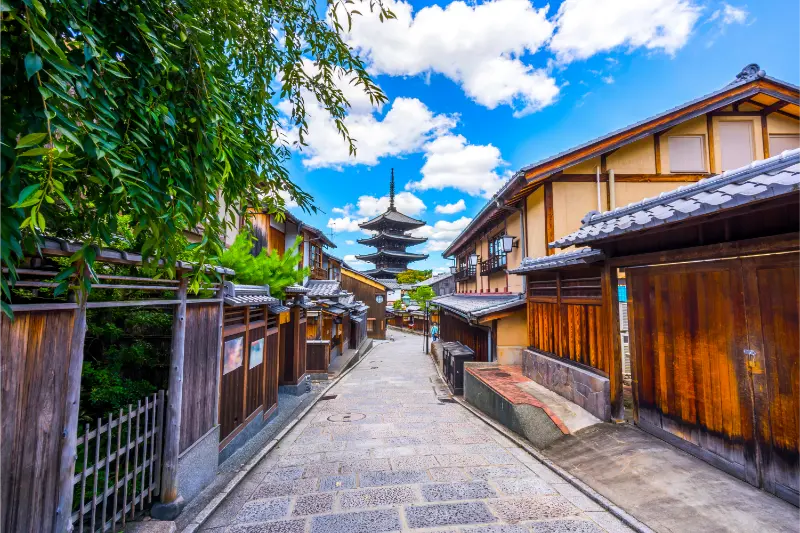
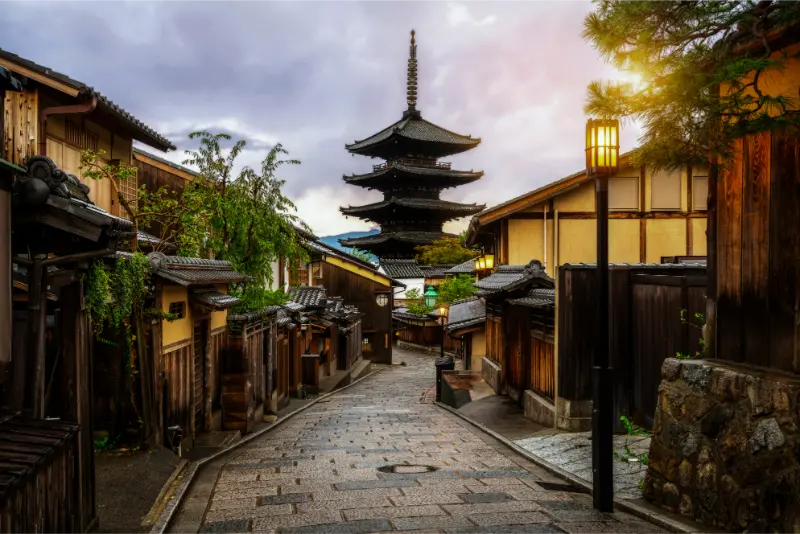
Start early in Higashiyama, choose a manageable sequence of temples and lanes, then allow the afternoon to slow down around Gion, the river or a museum. Avoid building the route around reproducing every famous photograph.
Day 2: Arashiyama beyond the bamboo grove
Arrive early, see the bamboo area if it matters to you, then spend more time on gardens, river scenery, temples or quieter streets. Arashiyama is worth a half or full day only if you move beyond the most compressed corridor near the station.
Day 3: north and northwest Kyoto
Choose Kinkaku-ji plus one or two nearby temples, or build a quieter garden-focused day. Distances between northern sights can be awkward, so this is a good day for a carefully planned bus route or occasional taxi rather than a long chain of transfers.
Day 4: Fushimi Inari and southern Kyoto
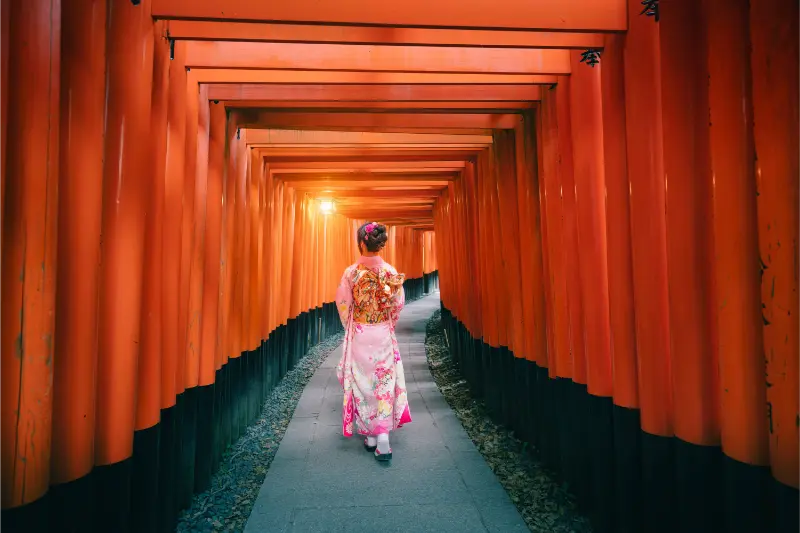
Visit Fushimi Inari early or later in the day and decide how far you actually want to climb. Combine it with one nearby district, sake area or a relaxed lunch rather than immediately crossing to the opposite side of Kyoto.
Day 5: crafts, markets and one flexible priority
Use the final day for Nishiki, a workshop, tea experience, museum, Philosopher’s Path or any major temple you deliberately left out. The day should absorb weather and energy rather than become a final attempt to collect missing landmarks.
How to move around without wasting the day
Kyoto transport is a mix of rail, subway, buses, walking and taxis. Buses are useful but can become crowded and slow on famous corridors, so rail should be used whenever it brings you close enough. Group sights by district, check walking distances between stops and consider a short taxi for awkward cross-neighbourhood links if it saves an hour of transfers for a family or slower-paced group.
Do not judge a journey only by kilometres. A short distance can include traffic, security, parking, boat boarding, luggage handling or a long final walk. For every important transfer, think in door-to-door time and keep a margin before anything expensive or difficult to replace.
Best time to visit
Cherry blossom and autumn foliage periods are beautiful but extremely busy, while summer is hot and humid and winter can be cold but calmer. The best season depends on your tolerance for crowds. During peak foliage or blossom weeks, early starts and advance accommodation matter more than trying to predict one perfect day months ahead.
Seasonal advice should guide the style of the trip, not become a promise. Climate averages cannot tell you the exact conditions on your dates. Check the local forecast and any official closure, transport or safety notice again shortly before each weather-sensitive day.
What to book first
Reserve accommodation early for peak seasons and book experiences with limited capacity, such as special temple openings, workshops or highly desired restaurants. Many temples do not require complicated advance planning. Avoid locking every morning to a reservation because the city is easier when you can shift a crowded district to another time.
After those anchors are secure, leave ordinary meals, short walks and secondary sights open. A timetable with every hour reserved is fragile: one delay turns the rest of the day into a sequence of apologies and missed slots.
Food strategy: eat well without scheduling every meal
Use meal planning to reduce unnecessary travel. Downtown has enormous variety, but temple districts may have fewer late options, so eat before returning exhausted. Nishiki is interesting but crowded; it works better as one food stop than as proof that every famous snack needs to be sampled. Respect rules about eating while walking where posted or culturally inappropriate.
For a multi-age group, a reliable breakfast and an easy lunch often matter more than one additional attraction. Keep water accessible, avoid waiting until everyone is exhausted to look for food and use meal stops as genuine rest rather than another item to complete quickly.
Travelling with children
Children often need fewer temples and more variety. Add trains, riverside walks, gardens, craft activities or a short monkey-park visit if appropriate for your group. Do not expect a young child to appreciate a sequence of similar interiors simply because each site is culturally important.
Children do not need a simplified version of every adult attraction. They usually need a different rhythm: movement, shade, snacks, toilets and periods when nobody is asking them to pay attention. Protect those needs and the whole group usually sees more, not less.
Travelling at a slower pace or as a senior
Stay near a useful rail or subway station and split large districts across separate half-days. Higashiyama has slopes and stone steps, while Arashiyama can involve more walking than expected. Taxis are a legitimate pacing tool for older travellers when they replace several bus transfers, especially outside rush periods.
When mobility or stamina is limited, reduce transitions before reducing experiences. One well-located base, a direct transfer and a shorter route often preserve the most memorable parts of a trip far better than trying to keep the original schedule with longer rest stops.
Budget: where the money really goes
Temple admissions are individually modest but add up when you visit many in one day. Transport remains reasonable if routes are grouped well. The biggest avoidable cost is often a taxi caused by poor geography, although a planned short taxi can be good value for a group if it replaces a long detour.
Track the total cost of each planning choice. A lower hotel rate can be false economy after taxis, parking or long transfers, while a more expensive excursion may be reasonable if it replaces a rental car, guide and separate admission fees. Compare complete days rather than isolated prices.
Weather fallback plan
Rain can make moss gardens and temple grounds beautiful, but stone paths become slippery and exposed walks less comfortable. Move a workshop, museum or covered market forward if weather is severe. In summer, schedule outdoor temple walks early and use the hottest hours for lunch or indoor cultural activities.
The useful fallback is not a list of random indoor attractions. It is one realistic substitute that fits the same area or preserves the next day. Keep at least one activity movable so a poor forecast does not force you to choose between losing money and doing something unsafe.
Connectivity, cash and small practical details
Carry a small amount of cash because some temples and smaller businesses remain cash-oriented. Save Japanese-language accommodation details for taxis. Avoid large luggage on crowded local buses; use station lockers or luggage forwarding when moving between cities rather than dragging suitcases through sightseeing districts.
Save hotel addresses, tickets, permits, insurance details and the next transfer outside your email app. Offline access matters most precisely when the network is weak, your battery is low or you are trying to solve a delay.
What to pack
Comfortable shoes that are easy to remove are useful for temple interiors, along with socks you are comfortable wearing indoors. Summer requires water and heat protection; rainy seasons need a compact umbrella or rain jacket. Pack light enough that stairs and station transfers do not become the hardest part of the trip.
A small day bag should hold water, medication, sun or rain protection and the layer you are most likely to need. The goal is not to carry everything; it is to avoid having the useful items locked in a suitcase or parked car when conditions change.
Common mistakes to avoid
- Scheduling too many temples simply because they are famous.
- Using buses for every journey even when rail or a short taxi is faster.
- Visiting only the bamboo corridor in Arashiyama and leaving immediately.
- Treating Gion as a place to pursue or photograph people working in traditional professions.
- Carrying large luggage through sightseeing districts instead of using storage or forwarding services.
Responsible travel and local etiquette
Kyoto’s most visited districts include residential streets and working religious sites. Follow local photography restrictions, do not enter private lanes or block doorways, and avoid intrusive behaviour toward maiko or geiko. The city’s official guidance emphasizes considerate tourism because local life continues around the attractions.
The best rule is to treat the destination as a real place rather than a stage built for visitors. Follow staff and ranger instructions, respect residential space and protected environments, and spend with businesses that add genuine local value instead of rewarding the most aggressive sales pitch.
If you have less or more time
Three days works if you choose Higashiyama, Arashiyama and one southern or northern day. Four days adds breathing room. A week lets you include Uji, Nara or deeper temple districts without turning Kyoto itself into a sequence of dawn starts.
Extra days are most useful when they reduce pressure. Before adding another distant stop, ask whether the trip improves more by sleeping in the same place, repeating a favourite beach or neighbourhood, waiting for better weather or enjoying a late breakfast without watching the clock.
How to choose between similar experiences
Choose Arashiyama for river scenery and a broader district, Fushimi Inari for a shrine landscape and hillside walk, and northern Kyoto for quieter temple depth. You do not need to rank them universally; choose the one that adds the experience missing from the rest of your Japan itinerary.
When two options offer a similar experience, choose the one that fits the geography and energy of the day. The extra hour of transfer rarely creates an extra hour of enjoyment, especially in heat, traffic, rough water or at altitude.
Safety and decision-making on the day
Kyoto is generally easy, but heat, dehydration and slippery temple steps are common practical concerns. Keep out of roadways and bicycle paths when streets are crowded, and follow trail or shrine closure instructions. In summer, shorten the route before heat fatigue becomes a problem.
Local warnings, ranger instructions and transport operators have more value than an itinerary written months earlier. Set a practical turnaround time for hikes, drives and water days, and change the plan when conditions deteriorate rather than trying to complete the original checklist.
Useful official and planning resources
Opening hours, protected-area rules, transport schedules, fees and visitor procedures change more often than the landscape. Recheck the source below shortly before departure.
Final planning checklist
- Confirm passport, visa, transit and health requirements for your nationality.
- Reserve the transport, permit or timed entry that controls the rest of the itinerary.
- Check how luggage moves between airport, road transfer, ferry, train or accommodation.
- Download offline maps and save key tickets outside your email app.
- Recheck weather, sea, road, trail or park notices before each critical day.
- Keep at least one half-day that can absorb a delay or become simple rest.
- Leave a generous buffer before international flights and other costly connections.
A good trip to Kyoto should feel like you understood the place, not merely that you passed through it. Keep the transport anchors fixed, leave room for conditions to change, and remove anything that does not fit your interests, mobility or energy. The result is usually more enjoyable than the most ambitious version of the same route.