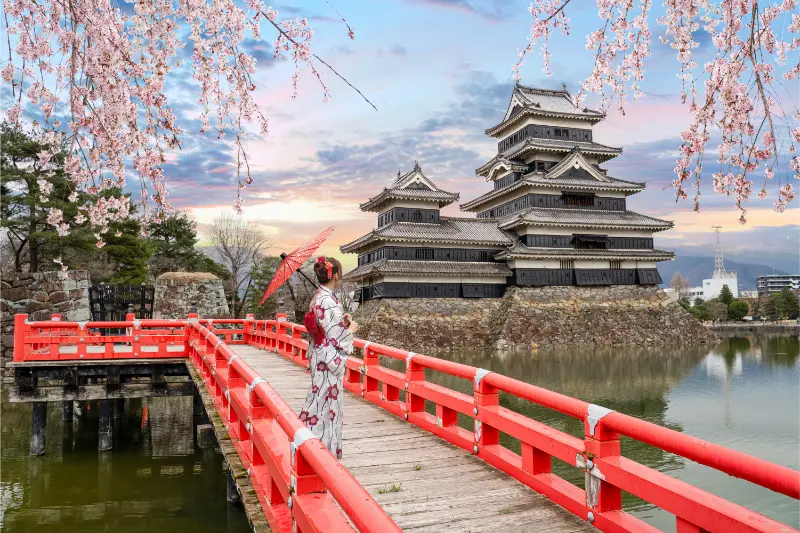
Matsumoto deserves enough time to feel like a destination rather than a box between two more famous places. 4 days give a first-time visitor room for the essential sights, neighbourhood life, meals and one flexible block without turning every morning into a race.
If Matsumoto is part of a wider journey, compare the pace with our Japan Alps itinerary through Kanazawa, Takayama and Matsumoto. This city guide adds local depth rather than repeating the broader route.
Quick trip summary
- Ideal stay: 4 days for a first visit.
- Best planning rule: group days geographically and protect one flexible half-day.
- Best for: first-time visitors, couples, solo travellers, families and slower-paced travellers.
- Main risk: using the destination only as a gateway or adding too many day trips.
Why 4 days works
A useful city break is not a contest to collect the maximum number of attractions. The best plan groups places that naturally belong together, protects the one or two reservations that genuinely matter and leaves enough slack for meals, weather, queues and simple wandering. That matters for every traveller, but especially for families, older visitors and anyone who prefers to finish the trip with energy left rather than needing a holiday from the holiday.
Matsumoto has enough contrast to justify a real stay, but it is still manageable when each day has a clear geographic focus. The itinerary below alternates heavier sightseeing with easier periods so it works for different ages, interests and energy levels rather than only for fast-moving travellers.
Where to stay
| Area | Why choose it |
|---|---|
| Central Matsumoto / station side | Best for rail and bus connections, restaurants and easy luggage handling, with the castle still walkable. |
| Castle / Nakamachi area | More atmospheric for early walks and heritage streets, though some lodging is smaller and less convenient with large bags. |
| Asama Onsen | A good choice for hot-spring atmosphere and a quieter evening, but it requires local transport to the centre. |
| Northern / residential Matsumoto | Useful for slower stays and local life, but less efficient for a short first visit. |
Choose location before hotel style. Map the first morning, likely dinner area and departure route. A beautiful room that creates two extra transfers every day can cost more in time and energy than a slightly dearer room in the right district. Families should check room size, cot policy and lift access; light sleepers should read recent comments about street noise rather than trusting a neighbourhood label.
A realistic 4-day itinerary
Day 1: Matsumoto Castle and old streets
Visit the castle early, then continue through Nawate and Nakamachi at a slower pace. Use the first day to understand the compact centre and avoid adding a mountain excursion immediately after arrival.
Day 2: art, local history and neighbourhood time
Build the day around the city art museum and one or two additional cultural stops, then leave room for cafés, shops and a relaxed meal. Matsumoto’s value is greater than the castle alone, so give contemporary culture a place in the itinerary.
Day 3: Kamikochi or another mountain landscape
Use the best weather day for Kamikochi when the route is in season, or choose another accessible mountain area such as Utsukushigahara or Norikura depending current transport and trail conditions. Start early, but keep the excursion proportional to your fitness and the season.
Day 4: onsen, museum depth or a flexible finish
Use the last day for Asama Onsen, the Former Kaichi School area, shopping or anything displaced by weather. If you are continuing toward Tokyo, Nagano or the Alps, protect the departure instead of forcing another distant viewpoint.
Arrival strategy
Matsumoto is reached efficiently by rail from Tokyo, Nagoya and other central Japan hubs, with buses also linking Alpine destinations. The main station is close to the city centre. For Kamikochi and some mountain areas, public transport is often preferable or required because private-car access can be restricted on key routes.
Arrival day should carry less risk than the rest of the trip. Save the accommodation address offline, know the first transport option before landing or leaving the station, and avoid a non-refundable attraction immediately after a flight, train or long road journey. If the journey is delayed, remove a secondary sight rather than beginning the holiday by rushing with luggage.
Getting around efficiently
Central Matsumoto is compact enough for walking, with local buses useful for outer neighbourhoods and onsen areas. Mountain day trips require more careful timetable planning. Buy or reserve the critical transport segment first, then build the sightseeing around it rather than assuming a mountain bus will operate as frequently as urban rail.
Compare routes door to door, not station to station. Waiting time, stairs, transfers and the final walk can make the nominally fastest option worse for a family, a senior traveller or anyone carrying luggage. Use transport to remove unrewarding distance and save walking energy for places where the surroundings are actually part of the experience.
Best time to visit
Spring and autumn are excellent for combining the castle with mountain scenery, while summer is useful for higher-elevation hiking. Winter can be beautiful but changes transport, clothing and trail expectations. The official tourism site publishes seasonal climate ranges and road or trail updates, which matter more than a generic Japan weather forecast.
Seasonal planning should also consider daylight, local holidays, school breaks and whether your most important experience depends on clear skies, calm water or outdoor access. A shoulder-season trip is not automatically better if the one thing you came to do operates on a reduced schedule.
What to book before arrival
Book first the things that can genuinely damage the itinerary if unavailable: a capacity-limited landmark, a specific long-distance connection, a guided experience with few departures or a weather-dependent excursion. Keep ordinary neighbourhood walks, markets and flexible museums movable whenever possible. Leave a margin around timed entries so one slow meal or transport delay does not damage the rest of the day.
Avoid the opposite mistake of reserving every hour. A useful booking creates certainty around something scarce; an unnecessary booking removes your ability to respond to weather, fatigue, local events or a place you unexpectedly want to explore longer. Keep at least one half-day with no fixed admission time.
Food strategy
Look for soba, local produce, miso-based dishes and regional sake while keeping meal logistics simple. A mountain excursion day needs an early, reliable breakfast and a realistic lunch plan. In the city, leave one evening unbooked so you can choose a place near the neighbourhood you actually finish exploring.
Meals should also function as rest. A very good restaurant ten minutes from where you already are can be a better travel decision than a famous address requiring forty minutes of extra transport. Keep breakfast reliable, lunch practical and one or two dinners memorable rather than turning every meal into logistics.
What is actually worth prioritising
Matsumoto deserves one full city day even if the Alps are the main reason you came. The castle, traditional streets, art and onsen culture create a complete destination. One well-chosen mountain day is more satisfying than trying to use Matsumoto as a launchpad for several far-apart valleys in four days.
Mountain access, seasonality and 2026 planning
Mountain transport around Matsumoto is highly seasonal and can change with road, trail and weather conditions. The official tourism site posts current updates for routes such as Kamikochi and Norikura. It also notes that an accommodation tax applies to stays from June 1, 2026. Recheck the practical details close to travel instead of relying on a timetable saved months earlier.
Should you add a day trip?
Kamikochi is the classic choice when open and suitable for your group, but Norikura and Utsukushigahara can be better depending weather, interests and onward routing. If Takayama or another Alpine town appears elsewhere in your itinerary, avoid duplicating long mountain transfers from Matsumoto simply because they are possible.
A day trip earns its place when it adds a landscape, historical layer or experience that the city cannot provide. It is less useful when it simply repeats a destination already included later in the same journey. Count total door-to-door time, not only the advertised train, ferry or driving time.
Travelling with children
With children, reduce transitions before reducing highlights. One substantial visit in the morning, an easy lunch and a park, waterfront, market or interactive stop in the afternoon usually works better than three formal attractions. Keep snacks, water and a simple exit route available. For babies and toddlers, check surfaces, stairs and changing facilities instead of assuming that “walkable” means stroller-friendly.
Travelling as a senior or at a slower pace
For senior travellers or anyone who prefers a slower pace, remove low-value walking rather than removing the experiences themselves. Use public transport, taxis, lifts or short transfers where they save energy, then spend that energy on the historic streets, viewpoints, gardens and museums that justify the trip. Check hotel lifts, shower access and the exact entrance route to older attractions before booking.
Budget planning
Build the budget in layers: accommodation, airport or station transfer, local transport, fixed attractions, food and a reserve for weather or fatigue. A cheaper hotel is not automatically a cheaper trip if it creates repeated taxi rides or long commutes. If a tourist pass exists, calculate it against the exact attractions and journeys you will use rather than buying it because the discount headline looks impressive.
Weather backup plan
Before each day, identify one outdoor anchor and one indoor alternative. Move museums, covered markets and cafés into the worst weather window and protect the experience that most needs good visibility or dry conditions. Temperature alone is not enough: wind, humidity, rain intensity, snow and daylight can completely change the practical value of a plan.
Accessibility and mobility
Accessibility varies sharply between modern transport and historic streets. If step-free access matters, verify the exact station exit, attraction entrance and hotel approach rather than relying on a general city label. Cobblestones, steep lanes, heat, ice, sand and older buildings without lifts can be more limiting than the nominal walking distance.
Connectivity, payments and practical details
Download an offline map, save the accommodation address and keep screenshots or offline copies of critical tickets. A local eSIM or data plan can make live transport easier, but the day should not fail because a phone battery dies. Carry a backup payment method and a small amount of local currency where markets, taxis or small businesses may still prefer it.
What to pack
Comfortable walking shoes, weather-appropriate layers, sun or rain protection and a small day bag matter more than extra outfits. Add personal medication, a refillable bottle where practical and a compact power bank if navigation and tickets are digital. Pack for the destination’s real conditions, not only for the headline temperature shown a week before departure.
Common mistakes to avoid
- Treating Matsumoto Castle as the only reason to stay overnight.
- Planning Kamikochi without checking seasonal transport and current road conditions.
- Assuming private cars can reach every mountain destination directly.
- Booking back-to-back mountain days with no weather flexibility.
- Ignoring the time needed to collect luggage before a long onward train.
Responsible travel and local etiquette
Residential streets, markets, places of worship and working neighbourhoods are part of daily life, not open-air sets. Keep entrances clear, follow photography rules, dress appropriately where required and support local businesses when it fits naturally. In natural areas, respect marked routes, closures and current safety guidance rather than looking for unofficial shortcuts.
If you have less or more time
With one day less, remove the most distant excursion or the day with the most transport instead of compressing every highlight. With one or two extra days, add neighbourhood depth, a slower museum block or one nearby excursion that offers something genuinely different. Extra time should make the trip calmer, not simply add more pins to the map.
Safety and decision-making on the day
Use ordinary situational awareness, keep valuables controlled in crowded transport and use clearly identified taxis or trusted ride services where relevant. Conditions can vary by neighbourhood and time of day, so current local advice is more useful than blanket labels. On excursion and departure days, set a turnaround time early enough that a delay does not put an expensive connection at risk.
Current planning note
Visit Matsumoto currently highlights Matsumoto Castle, museums, hot springs and mountain areas including Kamikochi, Norikura and Utsukushigahara. Its 2026 updates include seasonal road information and the accommodation tax introduced for stays from June 1, 2026.
Useful official resource
Opening hours, fees, access rules, transport schedules and seasonal operations can change. Recheck the official source shortly before departure.
Final planning checklist
- Confirm passport, visa, transit and health requirements for your nationality.
- Reserve the attraction or transport that controls the rest of the itinerary.
- Save the accommodation address and first-day route offline.
- Recheck weather, closures and transport notices before each critical day.
- Keep at least one half-day flexible enough to absorb a delay.
- Leave a generous buffer before flights and other expensive connections.
A strong trip to Matsumoto should feel as though you understood how the place fits together, not merely that you collected its famous names. Protect the reservations that matter, group the rest by geography and remove anything that creates more transit than experience.