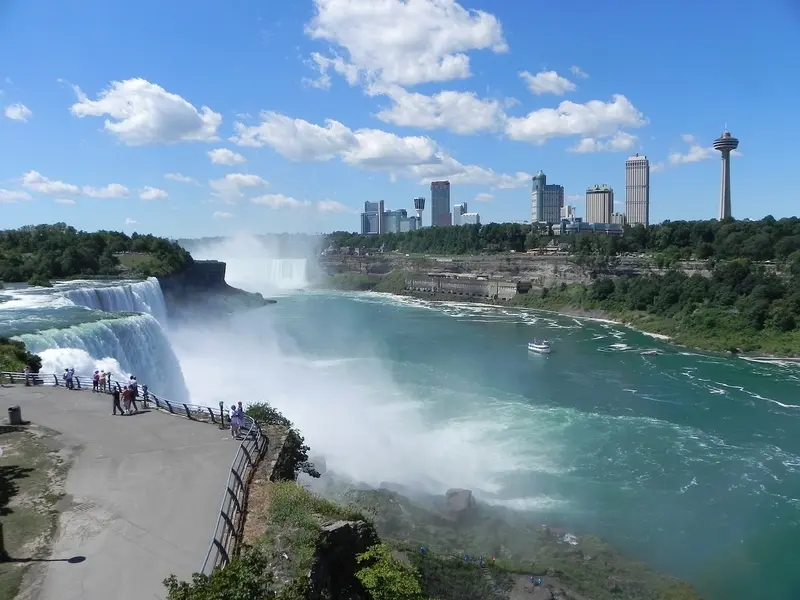
Niagara Falls is easy to visit badly: arrive, photograph Horseshoe Falls, spend one loud evening near Clifton Hill and leave. A four-day stay reveals a much broader destination. The falls change with light and weather, the gorge continues for kilometres, engineering history is unusually visible, and Niagara-on-the-Lake and wine country provide a complete contrast to the busiest tourist blocks.
If this destination is part of a wider journey, compare the pacing with Ontario in 9 Days. Use the wider route for country- or region-level decisions and this guide for destination-level detail.
Quick trip summary
- Ideal stay: 4 days for a first visit.
- Best approach: group each day by geography and keep one block flexible.
- Good for: independent travellers, couples, families and slower-paced trips.
- Main planning risk: underestimating local conditions, transfers, weather or walking effort.
Is Niagara Falls the right trip for you?
Niagara works for first-time Canada visitors, families, multi-generational trips and travellers who enjoy both natural sights and visitor attractions. The core area is accessible compared with many outdoor destinations, although gorge trails and some viewpoints involve stairs or uneven surfaces.
Where to stay
| Area | Why choose it |
|---|---|
| Fallsview | Best for iconic views and easy access to Table Rock, but usually the most expensive area. |
| Clifton Hill / central tourist district | Convenient for families and entertainment, with a busier atmosphere into the evening. |
| Downtown Niagara Falls | Quieter in parts and useful for rail/bus access, but farther from the main falls. |
| Niagara-on-the-Lake | Best for a quieter wine-country stay; less convenient if your priority is seeing the falls at different times of day. |
Choose accommodation by the journeys you will repeat, not by a small difference in nightly price. Check the route to your first morning attraction, likely dinner area and departure point for any fixed excursion. Recent reviews about noise, climate control, lift access and luggage handling can be more useful than a generic star rating.
How to get there
Toronto is the most common gateway. Driving is straightforward outside peak traffic, while GO, VIA and regional services can connect with Niagara Falls depending on season and timetable. Once in the destination, WEGO buses link major visitor areas and attractions.
Save the accommodation name and address offline before travelling. Keep arrival day low-risk and leave extra time for baggage, traffic, platform changes and finding the correct entrance.
Getting around
The main falls area is walkable, but the Niagara Parkway stretches far beyond it. Use WEGO, taxis, bikes where appropriate or a car for longer sections. Parking costs and traffic can make moving a car repeatedly less attractive than leaving it at the hotel.
Compare journeys door to door rather than only looking at distance. Waiting time, stairs, traffic, weather and the final walk can matter more than the nominally fastest route, especially for families, senior travellers or anyone carrying luggage.
A realistic day-by-day itinerary
The schedule below is a framework rather than a rigid timetable. Recheck opening days, weather and local transport shortly before each block. If one major experience is closed or conditions are poor, move the entire block instead of forcing the rest of the trip to become inefficient.
Day 1 – Horseshoe Falls, Table Rock and the park at different light
Start with the Canadian Horseshoe Falls from Table Rock and walk through Queen Victoria Park. Do not rush to every attraction immediately. Return after dark for illumination if it is operating; seeing the water in morning light, afternoon mist and evening colour gives more value than another indoor attraction.
Day 2 – Boat experience and Niagara Parks Power Station
In the operating season, take the boat excursion early or at a less busy time, understanding that you will get wet despite protective gear. Pair it with Journey Behind the Falls or the Niagara Parks Power Station and tunnel rather than trying to do every premium experience in one day.
Day 3 – Gorge, Whirlpool and river geology
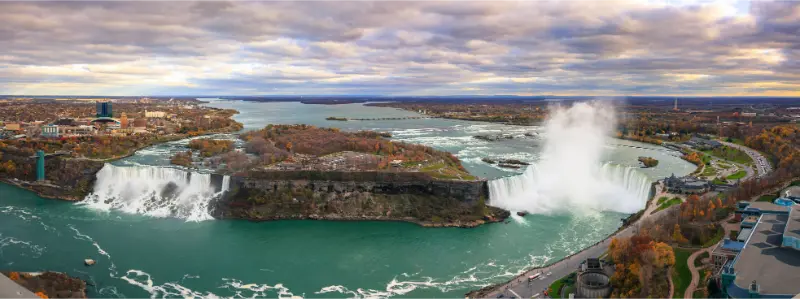
Move north along the parkway. Choose the White Water Walk, Whirlpool area or Niagara Glen according to mobility and weather. Niagara Glen is a real hiking environment with uneven terrain, not a paved extension of the falls promenade. Keep the afternoon flexible.
Day 4 – Niagara-on-the-Lake and wine country
Use the final day for Niagara-on-the-Lake, historic streets and the surrounding agricultural landscape. Wine tasting should be arranged with a designated driver, organised transport or a tour. Families can replace winery visits with parks, heritage sites and food stops.
Keep enough margin for meals, transport and an unscheduled stop. If this block runs long, remove the lowest-priority extra rather than turning the rest of the day into a race.
Best time to visit
Niagara is year-round, but the experience changes substantially. Summer has the widest attraction schedule and largest crowds. Autumn adds colour and harvest activity. Winter is cold, some boat operations stop, and ice can be spectacular. Spring is variable. Check individual attraction schedules rather than assuming all experiences operate every day.
Do not choose dates from average temperature alone. Check daylight, rainfall or snow, local holidays, school breaks and major events. A slightly less famous month can be better if it gives you easier accommodation, comfortable walking conditions and fewer queues.
Food and meal planning
The region is more than chain restaurants near the falls. Niagara-on-the-Lake and the wider peninsula have wineries, farm markets, bakeries and restaurants built around local produce. Reserve one important meal and keep the rest flexible.
Keep meal geography aligned with the day. Crossing the destination for a famous restaurant can waste more time than the meal adds. One carefully chosen reservation is usually more useful than building every sightseeing block around food bookings.
One day trip or regional extension
Niagara fits naturally into an Ontario trip with Toronto and Niagara-on-the-Lake. If you have more time, the wider peninsula, St Catharines and wine areas can justify extra nights. Do not treat Niagara as a detour that must be squeezed between two long driving days.
A day trip should add a genuinely different experience. Measure it from hotel door to first attraction and back again, including waiting time, so a destination described as nearby does not quietly become a full transport day.
How many days do you really need?
Four days is a useful first-visit length because it gives the headline experiences their own space while protecting one flexible half-day. With only two days, remove the excursion before compressing the core sights. With five or six days, add a slower neighbourhood, second museum or nearby destination instead of extending every sightseeing day late into the evening.
Think in half-days rather than individual attractions. A museum, historic complex, long market visit or excursion can consume much more time once transport, ticket queues, meals and rest are included. A realistic itinerary often looks modest on paper and feels much richer on the ground.
Travelling with children
Families have an enormous choice, which is exactly why overplanning is a risk. Pick one major falls experience, one fun attraction and one outdoor block each day. Leave space for mist, snacks and changing clothes.
Families usually enjoy a destination more when each day has one anchor activity, one flexible stop and an obvious place to pause. Alternate long indoor visits or demanding walks with parks, viewpoints, markets or relaxed food stops.

Senior travellers and a slower pace
Senior travellers can enjoy the falls from well-developed viewpoints and use WEGO to reduce walking. Choose accommodation near the main journeys you expect to repeat. Gorge hikes can be skipped without losing the core experience.
Do not let a four-day label force four full days of activity. A late start, long lunch or taxi across a difficult section can protect the experiences that matter most.
Accessibility
Many primary Niagara Parks attractions have accessibility information and paved approaches, but some natural areas do not. Check elevator status, boarding arrangements and trail conditions. Mist can make surfaces slippery even on paved areas.
Accessibility changes not only by attraction but by route. Check lifts, ramps, surfaces, toilets, boarding procedures and the final distance from the drop-off point. Contact attractions directly when access information is unclear.
Budget planning
Premium attractions accumulate quickly. Decide whether your priorities are the boat, Journey Behind the Falls, power station, tower views or entertainment. You do not need all of them to understand Niagara. Walking the parkway and seeing the falls remains the central experience.
Build the budget by day rather than only by accommodation night. Transport, timed attractions, tours and food in high-demand areas can cost more than the room itself. Keep a contingency for weather changes or a taxi when walking is no longer sensible.
Tickets and reservations
Reserve popular experiences in peak periods, but allow weather margin. If you plan a boat ride, avoid booking an immediate formal meal or long transfer afterward because you may need time to dry and change.
Reserve the experiences that control the day, not every hour. Flexible blocks make it easier to react to weather, energy levels and temporary closures.
Money and payments
Carry more than one payment method and keep a small amount of local cash where useful. Card acceptance, tipping expectations and ATM fees vary, so check current local guidance rather than assuming the same rules apply across a whole country. Keep your main card and backup card in different places.
Safety and situational awareness
Stay behind barriers and marked paths. The river and gorge are powerful and dangerous, and unofficial viewpoints are not worth the risk. In winter, ice adds slip hazards; in summer, heat and crowds require water and patience.
Use the same practical habits you would in any unfamiliar place: keep valuables unobtrusive, use licensed or well-reviewed transport, follow official warnings and avoid turning a beautiful viewpoint into a risky shortcut.
How to handle bad weather or extreme conditions
Build one movable block into the itinerary. In heat, shift the longest walk to morning or late afternoon; in rain, snow or strong wind, use a museum, market, long lunch or lower-level attraction as the flexible block. The goal is to reorganise the day rather than force the original order.
Solo travel
Solo travellers can simplify logistics by choosing a central base and joining a guided walk or small-group excursion only where it adds context or solves transport. Keep a charged phone, offline map and the accommodation address available without internet. Late at night, prioritise a simple route home over saving a small amount on transport.
Evenings and downtime
Do not turn every evening into another sightseeing shift. One planned dinner, performance, waterfront walk, market or neighbourhood stop is enough. Keeping some evenings light protects early starts and gives the trip the feeling of a holiday rather than a schedule that must be completed.
Photography without turning the trip into a photo shoot
Early morning and late afternoon often bring softer light and fewer people, but good travel photography comes from understanding a place rather than blocking it. Respect restrictions in religious, cultural and protected sites, ask before photographing people closely and never leave marked routes merely to recreate an image you saw online.
Shopping and souvenirs
Look for products connected to the destination rather than generic travel merchandise. Markets, museum shops and independent stores are often the easiest places to understand provenance. Check customs rules before carrying food, plants, animal products, antiques or unusually large quantities across borders.
What to pack
Bring a waterproof layer or clothes that dry quickly for falls experiences, comfortable shoes with grip and a spare layer. In winter, treat the mist zone as colder than the general forecast suggests.
A small day bag is generally more useful than carrying the contents of a suitcase through museums, historic streets, trails or long walking routes. Keep medication, water and essential documents easy to reach.
Common planning mistakes
- Choosing accommodation by headline price without checking the repeated daily journey.
- Booking a major attraction on arrival day with no margin for delays.
- Crossing the destination several times because sights were listed by fame rather than geography.
- Assuming a short map distance means an easy walk regardless of hills, heat, snow, rough surfaces or queues.
- Keeping every day full and leaving no space for weather or fatigue.
- Adding a day trip that duplicates a destination already scheduled later in the wider journey.
Practical habits that make the trip easier
- Save offline maps and the exact name of your hotel, station, terminal and meeting points.
- Download tickets and confirmations before leaving reliable Wi-Fi.
- Check the last practical return option before starting any excursion.
- Carry a small amount of local cash even where cards are widely accepted.
- Recheck opening hours and transport notices on the morning of any fixed reservation.
- Keep one half-day flexible so a delay does not damage the rest of the trip.
Final planning checklist
- Confirm entry, transit and insurance requirements relevant to your nationality.
- Choose accommodation by location, noise, access and transport as well as price.
- Reserve only the attractions or excursions that genuinely control the day.
- Keep offline copies of tickets, hotel details and important contact information.
- Check the exact station, airport terminal, parking area or pickup point before travel.
- Leave enough time for meals and unscheduled stops.
- Recheck official information shortly before departure.
Planning the days by geography
Niagara Falls becomes easier when the itinerary is built around neighbourhoods, transport corridors or landscape zones instead of a ranked attraction list. Put sights that share the same streets, transit line or access road on the same day, then leave the final hours flexible. This reduces repeated transfers and makes it easier to stop for a meal, market, café or viewpoint that was not part of the original plan.
Before each day, identify one experience that matters most and one that can be removed without regret. That simple hierarchy is more useful than a minute-by-minute schedule, particularly when weather, crowds or opening times change after you arrive.
Arrival and departure day strategy
Arrival and departure days are part of the trip but should not carry the same expectations as full sightseeing days. On arrival, prioritise checking in, eating, learning the immediate area and confirming the next morning’s transport. On departure, keep luggage logistics and the journey to the station, airport or onward road more important than squeezing in one last distant attraction.
If your wider route continues elsewhere in Canada, confirm the exact station, terminal, road conditions or pickup point the evening before. Similar place names, multiple stations and seasonal timetables are common sources of avoidable stress.
Final thoughts
A strong trip is not the itinerary with the highest number of pins. It is the one that protects the experiences you care about, groups the day sensibly and leaves enough energy to notice what happens between attractions. Use this structure as a framework, then let weather, local events and your own pace decide the final order.
Official information to check before you go
Opening days, transport, weather-sensitive access and event schedules can change. Recheck the details that control fixed reservations shortly before travel, especially during public holidays, festivals or severe weather.