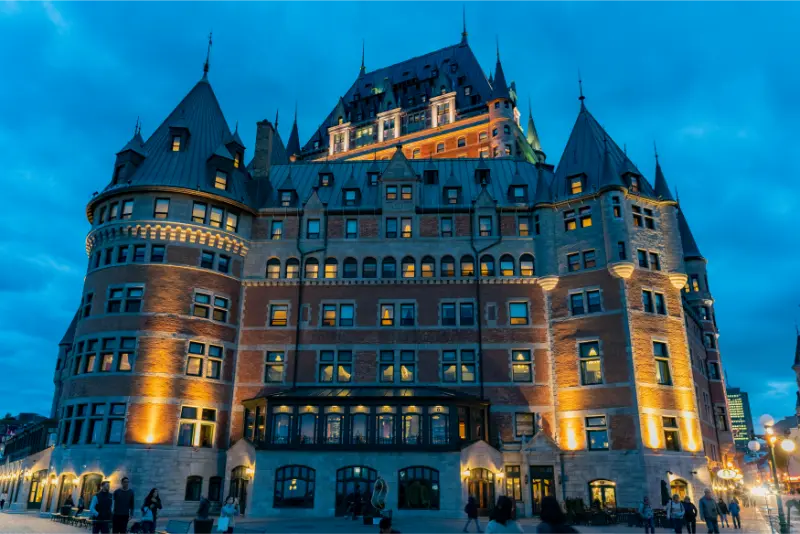
Québec City is compact in geography but dense in atmosphere. Fortifications, steep staircases, stone streets, French Canadian food and views over the St. Lawrence can make the old city feel cinematic, yet the destination becomes much more interesting once you add local neighbourhoods and one outdoor extension. Four days gives that balance without compressing everything into a cruise-port schedule.
If this stop is part of a wider journey, compare the pacing with Eastern Canada in 12 Days. Use that wider route for country- or region-level decisions and this guide for destination-level detail.
Quick trip summary
- Ideal stay: 4 days for a first visit.
- Best approach: group each day by geography and keep one block flexible.
- Good for: independent travellers, couples, families and slower-paced trips.
- Main planning risk: adding too many fixed activities and underestimating local transfers, weather or walking conditions.
Is this the right trip for you?
Québec City is excellent for history, food, winter atmosphere, family travel and travellers who enjoy exploring on foot. The steep connection between Upper Town and Lower Town matters, especially in winter or for reduced mobility, but the funicular and taxis can make the core far more manageable.
Where to stay
| Area | Why choose it |
|---|---|
| Old Québec – Upper Town | Best for a first visit, evening walks, historic atmosphere and immediate access to the walls and major sights. |
| Petit-Champlain / Lower Town | Romantic streets and fast access to the river, but expect stairs or funicular rides to Upper Town. |
| Saint-Roch | A more contemporary food and nightlife base with easy access to the old city. |
| Montcalm | Quieter residential feel near museums and the Plains of Abraham. |
For a first visit, staying in or near Old Québec makes the evenings especially pleasant. Check whether your hotel is in Upper Town or Lower Town before booking: a short-looking walk on the map may involve a steep climb. In winter, it’s also worth asking about luggage drop-off and how close a vehicle can get to the entrance.
How to get there
Québec City has an international airport and rail and coach connections with Montréal and other eastern Canadian cities. If you arrive by train, the station is conveniently placed near the lower edge of the historic centre. Winter conditions can add time to every transfer, so keep the first fixed reservation conservative.
Save the accommodation name and address offline before travelling. Keep arrival day low-risk and leave extra time for baggage, traffic, platform changes and finding the correct entrance.
Getting around
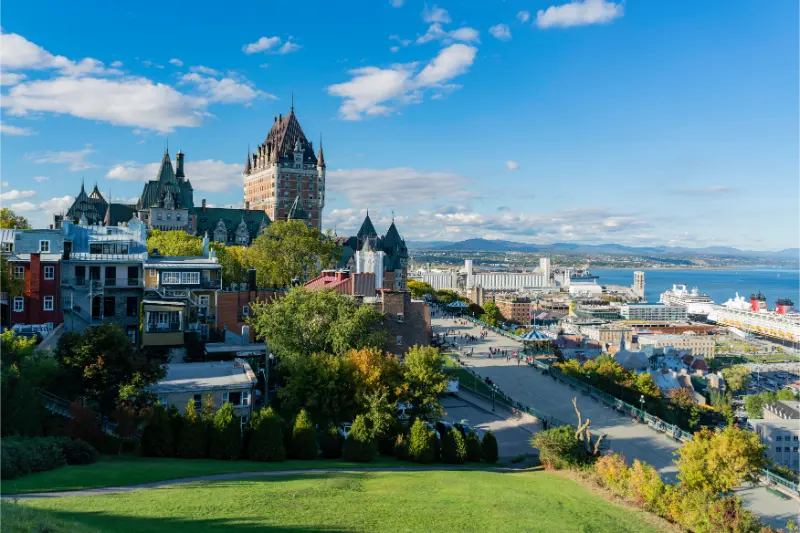
Old Québec is best explored on foot, but hills and stairs are real. The funicular between Lower Town and Dufferin Terrace is useful for conserving energy. Local buses and taxis help for Montmorency Falls, outer neighbourhoods and bad-weather days.
You can cover much of the old city on foot, but the height difference between Place Royale and Dufferin Terrace changes how far a walk feels. Use the funicular or a taxi when you’d rather save your energy for sightseeing. If you’re visiting in snow or ice, allow extra time even for familiar central routes.
A realistic day-by-day itinerary
Spend your first two days around the old town and the river, then look beyond the walls. That way you’re not travelling back and forth between the same streets. Keep the outdoor trip to Montmorency Falls on whichever day has the better conditions, rather than treating the schedule as something that can’t be changed.
Day 1 – Old Québec, walls and Dufferin Terrace
Start inside the fortified core with a slow walk around major squares, gates and viewpoints. Continue along Dufferin Terrace and around the Château Frontenac area without turning the hotel itself into the entire visit. Keep the evening in the old city so you can see the streets after day-trip crowds thin.
Day 2 – Petit-Champlain, Place Royale and the river
Descend to Lower Town for Petit-Champlain and Place Royale. Spend time along the St. Lawrence and Old Port rather than climbing immediately back uphill. This is also a good day for a museum or guided history walk if weather is poor.

Day 3 – Plains of Abraham, museum time and local neighbourhoods
Use the Plains of Abraham and nearby museum district to understand the city beyond the postcard streets. Continue into Montcalm or Saint-Jean-Baptiste for cafés and ordinary neighbourhood life. The day should feel more local and less monument-heavy.
Day 4 – Montmorency Falls or a seasonal outdoor extension
Visit Montmorency Falls if conditions suit, or choose another seasonal outdoor experience. In deep winter, keep the day flexible around weather; in summer and autumn, the river corridor and nearby nature are easier to combine with the city.
On the day you leave the centre, check your return journey before setting off. Montmorency Falls deserves time for the views, not a hurried stop between two appointments. If the outing takes longer than expected, enjoy dinner back in town and leave any spare museum visit for another day.
Best time to visit
Québec City is genuinely year-round, but the experience changes dramatically. Summer offers festivals and long days; autumn adds colour; winter brings snow, ice and major events but requires proper clothing and slower walking; spring is quieter and more variable. Choose the season for the experience you actually want rather than searching for one universal best month.
In Québec City, the season shapes the entire trip. Summer brings long evenings and busy terraces; winter offers a very different atmosphere, along with ice, cold and shorter daylight. Festival dates can affect room prices and availability, so choose the experience you want first and check the calendar before booking.
Food and meal planning
French Canadian classics, bakeries, maple products and contemporary Québec cooking are all easy to find. Reserve one important dinner if food is central to the trip, then keep the rest flexible so meals fit the neighbourhood you are already exploring.
Petit-Champlain is a lovely place to stop for lunch while you’re exploring Lower Town. On the day you visit Montcalm or Saint-Jean-Baptiste, eat there rather than heading back to the tourist centre. Save one special restaurant for an evening when you can linger; a good meal shouldn’t require crossing town twice.
One day trip or regional extension
Montmorency Falls is the easiest high-value extension. If you have more time, Île d’Orléans or another regional outing adds countryside and food, but do not force multiple outer-area stops into one winter day.
Montmorency Falls is the straightforward choice if you want a change of scenery from stone streets and museums. Île d’Orléans makes more sense when you have time for a leisurely food-and-countryside day, especially with suitable transport. Don’t try to combine both simply because they look close on a map.
How many days do you really need?
With four days you can explore Upper Town, spend a proper afternoon in Petit-Champlain and Place Royale, visit the Plains of Abraham and still get out toward the falls. If you only have two days, stay within the city. A fifth day is best spent taking things slower or exploring Île d’Orléans rather than revisiting the same viewpoints in a hurry.
Give Lower Town most of a morning or afternoon. You’ll want time to look into shops, stop at Place Royale and wander towards the port without immediately facing the climb back uphill. The same goes for a museum day: one good visit, followed by a café or a neighbourhood stroll, often feels more satisfying than three short stops.
Travelling with children
For families, mix the old town’s streets and stories with places where children can move about freely. The Plains of Abraham can provide a welcome break after museums or guided visits. Remember that a steep staircase is much more demanding with a pushchair; the funicular may make the day easier, depending on your needs.
Carry snacks and water when you’re spending a long stretch in Lower Town, especially if travelling with younger children. Leave room for an unplanned stop by the river and avoid putting two fixed reservations close together. A little spare time matters when someone wants lunch earlier than expected or needs a rest halfway up the hill.
Senior travellers and a slower pace
A relaxed Québec City visit is absolutely possible without walking every staircase. Stay close to the area you expect to enjoy most and use the funicular or a taxi for the climb between Upper and Lower Town. Put the museum and the Plains of Abraham on the same day if that reduces unnecessary journeys.
Old Québec has cobbles, slopes and stretches that can be slippery in winter. If you prefer shorter walks, choose a few viewpoints and squares rather than attempting every section of the fortifications. Check where you can sit, and be realistic about the walk back to the hotel after a full day out.
Accessibility
Don’t rely on an ‘accessible room’ label alone, especially in an older hotel. Ask about steps at the entrance, lifts, bathroom layout and the pavement outside. In Québec City a hotel may be close to everything on a map yet require a steep approach, so the exact address is important.
Before buying tickets, check the access arrangements for the museum or attraction you want to visit. Some entrances are easier than others, and the practical route can change with snow or temporary works. If step-free access or seating is essential, contact the venue directly and plan the day around the confirmed information.
Budget and booking strategy
An extra amount spent on a conveniently located hotel can be worthwhile here, particularly in winter when repeated uphill walks become tiring. Decide which paid attractions really matter to you, then enjoy the city’s streets, squares and river views at your own pace. There’s no need to turn every afternoon into another ticket purchase.
If you’re visiting during a major festival or a popular winter weekend, accommodation is the first thing to secure. Beyond that, keep at least one day flexible for weather. When comparing a trip to the falls or countryside, add the transport cost and time to the advertised ticket price before deciding what works for your budget.
Money and payments
You’ll be paying in Canadian dollars. Cards are useful across much of the city, but a little cash can still come in handy for smaller purchases. If you’re arriving from another country, check your bank’s foreign transaction fees and keep a spare payment card somewhere separate from your wallet.
Safety and situational awareness
Québec City is comfortable to explore with normal city precautions. Keep an eye on your belongings in crowded areas and take care on steep, icy streets in winter; a slip can be more likely than any dramatic travel mishap. If you’re out late, choose a well-lit route or a short taxi ride rather than a difficult shortcut.
How to handle bad weather or extreme heat
Winter weather can change a day’s plans quickly. Keep one indoor option, such as a museum or a leisurely meal, ready for icy or windy conditions. In summer, do your longer walks before the busiest part of the day and make time for the riverfront. Save Montmorency Falls for weather that lets you enjoy the views safely.
Solo travel
On your own, Québec City is easy to settle into. Spend a morning exploring the old streets, then join a history walk if you’d like local stories or company. For evenings, choosing accommodation near the areas you enjoy will make the walk home simple. Download a map before you go, especially if your phone plan doesn’t include Canadian data.
Evenings and nightlife
The old town is particularly attractive after sunset, when the stone buildings light up and the daytime visitors begin to leave. Have dinner nearby and walk along Dufferin Terrace if the weather allows. In winter, a warm café can be just as memorable; there is no need to force a late-night activity after a full day outdoors.
Photography without turning the trip into a photo shoot
For photographs, try the streets around Place Royale when they’re quieter, or look towards the St. Lawrence from Dufferin Terrace. Snow changes the whole scene, but watch your footing before stepping back for a wider shot. Be considerate in narrow streets and ask before photographing people at close range.
Shopping and souvenirs
Take a little time to browse the small shops in Petit-Champlain or look for Québec-made food and crafts. Maple products make an easy gift, provided you can carry them on the rest of your journey. Check where an item was made rather than assuming every souvenir in the old town is local.
What to pack
Pack for the season, not just for a city break. In winter that means warm, grippy footwear, gloves and layers you can adjust when going indoors. Even in summer, comfortable shoes are important for cobbled streets and slopes. A compact bag leaves your hands free on stairways and makes museum visits easier.
Common planning mistakes
- Choosing accommodation by headline price without checking the repeated daily journey.
- Booking a major attraction on arrival day with no margin for delays.
- Crossing the destination several times because sights were listed by fame rather than geography.
- Assuming a short map distance means an easy walk regardless of hills, heat, cobbles, weather or queues.
- Keeping every day full and leaving no space for weather or fatigue.
- Adding a day trip that duplicates a destination already scheduled later in the wider journey.
Practical habits that make the trip easier
- Save offline maps and the exact name of your hotel, station, terminal and meeting points.
- Download tickets and confirmations before leaving reliable Wi-Fi.
- Check the last practical return option before starting any excursion.
- Carry a small amount of local cash even where cards are widely accepted.
- Recheck opening hours and transport notices on the morning of any fixed reservation.
- Keep one half-day flexible so a delay does not damage the rest of the trip.
Final planning checklist
- Confirm entry, transit and insurance requirements relevant to your nationality.
- Choose accommodation by location, noise, access and transport as well as price.
- Reserve only the attractions or excursions that genuinely control the day.
- Keep offline copies of tickets, hotel details and important contact information.
- Check the exact station, airport terminal, parking area or pickup point before travel.
- Leave enough time for meals and unscheduled stops.
- Recheck official information shortly before departure.
Planning the days by geography
Québec City becomes easier when the itinerary is built around neighbourhoods and transport corridors instead of a ranked attraction list. Put sights that share the same streets, transit line or landscape on the same day, then leave the final hours flexible. This reduces repeated transfers and makes it easier to stop for a meal, market, café or viewpoint that was not part of the original plan.
Choose one thing you especially want from each day: the fortifications, the riverside streets, a museum or a trip to the falls. Everything else can fit around it. That simple choice makes it easier to enjoy an unexpected café or viewpoint without feeling that the whole itinerary has fallen behind.
Arrival and departure day strategy
Your arrival and departure days are best kept close to your hotel or transport connection. A gentle walk through Old Québec works well after checking in, but a trip to the falls doesn’t belong between checkout and an afternoon train. Leave time for luggage and for winter journeys that may take longer than planned.
If your wider route continues elsewhere in Canada, confirm the exact station, terminal or pickup point the evening before. Similar place names, multiple stations and seasonal timetables are common sources of avoidable stress.
Final thoughts
Québec City is at its best when you give the streets time to work their charm. Walk through the old town, linger by the river and make room for a neighbourhood outside the walls. You don’t need to see every landmark in four days; you need enough time to enjoy the ones that brought you here.
Official information to check before you go
Opening days, transport, weather-sensitive access and event schedules can change. Recheck the details that control fixed reservations shortly before travel, especially during public holidays, festivals or severe weather.