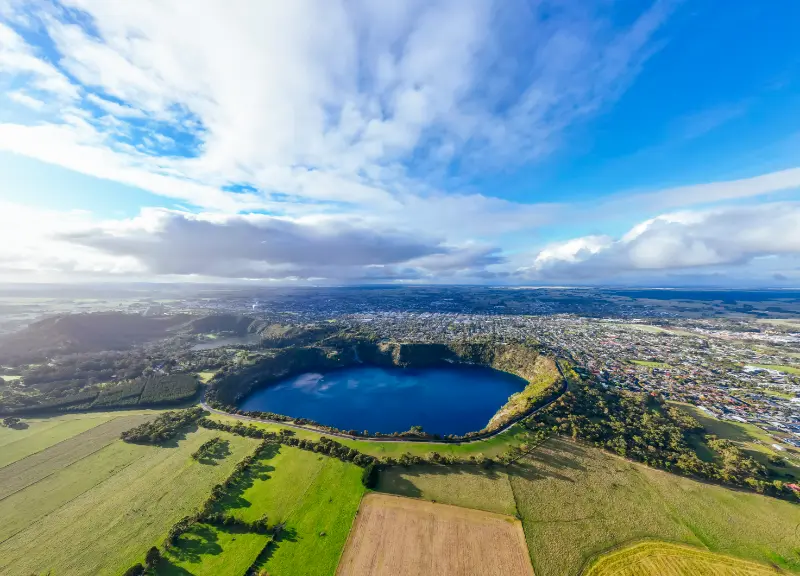
Mount Gambier is one of Australia’s most interesting stops for travelers who enjoy natural landscapes but do not necessarily want an extreme adventure. The city in South Australia’s Limestone Coast region is surrounded by evidence of volcanic activity and limestone geology: a crater lake known for dramatic seasonal color, sinkholes transformed into gardens, and caves with their own stories. It also makes a useful pause on a longer road trip, provided you allow time for the local sights rather than treating the city as a place to sleep between two driving days. This guide helps you choose a base, plan visits to the Blue Lake and Umpherston Sinkhole, and enjoy the region responsibly with family members of different ages and abilities.
At a glance
| Destination | Mount Gambier, South Australia |
|---|---|
| Suggested stay | 2–3 days |
| Especially good for | Crater lake viewpoints, gardens and geological landscapes |
In this guide
- Why the geology is the real attraction
- Blue Lake/Warwar and its seasonal color
- Umpherston Sinkhole/Balumbul: a garden below street level
- Cave visits and the importance of guided access
- Valley Lake and outdoor time without rushing
- Little Blue Lake: not the same as Blue Lake
- Getting to Mount Gambier and planning a road trip
- Where to stay and how many nights make sense
- A one-day Mount Gambier itinerary
- A two-day Limestone Coast extension
- Food, cafés, and what to budget for
- Traveling with children and grandparents
- Safety around water and underground places
- Best season and why flexibility helps
- Respectful visits and reliable information
- Frequently asked questions
Why the geology is the real attraction
Mount Gambier is sometimes described simply as a town with a blue lake, but its landscapes are more varied than that. Historic volcanic processes created crater features, while limestone and groundwater contributed to caves and sinkholes across the region. This combination explains why multiple unusual places can be reached from the same city. Learning the basics makes the attractions more rewarding and can help children understand why they look different. Use official interpretation signs and visitor-center materials rather than picking up loose rocks or entering closed areas. Geological formations are impressive, but some edges are steep and some underground spaces are controlled for safety. The best route is the one that appreciates them from designated public areas.
Blue Lake/Warwar and its seasonal color
The Blue Lake, also known as Warwar, sits within a volcanic crater and is a landmark of Mount Gambier. Its water can appear particularly vivid blue during the warmer season, while at other times the color is more subdued. A less intense shade is a normal part of the natural cycle, not a reason to declare a visit disappointing. Use designated viewpoints and public walking areas, and respect fencing around the crater. The lake is not simply an open swimming spot. Choose a short circuit or one or two viewpoints according to weather and physical comfort. Early or late light may change photographs, but follow local signs and avoid approaching unsafe edges for a better angle.
Umpherston Sinkhole/Balumbul: a garden below street level
Umpherston Sinkhole, also known as Balumbul, is a striking example of a collapsed limestone cave transformed into a planted garden. Viewing platforms allow visitors to appreciate the shape from above, while access down into the garden involves stairs. That distinction matters for anyone with limited mobility. The shaded space can feel cooler than the surrounding streets, and the plants change with seasons. It is tempting to spend the entire visit taking pictures, but the site’s appeal also comes from the contrast between geological walls and cultivated greenery. Stay on official paths, avoid disturbing plants or wildlife, and check local opening or maintenance notices. Visitors unable to descend can still enjoy views from accessible upper areas where provided.
Cave visits and the importance of guided access
Mount Gambier’s limestone landscape contains underground sites, including Engelbrecht Cave, where guided tours and access conditions may vary. A cave is not simply another outdoor lookout. Steep steps, low passages, enclosed spaces, moisture, and temperature differences can affect suitability. Confirm the tour route, duration, footwear, and any restrictions with the operator. Those uncomfortable in confined spaces or with mobility limitations may prefer interpretive exhibits or outdoor geological sites. Never enter unmarked caves or sinkholes independently. If traveling with children, ask about minimum ages and whether everyone must remain with the guide. A careful cave tour can be fascinating because it reveals what is happening beneath the landscape, not only what is visible from the road.
Valley Lake and outdoor time without rushing
Valley Lake provides another setting shaped by volcanic geology, with opportunities for viewpoints and more relaxed outdoor activities where facilities are open. It is useful when the group wants a break from museum interiors or steep staircase attractions. Check local park information for current walking paths, picnic areas, and any restrictions. Families may enjoy a simple picnic and a short walk rather than packing in another paid activity. Water edges, parking areas, and outdoor equipment still require supervision, especially for small children. Visitors looking for a quiet afternoon can choose one accessible lookout and enjoy the setting. Not every attractive green space has to become a long hike to be worthwhile.
Little Blue Lake: not the same as Blue Lake
The Little Blue Lake is a different site from the main Blue Lake/Warwar and is known as a natural swimming location. The name similarity sometimes causes confusion. It has deep water and steep limestone surroundings, so visiting is not equivalent to using a supervised municipal pool. Research local safety advice, facilities, and current conditions before considering a swim. Anyone who cannot swim confidently should enjoy the scenery from land. Children need close supervision, and jumping or diving into natural water can involve serious risk. Weather and water temperature may also surprise visitors. There is no need to enter the water to appreciate the unusual shape and color of the landscape.
Getting to Mount Gambier and planning a road trip
Mount Gambier lies in southeastern South Australia and can fit into routes between Adelaide, the Limestone Coast, and western Victoria. Distances are substantial by urban standards, so a map’s straight line is less useful than the actual driving route. The area has an airport with services that can change; confirm flights, baggage terms, and onward transport for your dates. A rental car makes regional excursions easier, although central accommodation and local attractions may be arranged with taxis or tours. Drivers should avoid planning a full day of sightseeing after a long and tiring road journey. Check fuel, tire condition, weather, and road notices before leaving on a regional circuit.
Where to stay and how many nights make sense
A central hotel or apartment allows you to walk to restaurants and services, while a rural or outlying stay may provide a quieter setting and more space. Families should consider kitchen access and parking, and older travelers may value a ground-floor room or reliable elevator. Historic houses can be attractive but may include steps. One night works for a brief stop, though you will probably need to prioritize just a few landmarks. Two nights allow the Blue Lake, Umpherston Sinkhole, one underground or outdoor activity, and relaxed meals without rushing. If you plan to extend into the wine country or Naracoorte Caves, add time rather than trying to complete the entire Limestone Coast in one day.
A one-day Mount Gambier itinerary
Begin with the Blue Lake/Warwar viewpoints while light is good, then head to Umpherston Sinkhole to see the sunken garden. Break for lunch before choosing an afternoon activity. Travelers who enjoy geology and can manage the tour requirements may visit Engelbrecht Cave; others can opt for Valley Lake or a gentle city walk. Finish with dinner in town. This itinerary uses a few sites well rather than collecting every sinkhole on a map. The order can change with weather and attraction schedules. If your group includes children, remember that frequent car stops can be tiring even when each destination is close. Build in playtime, water, and restroom breaks.
A two-day Limestone Coast extension
After your first day in Mount Gambier, choose a second-day direction. Naracoorte Caves National Park offers fossil and cave heritage, while Penola and the Coonawarra region appeal to visitors interested in local history, food, and wine. Robe and other coastal towns offer a different landscape. These are not all adjacent neighborhoods; allow appropriate driving time and check site-specific booking requirements. Naracoorte cave tours can involve physical conditions that require advance assessment. Families may prefer a town-and-nature combination over multiple cave visits. If one traveler does not drink alcohol, wineries can still be enjoyed selectively for scenery or food where offered, but the trip should not revolve around tastings for a mixed-age group.
Food, cafés, and what to budget for
Mount Gambier provides ordinary town services, restaurants, supermarkets, and cafés useful for keeping travel costs under control. If staying in an apartment, preparing breakfast or a picnic can free your budget for a guided cave visit or regional excursion. Check menus for vegetarian or allergen-related needs instead of relying on broad labels. The most famous lake viewpoints may be free to appreciate, while guided attractions and specialist activities have their own fees. Ask the visitor center for current information and avoid assuming a tour is operating just because a brochure still mentions it. Regional driving also affects the budget; compare fuel and parking needs alongside attraction costs.
Traveling with children and grandparents
Many Mount Gambier attractions can be enjoyed at different levels of effort. A family can visit a Blue Lake viewpoint and a sunken-garden overlook without completing every staircase or underground tour. Children may enjoy learning how caves, sinkholes, and volcanic craters form, especially with simple explanations before arriving. Older relatives may prefer short walks and a comfortable café stop between sites. Those using wheelchairs should contact individual venues for the exact locations of step-free viewpoints, accessible restrooms, and parking. Stairs down into Umpherston Sinkhole are not the same as its upper viewing options. A practical schedule may split the group briefly when some people want a more strenuous activity, then reunite for a shared meal.
Safety around water and underground places
Do not confuse photogenic nature with controlled recreation. Crater edges, sinkholes, and caves contain real hazards, and natural swimming holes require an honest assessment of swimming ability. Stay behind fences and use designated paths; avoid jumping into water unless it is explicitly permitted and safe under present conditions. Specialist diving or snorkeling at limestone sinkholes should only be undertaken with appropriately qualified providers and the necessary certifications. Do not follow casual social-media claims about unrestricted access. Weather can make steps slippery, and underground environments may feel cold or enclosed. Carry a charged phone, but never depend on cellular reception in every cave or remote area.
Best season and why flexibility helps
Warmer months can bring the Blue Lake’s most striking colors and more pleasant picnic weather, but summer also means stronger sun and periods of high visitor demand. Cooler months can be excellent for quieter touring, provided you bring layers and accept that the lake may not appear vivid cobalt. Rain can change the practicality of outdoor stairs and muddy walking routes. Check conditions before setting out and leave an indoor alternative for wet days. Mount Gambier is not a destination where a single weather forecast should dictate whether the holiday is worthwhile; the combination of town, geology, and regional landscapes gives you choices. Reserve popular cave activities if required, but leave quieter sightseeing flexible.
Respectful visits and reliable information
Use the city visitor information center for current opening details and route advice, particularly if a site has changed access arrangements. South Australia’s tourism authority provides regional context, while local managers can answer specific accessibility and safety questions. Notice and respect the dual names used for some sites, including Warwar and Balumbul. Avoid walking off marked tracks to reach unusual rock formations or using drones without checking local rules. Dispose of litter responsibly and give wildlife space. The area’s remarkable landscapes have existed for far longer than tourism, and thoughtful visitors help preserve them while supporting local hospitality businesses.
Frequently asked questions
Can I see Mount Gambier without climbing into caves? Yes. Blue Lake viewpoints and selected above-ground overlooks provide plenty of interest.
Is Blue Lake a swimming lake? The main Blue Lake/Warwar is a protected crater-lake attraction, not a casual public swimming beach. Do not confuse it with Little Blue Lake.
How many nights should I spend? Two nights work well for a relaxed visit; one is possible if you prioritize the main sights.
Is the destination suitable for older travelers? It can be, provided you select comfortable viewing areas and verify step-free access at each location.
More travel ideas on Travel is Wonderful
Continue planning with these related guides, already published on Travel is Wonderful.
- South Australia in 9 Days: Adelaide, Barossa and Kangaroo Island Without a Long Road Trip
- Adelaide in 5 Days: Markets, Beaches and Wine Country Without Turning Every Day Into a Drive
- Hahndorf South Australia Travel Guide: Heritage, Art and Adelaide Hills Food
Official visitor information and map
Confirm schedules, access rules, and travel conditions with these official sources before departure. Opening hours, permits, and services can change.