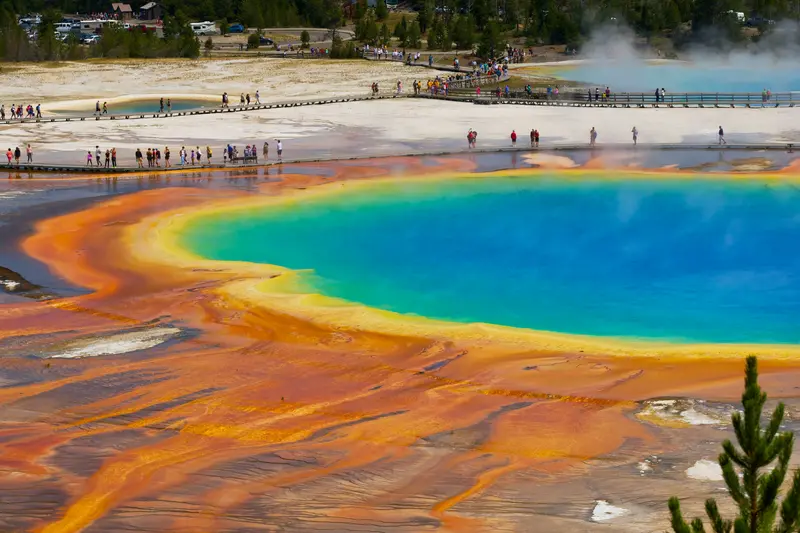
Yellowstone and Grand Teton sit next to each other on the map but together cover an enormous amount of ground. A nine-day trip can be excellent if you stop thinking in terms of one hotel and use three carefully chosen bases.
This route uses Jackson/Grand Teton first, a west or south Yellowstone base for geyser country, then a north Yellowstone base for Canyon, Mammoth and wildlife valleys.
For 2026 planning, the Yellowstone NPS road page lists projected opening windows that vary by road and elevation. Grand Teton NPS confirms no general timed-entry reservation is required, but 2026 construction can create delays and closures.
Quick trip summary
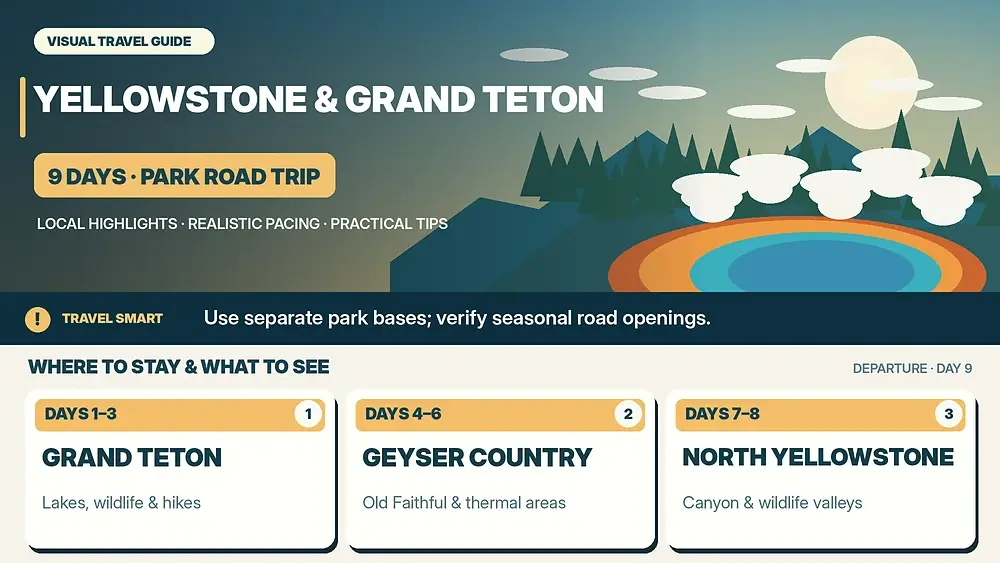
- 3 nights Jackson/Grand Teton, 3 nights West Yellowstone/Old Faithful side, 2 nights north Yellowstone, Day 9 departure.
- Do not use one hotel for both parks.
- Check 2026 road openings and construction.
- Grand Teton has no general timed entry.
- Protect sleep after long wildlife or driving days.
Why this route works
Grand Teton deserves three nights because lakes, wildlife and hikes should not be reduced to a drive-through.
West/south Yellowstone is the best first geyser base for Old Faithful and nearby thermal areas.
A north-side final base reduces the backtracking required for Canyon, Mammoth and Lamar-style wildlife time.
A realistic itinerary at a glance
| Days | Base | Main focus |
|---|---|---|
| 1–3 | Jackson / Grand Teton | Lakes, wildlife and one main hike |
| 4–6 | West Yellowstone / Old Faithful side | Geysers and thermal areas |
| 7–8 | North Yellowstone | Canyon, Mammoth and wildlife valleys |
| 9 | Departure | Bozeman/Jackson/Salt Lake positioning |
Day-by-day plan
Day 1: Jackson arrival
Keep the day light. Altitude, driving and wildlife on roads make a rushed evening loop a poor choice.
Day 2: Grand Teton scenic day
Use Jenny Lake, viewpoints and a moderate walk according to access. In 2026, construction around Moose-Wilson and Death Canyon can affect routes.
Day 3: Grand Teton wildlife or hike
Start early for wildlife or light, then choose a longer hike, float trip or slower lake day.
Day 4: Grand Teton to Yellowstone
Drive north only if the South Entrance route is open for your dates. Yellowstone’s projected 2026 road openings vary by segment.
Day 5: Geyser country
Give Old Faithful, Upper Geyser Basin and selected nearby thermal areas the day.
Day 6: Yellowstone west/south flexible day
Use Grand Prismatic, Norris, Yellowstone Lake or another cluster according to parking and road status.
Day 7: Move north via Canyon
Use Grand Canyon of the Yellowstone as the main sightseeing focus while transferring north.
Day 8: Lamar Valley and Mammoth/north
Use dawn wildlife time if the group can handle it, then rest and add Mammoth or another nearby area.
Day 9: Departure
Exit toward the chosen airport with generous time for park traffic, wildlife jams and roadwork.
Where to stay and how many hotel changes to make
In-park lodging saves driving but fills early; Jackson, West Yellowstone and Gardiner provide more services. Choose each base by the geography of the next two days.
For Yellowstone and Grand Teton, location matters more than a small difference in nightly rate. A hotel that removes repeated transfers usually adds more value than a prettier property in the wrong part of the route.
Read recent guest reviews for practical details that booking photos rarely show: stairs, lift size, road noise, parking access, breakfast hours and the final walk from transport.
Transport: what is worth planning in advance
A car is essential unless joining a fully guided tour. Yellowstone seasonal roads and Grand Teton construction must be checked live rather than assumed from a map.
Measure every move door to door rather than by the headline timetable. Checkout, terminal access, waiting, luggage and the final connection can turn a short journey into half a day.
Use inflexible tickets only when the saving is meaningful and the day is genuinely fixed. Weather-sensitive coast, mountain, wildlife and boat plans benefit from flexibility.
Food and daily rhythm
Park dining can be limited and busy, so carry water, snacks and a simple lunch on long wildlife or thermal days.
Use meals to control the rhythm of the day. A long regional lunch can be an experience and a recovery period, especially after hiking, museums, wildlife outings or early starts.
Do not make every meal another attraction. Mix local specialties with simple food so that the destination, not the restaurant schedule, remains the centre of the trip.
Families, children and older travellers
Geysers, lakes and wildlife are excellent for children, but thermal boardwalks require close supervision. Older travellers can use short boardwalks and scenic drives for high-value days.
For multigenerational travel, the useful pace is the one at which the least mobile member still enjoys the day. That normally produces a better shared trip for everyone.
When accessibility matters, ask specific questions about steps, trail surfaces, boat boarding, lift dimensions and vehicle access rather than relying on a generic label.
Budget: where the money really goes
Lodging inside or near the parks is the largest expense; sometimes a more expensive location saves hours of fuel and driving.
Compare total trip cost rather than headline prices. Parking, transfers, luggage, park transport, tours and time lost reaching a remote hotel can erase an apparent saving.
Keep a contingency rather than allocating every day to the last euro or dollar. Weather, a changed ferry, a taxi or an extra night can appear even on a carefully planned journey.
Best time to go
Summer offers broadest access and crowds; shoulder seasons can be excellent but road openings, snow and facility schedules matter much more.
Shoulder season often balances weather, demand and room prices well, but ferries, mountain services, wildlife excursions and rural restaurants may run less frequently.
Heat, rain, snow, wind and daylight should change the order of your day. Use the most comfortable hours for exposed outdoor sights and keep lower-effort alternatives available.
Comfort, accessibility and realistic pacing
Three bases reduce total mileage dramatically. Do not schedule dawn wildlife after a late cross-park transfer.
Travel fatigue compounds. One difficult transfer can reduce the quality of the following two days, which is why this itinerary avoids one-night bases unless geography genuinely requires them.
A free half-day is not wasted time. It is insurance for weather, laundry, a delayed service, a tired child or a place you discover only after arriving.
Small decisions that improve the trip
Use three geographic bases
This is the biggest way to reduce windshield time.
Plan from NPS road status
2026 construction and seasonal openings matter.
Separate geysers from wildlife valleys
They deserve different days.
What I would leave out on this length of trip
Leave Beartooth Highway or extensive backcountry hikes out if they distort a first trip.
Skip using Jackson for every Yellowstone day or West Yellowstone for every Grand Teton day.
Mistakes that make this trip harder than it needs to be
- Using one hotel for both parks.
- Ignoring 2026 road construction.
- Stopping illegally for wildlife.
- Driving five park sectors in one day.
- Booking shoulder-season hotels before checking road patterns.
- Connecting a park exit directly to a tight flight.
How I would adapt the itinerary
With six days, choose one park as the main focus and give the other a short section.
With twelve days, add a fourth base only if it opens a genuinely different park sector.
Before booking
- Check Yellowstone 2026 road status.
- Check Grand Teton construction alerts.
- Reserve lodging/campgrounds early.
- Carry food, water and layers.
- Choose airport geometry before the final base.
Practical questions
Do I need timed entry?
Grand Teton does not require a general timed entrance reservation; always check specific activities and current Yellowstone rules.
How many nights for Yellowstone?
Four to five nights is excellent for a first visit.
Can I use one hotel?
Technically yes, but it creates very long drives.
Final thoughts
Yellowstone and Grand Teton reward geographic planning more than aggressive sightseeing.
Three bases over nine days let geysers, mountains and wildlife each have their own time while keeping 2026 road realities in the plan.
How to keep this itinerary resilient
Check NPS alerts every evening and morning because construction or wildlife incidents can redirect the day.
Keep one Yellowstone day flexible rather than assigning every thermal basin to an exact hour months ahead.
Who this route suits best
This route is designed for travellers who prefer depth over collecting places. It keeps hotel changes low, protects flexible time and assumes that a good meal, an unexpectedly interesting neighbourhood or a slower morning can be as valuable as another attraction. That makes it particularly suitable for first-time visitors, couples, families and multigenerational groups.
More energetic travellers can add a longer hike, an extra museum or a second excursion on the flexible days. Travellers who prefer an easier pace can remove those extras and still keep the core journey intact. Before booking, identify the two or three experiences that would genuinely disappoint you to miss; those are the ones to reserve or protect first.
What to book early and what can wait
Book the elements with genuinely limited capacity first: high-demand accommodation, protected-area access, popular trains or ferries, and any guided experience that is central to the trip. Leave ordinary meals, minor attractions and weather-dependent outdoor activities more flexible whenever possible. This prevents the itinerary from becoming a chain of reservations that forces you to ignore how the destination actually feels on the day.
One week before departure, check the official transport or park information again. The evening before each major move, confirm departure points, opening status and the hotel address. That small routine catches most avoidable travel problems before they become expensive or tiring.