Category: Europe

Travel guides and practical itineraries for European cities, regions and road trips, with realistic pacing and transport advice.

  • Berlin in 5 Days: History, Museums and Neighbourhoods Without Crossing the City All Day

    Berlin in 5 Days: History, Museums and Neighbourhoods Without Crossing the City All Day

    Berlin deserves a trip built around geography and real travel time rather than a checklist. Berlin is not difficult because the transport network is weak; it is difficult because the city is large and the attractions people want to combine are often far apart. Five days works well when each day stays in one broad zone and when museums, memorials, neighbourhoods and nightlife are not all stacked into the same schedule.

    If this destination is part of a longer journey, compare the pacing with Germany in 10 Days by Train: Berlin, Nuremberg and Munich Without Renting a Car. The useful planning rule is to protect the experiences that are difficult to replace, then leave ordinary meals, neighbourhood walks and secondary attractions flexible. A city break usually becomes less enjoyable when every hour is reserved. Door-to-door travel time, queues, weather, luggage, meal stops and fatigue are part of the itinerary even when they do not appear on a map.

    Quick trip summary

    • Recommended time: 5 days.
    • Best planning principle: group each day by geography and protect only the reservations that control access.
    • Best for: independent travellers, couples, families and slower-paced visitors who prefer a realistic rhythm.
    • Keep flexible: at least one half-day or one major activity that can move with weather, traffic or energy.
    • Book first: accommodation location, scarce transport and any timed entry that shapes the rest of the trip.

    Is Berlin the right trip for you?

    Berlin suits travellers interested in twentieth-century history, museums, contemporary culture, architecture, food and neighbourhood life. It is particularly good for independent travellers because public transport reaches almost everywhere. The planning challenge is deciding what not to cross the city for on a given day.

    The practical test is to decide what would make you genuinely disappointed if you missed it, then build the trip around those one or two priorities. Everything else should earn its place by fitting the same area of the day. This becomes even more important when travelling with children, older relatives or anyone who values a slower rhythm.

    Where to stay: choose location before hotel style

    Base Why choose it
    Mitte Best for first-time access to major historic sights and Museum Island; convenient but often less neighbourhood-oriented in the evening.
    Kreuzberg / Friedrichshain Best for food, nightlife and a more local urban feel, with excellent transit to central sights.
    Charlottenburg / City West A comfortable base for shopping, older West Berlin atmosphere and good transport, but farther from some eastern attractions.

    A more attractive room is not always a better travel decision. Before booking, map the first activity of the morning, the likely dinner area and the departure route. If the hotel adds two unnecessary transfers every day, the hidden cost is time as well as money. Also check stairs, lift access, street noise and the final luggage route rather than relying only on the neighbourhood name.

    A realistic 5-day itinerary

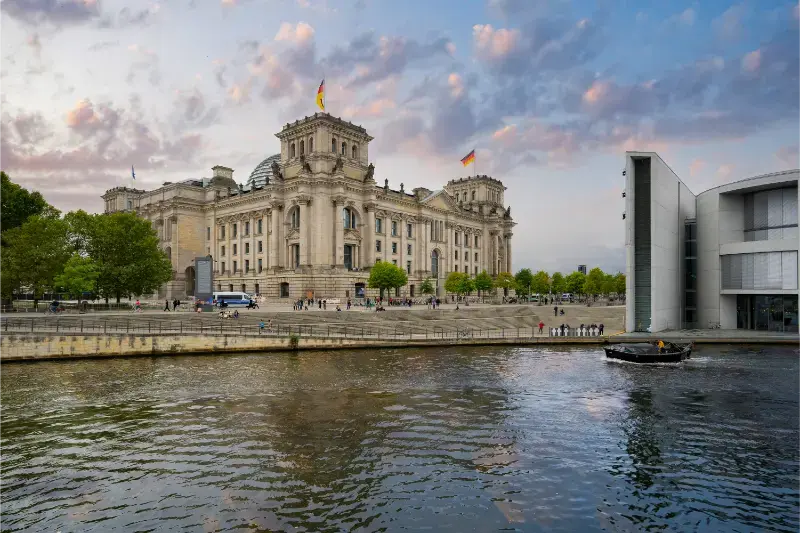
    Day 1: Brandenburg Gate, Reichstag area and central history

    Group the government quarter, Brandenburg Gate, Holocaust Memorial area and nearby history. Choose one serious museum or documentation centre rather than trying to absorb several emotionally heavy sites in sequence.

    Day 2: Museum Island and historic Mitte

    Build the day around one or two collections on Museum Island or nearby museums, then walk the historic centre at a slower pace. Check current museum openings because renovations and collection moves can change the practical plan.

    Day 3: East Side, Kreuzberg and Friedrichshain

    Explore the East Side Gallery area, the Spree and neighbourhood streets, using food markets or cafés as part of the day. This is the time to see contemporary Berlin rather than returning to the monumental centre.

    Day 4: City West, Tiergarten and Charlottenburg

    Move west for Tiergarten, the zoo area, Kurfürstendamm or Charlottenburg according to interest. Keep the whole day in the western side instead of adding an eastern evening reservation with a long return journey.

    Day 5: flexible neighbourhood day or Potsdam

    Stay in Berlin for another district, lakes or markets, or take a straightforward trip to Potsdam. Do not choose Potsdam merely because it is famous if your Berlin list is still unfinished; five days is not excessive for the capital.

    How to move around without wasting the day

    U-Bahn, S-Bahn, trams and buses make Berlin easy without a car, but transfers and station walks still take time. Grouping the day geographically matters more than finding the mathematically fastest route between isolated sights. Validate the current ticket zones and service changes when travelling, especially during engineering works or major events.

    Do not judge a journey only by kilometres. A short distance can include traffic, security, station corridors, boat boarding, parking, luggage handling or a long final walk. For every important transfer, think in door-to-door time and keep a margin before anything expensive or difficult to replace.

    Best time to visit

    Late spring through early autumn offers long days and outdoor neighbourhood life. Summer can be hot and busy, while winter is colder and darker but works well for museums, Christmas markets and indoor culture. Berlin is a year-round city, so choose the season based on the kind of trip you want rather than expecting one universally best month.

    Seasonal advice should guide the style of the trip, not become a promise. Check the local forecast and official closure, transport or safety notices again shortly before each weather-sensitive day. If one experience depends heavily on good conditions, keep it movable instead of sacrificing the rest of the itinerary to a fixed booking.

    What to book first

    Reserve accommodation, any high-priority timed experience and special exhibitions that are likely to sell out. Some government or museum visits may require advance registration or specific security procedures, so verify the official page. Leave ordinary neighbourhood exploration open because transport disruptions and weather are easier to absorb when not every hour is fixed.

    The useful planning rule is to protect the experiences that are difficult to replace, then leave ordinary meals, neighbourhood walks and secondary attractions flexible. A city break usually becomes less enjoyable when every hour is reserved. Door-to-door travel time, queues, weather, luggage, meal stops and fatigue are part of the itinerary even when they do not appear on a map.

    Food strategy: eat well without scheduling every meal

    Berlin rewards eating by neighbourhood. Kreuzberg, Neukölln, Friedrichshain, Prenzlauer Berg and City West all offer different reasons to stay local for dinner. Use markets, bakeries and casual lunches to preserve flexibility. Crossing the city for a single viral restaurant often costs more useful travel time than the meal justifies.

    For a multi-age group, a reliable breakfast and an easy lunch often matter more than one additional attraction. Keep water accessible, avoid waiting until everyone is exhausted to look for food and use meal stops as genuine rest rather than another item to complete quickly.

    Travelling with children

    For families, the best day is rarely the day with the most attractions. Alternate one focused cultural stop with outdoor time, food and a simple activity that does not require quiet concentration. Keep toilets, water and an easy route back to the hotel in mind before starting a long afternoon. A child-friendly plan should change the rhythm of the day rather than simply adding one children’s attraction to an adult schedule.

    Choose one activity each day that allows movement and does not depend on perfect behaviour: a park, ferry, market, viewpoint, waterfront or short ride can reset the group after a museum or historic interior. Keep the most demanding attraction early in the day when attention and energy are usually higher.

    Travelling at a slower pace or as a senior

    For older travellers or anyone who prefers a slower pace, reduce transitions before removing the highlights. A central base, one direct transfer and a shorter walking route can preserve the most memorable parts of the trip far better than trying to keep the same checklist with longer rest breaks. Check lifts, stairs, cobbles and seating at accommodation and major attractions before booking.

    Use public transport, taxis or boats to remove the least interesting walking rather than replacing the whole experience with vehicle transfers. The goal is to preserve the best streets, viewpoints and neighbourhoods while cutting out the tiring connections between them.

    Budget: where the money really goes

    Compare the total cost of a day rather than the price of one ticket. A cheaper hotel can become expensive after repeated taxis and long transfers, while a well-located room can reduce both transport costs and fatigue. Build the budget around accommodation, the few major paid attractions you genuinely value, food, local transport and one contingency reserve instead of trying to estimate every coffee in advance.

    City passes and transport passes only save money when they match the itinerary you would choose anyway. Do not add attractions simply to justify a pass. Compare the normal cost of your actual plan, then decide whether a bundled product improves convenience as well as price.

    Weather fallback plan

    A useful weather fallback is not a random list of indoor attractions. It is one realistic substitute that fits the same area and does not damage the following day. Keep at least one museum, market, neighbourhood or café block movable, and recheck local forecasts shortly before each outdoor-heavy day. Climate averages are useful for packing, but they cannot promise the conditions on your dates.

    A flexible final day is especially useful because it can absorb an attraction missed earlier, become a rest block or take advantage of unexpectedly good conditions. This is more valuable than scheduling four equally rigid days and hoping every forecast and transport connection behaves perfectly.

    Connectivity, cash and small practical details

    Save the hotel address, tickets, passport or identity details, insurance information and the next transfer outside your email app. Offline access matters most when the network is weak, the battery is low or you are trying to solve a delay. Carry a small power bank, keep medication in your day bag and confirm the final public-transport service before a late evening far from the hotel.

    Use cards, cash and digital tickets according to local practice, but keep at least one backup payment method separate from the main wallet. Do not let a phone become the only copy of every booking, address and document needed to continue the trip.

    What to pack

    Comfortable shoes and layers are essential because station changes and neighbourhood walks accumulate distance. In summer carry water and sun protection; in winter plan for wind and long outdoor waits on platforms. A compact rain layer works in every season and is easier to manage than relying on an umbrella during windy weather.

    A small day bag should hold water, medication, sun or rain protection and the layer you are most likely to need. The goal is not to carry everything; it is to avoid having the useful items locked in a suitcase when conditions change.

    Common mistakes to avoid

    • Scheduling Museum Island, East Side Gallery and Charlottenburg in one day.
    • Treating every Cold War or Second World War site as a quick photo stop instead of choosing a few meaningful visits.
    • Renting a car for a central Berlin stay.
    • Crossing the city repeatedly for restaurants or nightlife that have good alternatives nearby.
    • Failing to recheck museum renovations, closures or required reservations.

    Responsible travel and local etiquette

    Treat the destination as a real place rather than a stage built for visitors. Follow staff instructions, keep residential areas passable, use bins and public transport normally, and spend with businesses that add genuine local value. In religious, memorial or residential spaces, adapt to the setting instead of expecting the setting to adapt to sightseeing.

    Popular destinations function better when visitors spread some spending beyond the most photographed streets, avoid blocking narrow passages and respect the purpose of religious, memorial and residential spaces. Small decisions about timing and behaviour often improve the experience for the traveller as well.

    If you have less or more time

    With three days, prioritise central history, one museum block and one neighbourhood day. Four days adds City West or more eastern districts. With six or seven days, Berlin becomes especially rewarding because you can add Potsdam, lakes, markets and slower neighbourhood exploration without sacrificing the major history.

    Extra days are most useful when they reduce pressure. Before adding another distant stop, ask whether the trip improves more by staying in the same place, repeating a favourite neighbourhood, waiting for better weather or enjoying a slow morning without watching the clock.

    How to choose between similar experiences

    Choose Museum Island for concentrated historic collections, and newer or specialist museums when a particular subject matters more. Choose Kreuzberg and Neukölln for food and contemporary city life, Friedrichshain for eastern urban character, and Charlottenburg for a calmer western base. Berlin works best when you choose districts, not when you chase every top-ten list.

    When two options offer a similar experience, choose the one that fits the geography and energy of the day. The extra hour of transfer rarely creates an extra hour of enjoyment, especially in heat, traffic, rough water or after a long museum morning.

    Safety and decision-making on the day

    The most useful safety habit is situational awareness rather than anxiety. Keep valuables controlled in crowded transport and tourist zones, use official or clearly identified transport, and avoid walking while focused on a phone at road crossings. Local warnings, attraction staff and transport operators have more value than an itinerary written months earlier, so change the plan when conditions deteriorate.

    Set a practical turnaround time for long walks, excursions and transfer days. When conditions deteriorate, change the plan rather than trying to complete the original checklist. A missed secondary sight is cheaper than a missed flight, unsafe walk or exhausted final day.

    Useful official and planning resources

    Opening hours, transport schedules, fees, access rules and visitor procedures change more often than the basic geography. Recheck the sources below shortly before departure.

    Final planning checklist

    • Confirm passport, visa, transit and health requirements for your nationality.
    • Reserve the transport, permit or timed entry that controls the rest of the itinerary.
    • Check how luggage moves between airport, station, ferry, road transfer and accommodation.
    • Download offline maps and save key tickets outside your email app.
    • Recheck weather, road, sea, trail or attraction notices before each critical day.
    • Keep at least one half-day that can absorb a delay or become simple rest.
    • Leave a generous buffer before international flights and other costly connections.

    A good city break should feel as though you understood how the place fits together, not merely that you collected its famous names. Keep the fixed reservations that matter, group the rest by geography and remove anything that creates more transit than experience. The result is usually more memorable than the most ambitious version of the same trip.
  • Canary Islands in 10 Days: Tenerife and Gran Canaria Without Trying to Visit Every Island

    Canary Islands in 10 Days: Tenerife and Gran Canaria Without Trying to Visit Every Island

    The Canary Islands are often marketed as one destination, but each island is large and distinct enough to support a full holiday. Trying to include Tenerife, Gran Canaria, Lanzarote and Fuerteventura in ten days creates an airport-and-ferry itinerary rather than an island trip. A better first visit pairs two islands with direct transport and gives each enough time for both landscape and rest.

    This route uses Tenerife and Gran Canaria because they offer a broad mix: volcanic terrain, historic towns, beaches, mountain roads and urban life. It is intentionally not a “best islands” ranking. Travellers seeking mainly lava landscapes may prefer Lanzarote, while beach-first travellers may choose Fuerteventura. The planning principle is the same: two islands are enough for ten days.

    Quick trip summary

    • Split ten days roughly 5/5 between Tenerife and Gran Canaria.
    • Rent a car for selected days rather than automatically for the entire stay if you choose a walkable resort or city base.
    • Treat mountain roads as sightseeing time; short distances can take much longer than expected.
    • Choose one major volcanic or mountain day on each island and keep a weather fallback.
    • Use the inter-island transfer as a half-day, not as a free sightseeing day.

    Who this itinerary is for — and when to change it

    This route is designed for a first or early visit with a moderate pace. It assumes that you want the destination’s defining experiences without turning every day into an early start, late arrival and luggage transfer. Couples, solo travellers, families and mixed-age groups can use the same geographic structure, but the number of activities inside each day should change with mobility, climate, jet lag and personal interests.

    Before booking every attraction, identify the two experiences you would regret missing. Protect those first, then build the rest of the trip around them. Weather-dependent mountains, deserts, coastlines and wildlife experiences deserve flexible placement, while museums and neighbourhood days can often move more easily.

    Where to stay: choose the base before the hotel

    Accommodation is a transport decision as much as a comfort decision. Check how you will reach the first activity in the morning, how you will return after dinner, whether the property has lifts or parking, and what happens with luggage on transfer days. A cheaper room that creates two difficult journeys every day can cost more in taxis, time and energy than a slightly more expensive base in the right place.

    BaseWhy it works — and the trade-off
    Tenerife: La Laguna / Santa CruzGood for culture, food and the greener north; longer drive to some southern beaches.
    Tenerife: Costa Adeje / Los CristianosBest for resort convenience, family facilities and southern weather; farther from northern towns.
    Gran Canaria: Las PalmasStrong for city life, Las Canteras beach and restaurants; mountain day trips remain possible.
    Gran Canaria: Maspalomas / MelonerasBest for resort pools, dunes and winter sun; less central for the island’s northern cultural sights.

    The four decisions that shape this trip most

    DecisionBest defaultWhen to change it
    Number of islandsTwoUse one island for a slower trip; add a third only with 14+ days.
    Rental car3–4 days per island if neededSkip on city/resort days when buses, taxis and walking are easier.
    Teide / mountain dayWeather-dependent priorityKeep another day flexible because wind/cloud can change visibility and access.
    Beach baseChoose north/city or south/resort consciouslyDo not assume one coast provides the best compromise for every activity.

    Make these decisions before filling the calendar with attractions. They determine how many hotel changes, early starts and long journeys the trip contains. Once the structure is right, individual sightseeing choices become much easier to adjust.

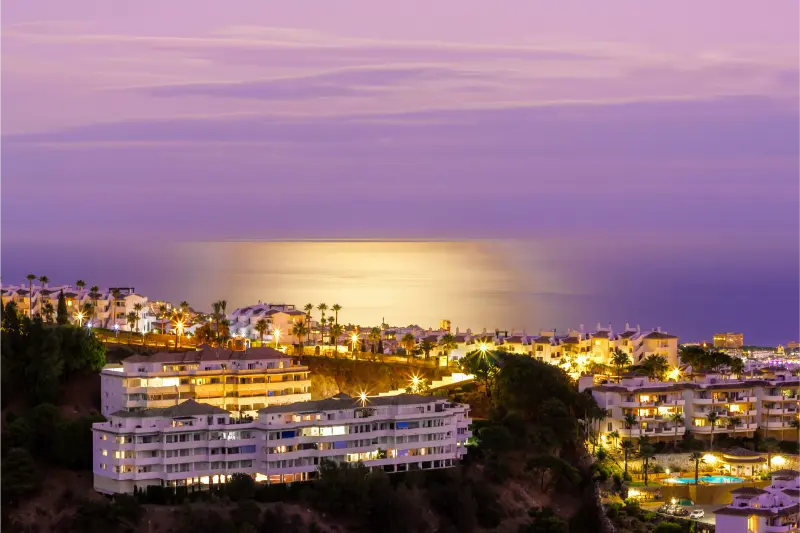
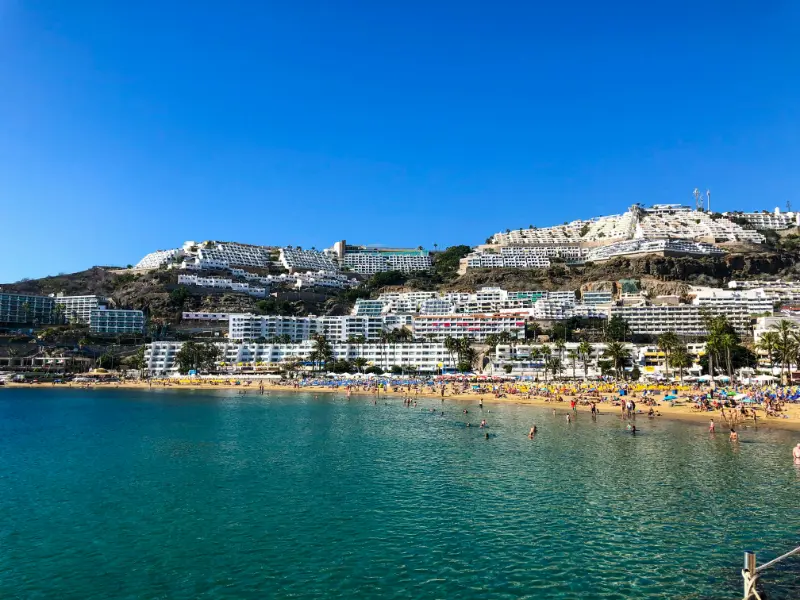
    Gran Canaria Seaside Village

    A realistic day-by-day route

    Days 1–2: settle into Tenerife and choose your island personality

    Use arrival day around the hotel area. If you are in the south, make it a beach/pool afternoon; in the north, choose a town walk.

    Use the first full day for the opposite side of Tenerife’s character: La Laguna and northern landscapes from a southern base, or a warmer coastal day from a northern base.

    Avoid collecting scenic viewpoints by car. Choose a few and leave time to stop safely, eat and walk.

    Days 3–5: Teide, one coast and a flexible weather day

    Use the clearest suitable day for Teide National Park and surrounding volcanic landscapes. Check current official access and cable-car/permit requirements for any specific summit activity.

    Give another day to a coast that contrasts with your base—whale-watching, a beach, Anaga or a north-coast town depending on interests and conditions.

    Keep the final Tenerife day intentionally flexible. It can absorb cloud on the mountain, wind at sea or simply become a slow pool day before the island transfer.

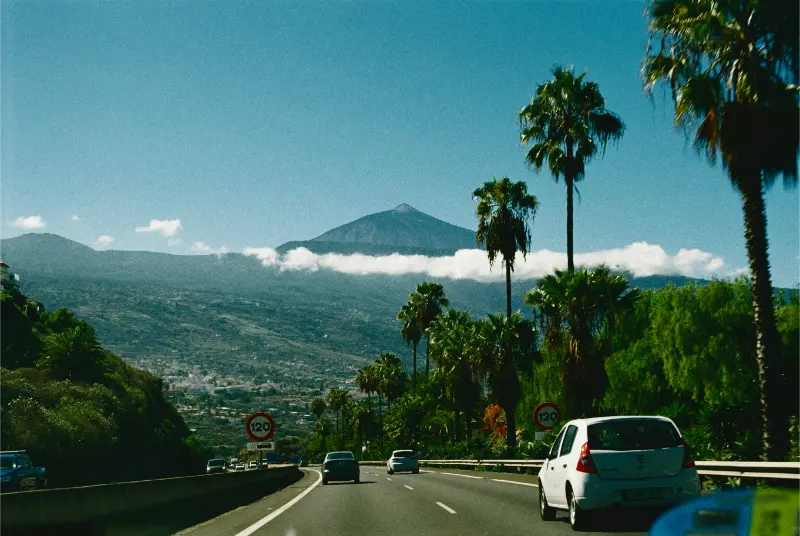
    A road and palm trees below Mount Teide in Tenerife

    Day 6: transfer to Gran Canaria

    Fly or take the ferry according to your bases and total door-to-door time. Do not compare only the scheduled journey duration.

    Pick up a car only if you need it immediately; city parking in Las Palmas may make a delayed rental smarter.

    Spend the evening within walking distance of your new base.

    Pace check: if this stage runs late, remove the lowest-priority activity rather than stealing time from meals, sleep or the next transfer. A resilient itinerary should become simpler when something changes, not more frantic.

    Days 7–9: Gran Canaria’s city, mountains and coast

    Use one day for Las Palmas and Las Canteras if you are staying south, or as an easy home day if you are based in the city.

    Use one full day for the interior, choosing a realistic mountain loop with villages and viewpoints. Winding roads make a short kilometre total feel much longer.

    Use the remaining day for Maspalomas, a beach, a family attraction or a quieter coastal area. Do not force another mountain drive if the group wants rest.

    Day 10: departure without crossing the island twice

    Keep the last morning near your base or airport route.

    Return the car with time for fuel and inspection, especially in busy holiday periods.

    If your international flight departs from a different island, strongly consider transferring the previous day rather than relying on a same-day inter-island connection.

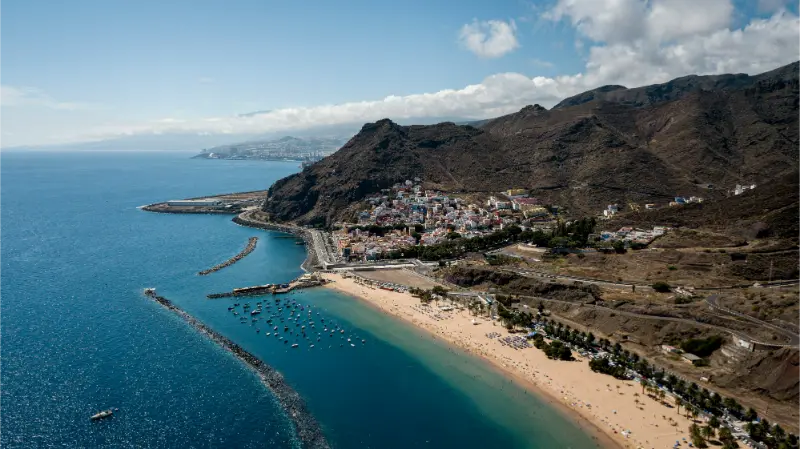
    Tenerife Volcanic Coastline And Blue Bay

    Transport reality: plan door to door

    Both Tenerife and Gran Canaria have extensive bus networks and airports, while ferries connect the islands. A rental car is valuable for mountain roads and dispersed viewpoints, but it can be unnecessary on resort days or in Las Palmas. Evaluate each island separately. Road distance is deceptive because volcanic topography creates curves, elevation and slow scenic sections. Check official island tourism and transport sources for current road, trail and cable-car access, especially when mountain weather is involved.

    Door-to-door time is the number that matters. Add hotel checkout, reaching the station, airport or pier, waiting, boarding, collecting luggage, local transport at the other end and the possibility that everyone needs food immediately after arrival. This is why a “two-hour flight” or “three-hour train” can consume most of a day. Our guide to building realistic 7-, 10- and 14-day itineraries explains how to treat transfer days honestly.

    Food strategy: make meals part of the route

    The islands are easy for mixed preferences because resort areas, cities and small towns provide very different dining styles. Plan at least one meal around Canarian dishes rather than eating only in international resort strips. On mountain days, carry water and snacks because opening hours in small villages may not match your driving schedule. If you stay in an apartment, a simple supermarket breakfast can make early scenic starts much easier.

    One planned meal per day is usually enough. Keep another meal flexible so it can respond to where you actually are, not where an old itinerary expected you to be. With children, older travellers or very hot weather, eating before everyone becomes exhausted is often more important than reaching a restaurant that looked perfect months earlier.

    When to go and how the season changes the plan

    The Canaries are popular for mild winter weather, but “eternal spring” does not mean identical conditions across each island. Northern slopes, mountains and trade-wind zones can be cool or cloudy while southern resorts are sunny. Higher elevations can be dramatically colder than the coast. Pack a warm layer for Teide or mountain viewpoints even if beach temperatures feel summery.

    Instead of searching for one universal best month, decide which compromise you prefer: better weather, fewer visitors, lower prices, longer daylight, beach conditions or seasonal scenery. No month maximises everything. Recheck short-term weather and official access information shortly before each critical outdoor day.

    Budget: where spending actually improves the trip

    Accommodation varies enormously between resort zones, city hotels and apartments. The biggest avoidable expense is renting a car for days when it remains parked, especially where hotel parking costs extra. Inter-island transport also adds baggage and transfer costs, which is another reason to limit the trip to two islands. Families can often save by choosing an apartment for part of the stay and using restaurants selectively.

    The most useful upgrades are often logistical rather than luxurious: a hotel that removes a daily transfer, a direct ride after a long flight, a flexible ticket, an additional night in a weather-dependent region or a guide where interpretation genuinely adds value. Cut low-value extras before cutting the pieces that keep the route reliable.

    Tenerife Tropical Resort Gardens

    Common mistakes to avoid

    • Trying to visit three or four islands in ten days.
    • Assuming coastal sunshine guarantees clear mountain conditions.
    • Underestimating driving time on winding interior roads.
    • Renting a car for an entire city-based stay without checking parking.
    • Planning a same-day island transfer immediately before an expensive international flight.

    Most difficult trips are not ruined by one large mistake. They become tiring through a sequence of optimistic assumptions: a transfer that “should” be quick, a hotel that is “only” a kilometre away, a famous walk assumed to suit everyone and a dinner reservation across town after an already long day. Leave margin before you need it.

    Families, older travellers and mixed-age groups

    Tenerife and Gran Canaria are both strong family destinations because beaches, pools, walks, towns and attractions can be mixed without a rigid schedule. Small children may prefer one longer resort base and fewer car days. Older travellers should pay attention to hotel gradients and the steepness of historic centres or mountain viewpoints. Scenic driving is enjoyable only if the driver is comfortable with curves and elevation; otherwise, organised excursions can be a better choice.

    For mixed-age groups, agree which experiences everyone will share and which can be optional. Splitting for two hours is often healthier than forcing the entire group through one person’s priority. Build seating, toilets, shade, step-free access and realistic meal times into the plan with the same seriousness as headline attractions. Our guide to travelling with parents and older adults develops this approach in more detail.

    If you have more or less time

    With fourteen days, add Lanzarote or Fuerteventura, or simply give a full week to each island. With seven days, choose one island and explore it properly. A single-island week usually feels richer than a two-island sprint because weather can move activities without forcing a transport change.

    When shortening the trip, remove an entire base before cutting every destination to one night. When lengthening it, add depth before distance. An extra morning in a place you already understand often produces a better memory than another multi-hour transfer to a new pin on the map.

    Useful official resources

    Opening hours, transport timetables, road conditions, trail rules and visitor procedures can change. Use official sources for the details that affect your exact travel dates and recheck them shortly before departure.

    Final planning checklist

    • Confirm passport, visa, entry and transit requirements for your nationality and route.
    • Book the genuinely scarce transport or accommodation segment before secondary attractions.
    • Check the exact luggage journey between bases, including stairs, ferries, station exits and rental-car rules.
    • Save offline copies of essential reservations, insurance details and each accommodation address.
    • Recheck weather, road, park, trail or transport notices shortly before each critical day.
    • Keep at least one flexible half-day that can absorb rain, fatigue, a delay or a cancellation.
    • Choose clothing and footwear for the actual surfaces and climate, not only for photographs.
    • Leave a generous buffer before international flights and other connections that are expensive to miss.

    The purpose of a good itinerary is not to prove that you covered the maximum distance. It is to make the important experiences easier to enjoy and to leave enough energy for the unexpected parts that become the best memories. Use this route as a framework, then remove anything that does not fit your interests, mobility or travel rhythm.

  • Amsterdam in 4 Days: Canals, Museums and Neighbourhoods Without Spending the Trip in Queues

    Amsterdam in 4 Days: Canals, Museums and Neighbourhoods Without Spending the Trip in Queues

    Amsterdam deserves a trip built around geography and real travel time rather than a checklist. Amsterdam is compact, but the combination of canals, museum reservations, busy cycling lanes and neighbourhoods on opposite sides of the centre can make an overplanned visit surprisingly tiring. Four days gives you enough time for the historic core, a serious museum day, local neighbourhoods and one flexible block without treating every bridge as another stop on a checklist.

    If this destination is part of a longer journey, compare the pacing with Netherlands in 7 Days: Amsterdam, Utrecht, Rotterdam and Delft Without Changing Hotels Constantly. The useful question is not how many famous names fit on the map, but how much usable holiday time remains after transfers, check-in, meals, weather and rest.

    Quick trip summary

    • Recommended time: 4 days.
    • Best planning principle: group each day by geography and protect only the reservations that control access.
    • Best for: independent travellers, couples, families and slower-paced visitors who prefer a realistic rhythm.
    • Keep flexible: at least one half-day or one major activity that can move with weather, traffic or energy.
    • Book first: the accommodation location, scarce transport and any permit, timed entry or signature experience that shapes the rest of the trip.

    Is Amsterdam the right trip for you?

    Amsterdam suits travellers who enjoy walking, art, urban history, cafés and neighbourhood life more than long attraction lists. Families can mix museums with parks and canal travel, while slower-paced visitors benefit from the flat terrain and dense public transport. The main planning challenge is not distance but avoiding peak queues, cycle-lane confusion and repeated crossings of the centre.

    The practical test is simple: decide what would make you disappointed if you missed it, then build the trip around that one or two priorities. Everything else should earn its place by fitting the same area of the day. This is especially important when travelling with children, older relatives or anyone who enjoys a slower pace.

    Where to stay: choose location before hotel style

    Base Why choose it
    Canal Belt / Jordaan Best for atmosphere, evening walks and easy access to central sights; usually expensive and some historic hotels have steep stairs.
    Museum Quarter Best for Rijksmuseum, Van Gogh Museum and a quieter evening base near Vondelpark.
    De Pijp / Oud-Zuid Best for cafés, markets and a more residential feel while remaining close by tram or metro.

    A more attractive room is not always a better travel decision. Before booking, map the first activity of the morning, the likely dinner area and the departure route. If the hotel adds two unnecessary transfers every day, the hidden cost is time as well as money.

    A realistic 4-day itinerary

    Day 1: canal belt, Jordaan and orientation

    Start with the central canal belt and Jordaan, using a canal cruise early in the trip if it helps you understand the city layout. Keep the first afternoon mostly outdoors, then choose one church, small museum or market rather than forcing a major timed attraction after travel.

    Day 2: Museum Quarter and Vondelpark

    Build the day around one or two major museums with confirmed entry times. Leave a real lunch break and use Vondelpark or nearby streets as the reset between interiors. Two serious museums can already fill the useful part of a day.

    Day 3: De Pijp, eastern districts and local Amsterdam

    Visit De Pijp and its market area, then choose either the Plantage and eastern docklands or a slower neighbourhood afternoon. This is the day to see Amsterdam beyond postcard canals instead of adding another major museum simply because it is famous.

    Day 4: flexible Amsterdam or one simple excursion

    Stay in the city for Noord, parks and overlooked museums, or take one easy regional excursion such as Haarlem or Zaanse Schans. Do not combine several towns merely because trains are frequent; a single place with time to walk is more satisfying.

    How to move around without wasting the day

    Walking and trams cover most visitor routes, with metro useful for longer north-south movements and ferries useful across the IJ. Cycling is excellent for confident riders, but Amsterdam bicycle traffic is functional transport rather than a sightseeing attraction. If you are hesitant, use trams and walking instead of learning in the busiest central lanes.

    Do not judge a journey only by kilometres. A short distance can include traffic, security, parking, boat boarding, luggage handling or a long final walk. For every important transfer, think in door-to-door time and keep a margin before anything expensive or difficult to replace.

    Best time to visit

    Spring brings flowers and high demand, summer brings long days and crowds, while early autumn can be a strong balance of weather and atmosphere. Winter works well for museums, cafés and canal views but requires shorter outdoor blocks. Rain and wind can appear in any season, so keep one indoor activity movable.

    Seasonal advice should guide the style of the trip, not become a promise. Climate averages cannot tell you the exact conditions on your dates. Check the local forecast and any official closure, transport or safety notice again shortly before each weather-sensitive day.

    What to book first

    Reserve accommodation first, then the museums or houses that use timed admission and would be disappointing to miss. Do not reserve every hour. Canal cruises, meals and smaller attractions usually work better as flexible pieces around the fixed museum times.

    After those anchors are secure, leave ordinary meals, short walks and secondary sights open. A timetable with every hour reserved is fragile: one delay turns the rest of the day into a sequence of apologies and missed slots.

    Food strategy: eat well without scheduling every meal

    Avoid assuming every meal must happen in the canal belt. De Pijp, Jordaan edges and neighbourhood streets offer more variety and often a calmer atmosphere. Mix one planned dinner with bakeries, markets and casual lunches so food remains part of the trip instead of a second reservation schedule.

    For a multi-age group, a reliable breakfast and an easy lunch often matter more than one additional attraction. Keep water accessible, avoid waiting until everyone is exhausted to look for food and use meal stops as genuine rest rather than another item to complete quickly.

    Travelling with children

    Children often enjoy canal boats, Vondelpark, ferries, interactive museums and snack stops more than a sequence of art galleries. Keep bicycle safety central when crossing streets, and choose one major indoor attraction per half-day. A stroller is manageable on most routes but cobbles and narrow entrances can slow the pace.

    Children do not need a simplified version of every adult attraction. They usually need a different rhythm: movement, shade, snacks, toilets and periods when nobody is asking them to pay attention. Protect those needs and the whole group usually sees more, not less.

    Travelling at a slower pace or as a senior

    Stay near a tram or metro stop and use public transport to remove the least interesting walking. Historic buildings can involve narrow stairs and lifts are not universal, so check hotel accessibility before booking. A slower plan should still include canals and neighbourhood life rather than replacing everything with taxis.

    When mobility or stamina is limited, reduce transitions before reducing experiences. One well-located base, a direct transfer and a shorter route often preserve the most memorable parts of a trip far better than trying to keep the original schedule with longer rest stops.

    Budget: where the money really goes

    Hotels are usually the largest expense, followed by major attractions and meals in central tourist zones. A transit pass can be useful when you genuinely plan several journeys, but many visitors walk enough that single fares are adequate. Spend for location before spending for unnecessary room size.

    Track the total cost of each planning choice. A lower hotel rate can be false economy after taxis, parking or long transfers, while a more expensive excursion may be reasonable if it replaces a rental car, guide and separate admission fees. Compare complete days rather than isolated prices.

    Weather fallback plan

    Use rain for museums, covered markets and cafés, then move the canal cruise or neighbourhood walk to the clearer window. Wind can make boat decks and waterfront areas feel colder than expected. Avoid locking every outdoor block to a specific hour days in advance.

    The useful fallback is not a list of random indoor attractions. It is one realistic substitute that fits the same area or preserves the next day. Keep at least one activity movable so a poor forecast does not force you to choose between losing money and doing something unsafe.

    Connectivity, cash and small practical details

    Cards are widely accepted, yet a charged phone matters for tickets, maps and transport. Watch cycle lanes carefully before stepping off pavements and do not stand in them while checking directions. Save hotel details offline and verify the correct station or tram stop before late-night returns.

    Save hotel addresses, tickets, permits, insurance details and the next transfer outside your email app. Offline access matters most precisely when the network is weak, your battery is low or you are trying to solve a delay.

    What to pack

    Bring comfortable waterproof shoes, a compact rain layer and something wind-resistant. In warmer months add sun protection for long canal walks; in colder months gloves matter more than an overly heavy coat that becomes uncomfortable inside museums and cafés.

    A small day bag should hold water, medication, sun or rain protection and the layer you are most likely to need. The goal is not to carry everything; it is to avoid having the useful items locked in a suitcase or parked car when conditions change.

    Common mistakes to avoid

    • Treating bicycle lanes like extra pavement.
    • Booking three major museums in one day.
    • Spending every meal and evening around Dam Square or the busiest canal streets.
    • Taking multiple day trips during a short city break.
    • Choosing a beautiful historic hotel without checking stairs, lift access or luggage practicality.

    Responsible travel and local etiquette

    Respect residential canals, avoid blocking narrow pavements and cycle lanes, and keep noise low when returning through neighbourhood streets at night. Use bins and public transport normally rather than treating the centre as an entertainment zone separate from daily city life.

    The best rule is to treat the destination as a real place rather than a stage built for visitors. Follow staff and ranger instructions, respect residential space and protected environments, and spend with businesses that add genuine local value instead of rewarding the most aggressive sales pitch.

    If you have less or more time

    With two days, focus on the canal belt, one museum block and Jordaan. Three days adds De Pijp or the eastern districts. With five or six days, add one regional excursion and another neighbourhood day without moving hotels.

    Extra days are most useful when they reduce pressure. Before adding another distant stop, ask whether the trip improves more by sleeping in the same place, repeating a favourite beach or neighbourhood, waiting for better weather or enjoying a late breakfast without watching the clock.

    How to choose between similar experiences

    Choose Haarlem for a compact historic city, Zaanse Schans for windmills and industrial heritage, and Amsterdam Noord for the easiest extra experience without leaving the city. If weather is poor, an additional museum or café-and-neighbourhood day often beats forcing an excursion.

    When two options offer a similar experience, choose the one that fits the geography and energy of the day. The extra hour of transfer rarely creates an extra hour of enjoyment, especially in heat, traffic, rough water or at altitude.

    Safety and decision-making on the day

    The practical risks are mostly busy traffic, bicycle lanes, pickpocketing in crowded areas and distraction near canals. Keep belongings controlled, cross with signals and avoid walking while focused on a phone near tram tracks or cycle lanes.

    Local warnings, ranger instructions and transport operators have more value than an itinerary written months earlier. Set a practical turnaround time for hikes, drives and water days, and change the plan when conditions deteriorate rather than trying to complete the original checklist.

    Useful official and planning resources

    Opening hours, protected-area rules, transport schedules, fees and visitor procedures change more often than the landscape. Recheck the source below shortly before departure.

    Final planning checklist

    • Confirm passport, visa, transit and health requirements for your nationality.
    • Reserve the transport, permit or timed entry that controls the rest of the itinerary.
    • Check how luggage moves between airport, road transfer, ferry, train or accommodation.
    • Download offline maps and save key tickets outside your email app.
    • Recheck weather, sea, road, trail or park notices before each critical day.
    • Keep at least one half-day that can absorb a delay or become simple rest.
    • Leave a generous buffer before international flights and other costly connections.

    A good trip to Amsterdam should feel like you understood the place, not merely that you passed through it. Keep the transport anchors fixed, leave room for conditions to change, and remove anything that does not fit your interests, mobility or energy. The result is usually more enjoyable than the most ambitious version of the same route.

  • Vienna in 4 Days: Imperial Sights, Museums and Neighbourhoods Without Spending the Trip in Palaces

    Vienna in 4 Days: Imperial Sights, Museums and Neighbourhoods Without Spending the Trip in Palaces

    Vienna deserves a trip built around geography and real travel time rather than a checklist. Vienna can easily become a parade of grand interiors: palace, museum, church, another palace. Four days works better when you alternate imperial history with neighbourhood walks, parks, cafés and one evening performance or river-side area. The public transport system makes it easy to reduce walking without reducing what you see.

    If this destination is part of a longer journey, compare the pacing with Austria in 8 Days by Train: Vienna, Salzburg and the Salzkammergut Without a Rental Car. The useful question is not how many famous names fit on the map, but how much usable holiday time remains after transfers, check-in, meals, weather and rest.

    Quick trip summary

    • Recommended time: 4 days.
    • Best planning principle: group each day by geography and protect only the reservations that control access.
    • Best for: independent travellers, couples, families and slower-paced visitors who prefer a realistic rhythm.
    • Keep flexible: at least one half-day or one major activity that can move with weather, traffic or energy.
    • Book first: the accommodation location, scarce transport and any permit, timed entry or signature experience that shapes the rest of the trip.

    Is Vienna the right trip for you?

    Vienna suits travellers who enjoy art, architecture, classical music, cafés and orderly public transport, but it also works for families because parks, the Prater and interactive museums break up formal sightseeing. Older travellers can control the pace well with trams and U-Bahn. The key is accepting that you do not need to enter every famous building to understand the city.

    The practical test is simple: decide what would make you disappointed if you missed it, then build the trip around that one or two priorities. Everything else should earn its place by fitting the same area of the day. This is especially important when travelling with children, older relatives or anyone who enjoys a slower pace.

    Where to stay: choose location before hotel style

    Base Why choose it
    Innere Stadt edge Best for a first visit and evening walks, though prices can be high and some streets are busy.
    Neubau / Mariahilf Best for cafés, independent shops and access to the MuseumsQuartier while remaining close to the centre.
    Wieden / Landstraße Best for a calmer residential base with strong tram or U-Bahn connections and easy station access depending on the exact location.

    A more attractive room is not always a better travel decision. Before booking, map the first activity of the morning, the likely dinner area and the departure route. If the hotel adds two unnecessary transfers every day, the hidden cost is time as well as money.

    A realistic 4-day itinerary

    Day 1: Ringstrasse and historic centre

    Walk a compact loop through the old centre, choosing one major interior such as the cathedral, Hofburg section or art collection. Use the Ring tram or public transport to shorten the less interesting stretches and save energy for the evening.

    Day 2: Schönbrunn without adding another palace

    Give Schönbrunn a proper half-day, including the gardens if weather is good. Return to a different district for lunch or a slow afternoon rather than immediately entering the Belvedere. Families can use the zoo or park spaces as their main second activity.

    Day 3: art, coffee and Neubau

    Choose one major museum or the Belvedere complex, then move into the MuseumsQuartier and Neubau area. The point is to balance concentrated art viewing with normal city time. A coffeehouse stop is useful when it is a rest, not another famous address you have to queue for.

    Day 4: Prater, Danube or one final cultural priority

    Use the final day for the Prater, Danube areas, Zentralfriedhof or a museum you deliberately left out. If you have an evening concert, keep the afternoon light so the performance is enjoyable rather than the fifth major activity of the day.

    How to move around without wasting the day

    Vienna’s U-Bahn, trams and buses cover the visitor areas extremely well. Most travellers do not need a car. Buy the transport product that matches your actual number of days and journeys, and compare the official Vienna City Card with ordinary transit plus separate admissions rather than assuming the card is automatically cheaper. Airport transport has several options, so compare time, fare and your hotel location.

    Do not judge a journey only by kilometres. A short distance can include traffic, security, parking, boat boarding, luggage handling or a long final walk. For every important transfer, think in door-to-door time and keep a margin before anything expensive or difficult to replace.

    Best time to visit

    Spring and early autumn are excellent for walking and gardens, summer brings outdoor events and heat, and December is atmospheric but crowded around Christmas markets. Winter works well for museums and cafés, though outdoor palace gardens are less central to the experience. Shoulder seasons reward a flexible order so Schönbrunn or the Danube gets the better-weather day.

    Seasonal advice should guide the style of the trip, not become a promise. Climate averages cannot tell you the exact conditions on your dates. Check the local forecast and any official closure, transport or safety notice again shortly before each weather-sensitive day.

    What to book first

    Reserve high-demand palace time slots, major performances and restaurants where a specific evening matters. Many museums can be visited more flexibly, especially if you arrive early. Do not book two major collections and a concert back to back; museum fatigue in Vienna is real because the collections are large.

    After those anchors are secure, leave ordinary meals, short walks and secondary sights open. A timetable with every hour reserved is fragile: one delay turns the rest of the day into a sequence of apologies and missed slots.

    Food strategy: eat well without scheduling every meal

    Vienna’s coffeehouse culture is part of the city, but one historic café is enough if you dislike queues. Mix traditional dishes with markets, bakeries and modern neighbourhood restaurants. Naschmarkt can be useful for variety, while residential districts often provide calmer dinners than the historic centre.

    For a multi-age group, a reliable breakfast and an easy lunch often matter more than one additional attraction. Keep water accessible, avoid waiting until everyone is exhausted to look for food and use meal stops as genuine rest rather than another item to complete quickly.

    Travelling with children

    Schönbrunn grounds, the zoo, Prater, trams and selected interactive museums give children strong alternatives to formal palace rooms. Build one child-led block into each day rather than promising a reward after hours of adult sightseeing. Public transport reduces fatigue and makes hotel breaks realistic.

    Children do not need a simplified version of every adult attraction. They usually need a different rhythm: movement, shade, snacks, toilets and periods when nobody is asking them to pay attention. Protect those needs and the whole group usually sees more, not less.

    Travelling at a slower pace or as a senior

    Vienna is easy to slow down because trams often run directly along the sightseeing corridors. Use lifts and accessible entrances where available, and do not assume a palace garden is a short walk simply because the building is close. Choose fewer interiors and allow time to sit in parks or cafés without feeling behind schedule.

    When mobility or stamina is limited, reduce transitions before reducing experiences. One well-located base, a direct transfer and a shorter route often preserve the most memorable parts of a trip far better than trying to keep the original schedule with longer rest stops.

    Budget: where the money really goes

    Accommodation and ticketed culture are the largest expenses. Transport is usually manageable with a period pass, while concert pricing varies widely. Decide whether you value a formal evening performance before buying premium seats; excellent music can also be found in smaller venues without building the whole day around dress and timing.

    Track the total cost of each planning choice. A lower hotel rate can be false economy after taxis, parking or long transfers, while a more expensive excursion may be reasonable if it replaces a rental car, guide and separate admission fees. Compare complete days rather than isolated prices.

    Weather fallback plan

    On rain days, move museums and coffeehouse time forward and keep parks for later. Heat can make palace gardens tiring, so visit earlier and use shaded or indoor afternoons. In winter, remember that heated museums and cafés make heavy layers inconvenient; dress in removable layers.

    The useful fallback is not a list of random indoor attractions. It is one realistic substitute that fits the same area or preserves the next day. Keep at least one activity movable so a poor forecast does not force you to choose between losing money and doing something unsafe.

    Connectivity, cash and small practical details

    Download the official city information or transport tools you prefer, and save booking confirmations offline. Many places accept cards, but small cash is still useful. Check museum closing days because Vienna’s cultural institutions do not all follow the same weekly pattern.

    Save hotel addresses, tickets, permits, insurance details and the next transfer outside your email app. Offline access matters most precisely when the network is weak, your battery is low or you are trying to solve a delay.

    What to pack

    Comfortable shoes and layers are the essentials. Bring a compact umbrella or rain shell, and slightly smarter clothing only if your chosen performance or restaurant requires it. Do not overpack formal wear for a city where most sightseeing is casual and walking-based.

    A small day bag should hold water, medication, sun or rain protection and the layer you are most likely to need. The goal is not to carry everything; it is to avoid having the useful items locked in a suitcase or parked car when conditions change.

    Common mistakes to avoid

    • Entering too many palaces and museums because they are famous rather than because you are interested.
    • Walking the entire Ringstrasse when a tram would save energy for the sights themselves.
    • Buying a city card without comparing it with a normal transport pass and your planned admissions.
    • Booking a major concert after an overloaded museum day.
    • Assuming every historic coffeehouse experience is improved by waiting in a long queue.

    Responsible travel and local etiquette

    Use public transport, respect quiet residential courtyards and follow photography rules inside museums and churches. In busy historic streets, step aside before stopping for maps or group photos. Vienna’s parks and public spaces are best enjoyed as shared city spaces rather than stages for rushed sightseeing.

    The best rule is to treat the destination as a real place rather than a stage built for visitors. Follow staff and ranger instructions, respect residential space and protected environments, and spend with businesses that add genuine local value instead of rewarding the most aggressive sales pitch.

    If you have less or more time

    Two days is enough for the old centre and Schönbrunn if you keep museums limited. Three days adds a serious art collection. Five or six days allows day trips such as Bratislava or Wachau, but Vienna itself also rewards a slower neighbourhood and park day.

    Extra days are most useful when they reduce pressure. Before adding another distant stop, ask whether the trip improves more by sleeping in the same place, repeating a favourite beach or neighbourhood, waiting for better weather or enjoying a late breakfast without watching the clock.

    How to choose between similar experiences

    Choose Schönbrunn for imperial scale and gardens, Belvedere for art and a more compact visit, and Hofburg for central history. You do not need all three as full interior tours. If classical music matters, prioritize one performance over adding another palace simply because it appears on every checklist.

    When two options offer a similar experience, choose the one that fits the geography and energy of the day. The extra hour of transfer rarely creates an extra hour of enjoyment, especially in heat, traffic, rough water or at altitude.

    Safety and decision-making on the day

    Vienna is generally easy to navigate. Use standard awareness in crowded transport and tourist areas, keep an eye on belongings, and take normal care around tram tracks and bicycle lanes. The practical risk is usually fatigue from long museum days rather than anything unique to the city.

    Local warnings, ranger instructions and transport operators have more value than an itinerary written months earlier. Set a practical turnaround time for hikes, drives and water days, and change the plan when conditions deteriorate rather than trying to complete the original checklist.

    Useful official and planning resources

    Opening hours, protected-area rules, transport schedules, fees and visitor procedures change more often than the landscape. Recheck the source below shortly before departure.

    Final planning checklist

    • Confirm passport, visa, transit and health requirements for your nationality.
    • Reserve the transport, permit or timed entry that controls the rest of the itinerary.
    • Check how luggage moves between airport, road transfer, ferry, train or accommodation.
    • Download offline maps and save key tickets outside your email app.
    • Recheck weather, sea, road, trail or park notices before each critical day.
    • Keep at least one half-day that can absorb a delay or become simple rest.
    • Leave a generous buffer before international flights and other costly connections.

    A good trip to Vienna should feel like you understood the place, not merely that you passed through it. Keep the transport anchors fixed, leave room for conditions to change, and remove anything that does not fit your interests, mobility or energy. The result is usually more enjoyable than the most ambitious version of the same route.

  • Strasbourg in 4 Days: Cathedral, Petite France and Local Districts Without Racing Through Alsace

    Strasbourg in 4 Days: Cathedral, Petite France and Local Districts Without Racing Through Alsace

    Strasbourg deserves to be planned as a destination in its own right. 4 days give a first-time visitor enough room for the headline sights, local neighbourhoods, food and one flexible block without turning every morning into a race.

    If Strasbourg is part of a wider trip, compare the pace with Alsace in 7 Days: Strasbourg, Colmar and the Wine Route Without Driving Every Day. This guide adds local depth rather than repeating the broader route.

    Quick trip summary

    • Ideal stay: 4 days for a first visit.
    • Best planning rule: group each day geographically and keep one flexible half-day.
    • Best for: first-time visitors, couples, solo travellers, families, older travellers and mixed-age groups.
    • Main risk: adding too many cross-city transfers or day trips and losing the destination itself.

    Why 4 days works

    Strasbourg works both as a historic city break and as a base for Alsace, but the city loses something when every morning begins with a train or wine-route excursion. Four days let you experience the cathedral and Petite France at different times of day, explore the European and residential districts, and still add one carefully chosen regional outing.

    The most useful itinerary is not the one with the longest attraction list. It is the one that reduces backtracking, protects the one or two experiences that need a reservation or good weather, and still leaves room for meals, queues, rest and small discoveries. This matters for everyone, but especially for children, older travellers and anyone who prefers to finish a holiday with energy left.

    Use the schedule below as a framework rather than a contract. If a museum is closed, weather changes or one neighbourhood turns out to be more interesting than expected, move the flexible block instead of compressing the rest of the trip.

    Where to stay

    Area Who it suits
    Grande Île Best for a first visit, especially if cathedral access, evening walks and a car-free stay matter most.
    Krutenau A lively but more local-feeling base near the centre with restaurants, university energy and easy walking access.
    European Quarter / Orangerie Quieter and greener, useful for travellers interested in European institutions or families who want more open space.

    For a first visit, choose the area that shortens the journeys you will make most often, not the hotel with the largest room far from the places you care about. A central or strategically connected base is especially valuable when you want an early start, a midday rest or an easy evening after a long sightseeing day.

    Before booking, open the route to your first two mornings and last two evenings. Check hills, bridges, station exits, walking surfaces and late-night transport. The right district is the one that makes your actual trip easier, not the neighbourhood that appears first in a generic hotel search.

    Getting there and getting around

    Strasbourg’s main station has fast rail links to Paris and strong regional connections across Alsace. The tram network is dense and the official tourism office highlights walking, cycling, buses and trams as the easiest ways to move around. A car is unnecessary for the city itself and can create parking stress; rent one only if your wider Alsace plan genuinely requires it.

    Before paying for any city pass or transport bundle, compare it with your actual itinerary. Many visitors buy unlimited transport and then discover that two days are mostly walkable. Conversely, families, travellers with limited mobility and people visiting in extreme heat can get excellent value from short taxi or ride-hailing trips even in cities with good public transport.

    Always plan door to door. Add the walk from your hotel, station entrances, security checks, platform changes and the last kilometre at the destination. A “20-minute journey” on a map can become 45 minutes once the whole movement is counted.

    Strasbourg day-by-day itinerary

    Day 1: cathedral, Grande Île and evening light

    Begin with the cathedral and surrounding lanes before the busiest part of the day, then circle through Place Gutenberg, historic squares and the river. Return to the cathedral quarter in the evening when day visitors thin out. Do not force Petite France into the same rushed morning.

    Day 2: Petite France and city history

    Explore Petite France slowly, including the covered bridges and river views, then choose a museum or boat experience for context. Keep the afternoon within the historic centre rather than adding Colmar simply because trains are available.

    Day 3: European Quarter, Orangerie and Krutenau

    Use the tram or a long walk to see the European institutions and Parc de l’Orangerie, then finish through Krutenau for cafés and dinner. This day shows Strasbourg as a living cross-border city rather than a preserved Alsatian stage set.

    Day 4: one Alsace extension or a slow city day

    Choose Colmar, a wine-route village cluster or another single regional focus. If you are already spending a full week in Alsace, keep the day in Strasbourg for markets, food and neighbourhood time. One good excursion is more rewarding than three villages observed through a car window.

    If you arrive late on the first day or leave early on the last, remove the least important optional stop rather than squeezing two days into one. The itinerary is designed to lose a minor block without collapsing.

    What is worth booking in advance

    Book only the experiences that are genuinely scarce or that control the structure of the day: a limited-entry museum, a popular guided visit, a specific train, a boat with few departures or a restaurant that matters to you. Leave parks, markets, ordinary neighbourhood walks and lower-priority museums flexible.

    If two reservations require opposite sides of the city, question the plan before confirming both. A timed ticket that saves a queue is useful; a timed ticket that forces three hours of unnecessary travel can make the day worse. Keep confirmations offline and note cancellation rules before paying.

    Food strategy: make meals part of the route

    Alsatian food is generous, so pace traditional meals. Try dishes such as tarte flambée, choucroute or regional pastries, but alternate them with lighter lunches and market food. Wine interests can be explored in the city before committing to a full route outside Strasbourg.

    For mixed-age groups, alternate quick meals with at least one comfortable seated meal each day. Children and older travellers often enjoy markets more when there is a clear place to sit afterwards. Carry water and a small snack so that a delayed lunch does not force the whole group into the nearest tourist trap.

    Do not create a second transport itinerary just for food. A famous restaurant can be worth a deliberate journey, but most meals should fit naturally near the neighbourhood you are already exploring. This keeps evenings relaxed and makes it easier to change plans when weather or energy shifts.

    Best time to go

    Spring and early autumn balance comfortable walking weather with manageable crowds. Summer brings long days and busy visitor periods. December is famous for Christmas markets but also requires early accommodation planning and tolerance for dense crowds in the core. Winter outside the festive period is quieter but darker and colder.

    Shoulder seasons often produce the best balance between weather, prices and manageable crowds, but the exact trade-off depends on your priorities. Recheck weather, public holidays, local events and transport schedules shortly before travel because seasonal conditions can change the best order of days.

    Families, older travellers and accessibility

    Strasbourg can work well for different ages when the itinerary is simplified. Families should protect meal and toilet breaks instead of expecting children to follow an adult museum schedule. Older travellers should prioritise central accommodation, elevators where available and one major objective per half-day rather than several small stops spread across the city.

    Accessibility varies by historic district, transport system and attraction. Cobblestones, stairs, steep streets, heat and long station corridors can be more important than the distance shown on a map. Check the official accessibility page of any essential attraction and contact the venue directly when a lift, step-free entrance or wheelchair reservation is critical.

    Mixed-age trips improve when the group agrees in advance that splitting for one or two hours is acceptable. One person can take a demanding tower, trail or museum while another chooses a café, park or shorter visit. Reuniting for lunch is often better than forcing everyone through the same energy level.

    A realistic budget

    Accommodation is usually the largest variable. Build the budget around a well-located room, airport or station transfers, one or two paid attractions per day, food and a contingency margin. Do not assume that a cheap hotel far away is cheaper once repeated transport and lost time are included.

    The best splurges are usually the ones that remove friction: a direct transfer after a long flight, a central hotel, a timed ticket that avoids a major queue, a guide where historical context genuinely changes the experience, or an extra night that removes a rushed transfer day.

    Budget a small daily margin for the costs that do not appear in the headline trip price: lockers, water, local taxes, transit to the station, a taxi when somebody is tired, snacks, luggage storage and the coffee you buy because the weather changed. Those small items are normal travel costs, not planning failures.

    Weather backup plan

    Keep one indoor-heavy half-day movable. Museums, markets, covered shopping streets, cafés and long lunches are not consolation prizes; they are part of a resilient itinerary. If the forecast is excellent, use the best-weather window for viewpoints, parks, boats or outdoor heritage areas and move the indoor block to the weaker day.

    For any boat, mountain, beach, exposed viewpoint or long walking day, check conditions the evening before and again in the morning. Do not let a ticket purchased weeks earlier push the group into unsafe or miserable conditions when the operator allows changes.

    Common mistakes to avoid

    • Treating Strasbourg only as the first station on an Alsace village checklist.
    • Renting a car for central sightseeing.
    • Visiting Petite France only at its busiest midday period.
    • Trying to combine Strasbourg, Colmar and multiple wine villages in one day.
    • Eating every traditional heavy dish in consecutive meals without leaving room for lighter options.

    The recurring theme is simple: protect time. A short city break becomes exhausting when every gap is filled with another attraction, another transfer or another reservation. Leave enough space to notice the place between the landmarks.

    Safety and practical habits

    Use the same sensible habits you would use in any busy destination: keep valuables secure in crowded transport and markets, use licensed or well-reviewed transport, avoid displaying unnecessary cash, and confirm the route before accepting a long taxi ride. Save your hotel address offline and keep a backup payment method separate from your main wallet.

    Health, entry and insurance requirements depend on nationality and personal circumstances. Check your own government’s travel advice, the destination’s immigration authority and your insurer before departure, especially when your itinerary includes remote areas, high heat, boat travel or outdoor activities.

    Official information to check before you go

    For current opening information, events, transport changes and visitor updates, use Visit Strasbourg. Before making fixed reservations, check current opening hours, ticket arrangements and transport rules with the official providers.

    Final planning checklist

    • Confirm passport, visa, entry and transit rules for your nationality.
    • Choose accommodation for location first, then room size and facilities.
    • Reserve only the attractions that genuinely sell out or control the order of the day.
    • Save offline copies of tickets, hotel details and essential addresses.
    • Check airport or railway-station names carefully before booking transfers.
    • Keep one flexible half-day for weather, fatigue or something you discover after arrival.
    • Recheck official opening hours and local transport shortly before each fixed day.

    Final thoughts

    Strasbourg is more rewarding when you stop treating time as empty space that needs to be filled. 4 days are enough to see the essential places, eat well, understand the city’s rhythm and still have room to change your mind. That balance is what turns an itinerary into a holiday.

  • York in 4 Days: Minster, City Walls and Viking History Without Turning the Trip Into a Museum Marathon

    York in 4 Days: Minster, City Walls and Viking History Without Turning the Trip Into a Museum Marathon

    York makes an easy stop on a longer trip through northern England. If you’re arriving by train, give the city a few days of its own rather than trying to squeeze the Minster, the walls and the museums into a single afternoon.

    Quick trip summary

    • Ideal stay: 4 days for a first visit.
    • Best approach: group each day by geography and keep one block flexible.
    • Good for: first-time visitors, couples, families, senior travellers and independent travellers.
    • Main planning risk: overloading short distances with too many timed attractions.

    Is this the right trip for you?

    York is compact enough to explore mostly on foot, but its layers of Roman, Viking, medieval and railway history make it easy to overfill a short break. Four days gives you time for York Minster, the city walls, the Shambles, the National Railway Museum and JORVIK without treating every historic doorway as another timed attraction.

    Part of York’s appeal is how quickly the scene changes: one minute you’re beside a medieval church, the next you’re passing a small shop or heading down to the river. Plan one big visit in the morning and leave the afternoon loose enough to enjoy those smaller discoveries.

    Where to stay

    AreaWhy choose it
    Minster QuarterBest for a first visit, early access to York Minster and atmospheric evening walks.
    MicklegateA little calmer, still central, and useful for the railway station.
    Fossgate / WalmgateStrong choice for independent restaurants, pubs and a more local evening atmosphere.
    BoothamQuieter streets just north of the walls, with easy walking access to the centre.

    For a first stay, look around the historic centre or within an easy walk of York station. A room outside the walls can be good value, but check the walk back after dinner and whether you’ll need a bus every morning. If stairs are a concern, ask about the lift before booking; older buildings aren’t always straightforward.

    How to get there

    York has no major commercial airport of its own, so most international visitors arrive by train after flying into London, Manchester or another UK gateway. York railway station is just outside the historic walls and is one of the easiest arrival points for a car-free city break.

    York station is close to the centre, so you may be able to walk straight to your hotel. With a heavy suitcase, though, cobbled streets and a long day of travel can make a short taxi ride worthwhile. Drop your bags first and save timed tickets for the following morning.

    Getting around

    Walk for most central sightseeing. The medieval core is compact, but cobbles, stairs on wall sections and busy pedestrian streets can slow the pace. Local buses are useful for outer attractions and park-and-ride services can be smarter than bringing a car into the centre.

    Inside the walls, walking is usually the simplest way to get around. Don’t assume every route is quick: the Shambles can be crowded, some streets are uneven, and the city-wall walk involves steps. If you’re heading to an outlying attraction, compare the bus journey with a taxi rather than trying to do everything on foot.

    A realistic 4-day itinerary

    The four days below are arranged so you don’t keep retracing your steps. Book any must-see entry at the Minster or JORVIK around the time you want to visit, then let the riverside walks and smaller museums fit around those plans. York is far more enjoyable when you’re not checking the clock at every corner.

    Day 1 – Minster, Shambles and the medieval core

    Start with York Minster and allow enough time for the interior rather than treating it as a quick photo stop. Continue through the lanes around Stonegate and the Shambles, then walk toward Clifford’s Tower and the riverside. Finish with an unhurried evening in Fossgate or Walmgate.

    Day 2 – City walls, railway history and riverside York

    Walk a substantial section of the city walls in the morning while your legs are fresh. Continue to the National Railway Museum, then return along the Ouse. If the weather is poor, reverse the order and use the museum as the main morning block.

    Day 3 – Viking York and smaller museums

    Use the morning for JORVIK Viking Centre or another major history attraction, then choose one smaller museum or historic house rather than trying to visit all of them. Leave time for a café, market browsing and the quieter streets north of the Minster.

    Day 4 – North Yorkshire extension or a slower city day

    Take a day trip toward the North York Moors, Whitby or Castle Howard if transport and weather line up. Otherwise keep the final day in York for gardens, the Chocolate Story, independent shops and anything you deliberately skipped earlier.

    If you choose Whitby or the North York Moors on day four, make that the focus of the day. It’s tempting to add another museum back in York that evening, but the journey and a proper meal already take time. A relaxed walk after dinner is a better finish than one more rushed ticket.

    Best time to visit

    Late spring and early autumn combine long enough daylight with more comfortable walking conditions. Summer is lively but busy, while winter can be atmospheric around seasonal events; rain is possible year-round, so keep at least one museum block movable.

    Spring and early autumn are lovely for walking the walls, but the practical details matter more than a forecast average. Check the dates of school holidays and big events, especially if you’re hoping for a quiet weekend or a particular hotel. In winter, shorter days make it sensible to put the outdoor sights earlier.

    Food and meal planning

    York works well for a mix of traditional pubs, bakeries, modern British cooking and casual market food. Do not schedule every meal around a famous address: the centre is compact enough to browse, but popular weekend restaurants can still require reservations.

    Eat where you happen to be exploring. Around the Shambles and the market you’ll find quick lunches; Fossgate and Walmgate offer plenty of choices for a more leisurely evening. If there’s a restaurant you particularly want to try on a Saturday, reserve it. The rest of the time, leave room to choose as you go.

    One day trip or regional extension

    North York Moors National Park and Whitby create a strong contrast to the compact historic city. Castle Howard is another classic option. Choose one extension and confirm transport before committing, because rural timetables can turn a simple-looking day trip into a long day.

    Whitby, Castle Howard and the North York Moors offer very different days out, so pick the one that interests you most. Look at the actual train, bus or driving route before committing: travelling to a rural stop and getting back isn’t always as simple as the distance suggests. A full day in York is also a perfectly good choice.

    How many days do you really need?

    Four days lets you spend real time in the Minster, explore the old streets, visit JORVIK and enjoy the Railway Museum without losing the pleasure of wandering. If you only have a weekend, stay in York and skip the excursion. With an extra day, choose a trip into the countryside rather than cramming more sights into the city centre.

    Historic York Railway Station Facade England

    York Minster deserves more than a passing glance, and the Railway Museum can easily fill a morning. Treat each as the main event of that part of the day. Add a riverside stroll or a café afterwards, not another timed entry that forces you to leave just as something catches your attention.

    For families with children

    For children, York’s mix of old walls, Viking stories and trains is easier to enjoy in small doses. Pair JORVIK or the Railway Museum with time outdoors by the river or in a park. The Shambles can be busy for pushchairs, so allow for slower walking and check family facilities before planning a long museum morning.

    Give older children a say in the plan: they might prefer Viking history, the Railway Museum or a walk along the walls. Choosing one favourite stop can make a history-heavy weekend feel more like their trip too. If rain sets in, swap an exposed walk for an indoor visit rather than insisting on the original order.

    For senior travellers and slower-paced trips

    You can see York’s major sights without walking every section of the walls. Choose a hotel close to the places you most want to visit, allow time to sit down between attractions and use a taxi when your legs have had enough. The city is compact, but its stone streets can be tiring over a full day.

    The city walls are memorable, but their steps and uneven sections won’t suit everyone. You can still enjoy York’s historic character from street level, including views around the gates and the river. Before buying tickets for older buildings, check whether there are lifts, resting places and an entrance that works for your needs.

    Accessibility

    York’s medieval buildings weren’t designed with modern access in mind. The Minster, museums and other venues have different arrangements, so check the accessibility information for each one rather than assuming that a central location means easy access. Ask about toilets, seating and alternative entrances if those details will affect your visit.

    In York, the approach to a hotel matters almost as much as the room. Ask whether you can reach reception without steps, whether a lift serves your floor and how far the hotel is from a taxi drop-off point. A charming old townhouse may be lovely for some visitors but awkward with a wheelchair or heavy luggage.

    Budget and booking strategy

    A well-placed hotel can save daily bus or taxi fares, particularly on a short break. Put your money towards the Minster, any timed experience you really want and a comfortable base. You can keep other costs down with casual lunches and free wandering through the centre instead of paying to enter every historic building.

    Book the visits that would genuinely disappoint you to miss, especially if you’re travelling at a busy time. Leave the smaller museums and city-wall walks for whichever day has the best weather. Check the terms before choosing a non-refundable ticket; a little flexibility is useful in a city where rain can change the mood of a day.

    Safety and practical awareness

    York is a welcoming place to explore, though the busiest shopping streets and attractions are worth the usual care with bags and phones. At night, stick to familiar, well-lit routes back to your accommodation. If you’re using a car, don’t leave luggage on display while you stop for sightseeing.

    Before leaving, check whether the rail route into York is affected by engineering work or disruption. It’s also worth looking at the official visitor information for changes to attractions and city events. Those two checks will save more frustration than trying to plan every spare minute in advance.

    How to handle bad weather or extreme heat

    Rain doesn’t have to spoil a day in York. Make the Railway Museum, JORVIK or another indoor visit your fallback, and save the city walls for a clearer spell. On a cold day, take a longer lunch between walks. Wet cobbles and exposed wall sections are much less pleasant when you’re hurrying.

    Solo travel

    York is particularly easy to enjoy on your own: the centre is walkable, cafés are plentiful and a guided history walk can be a friendly way to learn more about the city. Stay somewhere with a simple route back from the centre. Keep your hotel address and a map available offline for late returns.

    Evenings and nightlife

    After the daytime crowds thin, York has a quieter side. Have dinner around Fossgate or Walmgate, enjoy a traditional pub or take a short riverside stroll if conditions are good. You don’t need to book an evening activity every night; the city is atmospheric enough to reward an unplanned wander.

    Photography without turning the trip into a photo shoot

    The Shambles is striking in photographs, but it’s also a working street, so avoid stopping in doorways when it’s crowded. The Minster looks beautiful in the softer light around morning and evening, while the walls give broader views over the rooftops. Follow photography rules inside churches and museums.

    Shopping and souvenirs

    The market and independent shops around the old streets are better places to browse than a last-minute souvenir stand by the station. York has plenty of food gifts and locally made items, but choose something you’ll actually want to take home. If you’re travelling abroad afterwards, check what food you’re allowed to carry.

    What to pack

    Bring shoes you can comfortably wear on stone streets for hours, plus a light waterproof layer even if the forecast looks fair. A warm extra layer is handy by the river or on the walls. Keep your day bag small: crowded lanes and museum rooms aren’t much fun with bulky luggage.

    Common planning mistakes

    • Choosing accommodation by headline price without checking the repeated daily journey.
    • Booking major attractions on arrival day with no margin for delays.
    • Crossing the city several times because sights were listed by fame rather than geography.
    • Assuming a short map distance means an easy walk regardless of hills, heat, cobbles or queues.
    • Keeping every day full and leaving no space for weather or fatigue.
    • Adding a day trip that duplicates a destination already scheduled later in the wider journey.

    Practical habits that make the trip easier

    • Save offline maps and the exact name of your hotel, station, terminal and meeting points.
    • Download tickets and confirmations before leaving reliable Wi-Fi.
    • Check the last practical return option before starting any excursion.
    • Carry a small amount of local cash even where cards are widely accepted.
    • Recheck opening hours and transport notices on the morning of any fixed reservation.
    • Keep one half-day flexible so a delay does not damage the rest of the trip.

    Final planning checklist

    • Confirm entry, transit and insurance requirements relevant to your nationality.
    • Choose accommodation by location, noise, access and transport as well as price.
    • Reserve only the attractions or excursions that genuinely control the day.
    • Keep offline copies of tickets, hotel details and important contact information.
    • Check the exact station, airport terminal, parking area or pickup point before travel.
    • Leave enough time for meals and unscheduled stops.
    • Recheck official information shortly before departure.

    Final thoughts

    The best part of a York break may be the hour you didn’t plan: a lane you hadn’t noticed, a bookshop or a quiet stretch of river. See the Minster, the walls and the history that brought you here, then allow the city to surprise you. Four days gives you the luxury of doing both.

    Official information to check before you go

    Opening days, transport, weather-sensitive access and event schedules can change. Recheck the details that control fixed reservations shortly before travel, especially during public holidays, major festivals or severe weather.

  • Andalusia in 10 Days: Seville, Córdoba and Granada Without Changing Hotels Every Night

    Andalusia in 10 Days: Seville, Córdoba and Granada Without Changing Hotels Every Night

    Andalusia can look deceptively compact on a map. Seville, Córdoba, Granada, Málaga, Ronda, Cádiz and the white villages all seem close enough to combine, and that is how many ten-day itineraries become a sequence of check-outs rather than a holiday.

    A better first trip uses three bases at most. Seville deserves several nights, Córdoba can work as either a one-night stop or a day trip, and Granada needs enough time for the Alhambra plus the city beyond it. This route chooses depth over collecting provinces.

    If you enjoy this pace, it connects naturally with our Portugal itinerary or Croatia guide on a different trip: the same principle applies across southern Europe—fewer bases usually produce better days.

    Quick trip summary

    • Use Seville and Granada as the two main bases; make Córdoba a day trip or one-night stop.
    • Book the Alhambra as soon as your dates are firm because entry is capacity controlled.
    • Use high-speed and intercity trains for the core route; a car is unnecessary inside the major cities.
    • In hot months, move major outdoor sightseeing to mornings and late afternoons.
    • Do not add Ronda, Málaga, Cádiz and several white villages unless you have more than ten days.

    Why three famous cities are enough for ten days

    Seville, Córdoba and Granada are not interchangeable. Seville is a large, lived-in city with monumental architecture and neighbourhood evenings; Córdoba is compact and works beautifully as a concentrated historic stop; Granada combines the Alhambra with hill districts, tapas culture and views toward the Sierra Nevada.

    The rail network makes this route efficient. You can arrive in one city, walk or use local transport for several days, then move by train without dealing with parking or central driving restrictions.

    The official Andalusia tourism website is useful for checking regional events and current attraction information, but your itinerary should still leave free time for plazas, neighbourhoods and meals.

    A realistic itinerary at a glance

    Days Base Main focus
    1–4 Seville Historic core, Triana, parks and one slower neighbourhood day
    5 Córdoba Mezquita-Catedral and old city
    6–9 Granada Alhambra, Albaicín, Sacromonte and city life
    10 Granada / departure Buffer and onward journey

    Day-by-day plan

    Day 1: Arrive in Seville

    Stay central enough to walk to the historic core but not necessarily on the busiest street. Use the first evening for a river walk, Alameda, Santa Cruz or Triana depending on where you sleep.

    Seville is a city where atmosphere starts to make sense after sunset. Do not waste arrival day chasing a long monument list.

    Day 2: Cathedral, Alcázar and the old centre

    Give the major monuments a full day with a proper lunch break. Timed-entry tickets can reduce uncertainty, but stacking the cathedral, Alcázar, archives and several museums in one continuous block is tiring.

    Return to the same streets later in the evening when the light and temperature change; seeing an area twice at different times often gives more value than adding another distant sight.

    Day 3: Triana and the river

    Cross to Triana, explore its market and ceramic traditions, then use the river corridor as a lower-intensity day. The official tourism site highlights Triana as a distinct cultural neighbourhood, and it is worth experiencing as more than a photo stop.

    Illustrated Andalusia itinerary for Seville, Córdoba and Granada

    This is a good flamenco evening, but choose a performance style that suits you rather than assuming the most heavily advertised show is the only option.

    Day 4: Seville beyond the headline sights

    Use Plaza de España and María Luisa Park in the morning, then choose one museum, neighbourhood or food-focused afternoon. In summer, structure the day around heat rather than willpower.

    If you want a day trip, Cádiz is possible, but on a first ten-day route I would keep this fourth day in Seville unless the coast is a major priority.

    Day 5: Córdoba

    Travel early by train. If staying overnight, leave bags and explore the Mezquita-Catedral area, Jewish Quarter, Roman bridge and quieter lanes after day-trippers leave.

    If you prefer only two hotel bases, visit Córdoba as a day trip from Seville and take a direct train to Granada the next day. The one-night version is more atmospheric; the day-trip version is simpler.

    Day 6: Move to Granada

    Arrive without trying to visit the Alhambra immediately after check-in. Walk the lower centre, have a relaxed meal and orient yourself around the hills.

    Granada involves more slopes than Seville or Córdoba. A hotel that looks close in map distance may still require a steep climb, which matters with luggage or limited mobility.

    Day 7: Alhambra day

    Treat the Alhambra as the main event, not a two-hour stop. Confirm the exact entry conditions for your ticket and allow time for the Nasrid Palaces, Generalife and the walk between areas.

    Keep the evening flexible. A viewpoint at sunset is appealing, but you may prefer a simple dinner after several hours on your feet.

    Day 8: Albaicín and Sacromonte

    Explore the hill districts slowly, using buses or taxis for part of the climb if that makes the day more enjoyable. The value is in lanes, viewpoints and changes of perspective rather than a single attraction.

    This is another good evening for flamenco if you skipped it in Seville, but the experiences are different enough that enthusiasts may enjoy both.

    Day 9: Granada at a local pace

    Use the final full day for the cathedral area, markets, tapas neighbourhoods or a short excursion if you have energy. Keeping one uncommitted day is useful if weather or ticket availability affected earlier plans.

    Travellers who want mountains can investigate Sierra Nevada options, but do not force a long excursion simply to fill the day.

    Day 10: Departure buffer

    Have breakfast, revisit a favourite street and leave enough time for the station or airport. If flying from Málaga, account for the transfer rather than treating “Granada to Málaga” as a local airport ride.

    Where to stay and how many hotel changes to make

    In Seville, Santa Cruz is atmospheric but can be busy; Arenal is convenient for the river and centre; Alameda offers a more local evening feel. Choose according to your preferred night-time environment, not just daytime attractions.

    In Córdoba, one night near the old city is enough if you want the evening atmosphere. If you dislike hotel changes, skip the overnight and visit by train.

    In Granada, consider slope as well as location. Albaicín is beautiful but less convenient with heavy luggage; the lower centre can make transport and evening meals easier.

    Transport: what is worth booking in advance

    Train is the default for this route. It avoids city-centre parking and turns transfer days into simple point-to-point moves. Book earlier for fixed dates if you want better fares and preferred departure times.

    Within cities, walk strategically and use buses or taxis when hills or summer heat make them worthwhile. Saving energy for the Alhambra or a long evening is not “cheating” the itinerary.

    A rental car becomes more useful only if you add pueblos blancos or rural areas. For the three-city core, it is mostly an extra responsibility.

    Food and daily rhythm

    Andalusia rewards a later daily rhythm. Tapas, markets, terraces and long lunches can be part of the itinerary rather than breaks from it. In hot weather, a slower midday and active evening often matches local conditions better than a northern-European sightseeing schedule.

    Do not chase a list of famous dishes in every city. Try local specialities, but leave room to return to places you enjoy. The best meal of a trip is not always the one with the longest reservation queue.

    Families, children and older travellers

    Families should balance monumental interiors with parks, plazas and shorter walking loops. Seville’s María Luisa Park and riverfront are useful reset spaces after formal sightseeing.

    Older travellers may want hotels with lifts, especially in historic buildings, and should check walking gradients in Granada. A taxi to a hill viewpoint followed by a downhill walk can transform the day.

    In July and August, heat management becomes a family and mobility issue, not merely a comfort preference. Early starts, shade, water and indoor breaks matter.

    Budget: where the money really goes

    Rail fares, Alhambra tickets and well-located hotels are the main items worth planning early. Restaurant spending can range widely, but sharing dishes and eating at local bars makes it easy to control without turning meals into austerity exercises.

    City-centre parking can erase the apparent savings of a cheap rental car. If you are not visiting rural Andalusia, compare the full transport cost rather than the advertised daily rental rate.

    Spend on location and timed tickets before upgrading every hotel category. Less commuting is often the more valuable luxury.

    Best time to go

    Spring and autumn are popular for good reason, but festival dates can also mean high prices and crowds. Winter can be excellent for city sightseeing, although evenings are cooler and daylight shorter.

    Summer is possible, but the itinerary must change. The middle of the day should be lighter, and outdoor sites should be moved to morning or evening.

    Check event calendars because Semana Santa, Feria periods and local festivals can dramatically change availability and atmosphere.

    Mistakes that make this trip harder than it needs to be

    • Trying to fit Seville, Córdoba, Granada, Málaga, Ronda and Cádiz into ten days.
    • Renting a car for city-to-city travel when you do not need it.
    • Waiting until the last moment to look for Alhambra tickets.
    • Ignoring summer heat when planning afternoon walking.
    • Choosing an Albaicín hotel without checking access and gradients.
    • Treating Córdoba only as a two-hour stop between trains.

    How I would adapt the itinerary

    With seven days, use Seville and Granada as the two bases and make Córdoba a day trip from Seville. With fourteen days, add Cádiz or a short rural/white-village segment rather than simply extending every city.

    Beach-focused travellers can finish in Málaga or the Costa del Sol, but that creates a different trip. If your priority is architecture, history and food, the three-city route already has enough depth.

    Before booking the trip

    • Reserve the Alhambra once your Granada dates are fixed.
    • Compare rail times before choosing hotel nights.
    • Check whether your accommodation has a lift and easy luggage access.
    • Plan heat-sensitive sightseeing around the season.
    • Review current regional events on the official Andalusia tourism site.

    Andalusia is not improved by seeing more towns per day. It becomes memorable when you have time to notice how Seville changes after dark, how Córdoba empties in the evening and how Granada’s hills look different from one viewpoint to the next.

  • Malta in 7 Days: Valletta, Mdina and Gozo Without Renting a Car

    Malta in 7 Days: Valletta, Mdina and Gozo Without Renting a Car

    Malta looks tiny enough to cross in an afternoon. That is true geographically and misleading practically. Buses, ferry connections, summer traffic and the temptation to visit every historic site can make a seven-day holiday feel much busier than the map suggests.

    This itinerary uses only two bases: the Valletta area for Malta’s main island and Gozo for a slower final section. Mdina, the Three Cities and selected coastal stops become day trips rather than reasons to repack.

    The official Visit Malta tourism site emphasises Malta’s mix of history, sea, food, Gozo and cultural experiences. That mix is exactly why a balanced week should not be built entirely around beaches or entirely around monuments.

    Quick trip summary

    • 4 nights around Valletta/Sliema, 2 nights Gozo, final departure day.
    • Use buses and ferries rather than renting a car unless mobility or family needs strongly favour one.
    • Visit Mdina early or later in the day.
    • Sleep on Gozo instead of seeing it only through a rushed day tour.
    • Keep Comino optional and weather-dependent.

    Why this route works

    Valletta is the best cultural anchor because it is compact, ferry-connected and full of museums, churches and evening atmosphere.

    Mdina and Rabat work naturally together and do not need a separate hotel. The Three Cities are also close enough for a half or full day from Valletta.

    Gozo deserves at least two nights because its appeal is slower: villages, coast, walking and a different evening rhythm after day visitors leave.

    A realistic itinerary at a glance

    Days Base Main focus
    1–4 Valletta / harbour area Valletta, Three Cities, Mdina and coast
    5–6 Gozo Victoria, coast and villages
    7 Departure Return to main island with buffer

    Day-by-day plan

    Day 1: Valletta arrival

    Walk Republic Street, the waterfront edges and one viewpoint rather than starting with multiple ticketed interiors. Valletta’s slopes are short but cumulative.

    Day 2: Valletta properly

    Choose St John’s Co-Cathedral and one major museum or historic interior, then leave time for Upper Barrakka, cafés and the city after the daytime crowds thin.

    Day 3: Three Cities

    Use the harbour ferry where convenient and explore Birgu slowly. Forts, waterfronts and lanes can fill most of the day without crossing the island.

    Day 4: Mdina and Rabat

    Travel inland early. Mdina is small but benefits from unhurried walking, while Rabat’s sites and lunch options make the outing more substantial. Return before the evening commute becomes tiring.

    Day 5: Move to Gozo

    Take the ferry, check in and keep the first afternoon for Victoria/Citadel or a nearby village. Do not attach a full island tour to the transfer day.

    Day 6: Gozo coast day

    Choose a focused loop based on weather: one coastal area, a village, perhaps a boat if conditions are good. Gozo is not improved by trying to stop at every viewpoint.

    Day 7: Return and depart

    Give the ferry and onward airport transfer a wide buffer. If the flight is early, consider returning to the main island the night before.

    Where to stay and how many hotel changes to make

    Valletta is atmospheric but can be expensive and hilly; Sliema or another harbour-connected base can be practical for families.

    On Gozo, Victoria is easiest without a car, while a coastal village is better if relaxation matters more than bus connectivity.

    Historic Maltese buildings can have narrow stairs and small lifts, so accessibility questions should be specific.

    Location matters more than a small difference in room price because a badly placed hotel can turn every meal and attraction into another transfer. Check the walking route from the station or drop-off point, not only the straight-line distance shown on the booking map.

    In historic centres, charm can come with stairs, small lifts, street noise and difficult taxi access. Recent guest reviews often reveal these details better than the room description, especially for families, older travellers and anyone carrying large luggage.

    Transport: what is worth planning in advance

    Public buses cover the islands extensively, but journey times can stretch in traffic; avoid planning back-to-back timed entries across Malta.

    Harbour ferries are both practical transport and a sightseeing experience.

    The Malta–Gozo connection is straightforward, but always confirm the current ferry option and terminal that fits your route.

    Think door to door rather than station to station. Checkout, the trip to the terminal, waiting time, luggage and the final ride to the next hotel can turn a short headline journey into half a travel day.

    Book fixed tickets early only when the savings justify losing flexibility. On days that depend on weather, a late-running tour or a long international arrival, flexibility can be worth more than the cheapest fare.

    Food and daily rhythm

    Pastizzi make a useful snack, not a balanced meal plan. Use bakeries, fish restaurants and Maltese dishes as part of the day rather than chasing a viral food list.

    On Gozo, evening dining can be quieter and more seasonal, so check opening days if staying outside Victoria.

    Use food to shape the pace of the day. A long regional lunch or market stop can be an experience in its own right and often gives the group the rest needed before another museum, fortress or evening walk.

    Do not force every meal to be famous or traditional. Mixing local specialties with simple breakfasts and familiar food is especially sensible on hot days, after long drives or when travelling with children.

    Families, children and older travellers

    Short ferry rides and fortified cities work well with children because the day changes format frequently.

    Summer heat can make exposed stone streets demanding for young children and older travellers.

    A taxi for one awkward cross-island leg can be better value than forcing a tired group through two bus changes.

    For multigenerational travel, plan around the slowest comfortable pace rather than the maximum that the most energetic person can achieve. This produces better shared days and usually fewer last-minute taxi rides.

    Give children and teenagers variety: a fortress after a museum, a beach after archaeology, a boat after a city walk. Changing the format is often more useful than adding another headline attraction.

    Budget: where the money really goes

    Malta can be moderate compared with some Mediterranean islands, but central summer accommodation and boat trips raise the total quickly.

    Public transport reduces car and parking costs, while occasional ride-hailing can still fit comfortably into the budget.

    Compare total trip cost, not only room rates and headline transport fares. Parking, luggage, transfers, mandatory fees and the time lost reaching a remote hotel can erase apparent savings.

    The best upgrades usually remove friction: a central hotel, a private transfer on the hardest leg, an experienced guide where context matters, or a direct connection that saves a full afternoon.

    Best time to go

    Spring and autumn are excellent for walking and heritage sightseeing.

    Summer is best for swimming but requires heat management and more patience with traffic and crowds.

    Shoulder season often gives the best balance between weather, room availability and crowd levels, but seasonal transport and attraction hours may be reduced. Always check the exact month rather than relying on a generic ‘best time’ label.

    Heat, rain, wind and short daylight change what a realistic sightseeing day looks like. Move outdoor priorities to the best part of the day and protect indoor alternatives instead of following the same schedule in every season.

    Comfort, accessibility and realistic pacing

    Use early mornings for exposed historic areas and save shaded interiors or sea time for hotter hours.

    Two bases are enough for a week; a third hotel adds very little because Malta’s distances are short.

    Travel fatigue compounds. A difficult transfer on Day 3 can make Days 4 and 5 worse as well, which is why this itinerary avoids one-night stops unless they solve a genuine geographical problem.

    A free half-day is not wasted time. It is insurance for weather, a delayed transfer, laundry, a child who needs a quiet afternoon or an attraction you discover only after arriving.

    Small decisions that improve the trip

    Sleep on Gozo

    The island feels different after excursion traffic leaves.

    Keep Comino optional

    Weather and crowd conditions determine whether a boat day improves the trip.

    Do not rent a car automatically

    Driving on the left, parking and narrow roads can add stress when buses, ferries and taxis already cover this route.

    What I would leave out on this length of trip

    Leave a full diving programme or multiple beach days for a more sea-focused trip.

    Skip trying to see every megalithic temple, fort and church in one week.

    Mistakes that make this trip harder than it needs to be

    • Treating Malta as small enough to cross repeatedly every day.
    • Doing Gozo only as a rushed coach tour.
    • Booking timed attractions on opposite sides of the island.
    • Underestimating summer heat on limestone streets.
    • Choosing a Valletta hotel without checking stairs.
    • Connecting Gozo directly to a tight flight.

    How I would adapt the itinerary

    With four days, stay on the main island and make Gozo a carefully chosen day trip.

    With ten days, add more Gozo time and one dedicated beach or archaeology day.

    Before booking

    • Check current ferry information.
    • Map bus travel times, not only distances.
    • Verify hotel lift access.
    • Keep boat plans weather-flexible.
    • Return from Gozo early enough for the flight.

    Practical questions

    Do I need a car in Malta?

    No for this itinerary. A car can help specific mobility needs or remote exploration, but it is not required.

    Valletta or Sliema as a base?

    Valletta wins for atmosphere and history; Sliema can be easier for hotels, flat waterfront walking and some transport connections.

    Is Gozo worth two nights?

    Yes. Staying overnight changes it from a sightseeing circuit into a slower island experience.

    Final thoughts

    A week in Malta works best when the country’s small size reduces hotel changes instead of increasing daily mileage.

    Four nights around the Grand Harbour and two on Gozo create enough history, sea and local life for a varied first trip.

  • Bavaria Beyond Munich in 8 Days: Garmisch, Füssen and Berchtesgaden Without a Rushed Castle Tour

    Bavaria Beyond Munich in 8 Days: Garmisch, Füssen and Berchtesgaden Without a Rushed Castle Tour

    Bavaria is much bigger than Munich and Neuschwanstein. The classic mistake is to use Munich as a base for a series of very long day trips, spending three hours on trains or coaches so that every mountain and castle can be ‘done’ without moving hotels.

    This eight-day route shifts the centre of gravity south. Garmisch-Partenkirchen, Füssen and Berchtesgaden become real bases, while Munich is only the practical gateway. The result is more evening time in the Alps and fewer dawn departures from the city.

    The official Bavaria Travel portal presents Bavaria as a mix of Alps, lakes, castles, cities and regional traditions. That mix is best experienced by staying in the landscapes instead of repeatedly commuting back to Munich.

    Quick trip summary

    • 3 nights Garmisch-Partenkirchen, 2 Füssen, 2 Berchtesgaden, final departure day.
    • Use rail and buses where convenient; a car can simplify the Füssen–Berchtesgaden transition but is not mandatory for every traveller.
    • Treat Neuschwanstein as one part of Füssen, not the whole trip.
    • Keep mountain days weather-flexible.
    • Do not add Nuremberg or Salzburg unless the trip is longer.

    Why this route works

    Garmisch provides mountain access, gorge walks and an alpine town base that works even if the highest cableways are clouded in.

    Füssen gives Neuschwanstein/Hohenschwangau context plus lakes and a pleasant old town, preventing the castle visit from becoming a bus-tour sprint.

    Berchtesgaden closes with a different alpine landscape around Königssee and the national-park area, far enough east to deserve its own stay.

    A realistic itinerary at a glance

    Days Base Main focus
    1–3 Garmisch-Partenkirchen Mountains, gorge and alpine town
    4–5 Füssen Castles, lakes and old town
    6–7 Berchtesgaden Königssee and national-park landscape
    8 Departure Munich/Salzburg-area onward travel

    Day-by-day plan

    Day 1: Travel to Garmisch

    Arrive from Munich and keep the afternoon to the historic areas, cafés and a short local walk. Do not make Zugspitze your arrival-day gamble.

    Day 2: Main mountain day

    Choose Zugspitze or another high-elevation outing only if weather justifies the cost and visibility. If cloud is poor, use lower walks, cableways or town time.

    Day 3: Gorge or valley day

    Partnach Gorge can be the anchor when conditions and access allow, with the rest of the day reserved for a lower-effort valley activity. Families should avoid stacking a long hike after the gorge.

    Day 4: Garmisch to Füssen

    Travel west, check in and enjoy Füssen’s old town and lakeside atmosphere. Saving the castles for tomorrow removes pressure from the transfer day.

    Day 5: Neuschwanstein and Hohenschwangau area

    Use your timed entry exactly as instructed and give yourself time for the walk/shuttle/bus logistics around the castles. If mobility is limited, research the final uphill access before booking.

    Day 6: Füssen to Berchtesgaden

    This is the longest awkward transfer of the route. A car or private transfer can save time; by public transport, accept that the move is the main activity.

    Day 7: Königssee / Berchtesgaden

    Choose the lake, national-park walks or a historical site according to weather. Boat timetables and mountain conditions are seasonal, so avoid promising yourself three major excursions in one day.

    Day 8: Departure

    Continue toward Munich or Salzburg-area transport with a generous buffer. If your long-haul flight is early, move closer to the airport the night before.

    Where to stay and how many hotel changes to make

    In Garmisch, station access is useful if travelling car-free; a central base keeps restaurants walkable.

    In Füssen, staying in town is often more enjoyable than sleeping only for castle proximity.

    In Berchtesgaden, decide whether you value town convenience or a scenic rural guesthouse, then check evening transport/parking.

    On a multi-base trip, location usually matters more than a small difference in room price. A hotel that removes two daily transfers can save more energy than a nicer room on the wrong side of town.

    Read recent reviews for the practical details that booking photos rarely show: stairs, lift size, street noise, parking access, breakfast hours and the final walk from public transport.

    Transport: what is worth planning in advance

    Rail works very well for Munich–Garmisch and many local excursions.

    The cross-Alps connection between Füssen and Berchtesgaden is the route’s least elegant public-transport day; this is where a one-way car rental or private transfer may be worth considering.

    Do not keep a car only to leave it in hotel parking while you use cableways and boats.

    Judge every move door to door rather than by the timetable alone. Checkout, reaching the terminal, waiting, luggage and the final connection to the next hotel can turn a short headline journey into half a day.

    Book the inflexible ticket only when the savings are meaningful and the day is genuinely fixed. Weather-sensitive activities and remote transfers need room to move.

    Food and daily rhythm

    Use mountain huts and bakeries as part of outdoor days rather than carrying a restaurant schedule into every excursion.

    Regional portions can be substantial; a lighter evening meal often feels better after a rich lunch or beer-garden stop.

    Use meals to control the rhythm of the day. A long local lunch can be an experience and a recovery period, especially after exposed archaeological sites, mountain walks or early starts.

    Do not turn every meal into another attraction. Mix regional specialties with simple food, particularly on transfer days when everyone is already tired.

    Families, children and older travellers

    Cableways, lakes and castles make the route naturally varied for children.

    Older travellers should research uphill castle access, boat boarding and gorge conditions instead of assuming every iconic sight is easy.

    Bad-weather days should remain enjoyable; that is why each base has town and cultural alternatives.

    For multigenerational travel, the useful pace is the one at which the least mobile person still enjoys the day. That normally produces a better experience for everyone else too.

    Children often respond better to changes of format than to more attractions: a beach after a museum, a boat after a city walk, or wildlife after a long drive.

    Budget: where the money really goes

    Cableways and castles can make individual days expensive even when rail travel is reasonable.

    Spend on the high mountain lift only when conditions make it worthwhile, and compare regional transport tickets with your exact route.

    Compare total cost instead of headline prices. A cheaper room can become more expensive after transfers, parking, meals and the time lost reaching it.

    The best splurges are usually the ones that remove friction: a central hotel, a reliable private transfer, a direct train, a guide where context matters or one extra night that prevents an exhausting move.

    Best time to go

    Late spring through early autumn is simplest for hiking and lake activities, though alpine weather remains changeable.

    Winter creates a very different ski/snow trip; shoulder-season maintenance can affect some lifts and boats.

    Shoulder season can offer a good balance between weather, demand and comfort, but some boats, mountain services and seasonal restaurants may run less frequently.

    Heat, rain, snow, wind and daylight should change the order of your day. Use the most comfortable hours for exposed outdoor sights and keep indoor or low-effort alternatives available.

    Comfort, accessibility and realistic pacing

    Staying in the Alps removes the pressure to catch the last train back to Munich after every excursion.

    The route needs at least one weather-flexible day because cloud can make expensive mountain viewpoints pointless.

    Travel fatigue accumulates. One difficult transfer can reduce the quality of the next two days, which is why this itinerary avoids one-night bases unless geography genuinely requires them.

    A free half-day is not wasted time. It is insurance for weather, laundry, a delayed journey, a child who needs rest or a place you discover only after arriving.

    Small decisions that improve the trip

    Sleep where you hike

    Morning weather windows are easier to use when you are already in the mountains.

    Give Füssen two nights

    The town and lakes are worth more than a rushed Neuschwanstein coach stop.

    Treat the east-west transfer honestly

    It is long enough to count as the day’s main event.

    Do not chase every summit

    One clear high-mountain day is enough for a first trip.

    What I would leave out on this length of trip

    Leave Nuremberg and northern Bavaria for the broader Germany by train itinerary.

    Skip a Salzburg overnight unless you add at least two more days.

    Mistakes that make this trip harder than it needs to be

    • Using Munich for every alpine day trip.
    • Booking Neuschwanstein without enough access time.
    • Paying for a summit cableway in hopeless weather.
    • Underestimating Füssen–Berchtesgaden transfer time.
    • Adding Salzburg as a one-night trophy stop.
    • Driving to an early Munich flight from the far southeast.

    How I would adapt the itinerary

    With five days, use Garmisch and Füssen.

    With ten days, add two Salzburg nights or a slower Chiemsee stop rather than compressing more mountains.

    Before booking

    • Book castle entries when needed.
    • Check lift/boat seasonal operation.
    • Keep one mountain day flexible.
    • Plan the Füssen–Berchtesgaden transfer before hotels.
    • Protect the final airport connection.

    Practical questions

    Do I need a car?

    No for much of the route, but it can simplify the longest cross-region transfer and rural accommodation.

    Is Neuschwanstein worth it?

    Yes for many first-time visitors, but the overall area is more rewarding when you also allow time for Füssen and the lakes.

    Which base is best for older travellers?

    Garmisch and Füssen are easiest when chosen near stations; check specific mountain/castle access for mobility needs.

    Final thoughts

    Bavaria’s Alps are much more rewarding when they are not reduced to a series of Munich day trips.

    Eight days with three alpine bases create mountain weather flexibility, calmer evenings and a stronger sense of place.

  • Slovenia in 8 Days: Ljubljana, Lake Bled, Soča Valley and the Coast Without Rushing

    Slovenia in 8 Days: Ljubljana, Lake Bled, Soča Valley and the Coast Without Rushing

    Slovenia is small enough to encourage overconfidence. Ljubljana, Lake Bled, Bohinj, the Soča Valley, caves, vineyards and the Adriatic coast all look close, so travellers often build a daily itinerary that zigzags across the country. The better approach is to use the compact geography to reduce stress, not to increase the number of stops.

    Eight days works well with Ljubljana plus one Alpine base and one short coastal/Karst finish. This structure gives you city time, mountain scenery, a weather buffer and a completely different Mediterranean-influenced finale without requiring a new hotel every evening.

    Quick trip summary

    • Use three bases at most: Ljubljana, Julian Alps, and coast/Karst.
    • Do not treat Bled and Bohinj as interchangeable; give the Alps more than a photo stop.
    • Drive the Soča Valley only if mountain-road conditions and weather suit your group.
    • Book caves and the most popular summer accommodation in advance.
    • Keep one mountain day flexible because cloud can change the value of viewpoints and hikes.

    Who this itinerary is for — and when to change it

    This route is designed for a first or early visit with a moderate pace. It assumes that the goal is to understand the destination rather than collect the highest possible number of stops. Couples, solo travellers, families and mixed-age groups can use the same geographic structure, but activity intensity should change with mobility, climate, jet lag and personal interests.

    Before booking every attraction, identify the two experiences you would most regret missing. Protect those first, then build the rest of the trip around them. Weather-dependent beaches, mountains, wildlife, boats and scenic roads should remain movable, while museums, markets and neighbourhood time can often shift more easily.

    Where to stay: choose the base before the hotel

    Accommodation is a transport decision as much as a comfort decision. Check how you will reach the first activity in the morning, what happens after dinner, whether the property has lifts or parking, and how luggage will move on transfer days. A cheaper room that creates two difficult journeys every day can cost more in taxis, time and energy than a slightly more expensive base in the right place.

    Base Why it works — and the trade-off
    Ljubljana centre Walkable, lively and ideal for the first 2 nights; a car is more burden than benefit in the core.
    Bled Convenient for the lake and restaurants, but busy and more expensive in peak season.
    Bohinj Quieter, closer to mountain atmosphere and excellent for hiking; fewer evening choices.
    Piran / Slovenian coast Atmospheric car-light finish; parking is usually easier outside the historic core than at the door of the hotel.

    The four decisions that shape this trip most

    Decision Best default When to change it
    Ljubljana car No Collect it when leaving the capital if the rest of the route is a road trip.
    Alpine base Bohinj or Bled Choose Bled for convenience, Bohinj for nature and a quieter evening.
    Soča route Yes if weather/roads fit Use a simpler highway/Karst route when mountain driving is not appropriate.
    Cave Choose one major cave system Visiting several can crowd out the coast and Alps.

    Make these choices before filling the calendar with attractions. They determine how many hotel changes, early starts and fragile connections the trip contains. Once the structure is right, individual sightseeing choices are much easier to adjust.

    A realistic day-by-day route

    Days 1–2: Ljubljana without a car

    Use arrival day for the riverside centre, market area and castle district.

    On day two, add museums, Tivoli or a food-focused walk rather than a distant excursion.

    Pick up the car only when you are ready to leave the city.

    Days 3–4: Bled and Bohinj

    Move to your Alpine base and spend the first afternoon around Lake Bled or a nearby gorge depending on timing.

    Use the best-weather full day for Bohinj, cable-car views or a hike that fits fitness and trail conditions.

    Do not stack Bled island, castle, Bohinj, Vintgar and a major hike into one day.

    Day 5: Julian Alps to Soča Valley

    Drive a mountain route only if conditions are suitable and everyone is comfortable with winding roads.

    Stop selectively for viewpoints and short walks; the road itself is part of the day.

    Sleep in or near the Soča Valley rather than continuing to the coast after a full mountain day.

    Day 6: Soča Valley and Karst transition

    Choose one river activity, waterfall or historic stop in the morning.

    Then move toward the Karst/coast, possibly adding a cave if timing is realistic.

    Avoid booking a fixed late cave entry after an unpredictable mountain drive.

    Day 7: Piran and the coast

    Park once and enjoy Piran on foot.

    Add a short swim, salt-pan visit or neighbouring coastal town only if it does not turn the day into a parking exercise.

    Use the evening for the seafront rather than driving back inland.

    Day 8: departure

    Travel toward Ljubljana, Trieste, Venice or another departure point according to the wider trip.

    Allow border/traffic and rental-return margin.

    Do not plan a major cave or hike before an early flight.

    Pace check: if this stage runs late, remove the lowest-priority activity rather than stealing time from meals, sleep or the next transfer. A resilient itinerary should become simpler when something changes, not more frantic.

    What is worth booking in advance

    Book the components that are genuinely scarce or that would break the route if unavailable: limited transport, a special accommodation, a high-priority guided activity or a reservation required by a park or attraction. Do not pre-book every hour. Leaving some meals, beaches, short walks and neighbourhood time open gives you somewhere to move when weather or energy changes.

    Keep confirmations offline and note cancellation windows. If two weather-sensitive activities are booked on consecutive days, understand whether either can move. The strongest itinerary is not the one with the most reservations; it is the one that still works when one reservation fails.

    Transport reality: plan door to door

    Slovenia is compact, but mountain roads, parking and border-season traffic can stretch travel times. Ljubljana works well without a car; the Julian Alps and Soča Valley are far easier with one. If you prefer public transport, simplify the route around Ljubljana, Bled/Bohinj and the coast rather than trying to reproduce a road itinerary exactly. The official tourism site provides practical transport and accessibility information that is worth checking close to travel.

    Door-to-door time is the number that matters. Add hotel checkout, reaching the station, airport, ferry or pickup point, waiting, boarding, luggage, local transport at the other end and the possibility that everyone needs food immediately after arrival. This is why a “one-hour flight” or “two-hour drive” can consume half a day. Our guide to building realistic 7-, 10- and 14-day itineraries explains how to treat transfer days honestly.

    Food strategy: make meals part of the route

    Slovenian food changes with geography: Ljubljana offers modern restaurants and markets, Alpine areas bring hearty mountain dishes, the Karst is associated with cured meats and wine, and the coast adds Mediterranean flavours. Use lunch as the flexible meal on driving days and reserve dinner only when staying in a smaller village with limited options.

    One planned meal per day is usually enough. Keep another meal flexible so it can respond to where you actually are, not where an old itinerary expected you to be. With children, older travellers or very hot/cold weather, eating before everyone becomes exhausted is often more important than reaching a restaurant that looked perfect months earlier.

    When to go and how the season changes the plan

    Late spring through early autumn offers the easiest road-trip conditions, but summer crowds and thunderstorms can affect Alpine plans. Winter is a different itinerary and requires winter-driving and mountain-safety planning. Shoulder seasons can be excellent for cities and wine regions while high mountain routes may still have weather constraints.

    Instead of searching for one universal “best month,” decide which compromise you prefer: better weather, fewer visitors, lower prices, longer daylight, beach conditions, snow or wildlife. No period maximises everything. Recheck short-term weather and official access information shortly before each critical outdoor day.

    Budget: where spending actually improves the trip

    Slovenia can be good value compared with some Alpine neighbours, but Bled accommodation, car rental and premium experiences increase the total. Staying in Bohinj or a nearby village can offer better value than the most famous lakefront rooms. Collecting the car after Ljubljana also avoids urban parking costs.

    The most useful upgrades are often logistical rather than luxurious: a hotel that removes a daily transfer, a direct ride after a long flight, a flexible ticket, an additional night in a weather-dependent region or a guide where interpretation genuinely adds value. Cut low-value extras before cutting the pieces that keep the route reliable. Our realistic travel-budget guide can help you account for the smaller costs between headline bookings.

    Common mistakes to avoid

    • Trying to see Ljubljana, Bled, Bohinj, Postojna and Piran in two days.
    • Keeping a rental car in central Ljubljana without needing it.
    • Driving a mountain pass as if it were a normal fast transfer.
    • Visiting Bled only for a photo and missing the surrounding Alpine region.
    • Booking too many caves, castles and viewpoints instead of leaving weather flexibility.

    Most difficult trips are not ruined by one large mistake. They become tiring through a sequence of optimistic assumptions: a transfer that “should” be quick, a famous walk assumed to suit everyone, a meal delayed until everyone is hungry and a departure day with no margin. Leave space before you need it.

    Families, older travellers and mixed-age groups

    Slovenia is strong for families because distances are short and there are lakes, caves, gentle walks and compact towns. Choose trails by actual difficulty rather than social-media popularity. Older travellers can enjoy scenic drives, lake promenades, cable cars and caves, but should confirm steps and underground walking distances before booking.

    For mixed-age groups, agree which experiences everyone will share and which can be optional. Splitting for two hours is often healthier than forcing the whole group through one person’s priority. Build seating, toilets, shade or warm shelter, step-free access and realistic meal times into the plan with the same seriousness as headline attractions. Our guide to travelling with parents and older adults develops this approach in more detail.

    If you have more or less time

    With five days, use Ljubljana + Bled/Bohinj + one cave/coastal day. With ten to twelve days, add wine country, Logar Valley or extra Soča nights rather than simply driving into another country because the border is close.

    When shortening the trip, remove an entire base before cutting every destination to one night. When lengthening it, add depth before distance. An extra morning in a place you already understand often produces a better memory than another multi-hour transfer to a new pin on the map.

    Useful official resources

    Opening hours, transport timetables, road conditions, trail rules, sea conditions and visitor procedures can change. Use official sources for the details that affect your exact travel dates and recheck them shortly before departure.

    Final planning checklist

    • Confirm passport, visa, entry and transit requirements for your nationality and route.
    • Book the genuinely scarce transport or accommodation segment before secondary attractions.
    • Check the exact luggage journey between bases, including stairs, boats, station exits and rental-car rules.
    • Save offline copies of essential reservations, insurance details and each accommodation address.
    • Recheck weather, road, park, trail, sea or transport notices shortly before each critical day.
    • Keep at least one flexible half-day that can absorb rain, fatigue, a delay or a cancellation.
    • Choose clothing and footwear for the actual surfaces and climate, not only for photographs.
    • Leave a generous buffer before international flights and other connections that are expensive to miss.

    The purpose of a good itinerary is not to prove that you covered the maximum distance. It is to make the important experiences easier to enjoy and to leave enough energy for the unexpected parts that become the best memories. Use this route as a framework, then remove anything that does not fit your interests, mobility or travel rhythm.