Category: South America

Practical travel guides for South America, with realistic itineraries, transport, altitude, nature and cultural planning.

  • Brazil in 10 Days: Rio de Janeiro and Iguaçu Falls Without Spending Half the Trip in Airports

    Brazil in 10 Days: Rio de Janeiro and Iguaçu Falls Without Spending Half the Trip in Airports

    Brazil is continental in scale, which means a first ten-day trip improves dramatically when you stop trying to “see Brazil” and choose two strong regions instead. Rio de Janeiro, Iguaçu Falls, Salvador, the Amazon and São Paulo can all belong to great trips, but they do not belong to the same short itinerary unless airports become the main recurring experience.

    This route gives most of the time to Rio and adds Iguaçu Falls as the nature contrast. Brazil’s official tourism material notes that the falls change character with the seasons: wetter summer months generally bring greater water volume, while drier periods can make individual cascades more defined. That makes Iguaçu worthwhile in different seasons, but the exact experience is never identical.

    Quick trip summary

    • Use Rio as the main base and add only Iguaçu as the second region.
    • Choose a Rio neighbourhood based on evening comfort and transport, not just beach proximity.
    • Reserve one clear-weather slot for Sugarloaf/Christ viewpoints instead of fixing both to the same day.
    • Give Iguaçu two nights so domestic-flight delays do not erase the waterfall visit.
    • If crossing to the Argentine side, check current border requirements for your nationality before travel.

    Who this itinerary is for — and when to change it

    This route is designed for a first or early visit with a moderate pace. It assumes that you want the destination’s defining experiences without turning every day into an early start, late arrival and luggage transfer. Couples, solo travellers, families and mixed-age groups can use the same geographic structure, but the number of activities inside each day should change with mobility, climate, jet lag and personal interests.

    Before booking every attraction, identify the two experiences you would regret missing. Protect those first, then build the rest of the trip around them. Weather-dependent mountains, deserts, coastlines and wildlife experiences deserve flexible placement, while museums and neighbourhood days can often move more easily.

    Where to stay: choose the base before the hotel

    Accommodation is a transport decision as much as a comfort decision. Check how you will reach the first activity in the morning, how you will return after dinner, whether the property has lifts or parking, and what happens with luggage on transfer days. A cheaper room that creates two difficult journeys every day can cost more in taxis, time and energy than a slightly more expensive base in the right place.

    Base Why it works — and the trade-off
    Rio: Ipanema / Leblon Strong beach access, restaurants and evening walkability; usually expensive.
    Rio: Copacabana Broad hotel choice and transport; exact block and street atmosphere vary significantly.
    Rio: Botafogo / Flamengo Useful for metro access and lower-key local feel; less direct beach-holiday atmosphere than Ipanema.
    Foz do Iguaçu Practical base for the Brazilian falls side, airport and onward border travel; resort options outside town can suit families.

    The four decisions that shape this trip most

    Decision Best default When to change it
    Rio nights 6–7 nights Reduce only if another Brazilian region matters more than city and beach time.
    Iguaçu 2 nights minimum Use 3 if you want both Brazilian and Argentine sides with weather flexibility.
    Rio viewpoints Weather-driven order Move them when cloud hides the summit.
    Additional city Skip on 10 days Add Salvador or São Paulo only by removing days from Rio/Iguaçu, not by stacking another flight.

    Make these decisions before filling the calendar with attractions. They determine how many hotel changes, early starts and long journeys the trip contains. Once the structure is right, individual sightseeing choices become much easier to adjust.

    A realistic day-by-day route

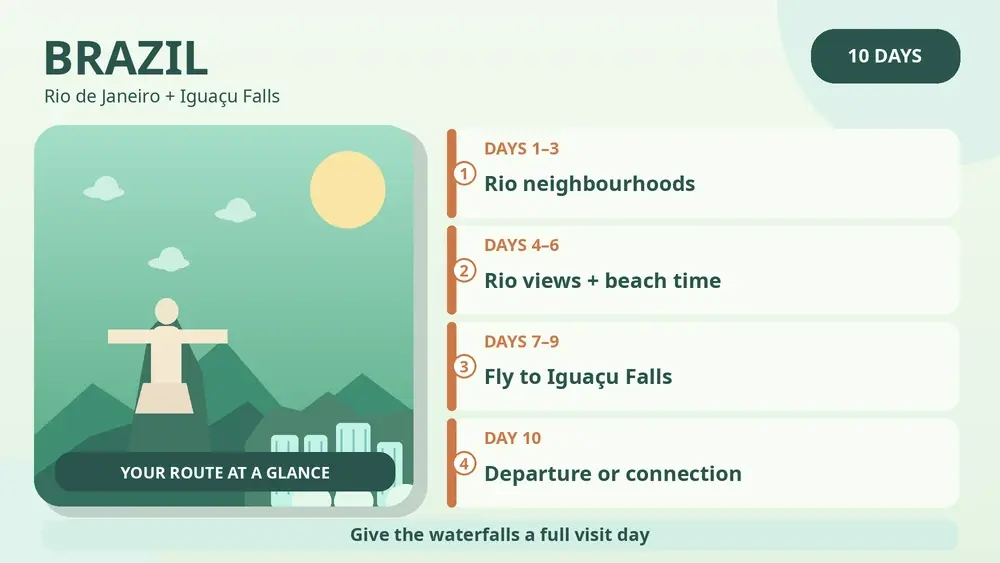
    Days 1–3: settle into Rio and understand the neighbourhoods

    Keep arrival day around your hotel area. Walk the beachfront in daylight, learn transport options and avoid a long cross-city itinerary after a flight.

    Use the first full clear-weather day for one major viewpoint such as Sugarloaf or Corcovado, then combine it with nearby neighbourhood time rather than another distant landmark.

    Give another day to the historic centre, museums, Santa Teresa or a second beach area according to interests and current local conditions.

    Days 4–6: Rio at a slower rhythm

    Use one morning for the second iconic viewpoint if the weather is good; if not, move it and use an indoor alternative.

    Spend a day that is genuinely beach-and-neighbourhood focused. Rio is not improved by turning every hour into transport between attractions.

    Use the last Rio day for a botanical garden, Tijuca-related experience, food tour or another priority. Keep the evening near your accommodation before the domestic flight.

    Days 7–9: fly to Foz do Iguaçu and give the falls real time

    Fly to Foz and do not assume the arrival day will support a full park visit. Airport, hotel and transfer timing matter.

    Use the full day for the Brazilian side or, if you have added a third night, choose the side according to weather and crowd patterns. The official Brazilian park information should determine current opening and ticket procedures.

    If visiting the Argentine side, treat it as another full day with border time. Do not schedule a late return immediately before an inflexible flight.

    Pace check: if this stage runs late, remove the lowest-priority activity rather than stealing time from meals, sleep or the next transfer. A resilient itinerary should become simpler when something changes, not more frantic.

    Day 10: departure or connection

    Fly onward with a healthy buffer, particularly if your international flight is on a separate ticket.

    If returning to Rio/São Paulo for the international departure, consider an overnight near the hub rather than trusting a tight same-day domestic connection.

    Keep the morning simple and close to the hotel or airport route.

    Transport reality: plan door to door

    Rio has metro, buses, ride-hailing and taxis, but the best combination depends on neighbourhood, time of day and current local advice. For Iguaçu, flights are usually the practical way to connect from Rio. The Brazilian national park can be reached from Foz by organised transfer, taxi/app transport or bus, while a visit to the Argentine side adds an international border crossing. Always check entry rules for your passport and carry the exact documents needed, even for a day trip.

    Door-to-door time is the number that matters. Add hotel checkout, reaching the station, airport or pier, waiting, boarding, collecting luggage, local transport at the other end and the possibility that everyone needs food immediately after arrival. This is why a “two-hour flight” or “three-hour train” can consume most of a day. Our guide to building realistic 7-, 10- and 14-day itineraries explains how to treat transfer days honestly.

    Food strategy: make meals part of the route

    Rio can be a major food destination without requiring formal restaurants every night. Beach kiosks, bakeries, juice bars and simple lunch-by-weight restaurants can balance more expensive dinners. At Iguaçu, park days often run on attraction timing, so eat when it is practical rather than waiting until everyone is exhausted. In hot weather, hydration and shade breaks matter as much as restaurant choice.

    One planned meal per day is usually enough. Keep another meal flexible so it can respond to where you actually are, not where an old itinerary expected you to be. With children, older travellers or very hot weather, eating before everyone becomes exhausted is often more important than reaching a restaurant that looked perfect months earlier.

    When to go and how the season changes the plan

    Rio is warm for much of the year, with summer bringing heat, humidity and more rain. Iguaçu’s water volume varies with rainfall and season; the official Brazilian tourism site notes stronger volume in wetter summer months and more defined falls in drier winter periods. Cloud can affect Rio viewpoints in any season, so flexible ordering is more valuable than obsessing over a single “best” month.

    Instead of searching for one universal best month, decide which compromise you prefer: better weather, fewer visitors, lower prices, longer daylight, beach conditions or seasonal scenery. No month maximises everything. Recheck short-term weather and official access information shortly before each critical outdoor day.

    Budget: where spending actually improves the trip

    Domestic flights, Rio hotel location and premium attractions shape the budget. Staying one or two metro stops away from the most expensive beachfront blocks can save money if the evening area still suits you. At Iguaçu, compare a central hotel plus transfers with a resort package. Avoid adding another Brazilian region simply because the domestic airfare looks cheap; airport transfers and lost sightseeing time are also costs.

    The most useful upgrades are often logistical rather than luxurious: a hotel that removes a daily transfer, a direct ride after a long flight, a flexible ticket, an additional night in a weather-dependent region or a guide where interpretation genuinely adds value. Cut low-value extras before cutting the pieces that keep the route reliable.

    Common mistakes to avoid

    • Trying to combine Rio, Iguaçu, Salvador and the Amazon in ten days.
    • Booking both major Rio viewpoints on fixed cloudy days with no flexibility.
    • Giving Iguaçu only one same-day flight window.
    • Crossing to Argentina without checking passport and entry requirements.
    • Choosing a Rio hotel solely by low price without understanding the exact block and transport context.

    Most difficult trips are not ruined by one large mistake. They become tiring through a sequence of optimistic assumptions: a transfer that “should” be quick, a hotel that is “only” a kilometre away, a famous walk assumed to suit everyone and a dinner reservation across town after an already long day. Leave margin before you need it.

    Families, older travellers and mixed-age groups

    Rio and Iguaçu can work well for families when the schedule includes beach or pool recovery. Children may enjoy cable cars and waterfall walks more than a full day of museums. Older travellers should check walking distance and lift/escalator access at viewpoints and the national park. Heat can magnify fatigue, so start earlier and plan seated breaks rather than adding another attraction to fill every afternoon.

    For mixed-age groups, agree which experiences everyone will share and which can be optional. Splitting for two hours is often healthier than forcing the entire group through one person’s priority. Build seating, toilets, shade, step-free access and realistic meal times into the plan with the same seriousness as headline attractions. Our guide to travelling with parents and older adults develops this approach in more detail.

    If you have more or less time

    With fourteen days, add Salvador, Paraty/Ilha Grande or another region rather than more Rio sightseeing. With seven days, stay in Rio and make Iguaçu optional unless the falls are one of your main reasons for visiting Brazil. The country’s scale means every extra region should earn its flight.

    When shortening the trip, remove an entire base before cutting every destination to one night. When lengthening it, add depth before distance. An extra morning in a place you already understand often produces a better memory than another multi-hour transfer to a new pin on the map.

    Useful official resources

    Opening hours, transport timetables, road conditions, trail rules and visitor procedures can change. Use official sources for the details that affect your exact travel dates and recheck them shortly before departure.

    Final planning checklist

    • Confirm passport, visa, entry and transit requirements for your nationality and route.
    • Book the genuinely scarce transport or accommodation segment before secondary attractions.
    • Check the exact luggage journey between bases, including stairs, ferries, station exits and rental-car rules.
    • Save offline copies of essential reservations, insurance details and each accommodation address.
    • Recheck weather, road, park, trail or transport notices shortly before each critical day.
    • Keep at least one flexible half-day that can absorb rain, fatigue, a delay or a cancellation.
    • Choose clothing and footwear for the actual surfaces and climate, not only for photographs.
    • Leave a generous buffer before international flights and other connections that are expensive to miss.

    The purpose of a good itinerary is not to prove that you covered the maximum distance. It is to make the important experiences easier to enjoy and to leave enough energy for the unexpected parts that become the best memories. Use this route as a framework, then remove anything that does not fit your interests, mobility or travel rhythm.

  • Rio de Janeiro in 5 Days: Beaches, Sugarloaf and Christ the Redeemer Without Living in Traffic

    Rio de Janeiro in 5 Days: Beaches, Sugarloaf and Christ the Redeemer Without Living in Traffic

    Rio de Janeiro deserves a trip built around geography and real travel time rather than a checklist. Rio is spectacular because mountains, beaches, dense neighbourhoods and city landmarks occupy the same landscape, but that geography also creates traffic bottlenecks and long cross-city journeys. Five days is enough for Corcovado, Sugarloaf, two different beach areas and one cultural or historic day if you group the city into zones and let weather decide the best viewpoint day.

    If this destination is part of a longer journey, compare the pacing with Brazil in 10 Days: Rio de Janeiro and Iguaçu Falls Without Spending Half the Trip in Airports. The useful question is not how many famous names fit on the map, but how much usable holiday time remains after transfers, check-in, meals, weather and rest.

    Quick trip summary

    • Recommended time: 5 days.
    • Best planning principle: group each day by geography and protect only the reservations that control access.
    • Best for: independent travellers, couples, families and slower-paced visitors who prefer a realistic rhythm.
    • Keep flexible: at least one half-day or one major activity that can move with weather, traffic or energy.
    • Book first: the accommodation location, scarce transport and any permit, timed entry or signature experience that shapes the rest of the trip.

    Is Rio de Janeiro the right trip for you?

    Rio suits travellers who want outdoor scenery with a major-city atmosphere. Beach-focused visitors, hikers, photographers, families and nightlife travellers can all enjoy it, but the daily plan needs more situational awareness than a compact resort. The best first trip uses reliable transport between districts and avoids assuming every attractive viewpoint can be added spontaneously after another full day.

    The practical test is simple: decide what would make you disappointed if you missed it, then build the trip around that one or two priorities. Everything else should earn its place by fitting the same area of the day. This is especially important when travelling with children, older relatives or anyone who enjoys a slower pace.

    Where to stay: choose location before hotel style

    Base Why choose it
    Copacabana Best for a first trip, broad hotel choice, beach access and practical transport; busy and very tourist-oriented.
    Ipanema / Leblon Best for beach atmosphere, restaurants and a more polished evening base, often at a higher price.
    Botafogo Best for metro access, Sugarloaf proximity and good value relative to the beachfront, with strong connections to several districts.

    A more attractive room is not always a better travel decision. Before booking, map the first activity of the morning, the likely dinner area and the departure route. If the hotel adds two unnecessary transfers every day, the hidden cost is time as well as money.

    A realistic 5-day itinerary

    Day 1: beach district and orientation

    Keep arrival day around your base. Walk Copacabana or Ipanema in active hours, understand the neighbourhood and watch sunset from a safe, busy location. Do not rush directly to a distant viewpoint if clouds or flight delays make the timing poor.

    Day 2: Christ the Redeemer and nearby green Rio

    Use a clear-weather window for Corcovado and combine it with one nearby garden, forest or neighbourhood stop rather than crossing to Sugarloaf immediately. Timed transport and crowds make the landmark a substantial half-day.

    Day 3: Sugarloaf and Urca / Botafogo

    Give Sugarloaf its own scenic block and spend time around Urca or Botafogo. Sunset is popular, but the best time depends on cloud, heat and ticket availability. Keep the rest of the day local.

    Day 4: historic centre, Santa Teresa or museums

    Choose a daytime cultural route through central Rio, museums, Lapa or Santa Teresa with current local guidance. Use reliable transport between areas rather than walking long unfamiliar connections solely because they look close on a map.

    Day 5: beach, Tijuca or one flexible experience

    Use the final day for another beach zone, a guided nature experience or anything weather displaced earlier. Leaving one flexible day protects the trip if Corcovado or Sugarloaf was hidden by cloud on your original date.

    How to move around without wasting the day

    Metro is useful along key corridors, while ride-hailing and taxis are practical for many point-to-point journeys. Traffic can be significant, so group days geographically and add a time buffer before airports, tours and sunset reservations. Walking is excellent along busy beachfront promenades and selected neighbourhoods, but route decisions should reflect current local context, not just map distance.

    Do not judge a journey only by kilometres. A short distance can include traffic, security, parking, boat boarding, luggage handling or a long final walk. For every important transfer, think in door-to-door time and keep a margin before anything expensive or difficult to replace.

    Best time to visit

    Rio can be visited year-round, but summer is hot, humid and storm-prone, while winter is milder and often comfortable for city walking. Visibility on Corcovado and Sugarloaf matters more than a generic seasonal ranking. Keep at least one viewpoint movable and check the live forecast before committing.

    Seasonal advice should guide the style of the trip, not become a promise. Climate averages cannot tell you the exact conditions on your dates. Check the local forecast and any official closure, transport or safety notice again shortly before each weather-sensitive day.

    What to book first

    Reserve timed landmark access when needed, plus any special guided hike, football match or high-demand event. Do not book both major viewpoints tightly on the same day; weather and transport can undermine the plan. Airport transfers deserve generous buffers because traffic conditions vary by time and route.

    After those anchors are secure, leave ordinary meals, short walks and secondary sights open. A timetable with every hour reserved is fragile: one delay turns the rest of the day into a sequence of apologies and missed slots.

    Food strategy: eat well without scheduling every meal

    Beach kiosks, bakeries, juice bars, traditional restaurants and modern dining all fit a Rio trip. On long sightseeing days, eat close to the district you are already in instead of crossing the city for one famous restaurant. Keep water and a simple snack available before viewpoints where queues can lengthen the day.

    For a multi-age group, a reliable breakfast and an easy lunch often matter more than one additional attraction. Keep water accessible, avoid waiting until everyone is exhausted to look for food and use meal stops as genuine rest rather than another item to complete quickly.

    Travelling with children

    Families can combine beaches, cable-car scenery, gardens and shorter museum visits. Shade and hydration are critical in hot weather. At beaches, keep children close and follow local advice on currents and swimming areas. A long central-city cultural day should include a clear rest or food break.

    Children do not need a simplified version of every adult attraction. They usually need a different rhythm: movement, shade, snacks, toilets and periods when nobody is asking them to pay attention. Protect those needs and the whole group usually sees more, not less.

    Travelling at a slower pace or as a senior

    Stay near metro access in Copacabana, Ipanema or Botafogo and use taxis for uphill or awkward final connections. Major viewpoints involve queues, slopes and standing, so plan fewer activities around them. Choose one beach section rather than walking kilometres of promenade simply to say you covered the whole coast.

    When mobility or stamina is limited, reduce transitions before reducing experiences. One well-located base, a direct transfer and a shorter route often preserve the most memorable parts of a trip far better than trying to keep the original schedule with longer rest stops.

    Budget: where the money really goes

    Accommodation varies by beachfront location and event dates. Ride-hailing is convenient but repeated cross-city use becomes expensive, which is another reason to group neighbourhoods. Paid viewpoints and organized tours should be chosen selectively; beaches, promenades and many views are free.

    Track the total cost of each planning choice. A lower hotel rate can be false economy after taxis, parking or long transfers, while a more expensive excursion may be reasonable if it replaces a rental car, guide and separate admission fees. Compare complete days rather than isolated prices.

    Weather fallback plan

    Cloud is the major planning issue for iconic viewpoints. If Corcovado is covered, move to museums, food, a lower neighbourhood or beach time and try again later. Summer downpours can be intense. Avoid exposed hikes or water activities when local warnings indicate unsafe conditions.

    The useful fallback is not a list of random indoor attractions. It is one realistic substitute that fits the same area or preserves the next day. Keep at least one activity movable so a poor forecast does not force you to choose between losing money and doing something unsafe.

    Connectivity, cash and small practical details

    Keep your phone secure rather than holding it loosely near traffic or in crowded areas, and save hotel details offline. Use reliable transport apps or official taxis. Carry only what you need to the beach, where leaving valuables unattended while swimming creates unnecessary risk.

    Save hotel addresses, tickets, permits, insurance details and the next transfer outside your email app. Offline access matters most precisely when the network is weak, your battery is low or you are trying to solve a delay.

    What to pack

    Light clothing, sun protection, water, a compact rain layer and comfortable sandals or shoes are useful. For hikes, bring proper footwear and more water than for a normal city walk. Leave expensive jewellery and unnecessary valuables at the hotel rather than managing them on beach days.

    A small day bag should hold water, medication, sun or rain protection and the layer you are most likely to need. The goal is not to carry everything; it is to avoid having the useful items locked in a suitcase or parked car when conditions change.

    Common mistakes to avoid

    • Booking Christ the Redeemer and Sugarloaf back to back without a weather buffer.
    • Crossing the city several times a day because attractions look close on a map.
    • Taking unnecessary valuables to the beach.
    • Walking unfamiliar routes after dark instead of using reliable transport.
    • Underestimating heat, humidity and the time spent in queues at major viewpoints.

    Responsible travel and local etiquette

    Use marked trails and established operators in natural areas, respect beach and park rules and avoid wildlife interaction for photographs. In neighbourhoods, choose tours that provide cultural context rather than treating communities as spectacles. Dispose of waste properly on beaches and use refill options when practical.

    The best rule is to treat the destination as a real place rather than a stage built for visitors. Follow staff and ranger instructions, respect residential space and protected environments, and spend with businesses that add genuine local value instead of rewarding the most aggressive sales pitch.

    If you have less or more time

    Three days can cover one major viewpoint, one beach day and a cultural district. Four days adds the second viewpoint. A week allows Tijuca, Niterói or more beach time while keeping weather flexibility and avoiding the feeling that every day must begin before sunrise.

    Extra days are most useful when they reduce pressure. Before adding another distant stop, ask whether the trip improves more by sleeping in the same place, repeating a favourite beach or neighbourhood, waiting for better weather or enjoying a late breakfast without watching the clock.

    How to choose between similar experiences

    Christ the Redeemer gives the iconic statue and a broad city panorama; Sugarloaf offers a different angle over bays and the coastline. If clouds are heavy, neither is worth forcing. Choose the clearer day rather than ranking the viewpoints in advance as if weather did not matter.

    When two options offer a similar experience, choose the one that fits the geography and energy of the day. The extra hour of transfer rarely creates an extra hour of enjoyment, especially in heat, traffic, rough water or at altitude.

    Safety and decision-making on the day

    Current local advice matters in Rio. Use reliable transport between unfamiliar districts, keep valuables discreet and be deliberate about routes after dark. On beaches and trails, waves, heat and changing weather are practical risks. A sensible plan is confident but not casual about context.

    Local warnings, ranger instructions and transport operators have more value than an itinerary written months earlier. Set a practical turnaround time for hikes, drives and water days, and change the plan when conditions deteriorate rather than trying to complete the original checklist.

    Useful official and planning resources

    Opening hours, protected-area rules, transport schedules, fees and visitor procedures change more often than the landscape. Recheck the source below shortly before departure.

    Final planning checklist

    • Confirm passport, visa, transit and health requirements for your nationality.
    • Reserve the transport, permit or timed entry that controls the rest of the itinerary.
    • Check how luggage moves between airport, road transfer, ferry, train or accommodation.
    • Download offline maps and save key tickets outside your email app.
    • Recheck weather, sea, road, trail or park notices before each critical day.
    • Keep at least one half-day that can absorb a delay or become simple rest.
    • Leave a generous buffer before international flights and other costly connections.

    A good trip to Rio de Janeiro should feel like you understood the place, not merely that you passed through it. Keep the transport anchors fixed, leave room for conditions to change, and remove anything that does not fit your interests, mobility or energy. The result is usually more enjoyable than the most ambitious version of the same route.

  • Colombia in 10 Days: Bogotá, Medellín and Cartagena With Flights That Actually Save Time

    Colombia in 10 Days: Bogotá, Medellín and Cartagena With Flights That Actually Save Time

    Colombia is large enough that a ten-day trip needs a clear transport strategy. Bogotá, Medellín and Cartagena form a classic first-time triangle because each feels different, and short domestic flights can save entire days compared with overland travel. The route only works, however, if you accept that airport time is part of the trip.

    Bogotá brings altitude, museums and Andean weather; Medellín adds spring-like temperatures and a valley city shaped by public transport and neighbourhood change; Cartagena shifts the trip to Caribbean heat and colonial streets. Three bases are enough.

    Travellers who want nature more than cities might prefer our Costa Rica itinerary or Peru itinerary. Colombia’s first-trip strength is the contrast between urban regions.

    Quick trip summary

    • Use 3 nights Bogotá, 3 nights Medellín and 3 nights Cartagena.
    • Fly the long intercity legs; road journeys are much slower than map distance suggests.
    • Give Bogotá an easy first day because of altitude.
    • In Cartagena, plan around heat: early morning and evening outside, slower midday.
    • Choose neighbourhoods carefully and use current local safety advice rather than relying on old reputations.

    Why this city triangle is realistic

    Each city offers a distinct climate and travel style, so the flights buy genuine variety rather than moving you between similar places. Bogotá and Medellín are separated by mountains; Cartagena sits on the Caribbean coast.

    The route also gives you a natural energy curve: cooler Bogotá for culture, Medellín for mixed city/outdoor days, then Cartagena for a slower finish.

    The official Colombia Travel site can help with current destination information. For neighbourhood-level safety and transport choices, use recent local guidance because conditions can change.

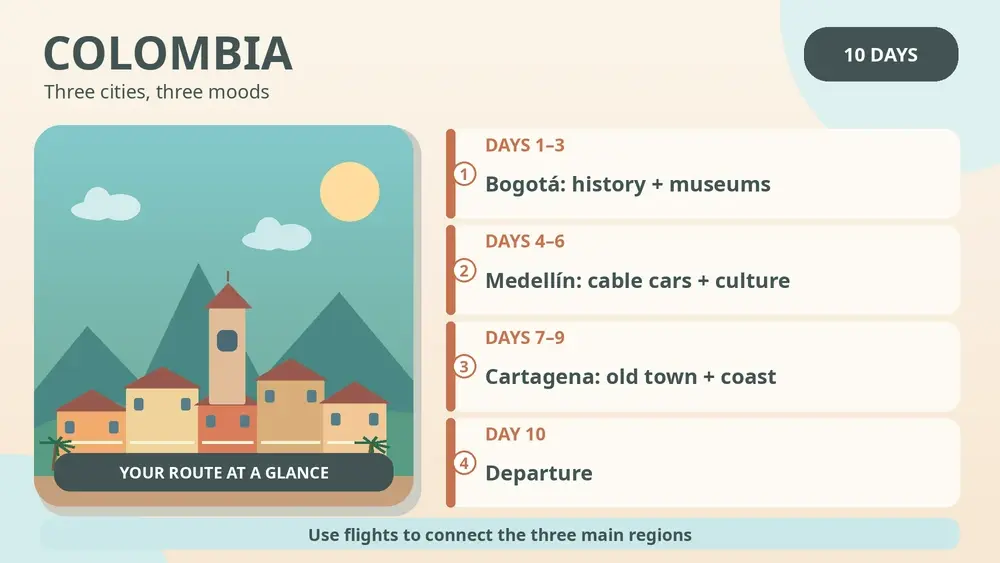
    A realistic itinerary at a glance

    DaysBaseMain focus
    1–3BogotáLa Candelaria, museums and one viewpoint/neighbourhood day
    4–6MedellínCity, cable cars and one regional excursion
    7–9CartagenaWalled city, Getsemaní and optional islands
    10DepartureFly home or connect onward

    Day-by-day plan

    Day 1: Bogotá arrival

    Bogotá sits at high elevation, so use arrival day for a short walk, an early meal and sleep. Staying in a neighbourhood with restaurants nearby reduces the need for late transport after a long flight.

    Day 2: Historic Bogotá

    Explore La Candelaria and choose one major museum such as the Gold Museum rather than trying to see every collection. Weather can shift quickly, so carry a light waterproof layer.

    If you go to Monserrate, treat visibility as weather-dependent and avoid forcing the climb if altitude affects you.

    Day 3: Bogotá beyond the historic core

    Use the day for a food experience, Chapinero/Zona G, Usaquén or another neighbourhood according to your interests. This is also your buffer if Day 2 weather was poor.

    Day 4: Fly to Medellín

    A morning or midday flight works well. The airport is outside the central valley, so include the ground transfer in your planning.

    After check-in, keep the first Medellín evening near your base.

    Day 5: Medellín city day

    Use the metro/cable-car system to understand the geography and visit one or two areas in depth. Guided context can be especially valuable in places where visitors are interested in the city’s social transformation.

    Avoid “dark tourism” experiences that reduce complex communities to crime stories. Choose guides who centre residents and present-day life.

    Day 6: Day trip or slower city day

    Guatapé is a popular full day, but the drive and climb can be tiring. Choose it if colourful towns and reservoir views appeal to you; otherwise spend more time in Medellín’s museums, gardens and neighbourhoods.

    Day 7: Fly to Cartagena

    Arrive and adapt to the heat. Walk the walled city after the strongest sun has eased, then have dinner nearby.

    Cartagena is compact but humid, and the climate changes how far you want to walk.

    Day 8: Walled city and Getsemaní

    Start early, return to the hotel or a shaded lunch at midday, then go out again in late afternoon. This split-day rhythm is more comfortable than pushing through the heat.

    Take your time with streets, balconies, churches and plazas instead of turning the old city into a photo scavenger hunt.

    Day 9: Islands or a slow Cartagena day

    Choose a reputable boat trip if beaches are important. Sea conditions, transfer logistics and beach-club expectations vary, so understand exactly what the package includes.

    If you are tired of transfers, stay in Cartagena. A slow final day can be more satisfying than another early pickup.

    Day 10: Departure

    Allow traffic and airport time. If connecting internationally on separate tickets, build more margin than the airline minimum.

    Where to stay and how many hotel changes to make

    In Bogotá, Chapinero/Zona G, Parque 93 and parts of La Candelaria offer very different evenings; choose based on your activities and current local advice.

    In Medellín, El Poblado is convenient for first-timers but not the only option. Laureles offers a flatter, more residential feel.

    Illustrated itinerary linking Bogotá, Medellín and Cartagena

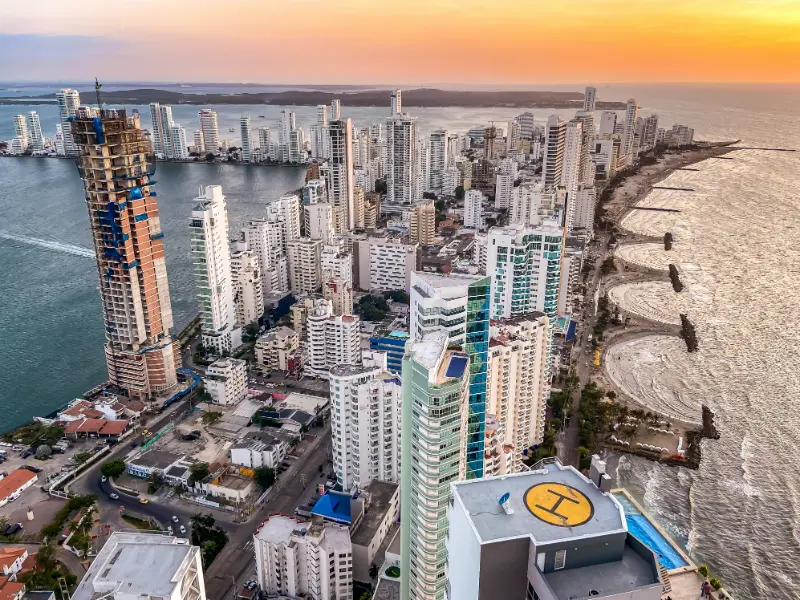
    In Cartagena, sleeping inside the walled city or Getsemaní makes evening walks easy, while Bocagrande offers modern hotels and a different atmosphere.

    Transport: what is worth booking in advance

    Domestic flights are worth using, but airport transfers are not trivial. Bogotá traffic and Medellín’s out-of-town airport can turn a “one-hour flight” into half a day.

    Use app-based or authorised transport according to current local practice, especially at night and with luggage. If your itinerary adds protected natural areas later, verify rules through Colombia National Natural Parks rather than assuming city-tour advice applies nationwide.

    Do not rent a car for this three-city route. It adds parking, security and navigation issues without improving the main transfers.

    Food and daily rhythm

    Each city has a different food scene. Bogotá is strong for contemporary Colombian cooking and markets; Medellín for Antioquian traditions and modern restaurants; Cartagena for Caribbean seafood and tropical flavours.

    In Cartagena tourist zones, menu prices can vary widely. Check prices before ordering and be cautious with unsolicited beach services or add-ons.

    Families, children and older travellers

    Families should keep Bogotá’s first day light because altitude affects adults and children unpredictably. Medellín’s parks and cable cars can break up museum time.

    Older travellers may prefer Laureles in Medellín for flatter streets and should use taxis strategically in Bogotá. Cartagena’s heat makes midday rest especially valuable.

    A hotel pool in Cartagena is not a frivolous upgrade for a multigenerational group—it can be the difference between an enjoyable afternoon and heat fatigue.

    Budget: where the money really goes

    Domestic flights are often reasonably priced when booked ahead, but checked bags and seat fees can change the total. Compare the complete fare.

    Cartagena is usually the most expensive stop for accommodation and tourism services. Bogotá and Medellín offer broader price ranges.

    Budget for airport transfers in all three cities. They are part of the transport cost, not a minor extra.

    Best time to go

    Colombia’s seasons are driven more by altitude and rainfall than by a simple four-season pattern. Bogotá can be cool and wet while Cartagena is hot on the same day.

    Pack for multiple climates: light layers and rain protection for Bogotá, warmer conditions in Medellín, breathable clothing and strong sun protection for Cartagena.

    Holiday periods can raise domestic-flight prices and crowd coastal destinations.

    Three cities, three different ways to plan a day

    Bogotá works best when you group museums and historic streets, then use a separate day for northern neighbourhoods or a food experience. Medellín is more linear because the metro and cable-car network can shape the day, but hills still make short map distances deceptive. Cartagena is the opposite: distances are small, yet heat and humidity make the timing of those kilometres more important than the number.

    That means the same daily schedule should not be copied across all three stops. In Bogotá, start a little later if you are still adapting to altitude. In Medellín, use the morning for a neighbourhood or excursion and the afternoon for a museum or garden. In Cartagena, start early, retreat during the strongest heat and return outside near sunset. Adapting the clock is one of the simplest ways to make the trip feel less tiring.

    It is also worth deciding how much guided context you want. Bogotá and Medellín both have histories that are easy to misunderstand through headlines alone. A strong local guide can add value, but choose experiences that explain communities rather than turning poverty, conflict or crime into spectacle. The quality of the interpretation matters more than the number of stops on the tour.

    Mistakes that make this trip harder than it needs to be

    • Taking buses between all three cities to save money on a ten-day trip.
    • Planning a heavy Bogotá day immediately after a long-haul flight.
    • Choosing Medellín experiences that sensationalise violence rather than explain the city.
    • Walking Cartagena through the hottest midday hours every day.
    • Booking an island trip without checking what is included.
    • Using neighbourhood advice from many years ago as if cities do not change.

    How I would adapt the itinerary

    With seven days, choose Bogotá plus Medellín or Medellín plus Cartagena. With fourteen, add the coffee region or a slower Caribbean stop rather than extending every city equally.

    Travellers who dislike airports should focus on one region—Bogotá plus the coffee zone, or Cartagena plus nearby Caribbean destinations—rather than forcing the classic triangle.

    Before booking the trip

    • Check recent neighbourhood and transport guidance before departure.
    • Compare domestic airfares including bags.
    • Plan for three different climates.
    • Use a midday-rest strategy in Cartagena.
    • Protect separate-ticket international connections with extra time.

    Ten days in Colombia can show remarkable variety, but only because flights replace very long road journeys. Once you accept the airport time and keep the city days geographically simple, the route feels far more spacious than it looks on paper.