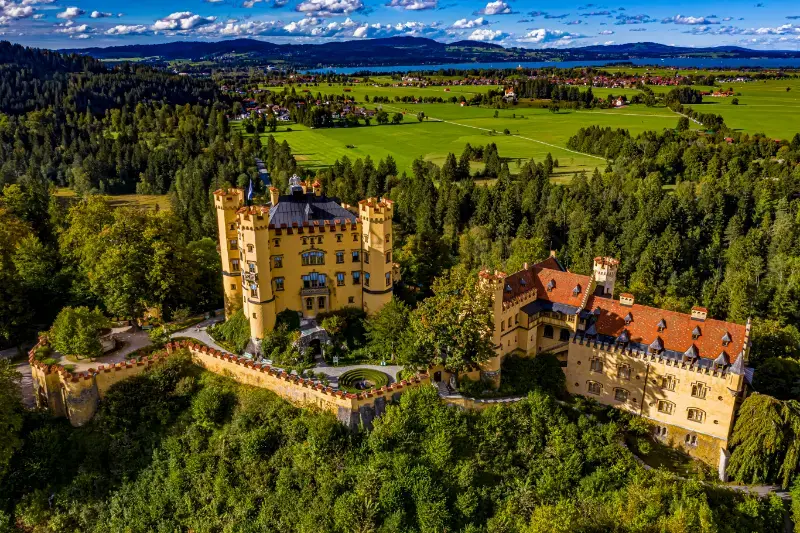
Bavaria is much bigger than Munich and Neuschwanstein. The classic mistake is to use Munich as a base for a series of very long day trips, spending three hours on trains or coaches so that every mountain and castle can be ‘done’ without moving hotels.
This eight-day route shifts the centre of gravity south. Garmisch-Partenkirchen, Füssen and Berchtesgaden become real bases, while Munich is only the practical gateway. The result is more evening time in the Alps and fewer dawn departures from the city.
The official Bavaria Travel portal presents Bavaria as a mix of Alps, lakes, castles, cities and regional traditions. That mix is best experienced by staying in the landscapes instead of repeatedly commuting back to Munich.
Quick trip summary
- 3 nights Garmisch-Partenkirchen, 2 Füssen, 2 Berchtesgaden, final departure day.
- Use rail and buses where convenient; a car can simplify the Füssen–Berchtesgaden transition but is not mandatory for every traveller.
- Treat Neuschwanstein as one part of Füssen, not the whole trip.
- Keep mountain days weather-flexible.
- Do not add Nuremberg or Salzburg unless the trip is longer.
Why this route works
Garmisch provides mountain access, gorge walks and an alpine town base that works even if the highest cableways are clouded in.
Füssen gives Neuschwanstein/Hohenschwangau context plus lakes and a pleasant old town, preventing the castle visit from becoming a bus-tour sprint.
Berchtesgaden closes with a different alpine landscape around Königssee and the national-park area, far enough east to deserve its own stay.
A realistic itinerary at a glance
| Days | Base | Main focus |
|---|---|---|
| 1–3 | Garmisch-Partenkirchen | Mountains, gorge and alpine town |
| 4–5 | Füssen | Castles, lakes and old town |
| 6–7 | Berchtesgaden | Königssee and national-park landscape |
| 8 | Departure | Munich/Salzburg-area onward travel |
Day-by-day plan
Day 1: Travel to Garmisch
Arrive from Munich and keep the afternoon to the historic areas, cafés and a short local walk. Do not make Zugspitze your arrival-day gamble.
Day 2: Main mountain day
Choose Zugspitze or another high-elevation outing only if weather justifies the cost and visibility. If cloud is poor, use lower walks, cableways or town time.
Day 3: Gorge or valley day
Partnach Gorge can be the anchor when conditions and access allow, with the rest of the day reserved for a lower-effort valley activity. Families should avoid stacking a long hike after the gorge.
Day 4: Garmisch to Füssen
Travel west, check in and enjoy Füssen’s old town and lakeside atmosphere. Saving the castles for tomorrow removes pressure from the transfer day.
Day 5: Neuschwanstein and Hohenschwangau area
Use your timed entry exactly as instructed and give yourself time for the walk/shuttle/bus logistics around the castles. If mobility is limited, research the final uphill access before booking.
Day 6: Füssen to Berchtesgaden
This is the longest awkward transfer of the route. A car or private transfer can save time; by public transport, accept that the move is the main activity.
Day 7: Königssee / Berchtesgaden
Choose the lake, national-park walks or a historical site according to weather. Boat timetables and mountain conditions are seasonal, so avoid promising yourself three major excursions in one day.
Day 8: Departure
Continue toward Munich or Salzburg-area transport with a generous buffer. If your long-haul flight is early, move closer to the airport the night before.
Where to stay and how many hotel changes to make
In Garmisch, station access is useful if travelling car-free; a central base keeps restaurants walkable.
In Füssen, staying in town is often more enjoyable than sleeping only for castle proximity.
In Berchtesgaden, decide whether you value town convenience or a scenic rural guesthouse, then check evening transport/parking.
On a multi-base trip, location usually matters more than a small difference in room price. A hotel that removes two daily transfers can save more energy than a nicer room on the wrong side of town.
Read recent reviews for the practical details that booking photos rarely show: stairs, lift size, street noise, parking access, breakfast hours and the final walk from public transport.
Transport: what is worth planning in advance
Rail works very well for Munich–Garmisch and many local excursions.
The cross-Alps connection between Füssen and Berchtesgaden is the route’s least elegant public-transport day; this is where a one-way car rental or private transfer may be worth considering.
Do not keep a car only to leave it in hotel parking while you use cableways and boats.
Judge every move door to door rather than by the timetable alone. Checkout, reaching the terminal, waiting, luggage and the final connection to the next hotel can turn a short headline journey into half a day.
Book the inflexible ticket only when the savings are meaningful and the day is genuinely fixed. Weather-sensitive activities and remote transfers need room to move.
Food and daily rhythm
Use mountain huts and bakeries as part of outdoor days rather than carrying a restaurant schedule into every excursion.
Regional portions can be substantial; a lighter evening meal often feels better after a rich lunch or beer-garden stop.
Use meals to control the rhythm of the day. A long local lunch can be an experience and a recovery period, especially after exposed archaeological sites, mountain walks or early starts.
Do not turn every meal into another attraction. Mix regional specialties with simple food, particularly on transfer days when everyone is already tired.
Families, children and older travellers
Cableways, lakes and castles make the route naturally varied for children.
Older travellers should research uphill castle access, boat boarding and gorge conditions instead of assuming every iconic sight is easy.
Bad-weather days should remain enjoyable; that is why each base has town and cultural alternatives.
For multigenerational travel, the useful pace is the one at which the least mobile person still enjoys the day. That normally produces a better experience for everyone else too.
Children often respond better to changes of format than to more attractions: a beach after a museum, a boat after a city walk, or wildlife after a long drive.
Budget: where the money really goes
Cableways and castles can make individual days expensive even when rail travel is reasonable.
Spend on the high mountain lift only when conditions make it worthwhile, and compare regional transport tickets with your exact route.
Compare total cost instead of headline prices. A cheaper room can become more expensive after transfers, parking, meals and the time lost reaching it.
The best splurges are usually the ones that remove friction: a central hotel, a reliable private transfer, a direct train, a guide where context matters or one extra night that prevents an exhausting move.
Best time to go
Late spring through early autumn is simplest for hiking and lake activities, though alpine weather remains changeable.
Winter creates a very different ski/snow trip; shoulder-season maintenance can affect some lifts and boats.
Shoulder season can offer a good balance between weather, demand and comfort, but some boats, mountain services and seasonal restaurants may run less frequently.
Heat, rain, snow, wind and daylight should change the order of your day. Use the most comfortable hours for exposed outdoor sights and keep indoor or low-effort alternatives available.
Comfort, accessibility and realistic pacing
Staying in the Alps removes the pressure to catch the last train back to Munich after every excursion.
The route needs at least one weather-flexible day because cloud can make expensive mountain viewpoints pointless.
Travel fatigue accumulates. One difficult transfer can reduce the quality of the next two days, which is why this itinerary avoids one-night bases unless geography genuinely requires them.
A free half-day is not wasted time. It is insurance for weather, laundry, a delayed journey, a child who needs rest or a place you discover only after arriving.
Small decisions that improve the trip
Sleep where you hike
Morning weather windows are easier to use when you are already in the mountains.
Give Füssen two nights
The town and lakes are worth more than a rushed Neuschwanstein coach stop.
Treat the east-west transfer honestly
It is long enough to count as the day’s main event.
Do not chase every summit
One clear high-mountain day is enough for a first trip.
What I would leave out on this length of trip
Leave Nuremberg and northern Bavaria for the broader Germany by train itinerary.
Skip a Salzburg overnight unless you add at least two more days.
Mistakes that make this trip harder than it needs to be
- Using Munich for every alpine day trip.
- Booking Neuschwanstein without enough access time.
- Paying for a summit cableway in hopeless weather.
- Underestimating Füssen–Berchtesgaden transfer time.
- Adding Salzburg as a one-night trophy stop.
- Driving to an early Munich flight from the far southeast.
How I would adapt the itinerary
With five days, use Garmisch and Füssen.
With ten days, add two Salzburg nights or a slower Chiemsee stop rather than compressing more mountains.
Before booking
- Book castle entries when needed.
- Check lift/boat seasonal operation.
- Keep one mountain day flexible.
- Plan the Füssen–Berchtesgaden transfer before hotels.
- Protect the final airport connection.
Practical questions
Do I need a car?
No for much of the route, but it can simplify the longest cross-region transfer and rural accommodation.
Is Neuschwanstein worth it?
Yes for many first-time visitors, but the overall area is more rewarding when you also allow time for Füssen and the lakes.
Which base is best for older travellers?
Garmisch and Füssen are easiest when chosen near stations; check specific mountain/castle access for mobility needs.
Final thoughts
Bavaria’s Alps are much more rewarding when they are not reduced to a series of Munich day trips.
Eight days with three alpine bases create mountain weather flexibility, calmer evenings and a stronger sense of place.