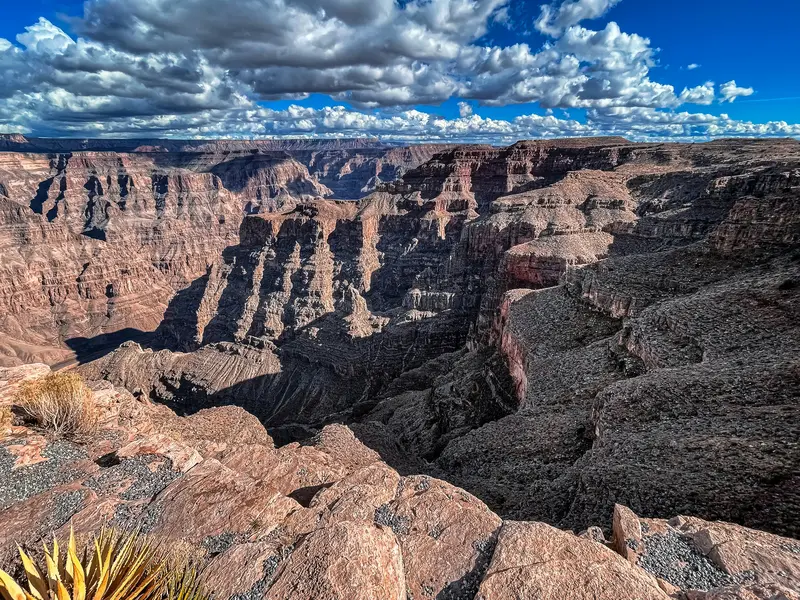
The American Southwest encourages overplanning because Zion, Bryce Canyon, Grand Canyon, Arches, Canyonlands, Monument Valley and Page all look close when viewed at state scale. Ten days are better spent on three major parks than on a windshield tour of seven.
This route uses Las Vegas as the practical gateway, then Zion, Bryce Canyon and the Grand Canyon South Rim. Page is optional as a transfer stop, not another mandatory two-night base, and Moab is deliberately left for a second road trip.
For 2026, the National Park Service states that Zion Canyon shuttle service resumes March 7 and operates seasonally; no shuttle ticket or reservation is required, but park admission still applies. Bryce Canyon also publishes a 2026 seasonal shuttle schedule, so current NPS information should shape each park day rather than an old road-trip blog.
Quick trip summary
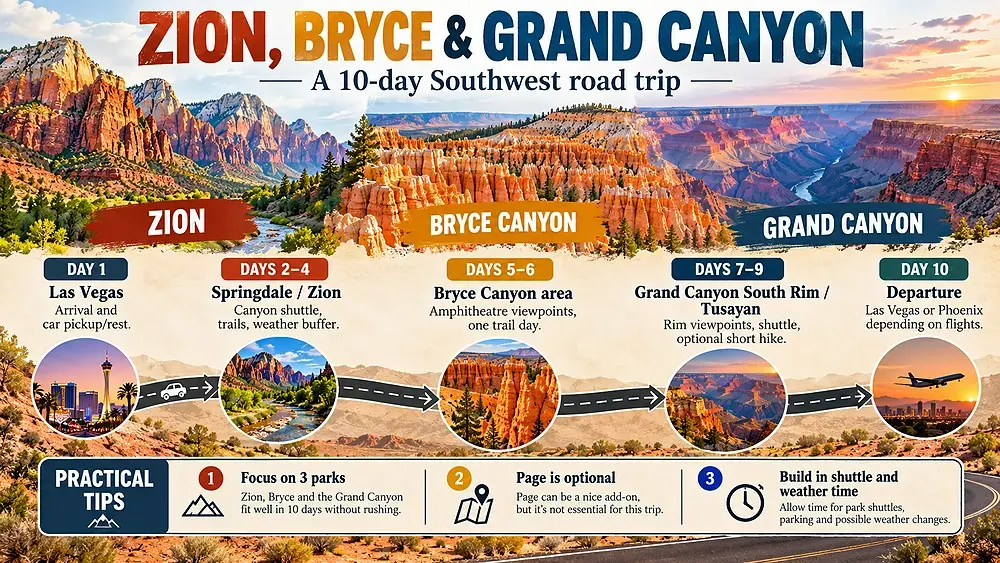
- 1 Las Vegas arrival night, 3 Zion-area nights, 2 Bryce nights, 3 Grand Canyon South Rim/Tusayan nights, Day 10 departure.
- In 2026 Zion Canyon shuttle service is seasonal; check the exact NPS schedule for your dates.
- Bryce Canyon shuttle operates seasonally in 2026 and can reduce parking stress.
- Use the Grand Canyon South Rim for this route; do not build the itinerary around North Rim access without checking current NPS status.
- Do not add Moab/Arches unless the trip becomes at least 13–14 days.
Why this route works
Three Zion nights let you use the shuttle system without making the first hike a race after driving from Las Vegas.
Bryce needs less time than Zion but benefits from one sunrise/sunset plus one daylight trail/viewpoint day.
The Grand Canyon deserves several nights because scale, heat, weather and shuttle logistics make a one-hour rim stop a poor finale.
A realistic itinerary at a glance
| Days | Base | Main focus |
|---|---|---|
| 1 | Las Vegas | Arrival and car pickup/rest |
| 2–4 | Springdale / Zion | Canyon shuttle, trails and weather buffer |
| 5–6 | Bryce Canyon area | Amphitheatre viewpoints and one trail day |
| 7–9 | Grand Canyon South Rim / Tusayan | Rim, shuttle viewpoints and optional short hike |
| 10 | Departure | Las Vegas/Phoenix depending on flights |
Day-by-day plan
Day 1: Las Vegas arrival
Collect the car only if rested and keep the night simple. Do not begin a desert highway drive after a long-haul arrival just to save one hotel night.
Day 2: Drive to Zion
Travel to Springdale/Zion area and use a short visitor-centre or Pa’rus-style orientation walk. Learn the shuttle system before the main day.
Day 3: Zion Canyon
Use the 2026 shuttle when it is operating. The NPS says buses generally arrive every 5–10 minutes in the canyon during scheduled service, and a one-way ride to Temple of Sinawava takes about 45 minutes. Choose one major trail plus one short stop, not every shuttle station.
Day 4: Zion flexible day
Use a second trail, Kolob/other accessible area, e-bike-style valley option where legal, or a slow day. This is the weather/crowd buffer and protects the route if Day 3 was too hot or busy.
Day 5: Zion to Bryce
Drive to Bryce Canyon and stop selectively. Arrive with daylight for the amphitheatre rim or sunset, but do not start a long trail after the transfer.
Day 6: Bryce Canyon
Use the 2026 shuttle during its operating season to reduce parking pressure. Combine several viewpoints with one trail matched to altitude, heat/cold and fitness; Bryce sits much higher than Zion and can feel dramatically cooler.
Day 7: Bryce to Grand Canyon South Rim
Drive south, using Page only if it fits naturally. Avoid stacking Antelope Canyon, Horseshoe Bend and the entire drive unless you have timed entries and enough daylight.
Day 8: Grand Canyon South Rim
Use rim shuttles/viewpoints and walk a manageable section of the Rim Trail. The canyon’s scale does not require a strenuous below-rim hike to be meaningful.
Day 9: Second Grand Canyon day
Use sunrise, another rim sector, museum/geology interpretation or a short below-rim section only if weather, heat and fitness are appropriate. Turn around before exhaustion; uphill return is harder than the descent suggests.
Day 10: Departure
Drive to Las Vegas or Phoenix according to the chosen airport with a conservative buffer. Do not schedule a long canyon hike before the departure drive.
Where to stay and how many hotel changes to make
Springdale is the most convenient Zion base when shuttle season and walkability matter.
At Bryce, staying near the park entrance reduces dawn/sunset driving.
At the Grand Canyon, in-park lodging or Tusayan costs more but protects sunrise/sunset time and removes a long daily commute.
On a multi-base trip, hotel location matters more than a small difference in nightly price. A room that removes repeated transfers usually adds more value than a prettier property in the wrong place.
Read recent reviews for practical details that booking photos rarely show: stairs, lift size, road noise, parking access, breakfast hours and the final walk from transport.
Transport: what is worth planning in advance
A rental car is essential between parks, but inside Zion Canyon and some Bryce/Grand Canyon areas the shuttle systems can be more useful than driving.
NPS rules, road closures, shuttle dates and trail conditions can change; recheck each park shortly before arrival.
Fuel and food should be planned before long rural stretches, especially outside peak season.
Measure every move door to door rather than by the published journey time. Checkout, terminal access, waiting, luggage and the final connection can turn a short transfer into half a day.
Use inflexible tickets only when the saving is meaningful and the day is truly fixed. Weather-sensitive island, mountain and outdoor plans benefit from flexibility.
Food and daily rhythm
Park gateway towns can be expensive and busy; groceries/simple breakfasts help on early trail days.
Hydration and electrolytes matter more than elaborate dining on hot hiking days.
Use meals to control the rhythm of the day. A long regional lunch can be an experience and a recovery period, especially after hiking, museums, boat trips or early starts.
Do not make every meal another attraction. Mix local specialties with simple food so that the destination, not the restaurant schedule, remains the centre of the trip.
Families, children and older travellers
Shuttles, rim trails and viewpoints make the route workable without demanding hikes.
Older travellers should choose trail surfaces/altitude carefully; Bryce elevation and canyon heat can be significant.
Never treat Angels Landing or a deep Grand Canyon hike as a family default; permits, conditions and individual ability matter.
For multigenerational travel, the useful pace is the one at which the least mobile member still enjoys the day. That usually produces a better experience for everyone.
Children often respond better to a change of format than to another famous sight: a beach after a museum, a ferry after a city walk, or wildlife after a road day.
Budget: where the money really goes
Park lodging and rental cars are the main fixed costs; food and guided activities vary widely.
Paying more to stay near the parks often saves hours of driving and improves sunrise/sunset access.
Compare total trip cost rather than headline prices. Parking, transfers, luggage, tours and time lost reaching a remote hotel can erase an apparent saving.
The best splurges usually remove friction: a central room, a safe private transfer, a direct train or ferry, a guide where context matters or one extra night that prevents an exhausting move.
Best time to go
Spring and autumn can balance temperature and crowd levels, but high-elevation Bryce can still see cold/snow while the Grand Canyon interior is hot.
Summer heat requires early starts and conservative hiking; winter brings snow/ice and reduced services in some areas.
Shoulder season often balances weather, demand and room prices well, but ferries, mountain services and rural restaurants may operate less frequently.
Heat, rain, wind, snow and daylight should change the order of a day. Use comfortable hours for exposed outdoor sights and keep lower-effort alternatives available.
Comfort, accessibility and realistic pacing
The route uses two full Zion days and two Grand Canyon days so no single hike has to carry the trip.
Do not combine long drives with strenuous descents into canyons.
Travel fatigue compounds. One difficult transfer can reduce the quality of the following two days, which is why this route avoids one-night bases unless geography genuinely requires them.
A free half-day is not wasted time. It is insurance for weather, laundry, a delayed transfer, a tired child or a place you discover only after arrival.
Small decisions that improve the trip
Use only three major parks
Zion, Bryce and Grand Canyon already provide distinct geology and hiking.
Plan around 2026 shuttles
Current NPS operations matter more than old blog maps.
Stay close to parks
Dawn and evening are worth more than a cheaper room an hour away.
Leave Moab out
Arches/Canyonlands deserve their own multi-day block.
What I would leave out on this length of trip
Leave Arches, Canyonlands and Capitol Reef for another Utah route.
Skip the North Rim unless current NPS access is fully confirmed for your dates; the South Rim is the stable structure for this itinerary.
Mistakes that make this trip harder than it needs to be
- Trying to see five or six national parks in ten days.
- Ignoring Zion shuttle operations.
- Underestimating Bryce elevation and cold.
- Descending too far into the Grand Canyon in summer heat.
- Booking distant motels that add hours of daily driving.
- Driving to a flight after a major hike.
How I would adapt the itinerary
With seven days, use Zion plus Grand Canyon or Zion plus Bryce.
With fourteen days, add Page and Moab/Arches only with two or three proper nights.
Before booking
- Check each NPS park alert page.
- Verify 2026 shuttle dates.
- Reserve park lodging early.
- Carry water/sun protection and cold layers for Bryce.
- Protect the final airport drive.
Practical questions
Do I need reservations for Zion shuttle in 2026?
NPS states no shuttle ticket or reservation is required, but park admission applies and service is seasonal.
How many parks are realistic in ten days?
Three major parks provide a much stronger trip than six brief stops.
Should I hike below the Grand Canyon rim?
Only to a distance you can safely climb back in the conditions; the Rim Trail and viewpoints are complete experiences too.
Final thoughts
The Southwest is a place where fewer parks can produce a much bigger experience.
Zion, Bryce and the Grand Canyon fill ten days with distinct landscapes while leaving enough energy to hike safely and actually watch the light change.