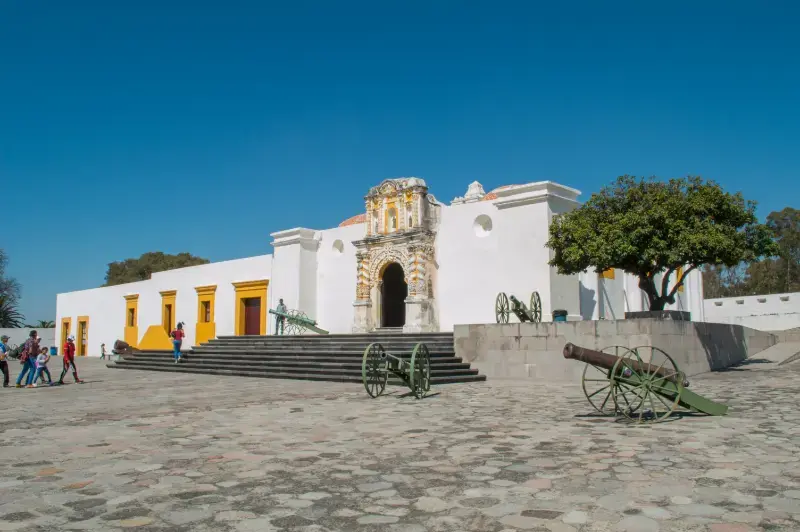
Puebla is the kind of city where a colourful tiled façade can pull you down a street you had not planned to visit. Its historic centre, churches, Talavera workshops and regional food deserve more than a quick detour from Mexico City. Four days give you time to see the main sights and enjoy the small discoveries between them.
If Puebla is part of a wider journey, compare the pace with Mexico in 10 Days: Mexico City and Oaxaca Without Trying to See the Whole Country. This city guide adds local depth rather than repeating the broader route.
Quick trip summary
- Ideal stay: 4 days for a first visit.
- Best planning rule: group days geographically and protect one flexible half-day.
- Best for: first-time visitors, couples, solo travellers, families and slower-paced travellers.
- Main risk: using the city only as a gateway or adding too many day trips.
Why 4 days works
Four days in Puebla give you time to look beyond its beautiful main square. You can enjoy the cathedral and tiled façades, visit workshops or museums connected with Talavera, and make time for the city’s food without trying to cover every surrounding town. Its historic streets reward a slow pace, especially between meals.
Puebla has enough contrast to justify a real stay, but it is still manageable when each day has a clear geographic focus. The itinerary below alternates heavier sightseeing with easier periods so it works for different ages, interests and energy levels rather than only for fast-moving travellers.
Where to stay
| Area | Why choose it |
|---|---|
| Centro Histórico | Best for first-time visitors who want to walk to the cathedral, museums, churches and many restaurants. |
| Analco | Close to the centre with a more neighbourhood feel and easy access to traditional market areas. |
| Avenida Juárez / La Paz | More modern hotels and restaurants, useful for travellers who value space and evening dining. |
| Cholula | A different base better suited to travellers prioritising the pyramid, university-town atmosphere and volcano views over central Puebla. |
A base within comfortable walking distance of the historic centre is useful if your plans revolve around the cathedral, markets and restaurants. Check the actual route from the hotel to the places you want to visit, as well as recent comments about street noise. If you are taking a day trip, ask how easily you can reach the departure point.
A realistic 4-day itinerary
Day 1: Zócalo, cathedral and tiled streets
Begin around the Zócalo and cathedral, then explore the historic centre on foot, including streets where Talavera and colonial façades make the architecture itself part of the experience. Choose one museum or church interior rather than entering every building. Evening belongs in the centre after day visitors depart.
Day 2: museums, markets and Puebla’s food culture
Use the morning for a substantial museum or historic house, then move toward markets and traditional food. Puebla’s cuisine deserves more than a single mole tasting: share dishes, ask what is seasonal and leave enough time for a proper lunch rather than treating food as a snack between attractions.
Day 3: Cholula without rushing both cities
Spend a full or generous half-day in Cholula, focusing on the archaeological zone, churches, streets and views rather than trying to return for another packed Puebla programme. Weather can affect volcano visibility, so do not build the value of the outing around a guaranteed clear photograph.
Day 4: crafts, quieter streets and a flexible finish
Use the final day for Talavera-related workshops or shops, a second museum, Analco or anything missed earlier. If you are continuing to Oaxaca, keep the last afternoon easy and protect your intercity transport rather than adding another distant excursion.
Arrival strategy
Puebla is commonly reached overland from Mexico City and its airports, and road time can vary considerably with traffic. Compare the exact departure point of your bus or transfer with your arrival airport and hotel; “Mexico City to Puebla” is not a single fixed journey. If arriving after a long international flight, a comfortable connection is usually more valuable than squeezing another attraction into the first evening.
Arriving from Mexico City or another destination may take longer than the timetable suggests once you include traffic and the final transfer. Keep the first afternoon simple: settle in, explore a few streets around the zócalo and have a good meal. Save a museum with fixed opening hours for the following day.
Getting around efficiently
The historic centre is highly walkable, but traffic and elevation changes make taxis or ride-hailing useful for some outer districts and Cholula. Local buses can work for experienced travellers, while families and senior visitors may prefer direct rides for longer legs. Keep central days compact and avoid repeatedly crossing the metro area.
Much of Puebla’s central sightseeing works on foot, but the distance to a workshop, outlying attraction or Cholula can change the day’s transport needs. Plan each longer journey separately rather than assuming everything is just around the next corner. Use a legitimate taxi or appropriate local transport when the walk stops being enjoyable.
Best time to visit
Puebla’s elevation moderates temperatures, but mornings and evenings can feel cool while midday sun is strong. The rainy season often brings afternoon or evening showers rather than constant rain; build museum and café options into each day. Festival periods and weekends can transform the centre, so check current local events before choosing dates.
Puebla’s sunny hours can be wonderful for the colourful streets, but strong sun and afternoon showers can change the pace. Check local holiday dates and museum openings, particularly if your visit includes a religious festival or special event. A morning walking route and a flexible indoor stop often make the best combination.
What to book before arrival
If a Talavera workshop tour or a guided experience is the highlight, arrange that first and build the city walks around its schedule. The cathedral square and neighbouring streets are less demanding to plan. Leave a little freedom for a market, a craft shop or an unexpected café you would otherwise walk straight past.
Food strategy
Puebla is one of Mexico’s strongest food destinations. Mole poblano, cemitas, chalupas and seasonal chiles en nogada are part of the story, but the best strategy is variety rather than eating every famous dish in one day. Mix markets, traditional restaurants and contemporary cooking, and leave room for sweets and coffee without making every stop a food challenge.
Puebla is a place to make room for a proper meal. Mole poblano and other regional dishes deserve more attention than a rushed snack between museums. Choose somewhere near the day’s walking route, and let lunch break up the heat. A relaxed dinner in the centre is easier than making repeated cross-town journeys for every recommendation.
How to use food as cultural context
Puebla’s food tells a story of indigenous ingredients, convent traditions, colonial exchange and regional agriculture. Instead of trying every famous dish in succession, ask what is seasonal and where it fits naturally. A market breakfast, traditional lunch and lighter evening can reveal more than three formal restaurants booked for reputation alone.
Should you add a day trip?
Cholula is the obvious extension and belongs inside this four-day plan. Do not add multiple pueblos, volcano excursions and Mexico City returns unless Puebla is your only base in central Mexico. If Oaxaca is next, protect the contrast by leaving some regional experiences for the onward journey.
Cholula is a worthwhile change of scene if you want archaeological and church history beyond Puebla’s centre, but it should be given time rather than treated as a quick detour. Decide whether it fits your interests and energy. You can also have a rewarding fourth day staying in the city and exploring its museums and neighbourhoods.
Travelling with children
With children, mix a short museum or workshop visit with time outdoors around a square or park. Historic centres involve crossings, uneven paving and plenty of walking, so it helps to choose a lunch stop before everyone is hungry. Pick one meaningful activity for each half-day instead of expecting children to enjoy endless church interiors.
Travelling as a senior or at a slower pace
For an easier pace, stay near the streets you most want to explore and break longer routes with a café or museum stop. The central buildings are worth seeing from outside even if access inside is not suitable. Arrange a short ride to a more distant destination rather than turning a gentle city visit into a test of stamina.
Budget planning
Puebla can be enjoyable without buying many tickets: streets, squares and façades are a large part of its appeal. Put money aside for a workshop visit, regional food and transport to any outlying destination. If an inexpensive hotel is well beyond the centre, calculate what you will spend getting back each evening.
Weather backup plan
If rain interrupts a walking afternoon, a museum, covered market or long lunch may be the best way to wait it out. Move an outdoor excursion to a clearer morning if your schedule allows. Avoid filling the whole day with indoor stops just because the forecast mentions showers; conditions may improve quickly.
Accessibility and mobility
Older churches, craft workshops and market lanes may have steps or uneven surfaces. Ask about the exact entrance and available facilities if someone in your party needs step-free access. A shorter route through the centre can still capture Puebla’s atmosphere without requiring a visit to every upper floor or distant viewpoint.
Connectivity, payments and practical details
Keep your accommodation address, a map of the historic centre and important journey details saved offline. Carry a mix of practical payment options and some local currency for smaller purchases. For trips outside the city, confirm the pickup or return point before you leave rather than solving it when you are already tired.
What to pack
Comfortable shoes matter in Puebla’s centre, where you may spend hours on stone pavements. Bring water, sun protection and a light waterproof layer if showers are possible. Even a short outing can feel longer at altitude, so plan walking days around your own energy rather than the distances shown on a map.
Common mistakes to avoid
- Visiting Puebla only for a few hours from Mexico City.
- Trying to combine central Puebla and every Cholula attraction in one rushed day.
- Assuming volcano views will always be clear.
- Ordering every famous regional dish at a single meal.
- Ignoring traffic when planning bus connections back to Mexico City airports.
Responsible travel and local etiquette
Talavera and other local crafts are part of Puebla’s working culture, not just souvenir displays. Follow the workshop’s rules, ask before photographing artisans and shop thoughtfully when something genuinely appeals to you. At churches and religious celebrations, dress and behave with the respect expected of visitors to an active place of worship.
If you have less or more time
With three days, keep the historic centre, one meaningful museum or workshop and time for regional food. A fifth day allows Cholula at an easier pace or more of Puebla’s local neighbourhoods. Adding time is worthwhile when it helps you enjoy a craft visit properly, not simply collect another nearby name.
Safety and decision-making on the day
Stay alert in busy markets and transport areas, use clearly identified transport and ask your hotel for advice about evening routes. Avoid displaying valuables unnecessarily when taking photographs in crowded streets. If a day trip is running late, head back rather than trying to squeeze in an extra stop after dark.
What is actually worth prioritising
The historic centre is not only a collection of churches. Talavera façades, convent history, markets and regional food all reinforce one another, so a slow central day can be richer than a long list of admissions. Cholula then adds a different pre-Hispanic and contemporary university-town layer without requiring another hotel.
Managing the Mexico City connection
If you arrive through Mexico City, plan the airport-to-bus-terminal or direct-transfer leg as carefully as the intercity journey itself. Mexico City traffic can be the least predictable part. On the return, leave a substantial buffer before an international flight or, if the schedule is early, consider spending the final night closer to the departure airport.
Current planning note
Official Puebla tourism information emphasises the UNESCO historic centre, Talavera traditions, baroque architecture, gastronomy and the wider state’s routes. Check the city and state tourism portals for current events, museum access and visitor information before travel.
Useful official resource
Opening hours, fees, access rules, transport schedules and seasonal operations can change. Recheck the official source shortly before departure.
Final planning checklist
- Confirm passport, visa, transit and health requirements for your nationality.
- Reserve the attraction or transport that controls the rest of the itinerary.
- Save the accommodation address and first-day route offline.
- Recheck weather, closures and transport notices before each critical day.
- Keep at least one half-day flexible enough to absorb a delay.
- Leave a generous buffer before flights and other expensive connections.
Puebla is best remembered through details: the tilework on a building, a conversation in a workshop or a long lunch that introduces you to a local dish. Keep those pleasures in the plan rather than filling every hour with another church or museum. Four days can offer a satisfying feel for the city without hurrying it along.
Leave a Reply