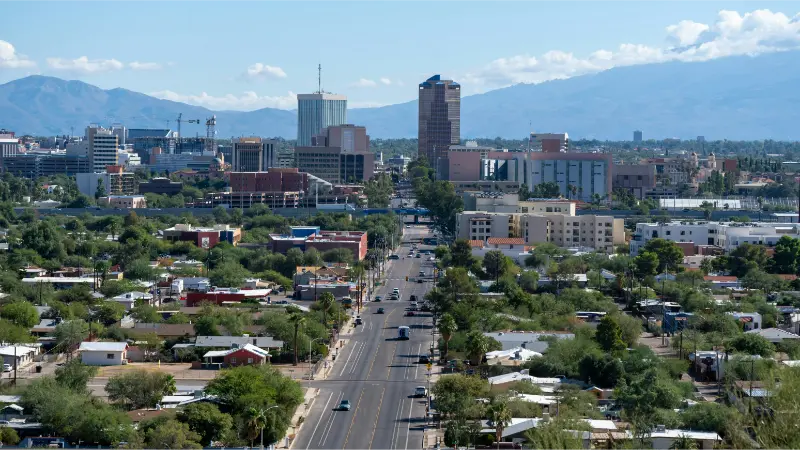
Arizona travel does not have to revolve around the Grand Canyon. Southern Arizona offers a completely different desert, food culture and borderland history centred on Tucson, Saguaro National Park and the historic mining town of Bisbee.
This eight-day route uses Tucson as the main base and Bisbee for the final block, with only one hotel change.
The Visit Arizona Saguaro page notes that Saguaro National Park is split into east and west districts on opposite sides of Tucson. Treat them as separate days or half-days rather than trying to cross the city repeatedly.
Quick trip summary
- 5 nights Tucson, 2 nights Bisbee, Day 8 departure.
- Use a rental car.
- Treat Saguaro East and West as separate geographic areas.
- Do desert walks early, especially in warm months.
- Do not add the Grand Canyon or Sedona to this eight-day Southern Arizona trip.
Why this route works
Tucson deserves several nights for Sonoran Desert landscapes, UNESCO-recognised food culture, museums and nearby mountain environments.
Five nights allow both Saguaro districts without daily cross-city driving.
Bisbee provides a cooler, walkable historic finale and access to a different southeastern Arizona landscape.
A realistic itinerary at a glance
| Days | Base | Main focus |
|---|---|---|
| 1–5 | Tucson | Saguaro districts, food, museums and desert/mountain day |
| 6–7 | Bisbee / southeast Arizona | Mining history, borderlands and smaller-town atmosphere |
| 8 | Departure | Tucson/Phoenix onward |
Day-by-day plan
Day 1: Tucson arrival
Stay downtown, near the university or another area tied to your evening plans. Keep the first afternoon to food, streetcar districts or a short sunset stop.
Day 2: Saguaro National Park West
Use the Tucson Mountain District, Desert Museum direction and a short desert walk. Start early in hot weather and protect the middle of the day.
Day 3: Tucson culture and food
Use Mission San Xavier del Bac, museums, downtown or a food-focused experience. This lower-effort day breaks the desert exposure.
Day 4: Saguaro National Park East
Use the Rincon Mountain District scenic loop and one hike suited to conditions. The east side feels different enough to justify a separate day.
Day 5: Mount Lemmon or flexible Tucson day
Drive upward into cooler ecological zones, use an observatory/astronomy option or keep a slower city day depending on weather and energy.
Day 6: Tucson to Bisbee
Drive southeast, stop in Tombstone only if its history/interpretation genuinely interests you, then settle into Bisbee before evening.
Day 7: Bisbee and borderlands
Walk the steep historic town, use a mine/history tour or nearby nature. Avoid packing Tombstone, Bisbee and several border towns into one hurried day.
Day 8: Departure
Return toward Tucson or Phoenix with enough road time and no final long desert hike.
Where to stay and how many hotel changes to make
Tucson hotel location matters because the city is spread out; choose one side based on dining and the park district you expect to visit most.
Bisbee is steep, so travellers with mobility limitations should check parking, stairs and the exact route to the room before booking.
Choose accommodation for geography before décor. A well-positioned room can save an hour every day and often matters more than a small difference in nightly rate.
Read recent guest reviews for practical details that hotel pages rarely emphasise: stairs, parking, road noise, breakfast hours, heating or air conditioning, and the real walk from transport.
Transport: what is worth planning in advance
A car is essential, and Saguaro’s two districts should be grouped with attractions on their respective sides of Tucson.
Avoid long desert driving at dusk/night when wildlife and fatigue increase risk.
Measure every move door to door rather than by headline distance. Parking, luggage, road conditions, ferry check-in and the final local transfer can turn a short-looking journey into half a day.
Save hotel addresses, tickets and maps offline. The places where navigation matters most are often the places where mobile coverage becomes less reliable.
Food and daily rhythm
Tucson’s food culture is a major reason to stay several nights, with Sonoran, Mexican and Indigenous influences far beyond a single famous dish.
Hydration matters more than restaurant ambition on hot hiking days.
Use meals to shape the rhythm of the day. A long regional lunch can be both an experience and a recovery period after museums, hiking, heat or an early start.
Do not make every meal another reservation. Mix destination restaurants with bakeries, markets, cafés and simple local places so food improves the trip instead of controlling it.
Families, children and older travellers
Desert museums, short park trails and astronomy can be excellent for families.
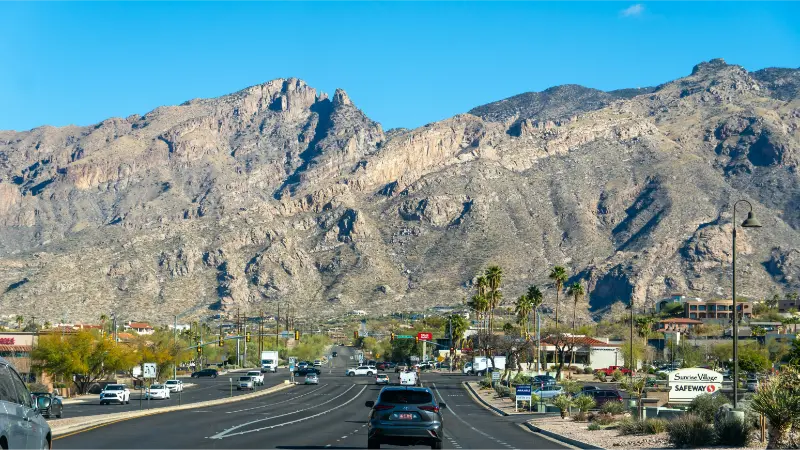
Older travellers can use scenic drives and visitor-centre trails; Bisbee’s steep streets require more planning.
For multigenerational travel, the right pace is the one at which the least mobile member still enjoys the day. That usually creates a better shared trip for everyone.
When accessibility matters, ask precise questions about steps, trail surfaces, boat boarding, lifts, toilets and vehicle access rather than relying on a generic accessibility label.
Budget: where the money really goes
Tucson lodging is often good value outside major events, while specialty astronomy, guided food or mine tours add optional costs.
Five nights in one Tucson hotel reduce packing and parking uncertainty.
Compare total trip cost rather than headline prices. Parking, transfers, fuel, tolls, ferries and guided activities can erase an apparent saving.
The best splurges usually remove friction: a central room, a direct transfer, a good local guide or one extra night that prevents an exhausting move.
Best time to go
Late autumn through spring is easiest for desert walking; summer heat requires dawn starts and major midday indoor breaks.
Higher elevations such as Mount Lemmon can be dramatically cooler and may have winter weather while Tucson is mild.
Shoulder season often balances weather, crowds and prices well, but rural attractions, ferries, mountain services and seasonal restaurants may run reduced schedules.
Weather should change the order of the day. Keep indoor or lower-effort alternatives so rain, heat, wind, smoke or cloud does not force you to waste the trip.
Comfort, accessibility and realistic pacing
One long Tucson base eliminates most logistics.
The itinerary alternates exposed desert days with culture and high-elevation options.
Travel fatigue compounds. One difficult relocation can weaken the following two days, which is why this itinerary avoids one-night bases unless geography genuinely requires them.
A free half-day is not wasted time. It is insurance for weather, traffic, a tired child or a place you discover only after arriving.
Small decisions that improve the trip
Keep the trip southern
Do not add the Grand Canyon.
Separate Saguaro East and West
Tucson sits between them.
Use heat-aware timing
The desert dictates the schedule.
Sleep in Bisbee
Its evening atmosphere is part of the experience.
What I would leave out on this length of trip
Leave Sedona, Grand Canyon and northern Arizona for another road trip.
Skip long exposed hikes when temperatures are unsafe simply because the trail is famous.
Mistakes that make this trip harder than it needs to be
- Treating both Saguaro districts as one quick stop.
- Hiking at midday in hot weather.
- Underestimating Tucson’s spread.
- Booking steep Bisbee lodging without checking access.
- Adding Tombstone to every southeast-Arizona day.
- Returning to Phoenix after a long hike with no buffer.
How I would adapt the itinerary
With five days, stay in Tucson and make Bisbee a long day only if you tolerate the driving.
With ten days, add Chiricahua National Monument or another southeast-Arizona block with proper nights.
Before booking
- Check NPS weather/trail alerts.
- Carry far more water than on a city day.
- Use sun protection.
- Choose Tucson hotel geography carefully.
- Check Bisbee mobility/parking details.
Practical questions
Which Saguaro district is better?
West is dense and dramatic around Tucson Mountain landscapes; East has a longer scenic road and Rincon Mountain setting. Both are worth time.
Do I need to add the Grand Canyon?
No. Southern Arizona can easily fill eight days.
Is Bisbee worth two nights?
Yes if you enjoy historic towns, architecture and slower evenings.
Final thoughts
Southern Arizona is a complete destination without borrowing the Grand Canyon’s fame.
Tucson, two Saguaro districts and Bisbee create eight days of desert, food and history with only one hotel change.
How to keep the itinerary resilient
Keep the park districts interchangeable around heat, wind and storms.
If temperatures spike, move desert walks to dawn and use museums or Mount Lemmon during the hottest hours.
Who this route suits best
This itinerary works best for travellers who prefer depth over collecting places. It keeps hotel changes low, protects flexible time and assumes that a good meal, a slower morning or an unexpectedly interesting local stop can be as valuable as another famous attraction. That approach works especially well for first-time visitors, couples, families and multigenerational groups.
More energetic travellers can add a longer hike, another museum or a second excursion on flexible days. Travellers who prefer an easier pace can remove those extras and still keep the core journey intact. Before booking, identify the two or three experiences that would genuinely disappoint you to miss; those are the ones to reserve first.