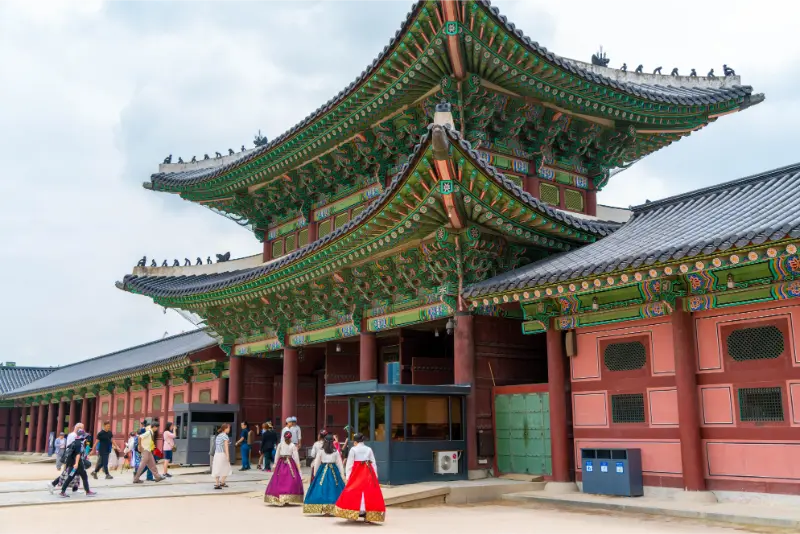
South Korea is compact enough to tempt first-time visitors into overplanning. Seoul, Gyeongju, Busan, Jeju, Sokcho and several smaller cities can all look close on a map, especially when fast trains connect the country so efficiently. The problem is not the train itself; it is the repeated checkout, station transfer, luggage handling and time needed to understand a new city. A stronger ten-day trip uses only three bases and lets day trips do part of the work.
This itinerary gives Seoul the largest share of time, uses Gyeongju for history at a calmer pace and finishes in Busan for markets, beaches and coastal scenery. It works well for couples, solo travellers, families and mixed-age groups because each base offers both high-energy days and easier alternatives. The official VISITKOREA planner itself commonly combines Seoul, Gyeongju and Busan, which is a useful confirmation that the geography is logical even when your exact attractions differ.
Quick trip summary
- Use Seoul, Gyeongju and Busan as the only hotel bases.
- Book KTX or other intercity trains around your fixed travel days, but do not schedule a tight attraction immediately after arrival.
- Group Seoul by district instead of zigzagging across the city several times a day.
- Give Gyeongju at least one full day; it is more rewarding than treating it as a quick photo stop between trains.
- Finish in Busan, where a slower coastal day balances the intensity of Seoul.
Who this itinerary is for — and when to change it
This route is designed for a first or early visit with a moderate pace. It assumes that you want the destination’s defining experiences without turning every day into an early start, late arrival and luggage transfer. Couples, solo travellers, families and mixed-age groups can use the same geographic structure, but the number of activities inside each day should change with mobility, climate, jet lag and personal interests.
Before booking every attraction, identify the two experiences you would regret missing. Protect those first, then build the rest of the trip around them. Weather-dependent mountains, deserts, coastlines and wildlife experiences deserve flexible placement, while museums and neighbourhood days can often move more easily.
Where to stay: choose the base before the hotel
Accommodation is a transport decision as much as a comfort decision. Check how you will reach the first activity in the morning, how you will return after dinner, whether the property has lifts or parking, and what happens with luggage on transfer days. A cheaper room that creates two difficult journeys every day can cost more in taxis, time and energy than a slightly more expensive base in the right place.
| Base | Why it works — and the trade-off |
|---|---|
| Seoul: Myeongdong / Euljiro | Central and convenient for first-time sightseeing, airport transport and multiple subway lines; busy but practical. |
| Seoul: Hongdae / Mapo | Better for a younger evening atmosphere and airport rail access, though some historic sights require longer rides. |
| Gyeongju: city centre / Hwangnidan-gil | Best for evening walks, restaurants and access to the tomb district; many attractions remain spread out enough for taxis or buses. |
| Busan: Seomyeon or Nampo | Seomyeon is central for transport; Nampo is stronger for markets and old-city atmosphere. Haeundae suits travellers prioritising the beach. |
The four decisions that shape this trip most
| Decision | Best default | When to change it |
|---|---|---|
| Seoul nights | 4–5 nights | Reduce only if you already know the city or want to add Jeju with a flight. |
| Gyeongju | 2 nights | A day trip saves a hotel change but loses the quieter evening atmosphere. |
| Busan base | Seomyeon or Nampo for a first visit | Choose Haeundae if beach time matters more than central transport. |
| DMZ day trip | Optional | Include only if it is a real priority; it consumes much of a Seoul day and operations can change. |
Make these decisions before filling the calendar with attractions. They determine how many hotel changes, early starts and long journeys the trip contains. Once the structure is right, individual sightseeing choices become much easier to adjust.
A realistic day-by-day route
Days 1–2: arrive in Seoul and learn one side of the city
Keep arrival day near your hotel. Walk one market or neighbourhood, eat early and resist the urge to cross Seoul for a famous viewpoint while jet-lagged.
On the first full day, combine the palace area, Insadong and nearby traditional streets. Gyeongbokgung or Changdeokgung can anchor the morning, followed by smaller stops rather than several major palaces in a row.
Leave the evening flexible. Seoul rewards spontaneous food stops, but long subway transfers after a full walking day add up.
Days 3–4: modern Seoul, neighbourhoods and one optional excursion
Use one day for a contrasting part of Seoul such as Gangnam, the Han River, a museum cluster or a market-focused route. The city feels more coherent when each day has a geographic theme.
If the DMZ is important, dedicate a day to it and verify current operating conditions with an authorised operator. Do not schedule a fixed evening event that assumes the tour will return at an exact minute.
Families can substitute an aquarium, park or interactive museum for a second dense heritage day. Older travellers may prefer taxis for the last short connection rather than adding another transfer.
Days 5–6: Gyeongju for history without rushing
Take the train toward Gyeongju and treat the afternoon as orientation time around the central tomb district, Hwangnidan-gil and nearby heritage areas.
Use the full day for Bulguksa, Seokguram if conditions and mobility suit, and one or two central sites. Gyeongju is spread out; trying to cover every UNESCO-related point in one day creates more transport than experience.
Stay for the evening. Illuminated historic areas and a slower dinner make the overnight worthwhile compared with a race back to Seoul.
Days 7–9: Busan by district, not by checklist
Move to Busan and spend the first afternoon around your chosen base. Nampo pairs naturally with Jagalchi and old-city streets; Haeundae belongs on a different day.
Use one full day for the eastern coast, choosing between Haeundae, coastal walks, temples and viewpoints according to weather. Do not stack all of them if the group dislikes stairs.
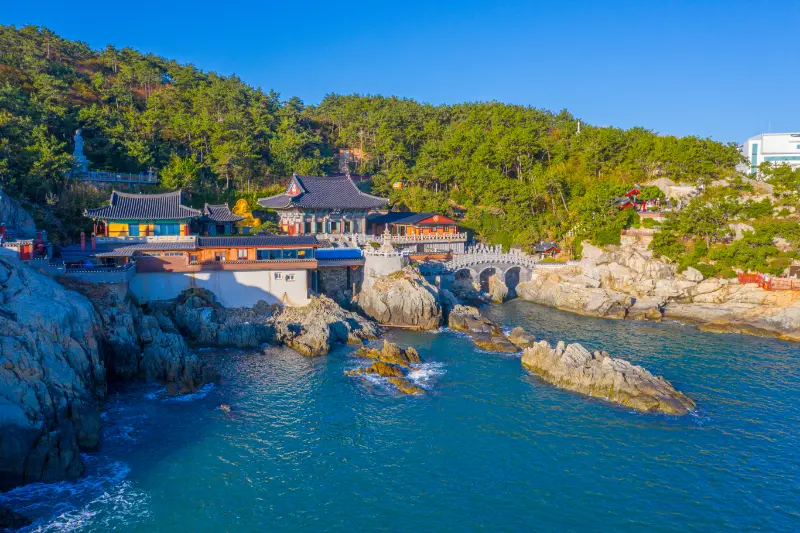
Use the second full day for markets, Gamcheon or a quieter neighbourhood. Busan is hilly, so map distance can understate effort; taxis can be a good value when they eliminate a difficult uphill connection.
Day 10: departure or a flexible final morning
If flying from Busan, keep the final morning close to your base and check airport transport the night before.
If returning to Seoul for an international flight, travel with a generous buffer or sleep near the departure airport the previous night when tickets are separate.
Use any spare time for food, a short waterfront walk or shopping rather than a distant attraction that creates a fragile last day.
Pace check: if this stage runs late, remove the lowest-priority activity rather than stealing time from meals, sleep or the next transfer. A resilient itinerary should become simpler when something changes, not more frantic.
Transport reality: plan door to door
South Korea is easy to link by rail, but station names, city-centre distances and last-mile connections still matter. KTX makes Seoul–Gyeongju–Busan a logical spine, while subways handle most urban journeys in Seoul and Busan. In Gyeongju, taxis and local buses are often more useful because heritage sites are dispersed. Do not assume a rail pass is automatically cheaper than point-to-point tickets; compare your actual journeys. Use VISITKOREA and the relevant rail operator for current schedules, and allow more station time when travelling with large luggage, a stroller or limited mobility.
Door-to-door time is the number that matters. Add hotel checkout, reaching the station, airport or pier, waiting, boarding, collecting luggage, local transport at the other end and the possibility that everyone needs food immediately after arrival. This is why a “two-hour flight” or “three-hour train” can consume most of a day. Our guide to building realistic 7-, 10- and 14-day itineraries explains how to treat transfer days honestly.
Food strategy: make meals part of the route
Korean travel becomes easier when you treat food as part of the neighbourhood plan. Markets are useful for variety, but not every group enjoys standing or eating several small dishes in succession. Mix market meals with seated restaurants and convenience-store breakfasts on early train mornings. In Seoul, different districts specialise in different styles; in Gyeongju, traditional set meals can be a slower experience; Busan is ideal for seafood and market food. If someone has an allergy, carry a translated explanation and confirm ingredients rather than relying only on visual menus.
One planned meal per day is usually enough. Keep another meal flexible so it can respond to where you actually are, not where an old itinerary expected you to be. With children, older travellers or very hot weather, eating before everyone becomes exhausted is often more important than reaching a restaurant that looked perfect months earlier.
When to go and how the season changes the plan
Spring and autumn are popular for mild weather, while summer can be hot, humid and rainy and winter can be very cold. Cherry blossom and autumn foliage periods shift from year to year, so treat forecasts as guidance rather than a promise. Coastal Busan may feel different from inland Seoul on the same trip. Pack layers and a compact rain option, and keep one museum or indoor activity in reserve when weather affects a walking-heavy day.
Instead of searching for one universal best month, decide which compromise you prefer: better weather, fewer visitors, lower prices, longer daylight, beach conditions or seasonal scenery. No month maximises everything. Recheck short-term weather and official access information shortly before each critical outdoor day.
Budget: where spending actually improves the trip
The trip is generally easier to control financially than routes with domestic flights. The main choices are hotel location, intercity rail timing, taxis in hilly or dispersed areas and how often you choose premium restaurants. Paying a little more for a hotel near a useful subway interchange can save repeated taxi fares and evening fatigue. For budgeting structure, our guide to building a realistic travel budget helps account for airport transfers, luggage storage and the smaller costs that accumulate between headline bookings.
The most useful upgrades are often logistical rather than luxurious: a hotel that removes a daily transfer, a direct ride after a long flight, a flexible ticket, an additional night in a weather-dependent region or a guide where interpretation genuinely adds value. Cut low-value extras before cutting the pieces that keep the route reliable.
Common mistakes to avoid
- Adding Jeju to the same ten-day plan without removing a mainland base.
- Choosing a Seoul hotel only because it looks central on a map, without checking the nearest subway line.
- Treating Gyeongju as a two-hour stop between trains.
- Planning several famous Busan coastal sights on one day without accounting for hills and transfer time.
- Assuming every KTX seat or popular holiday train will be available at the last minute.
Most difficult trips are not ruined by one large mistake. They become tiring through a sequence of optimistic assumptions: a transfer that “should” be quick, a hotel that is “only” a kilometre away, a famous walk assumed to suit everyone and a dinner reservation across town after an already long day. Leave margin before you need it.
Families, older travellers and mixed-age groups
South Korea works well for mixed-age trips because public transport is extensive and cities have many indoor alternatives. Families should build snack and toilet breaks into palace and market days rather than expecting children to follow an adult sightseeing rhythm. Older travellers may appreciate hotels with lifts and short walks to stations, as some subway interchanges are enormous. In hilly Busan and spread-out Gyeongju, a short taxi ride can be a smart accessibility choice rather than a failure to “travel like a local.”
For mixed-age groups, agree which experiences everyone will share and which can be optional. Splitting for two hours is often healthier than forcing the entire group through one person’s priority. Build seating, toilets, shade, step-free access and realistic meal times into the plan with the same seriousness as headline attractions. Our guide to travelling with parents and older adults develops this approach in more detail.
If you have more or less time
With twelve to fourteen days, add Jeonju, Sokcho or Jeju, but add only one substantial new region. With seven days, use Seoul and Busan with Gyeongju as either a one-night stop or day trip. The best reduction is to remove a base, not to cut all three cities to one or two rushed nights.
When shortening the trip, remove an entire base before cutting every destination to one night. When lengthening it, add depth before distance. An extra morning in a place you already understand often produces a better memory than another multi-hour transfer to a new pin on the map.
Useful official resources
Opening hours, transport timetables, road conditions, trail rules and visitor procedures can change. Use official sources for the details that affect your exact travel dates and recheck them shortly before departure.
Final planning checklist
- Confirm passport, visa, entry and transit requirements for your nationality and route.
- Book the genuinely scarce transport or accommodation segment before secondary attractions.
- Check the exact luggage journey between bases, including stairs, ferries, station exits and rental-car rules.
- Save offline copies of essential reservations, insurance details and each accommodation address.
- Recheck weather, road, park, trail or transport notices shortly before each critical day.
- Keep at least one flexible half-day that can absorb rain, fatigue, a delay or a cancellation.
- Choose clothing and footwear for the actual surfaces and climate, not only for photographs.
- Leave a generous buffer before international flights and other connections that are expensive to miss.
The purpose of a good itinerary is not to prove that you covered the maximum distance. It is to make the important experiences easier to enjoy and to leave enough energy for the unexpected parts that become the best memories. Use this route as a framework, then remove anything that does not fit your interests, mobility or travel rhythm.