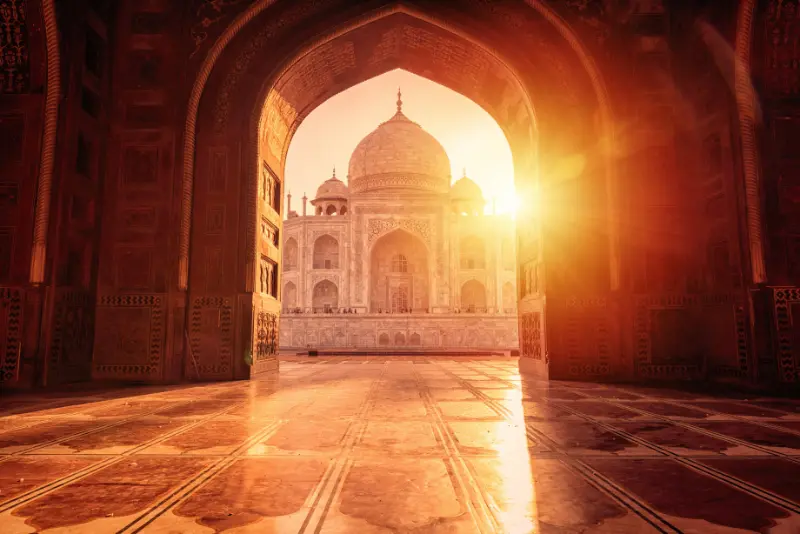
Agra is often treated as a sunrise photograph between Delhi and Jaipur, yet its Mughal history is far richer than a single monument. The Taj Mahal, Agra Fort, Itimad-ud-Daulah, gardens and old market areas form a connected imperial landscape along the Yamuna. Four days let you see the Taj at a humane pace, understand the fort and add Fatehpur Sikri without turning the whole stay into transfers.
This itinerary is designed for travellers who want useful structure without turning Agra into a race. The order groups nearby experiences where possible and leaves one flexible block for weather, fatigue or an opportunity you discover after arrival.
If Agra is part of a wider journey, compare this city plan with India Golden Triangle in 10 Days: Delhi, Agra and Jaipur Without Rushing the First Trip. Use that article for the larger route; this guide keeps the focus on Agra itself.
Quick trip summary
- Ideal stay: 4 days for a first visit.
- Best approach: one major experience per half-day, with a flexible block for weather or fatigue.
- Good for: couples, solo travellers, families, older travellers and mixed-age groups who value realistic pacing.
- Main planning risk: underestimating transfers, climate or the energy cost of adding one more stop.
Is Agra the right trip for you?
Choose Agra if you prefer a trip where place, culture and ordinary local life matter as much as headline attractions. This four-day plan deliberately limits the number of major commitments in each half-day. That creates room for meals, weather changes, transport delays and the small discoveries that usually become the most personal memories. Before booking, identify the two experiences you would genuinely regret missing and protect those first; everything else can move around them.
Where to stay
| Area | Why choose it |
|---|---|
| Taj East Gate / Tajganj | Best for early Taj Mahal access and a first visit focused on the monument. |
| Fatehabad Road | Wide hotel choice and easy vehicle access, useful for families and organised tours. |
| Near Agra Fort / central city | More connected to markets and everyday Agra, but traffic can be intense. |
| A quieter resort-style property outside the busiest core | Useful for travellers prioritizing space and recovery, provided transfers are planned in advance. |
Choose accommodation by the journeys you will repeat, not by room price alone. Check the route to your likely dinner area, the first morning attraction and the departure point for any fixed excursion. A hotel that removes two awkward transfers every day can be better value than a cheaper room farther away.
How many days do you need?
Four days is enough for a first visit without pretending you have exhausted the destination. It gives you one orientation day, two stronger sightseeing or nature days and a final flexible block. With only two days, keep the historic or cultural core and one signature experience. With five or six days, add one regional excursion or slower neighbourhood day rather than stretching every sightseeing day until dinner becomes another appointment.
How to get to Agra
Agra is well connected by rail and expressway with Delhi and other north-Indian cities. Several railway stations serve the city, so confirm the station code before arranging a pickup. Agra Airport has limited service compared with Delhi. For most Golden Triangle itineraries, a train or pre-arranged road transfer is more practical. Traffic around monuments can change journey times considerably, so avoid scheduling a major timed visit immediately after arrival.
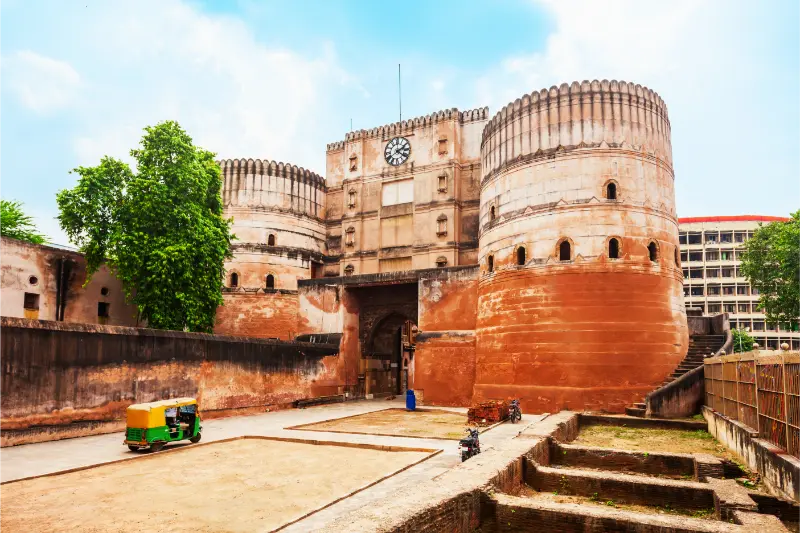
Always verify the exact terminal, station or pier on your ticket. Cities with more than one transport hub can turn a simple arrival into an expensive cross-city transfer when the wrong location is assumed.
Getting around Agra
Within Agra, use the simplest transport for each journey rather than committing to one mode for the entire stay. Walk compact central areas when conditions are comfortable, use public transport where it clearly saves time, and take a taxi or ride-hail when heat, luggage, mobility or an awkward transfer makes that the safer choice. Download an offline map and save the hotel address before leaving Wi-Fi. If you rent a car, confirm parking and road rules before the first drive instead of learning them in traffic.
A realistic 4-day itinerary
The itinerary below is a framework, not a timetable. Opening days, weather, seasonal transport and personal energy should determine the final order. If a major attraction is closed on the suggested day, move the whole block rather than forcing the rest of the trip to become inefficient.
Day 1 – Taj Mahal with enough time to actually see it
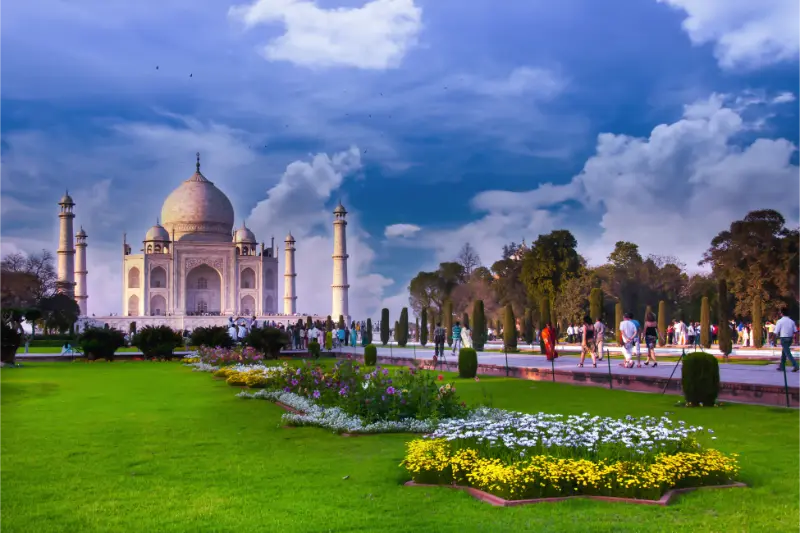
Plan the Taj Mahal around current official opening rules and ticket requirements. The monument normally closes to general visitors on Fridays, so check your dates before booking the rest of the itinerary. Arrive early if you want softer light and cooler conditions, but do not treat the visit as a race to one photo point. Spend time on the gardens, mosque and decorative details, then keep the afternoon deliberately light around Tajganj or the hotel.
Keep enough time around lunch for a real break. If the morning runs long, remove the lowest-priority afternoon stop instead of pushing dinner later and beginning the next day tired.
Day 2 – Agra Fort and the Mughal city
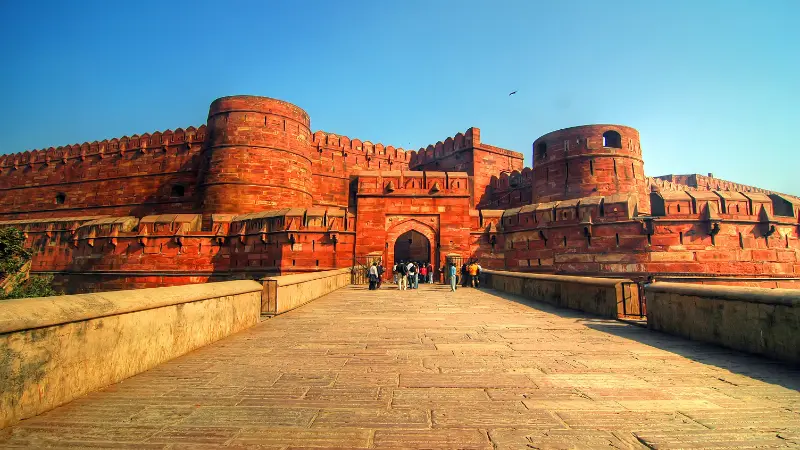
Visit Agra Fort when your energy is high because the complex is larger and more layered than many visitors expect. Connect its palaces and courtyards with the story of Akbar, Jahangir and Shah Jahan rather than seeing it only as another red-sandstone monument. After lunch, explore a market area or craft tradition with a reputable guide if that interests you. Keep the evening free for a quieter dinner.
Day 3 – Itimad-ud-Daulah, Mehtab Bagh and the river landscape
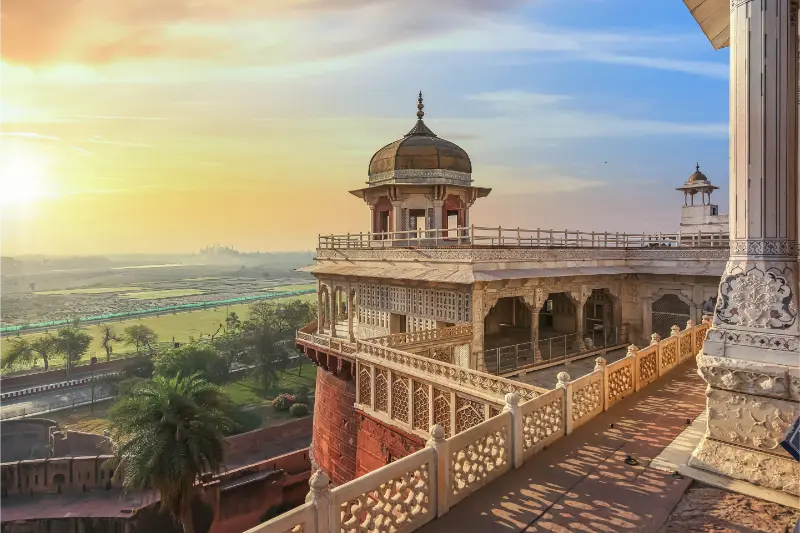
Begin with Itimad-ud-Daulah, whose marble inlay and smaller scale make a useful contrast with the Taj. Continue toward Mehtab Bagh or another legal public viewpoint across the Yamuna, checking current access conditions. Avoid informal riverbank arrangements that bypass official guidance. Use the rest of the day for a museum, shopping or rest rather than adding another long transfer.
Day 4 – Fatehpur Sikri or a flexible heritage day
Dedicate the final day to Fatehpur Sikri if it is not already included in your onward route. The former Mughal capital deserves several hours plus transport time. If heat, fatigue or onward travel makes the excursion unattractive, stay in Agra and revisit a favourite area. A second slower look at the fort or craft traditions can be more rewarding than forcing another monument into the schedule.
What to eat and how to plan meals
Agra offers Mughlai dishes, breads, vegetarian thalis, street snacks and petha sweets, but hygiene and heat should shape choices as much as reputation. Choose busy restaurants with good turnover, drink safe water and be cautious with food that has been sitting unrefrigerated. Heavy meals at lunch can make hot-afternoon sightseeing difficult, so many travellers do better with a substantial breakfast and lighter midday food.
For a mixed-age group, decide in advance which meal matters most each day. A destination restaurant can be enjoyable, but three reservation-heavy meals in one day remove flexibility. Markets, bakeries and casual lunches often reveal more about everyday food culture while keeping the schedule adaptable.
Agra with children
Families should protect meal times, toilets and recovery time as carefully as attractions. One substantial activity in the morning and one lighter activity after lunch is usually more successful than four ticketed stops. Let children choose one element each day—a market snack, short boat ride, park, viewpoint or museum section—so the trip does not feel entirely adult-directed. In hot or cold weather, schedule the most exposed activity for the comfortable part of the day.
Bring one familiar snack for long transfers and avoid promising a specific wildlife sighting, boat condition or weather-dependent activity to young children. Frame those experiences as possibilities rather than guarantees.
Older travellers and multigenerational groups
For older travellers and multigenerational groups, reduce transitions before reducing experiences. A centrally located hotel, direct rides for awkward journeys and one major sight per half-day can preserve far more energy than a cheaper room on the edge of town. Agree in advance that part of the group can rest or split for a specialist attraction without creating a problem for everyone else.
Accessibility and practical comfort
Accessibility varies by building, street and operator. Historic districts may include cobbles, steps, steep ramps, sand, broken pavements or narrow entrances even when nearby modern museums and hotels are straightforward. Ask specific questions about step-free entrances, lift dimensions, bathroom layout, seating, gradients and the distance from the vehicle drop-off. For boats, beaches, temples, trails and heritage sites, contact the exact operator or attraction rather than relying on a general destination label.
Comfort planning also includes toilets, shade, drinking water and the distance between places to sit. These details can determine whether a long sightseeing day remains enjoyable.
Safety, cultural awareness and small practical habits
Use the same layered approach you would use in any unfamiliar destination: keep valuables discreet, use transport you understand, ask accommodation staff about routes after dark and avoid carrying the day’s entire cash supply in one place. Local advice is most useful when it is specific—ask about a street, trail, beach, station or return time rather than whether the whole city is ‘safe’. Respect religious sites, memorials, markets and residential areas, and ask before photographing people at close range.
Best time to visit Agra and a weather fallback
Agra can be intensely hot from late spring into early summer, while winter mornings can be cool and affected by fog or poor visibility. Monsoon conditions bring humidity and rain. Air quality may also affect comfort and views at some times of year. Start exposed monument visits early, carry water and keep one indoor or low-effort block available if heat or visibility is poor.
Keep at least one half-day movable. Weather problems are easier to manage when you already know which indoor or lower-exposure activities can replace an outdoor block. Check the local forecast in the morning, but also pay attention to wind, visibility, marine conditions, road alerts or air quality when those factors matter more than the headline temperature.
Budget: where the money really goes
The most useful budget comparison is the cost of an entire day rather than the price of one hotel or ticket. A room that costs slightly more can be better value if it removes repeated taxis, while a cheap excursion can become expensive after transfers, equipment and meals are added. Keep a contingency for weather changes, a direct ride when the group is tired, medical needs and one spontaneous experience discovered after arrival.
Reserve the experiences that control the schedule, such as a limited tour, ferry, long transfer, guided heritage visit or timed museum. Leave ordinary meals and short local rides more flexible unless you are travelling during a major event or holiday period.
Money, connectivity and bookings
Carry more than one payment method. Even where cards are common, small vendors, markets, taxis or ticket counters may work differently. Use bank or official ATMs where possible, understand your card’s foreign-transaction costs and keep a modest amount of local cash. Save confirmation numbers and tickets offline so a weak signal does not become a travel problem.
Photography without turning the trip into a photo shoot
The best light and the quietest streets often coincide with the most comfortable walking hours, so early morning can solve several problems at once. At sacred places, markets, memorials and residential areas, let the setting guide your behaviour. Wide architectural photographs are different from placing a camera close to a person at work, worship or remembrance. Do not sacrifice the itinerary for a famous angle if access, weather or crowds make it unpleasant.
Common mistakes to avoid
- Visiting Agra only as a same-day race from Delhi.
- Booking the Taj Mahal on a Friday without checking current opening rules.
- Underestimating the size and historical depth of Agra Fort.
- Accepting unofficial guides or transport without agreeing on price and scope first.
- Combining the Taj, fort and Fatehpur Sikri in one exhausting day.
Most tiring trips are not ruined by one dramatic mistake. They become difficult through a chain of optimistic assumptions: a transfer that should be quick, a hotel that is “only” a kilometre away and a final reservation on the other side of town after an already full day. Add margin before you need it.
A slower experience worth protecting
After the major monuments, protect one unhurried hour for a garden, hotel terrace or quiet viewpoint where you can look at the Mughal landscape without another gate, queue or guide speaking in your ear.
Official information to check before you go
Opening days, transport, weather-sensitive access and event schedules can change. Recheck the details that control fixed reservations shortly before travel, especially during public holidays, major festivals or severe weather.
How to adapt the itinerary
With less time: keep Day 1 and the single experience from Days 2–3 that matters most to you. Do not compress all four days into two.
With more time: add one carefully chosen excursion or a slower neighbourhood day rather than extending every sightseeing day.
For a multigenerational group: agree on one shared priority each day and allow people to split for specialist interests or rest. It is often better for one person to visit a niche museum while another relaxes than for the whole group to become tired together.
Final planning checklist
- Confirm passport, visa, entry and transit requirements for your nationality.
- Choose accommodation for location and repeated journeys before room size alone.
- Reserve only the attractions or excursions that genuinely control the day.
- Save offline copies of tickets, hotel details, insurance information and essential addresses.
- Check the exact airport, station, bus terminal, pier or pickup point before arranging transfers.
- Keep one flexible half-day for weather, fatigue or something discovered after arrival.
- Recheck official opening information and local transport shortly before each fixed day.
- Carry clothing and footwear for the real climate and walking surfaces, not only the average forecast.
How to make the four days feel less rushed
A useful way to plan Agra is to separate fixed commitments from flexible interests. Put only transport departures, limited-entry attractions and weather-dependent excursions into the fixed category. Keep cafés, viewpoints, shopping streets, markets and small museums as movable options. This prevents a delayed lunch or rain shower from turning the entire day into a recovery exercise.
Each evening, look at the next day again. Check travel time from the hotel, opening information, weather and how the group actually feels. If everyone is tired, remove one stop before breakfast instead of waiting until late afternoon when the day has already become difficult. A four-day stay has enough time for this kind of adjustment, and that flexibility is one of its main advantages over a day trip.
Finally, distinguish between distance and effort. A two-kilometre walk in cool weather on flat pavements is not the same as two kilometres in tropical humidity, winter ice, desert sun, steep streets or crowded markets. Plan by the physical reality of the destination, not only by map distance.
Practical pacing for a better first visit
Do not measure a successful day in Agra by the number of pins removed from a map. A good first visit normally has a clear morning priority, a lunch area that does not require a major detour and an afternoon that can shrink if weather, traffic or tiredness changes the plan. Put the attraction with the strictest opening time first and keep the most flexible walk, market or neighbourhood for later.
Build short recovery moments into the day before they become necessary. Twenty minutes in a café, park or shaded square can prevent an entire late afternoon from becoming unpleasant. This matters especially for children, older travellers and anyone adjusting to heat, altitude, jet lag or unfamiliar food. If the group has different interests, one planned split can work better than making everyone compromise through an activity they do not enjoy.
On the final evening, avoid scheduling a complicated cross-city reservation unless it is truly important. Pack, confirm the next transfer, save tickets offline and leave room for one last local meal near the hotel. That small amount of margin makes the departure day easier and protects the memory of the trip from ending with unnecessary logistics.
Final thoughts
Agra works best when you give its main experiences enough space and allow the rest of the destination to appear between them. Four days are long enough to understand the place without pretending that every surrounding attraction belongs in the same trip.