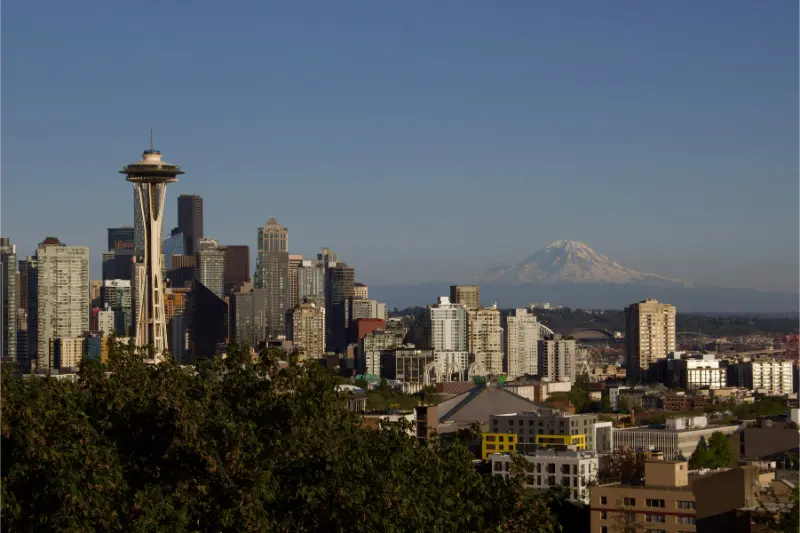
Washington State contains three national parks, a major city, islands, volcanoes and a huge coastline, so a ten-day trip becomes much better when you stop trying to include everything. This route deliberately skips North Cascades to give Olympic and Mount Rainier enough time.
The itinerary uses Seattle first, then a four-night Olympic Peninsula road block and two nights near Mount Rainier. The route ends close enough to Seattle-Tacoma Airport that the final day is not a cross-state race.
For 2026, the National Park Service says Mount Rainier does not require timed-entry reservations anywhere in the park. Olympic, however, has 2026 construction and road disruptions in several areas, so live NPS conditions are essential; Hurricane Ridge also has limited services and no potable water at the temporary contact station.
Quick trip summary
- 3 nights Seattle, 4 nights Olympic Peninsula, 2 nights Mount Rainier, Day 10 departure.
- Do not add North Cascades to this ten-day route.
- Mount Rainier has no timed-entry reservation in 2026, but parking congestion remains real.
- Check Olympic road closures daily.
- Use at least two Olympic bases because the park wraps around a large peninsula.
Why this route works
Seattle deserves several nights without a car for markets, neighbourhoods, museums and waterfront time.
Olympic is not one park road; mountains, rainforest and Pacific coast sit hours apart, so four nights and two bases make the geography realistic.
Mount Rainier works best as the final outdoor block because it can be placed geographically near the airport route and adjusted around mountain weather.
A realistic itinerary at a glance
| Days | Base | Main focus |
|---|---|---|
| 1–3 | Seattle | City, waterfront and optional local day |
| 4–7 | Olympic Peninsula | Hurricane Ridge, rainforest, lakes and coast |
| 8–9 | Mount Rainier | Paradise/Sunrise region according to access |
| 10 | Departure | Seattle-Tacoma Airport |
Day-by-day plan
Day 1: Seattle arrival
Stay central and keep the day to Pike Place/waterfront or one neighbourhood. Do not collect the road-trip car until it is useful.
Day 2: Seattle properly
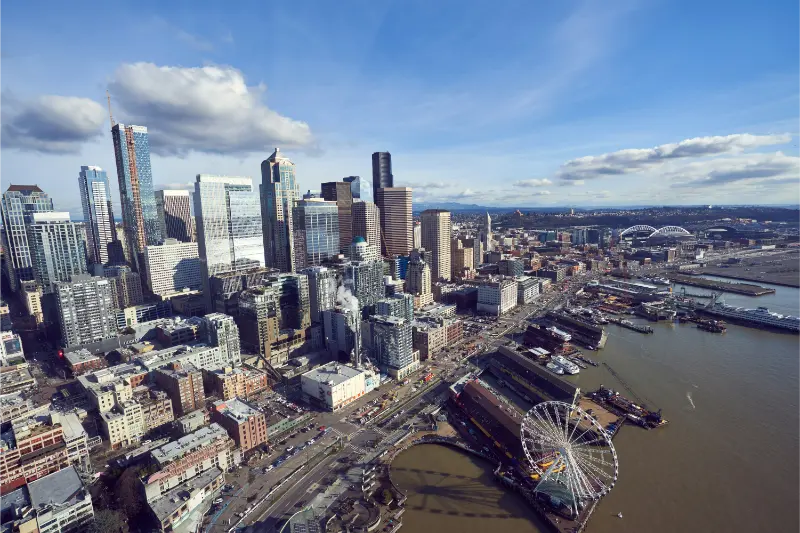
Choose a museum/Seattle Center cluster, neighbourhood food and waterfront time. The city should not be sacrificed simply because national parks are nearby.
Day 3: Flexible Seattle day
Use a ferry, Ballard, another museum or genuine recovery from long-haul travel. Collect the car tonight or tomorrow morning.
Day 4: Seattle to Port Angeles
Drive or use the ferry-route combination that best fits your plan, then use Lake Crescent or an easy peninsula stop without pushing to the Pacific coast.
Day 5: Hurricane Ridge and north Olympic
Check NPS status that morning. In 2026 there is construction in the Hurricane Ridge developed area and limited services; bring water and be prepared for temporary changes.
Day 6: Move toward the west side
Travel to Forks/Kalaloch area, using one rainforest or beach stop. Olympic road distances are slow enough that this move should not contain six attractions.
Day 7: Rainforest and Pacific coast
Use Hoh/Quinault-style rainforest and one coastal area according to current access. In 2026, NPS has road construction affecting some west-side access, so alternative beaches may be necessary.
Day 8: Olympic to Mount Rainier area
Make the relocation the main activity. Stay near the park entrance that fits tomorrow’s planned sector.
Day 9: Mount Rainier
Visit Paradise, Sunrise or another open area according to season and road status. NPS states no timed-entry reservation is required in 2026, but recommends early or later visits when parking is less congested.
Day 10: Departure
Drive to Sea-Tac with a generous traffic buffer. Do not attach a mountain hike to the flight morning.
Where to stay and how many hotel changes to make
Seattle should remain car-free if possible. On Olympic, two bases such as Port Angeles plus Forks/Kalaloch reduce huge daily backtracking.
At Mount Rainier, choose accommodation by the entrance/sector you plan to use; a cheap room on the wrong side can add hours.
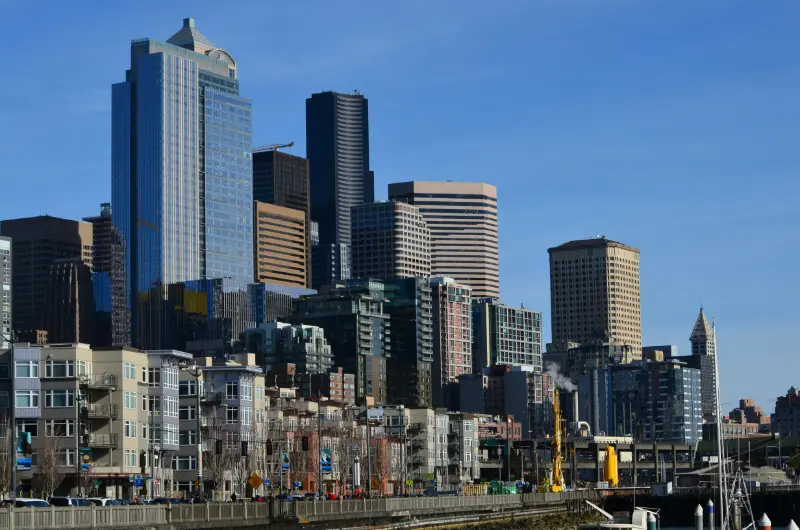
Hotel geography matters more than a small nightly-price difference. A room that removes a repeated transfer or a difficult parking problem often adds more value than a prettier property in the wrong place.
Read recent reviews for the practical details that promotional photos rarely show: stairs, lift size, street noise, parking, breakfast hours and how far you actually carry luggage from the station, ferry or car park.
Transport: what is worth planning in advance
A car becomes essential after Seattle because Olympic and Rainier are geographically dispersed.
Ferry schedules, park roads and construction all matter more than straight-line mileage; check official conditions rather than trusting a single map estimate.
Measure every move door to door rather than by the timetable headline. Checkout, waiting, luggage and the final transfer can turn a short train, road or ferry journey into half a day.
Save tickets, accommodation addresses and essential timetables offline. Rural roads, parks and islands are exactly where mobile coverage or battery life can become least reliable.
Food and daily rhythm
Seattle provides the strongest restaurant range, while park sections need more self-sufficiency: carry water, snacks and simple lunches.
Do not assume every park visitor area has full food service, especially with construction or seasonal closures.
Use meals to control the rhythm of the day. A long regional lunch can be both an experience and a recovery period after museums, hiking, heat or an early start.
Do not make every meal another attraction. Mix destination restaurants with markets, bakeries, cafés and simple local places so food improves the trip instead of controlling it.
Families, children and older travellers
Ferries, beaches, rainforest and mountain viewpoints give children excellent variety.
Older travellers can use scenic drives and short accessible viewpoints instead of long hikes; the main challenge is driving time, not a lack of low-effort scenery.
For multigenerational travel, the useful pace is the one at which the least mobile member still enjoys the day. That normally produces a better trip for everyone.
When accessibility matters, ask specific questions about steps, surfaces, boat boarding, lifts and vehicle access rather than relying on a generic accessibility label.
Budget: where the money really goes
Car hire and peak-season lodging near the parks are the main costs. Booking geographically smart hotels often saves enough driving to justify a higher rate.
Seattle parking is expensive, another reason to delay rental pickup.
Compare total trip cost rather than headline room or ticket prices. Parking, taxis, transfers, luggage and time lost reaching remote accommodation can erase an apparent saving.
The best splurges usually remove friction: a central room, a direct transfer, a good guide where context matters, or one extra night that prevents an exhausting move.
Best time to go
Summer provides the broadest high-elevation access, but wildfire smoke and crowds can affect plans.
Spring and autumn are beautiful but mountain snow and road closures make live-condition checking essential.
Shoulder season often balances weather, demand and prices well, but ferries, mountain services and rural attractions may run less frequently.
Heat, rain, snow, wind and daylight should change the order of a day. Use the most comfortable hours for exposed outdoor sights and keep easier alternatives available.
Comfort, accessibility and realistic pacing
The route protects one full Olympic block and one Rainier block instead of alternating long park drives with Seattle.
Never treat Hurricane Ridge, Hoh rainforest and a Pacific beach as one easy day; they sit in very different parts of the peninsula.
Travel fatigue compounds. One difficult transfer can reduce the quality of the following two days, which is why this itinerary avoids one-night bases unless geography genuinely requires them.
A free half-day is not wasted time. It is insurance for weather, transport disruption, a tired child or a place you discover only after arriving.
Small decisions that improve the trip
Skip North Cascades this time
Three national parks would turn ten days into road logistics.
Use two Olympic bases
The peninsula is too large for one convenient centre.
Delay the rental car
Seattle does not need it.
Use NPS live conditions
2026 construction and mountain weather are operational facts.
What I would leave out on this length of trip
Leave North Cascades and the San Juan Islands for another Washington trip.
Skip long hikes on the final day before a flight.
Mistakes that make this trip harder than it needs to be
- Using one Olympic hotel.
- Assuming Mount Rainier still uses 2024-style timed entry.
- Ignoring Olympic 2026 construction notices.
- Driving Seattle with a rental car for no reason.
- Trying to see rainforest, ridge and coast in one day.
- Leaving Rainier too late for Sea-Tac.
How I would adapt the itinerary
With seven days, use Seattle plus Olympic or Seattle plus Rainier, not both parks deeply.
With two weeks, add North Cascades or San Juan Islands with several proper nights.
Before booking
- Check Mount Rainier and Olympic NPS alerts.
- Reserve peak-season park-area lodging early.
- Carry water at Hurricane Ridge.
- Download offline maps.
- Protect the final airport drive.
Practical questions
Does Mount Rainier require timed entry in 2026?
No. NPS announced no timed-entry reservation for any portion of the park in 2026.
How many nights for Olympic?
Four nights is a strong minimum if you want mountains, rainforest and coast.
Can I add North Cascades?
Not without making the ten-day itinerary much more road-heavy.
Final thoughts
Washington State is best when its landscapes are allowed to feel large.
Seattle, Olympic and Mount Rainier create a ten-day trip through urban waterfront, rainforest, wild Pacific coast and volcanic mountains without pretending the state is compact.
How to keep this itinerary resilient
Check NPS road and construction notices every evening, not just before departure.
Keep one Olympic day flexible so a closed road or mountain cloud can be replaced with rainforest, lake or coast.