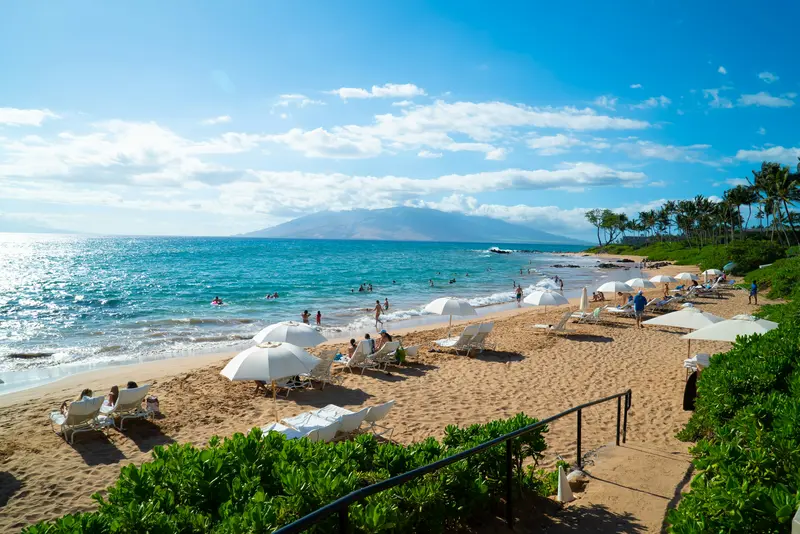
Hawaii is one of those destinations where adding more islands can make a trip worse. Oahu, Maui, Kauai and Hawaiʻi Island each justify a holiday of their own, yet first-time visitors often try to fit three or four into ten days. The result is more packing, rental-car paperwork and airport time than the map suggests.
A better ten-day introduction uses two islands. Oahu offers Honolulu, history, urban food and varied beaches; Maui adds a different landscape and a stronger road-trip feel. This plan protects enough time on both islands to understand them rather than treating each one as a collection of famous stops.
Quick trip summary
- Use only two islands in ten days.
- Start with Oahu for 4 nights and give Maui about 5 nights plus the transfer day.
- Rent a car only for the days when it improves access; Waikiki does not require one every day.
- Treat the Road to Hana and Haleakalā as separate high-effort days.
- Check park access, reservations, road conditions and ocean safety shortly before each outdoor day.
Who this itinerary is for — and when to change it
This route is designed for a first or early visit with a moderate pace. It assumes that the goal is to understand the destination rather than collect the highest possible number of stops. Couples, solo travellers, families and mixed-age groups can use the same geographic structure, but activity intensity should change with mobility, climate, jet lag and personal interests.
Before booking every attraction, identify the two experiences you would most regret missing. Protect those first, then build the rest of the trip around them. Weather-dependent beaches, mountains, wildlife, boats and scenic roads should remain movable, while museums, markets and neighbourhood time can often shift more easily.
Where to stay: choose the base before the hotel
Accommodation is a transport decision as much as a comfort decision. Check how you will reach the first activity in the morning, what happens after dinner, whether the property has lifts or parking, and how luggage will move on transfer days. A cheaper room that creates two difficult journeys every day can cost more in taxis, time and energy than a slightly more expensive base in the right place.
| Base | Why it works — and the trade-off |
|---|---|
| Waikiki | The easiest first-time Oahu base for beach access, food and transport; parking can be expensive if you keep a car throughout. |
| Ko Olina | Resort-oriented and calmer for families, but less convenient for Honolulu sightseeing. |
| Maui: Kihei / Wailea | Good access to south Maui beaches and services; Wailea is more resort-focused and usually pricier. |
| Maui: Kaʻanapali / West Maui | Strong beach-resort choice with sunset views, but road access and driving times should be checked for your specific plans. |
The four decisions that shape this trip most
| Decision | Best default | When to change it |
|---|---|---|
| Number of islands | Two | Add a third only with 14+ days or if you already know exactly what you are sacrificing. |
| Oahu car | Part-time rental | Keep one continuously only if parking cost and daily driving make sense. |
| Maui car | Yes for most itineraries | Use transfers only if you plan to stay almost entirely at one resort. |
| Big driving day | Choose Hana or a very full upcountry day | Do not stack multiple long scenic drives back to back. |
Make these choices before filling the calendar with attractions. They determine how many hotel changes, early starts and fragile connections the trip contains. Once the structure is right, individual sightseeing choices are much easier to adjust.
A realistic day-by-day route
Days 1–2: Waikiki and Honolulu orientation
Keep arrival day around Waikiki, the beach and nearby food.
Use the first full day for Pearl Harbor if it is a priority, downtown history and one neighbourhood or viewpoint rather than crossing the island repeatedly.
Schedule reservations that matter, but leave evening flexible for jet lag.
Days 3–4: one Oahu road day and one slower day
Rent a car for a North Shore or windward-coast day, grouping stops in one direction.
Choose a few beaches and viewpoints instead of trying to stop at every pin saved on your map.
Use the second day for swimming, a museum, Diamond Head if appropriate, or a food-focused neighbourhood day.
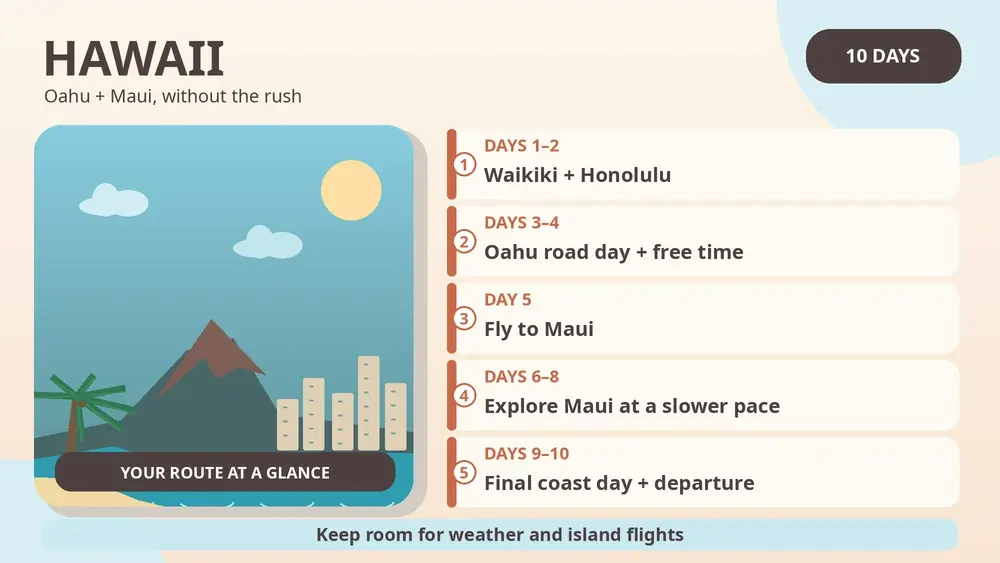
Day 5: fly to Maui
Allow time for hotel checkout, returning the car if you rented one, airport security, the inter-island flight, collecting another car and checking in again.
Do not call this a “half-day transfer” and then reserve a distant sunset activity.
Shop for water and simple breakfasts after arrival if you are staying in a condo or apartment-style property.
Days 6–8: Maui with one demanding day at a time
Use one day for a beach-and-snorkel rhythm close to your base.
Give the Road to Hana its own day only if everyone tolerates curves and long driving; otherwise explore a shorter east-Maui section.
Make Haleakalā or upcountry a separate day, checking reservations and weather where required.
Pace check: if this stage runs late, remove the lowest-priority activity rather than stealing time from meals, sleep or the next transfer. A resilient itinerary should become simpler when something changes, not more frantic.
Days 9–10: flexible coast day and departure
Keep day nine flexible for the beach, a boat trip, a missed weather-dependent activity or simply a slower final day.
On departure day, leave rental-car and airport margin rather than squeezing in a remote beach.
If your international flight leaves from Honolulu on a separate ticket, consider connection risk carefully rather than relying on a tight same-day inter-island flight.
What is worth booking in advance
Book the components that are genuinely scarce or that would break the route if unavailable: limited transport, a special accommodation, a high-priority guided activity or a reservation required by a park or attraction. Do not pre-book every hour. Leaving some meals, beaches, short walks and neighbourhood time open gives you somewhere to move when weather or energy changes.
Keep confirmations offline and note cancellation windows. If two weather-sensitive activities are booked on consecutive days, understand whether either can move. The strongest itinerary is not the one with the most reservations; it is the one that still works when one reservation fails.
Transport reality: plan door to door
Inter-island flights are short in the air but much longer door to door. Add hotel checkout, car return, airport time, baggage, another car pickup and the drive to the next accommodation. On Oahu, buses, rideshares and walking can cover many Waikiki/Honolulu days. On Maui, a car is normally the practical choice because beaches, trailheads and scenic drives are dispersed. Never let an online route estimate replace current road and park information.
Door-to-door time is the number that matters. Add hotel checkout, reaching the station, airport, ferry or pickup point, waiting, boarding, luggage, local transport at the other end and the possibility that everyone needs food immediately after arrival. This is why a “one-hour flight” or “two-hour drive” can consume half a day. Our guide to building realistic 7-, 10- and 14-day itineraries explains how to treat transfer days honestly.
Food strategy: make meals part of the route
Hawaii can be expensive, so mix destination meals with food trucks, plate lunches, supermarkets and simple breakfasts. Oahu has a broad restaurant scene and is ideal for trying local, Japanese, Filipino, Korean and Pacific influences. On Maui, plan food stops around long driving days because rural areas may have fewer late options. Carry water and snacks, but respect local rules about where food is allowed at beaches and parks.
One planned meal per day is usually enough. Keep another meal flexible so it can respond to where you actually are, not where an old itinerary expected you to be. With children, older travellers or very hot/cold weather, eating before everyone becomes exhausted is often more important than reaching a restaurant that looked perfect months earlier.
When to go and how the season changes the plan
Hawaii works year-round, but winter surf, trade winds, rain patterns and whale season can change what a “perfect beach day” looks like. Different sides of each island can have different conditions on the same day. For ocean activities, local warnings matter more than a generic weather icon. Build flexibility around snorkeling, boat trips and exposed hikes.
Instead of searching for one universal “best month,” decide which compromise you prefer: better weather, fewer visitors, lower prices, longer daylight, beach conditions, snow or wildlife. No period maximises everything. Recheck short-term weather and official access information shortly before each critical outdoor day.
Budget: where spending actually improves the trip
Accommodation, rental cars, parking, resort fees where applicable, food and inter-island flights drive the budget. The strongest saving is often structural: two islands instead of three, part-time car rental on Oahu, fewer paid activities and a property that reduces daily parking. Do not judge a condo only on nightly price; cleaning and other fees can materially change a short stay.
The most useful upgrades are often logistical rather than luxurious: a hotel that removes a daily transfer, a direct ride after a long flight, a flexible ticket, an additional night in a weather-dependent region or a guide where interpretation genuinely adds value. Cut low-value extras before cutting the pieces that keep the route reliable. Our realistic travel-budget guide can help you account for the smaller costs between headline bookings.
Common mistakes to avoid
- Visiting three or four islands in ten days.
- Keeping a rental car in Waikiki for days when it sits in expensive parking.
- Underestimating the Road to Hana because the mileage looks short.
- Ignoring ocean warnings because the beach looks calm from shore.
- Booking a tight connection between separate inter-island and long-haul tickets.
Most difficult trips are not ruined by one large mistake. They become tiring through a sequence of optimistic assumptions: a transfer that “should” be quick, a famous walk assumed to suit everyone, a meal delayed until everyone is hungry and a departure day with no margin. Leave space before you need it.
Families, older travellers and mixed-age groups
Oahu offers the easiest variety for families because an urban day, beach day and museum day can be mixed without long drives. On Maui, choose a base with easy food and swimming access so every day does not start in the car. For older travellers, reduce steep viewpoints and long driving combinations, and check whether boat excursions require beach launches or difficult boarding.
For mixed-age groups, agree which experiences everyone will share and which can be optional. Splitting for two hours is often healthier than forcing the whole group through one person’s priority. Build seating, toilets, shade or warm shelter, step-free access and realistic meal times into the plan with the same seriousness as headline attractions. Our guide to travelling with parents and older adults develops this approach in more detail.
If you have more or less time
With seven days, stay on one island or use a 3/4-night split only if flights align well. With two weeks, add Hawaiʻi Island or Kauai rather than giving each existing stop only one extra day. A third island works best when it brings a clearly different priority such as volcano landscapes or hiking, not merely another beach.
When shortening the trip, remove an entire base before cutting every destination to one night. When lengthening it, add depth before distance. An extra morning in a place you already understand often produces a better memory than another multi-hour transfer to a new pin on the map.
Useful official resources
Opening hours, transport timetables, road conditions, trail rules, sea conditions and visitor procedures can change. Use official sources for the details that affect your exact travel dates and recheck them shortly before departure.
Final planning checklist
- Confirm passport, visa, entry and transit requirements for your nationality and route.
- Book the genuinely scarce transport or accommodation segment before secondary attractions.
- Check the exact luggage journey between bases, including stairs, boats, station exits and rental-car rules.
- Save offline copies of essential reservations, insurance details and each accommodation address.
- Recheck weather, road, park, trail, sea or transport notices shortly before each critical day.
- Keep at least one flexible half-day that can absorb rain, fatigue, a delay or a cancellation.
- Choose clothing and footwear for the actual surfaces and climate, not only for photographs.
- Leave a generous buffer before international flights and other connections that are expensive to miss.
The purpose of a good itinerary is not to prove that you covered the maximum distance. It is to make the important experiences easier to enjoy and to leave enough energy for the unexpected parts that become the best memories. Use this route as a framework, then remove anything that does not fit your interests, mobility or travel rhythm.