Author: admin

  • Casablanca in 3 Days: Hassan II Mosque, Art Deco and Habous Without Treating It as an Airport Stop

    Casablanca in 3 Days: Hassan II Mosque, Art Deco and Habous Without Treating It as an Airport Stop

    Casablanca Casablanca is easy to misunderstand if you arrive expecting a preserved medina like Fez or Marrakech. Morocco’s economic capital is more interesting as a living modern city shaped by Art Deco, Atlantic light, business districts, neighbourhood markets, religious architecture and 20th-century urban history. Three days is enough to see those layers without pretending the city is something it is not.

    If this stop is part of a wider journey, compare the pacing with Morocco Atlantic Coast in 9 Days: Casablanca, Rabat and Essaouira Without Returning to Marrakech. The broader itinerary is better for deciding how long to stay and what comes before or after; this city guide is designed to make the days on the ground work well.

    Quick trip summary

    Ideal stay 3 days for a first visit
    Best approach Group each day by neighbourhood or geographic zone and protect one flexible block
    Transport strategy Walk where the experience is concentrated; use public transport or a taxi to remove unrewarding distance
    Who it suits First-time visitors, couples, solo travellers, families and slower-paced travellers
    Most common mistake Trying to fit technically possible transfers into every available hour

    How to plan Casablanca before you book

    A strong short stay starts with three decisions: where you will sleep, which one or two experiences really need a reservation, and what you will deliberately leave flexible. That sounds simple, but it prevents the most common city-break problem: a schedule that only works if every queue, meal, transfer and weather forecast behaves perfectly.

    Think in geographic clusters rather than popularity rankings. Put nearby sights on the same day, then reserve the other half of the day for a neighbourhood, meal, park, waterfront or weather-dependent option. This creates room for the moments that usually become the best part of a trip: a market that takes longer than expected, a viewpoint with unusually clear light, or a café where you decide not to rush.

    Where to stay

    The central areas around the main boulevards are practical for architecture, restaurants and transport. Gauthier and nearby districts offer a strong dining and café scene, while the Corniche suits travellers who want ocean views and do not mind using taxis more often. Habous is atmospheric for daytime exploration but is less convenient as a universal base. Choose a hotel with straightforward vehicle access because Casablanca distances are larger than they first appear.

    For a multi-age trip, hotel access matters almost as much as the neighbourhood name. Check the walk from the nearest useful stop, hills or stairs, late-evening transport, lifts inside the building and whether a taxi can actually reach the entrance. A slightly more expensive room can be better value if it removes two difficult transfers every day.

    Arrival and the first few hours

    Mohammed V International Airport is outside the city, with rail and road connections that should be checked against your arrival time and exact hotel location. Casablanca also has important rail links to Rabat, Marrakech and other Moroccan cities. If you are landing after a long international flight, keep the first evening simple rather than immediately crossing the city for dinner.

    Save the hotel address offline before travelling and know the simplest first transfer before you land. Arrival day is the wrong time to improvise a complicated chain of local transport with heavy luggage. Once you have checked in, use a nearby walk or meal to understand the immediate area rather than crossing the destination for a single famous sight.

    Getting around without wasting the trip in transit

    Casablanca’s tram system is useful on selected corridors, while taxis fill many gaps. Walking works within neighbourhoods, not necessarily between all major sights. Group Hassan II Mosque with the nearby waterfront, central Art Deco streets with downtown exploration, and Habous with adjacent areas. This neighbourhood logic matters more than trying to visit attractions in popularity order.

    Check live service information on the day because construction, events, weather and local disruptions can change the practical route even when the map is unchanged. When choosing between a cheaper transfer and a faster one, consider the value of your limited holiday time and the energy of the whole group, not just the fare.

    A realistic 3-day itinerary

    Day 1 – Hassan II Mosque and Atlantic Casablanca

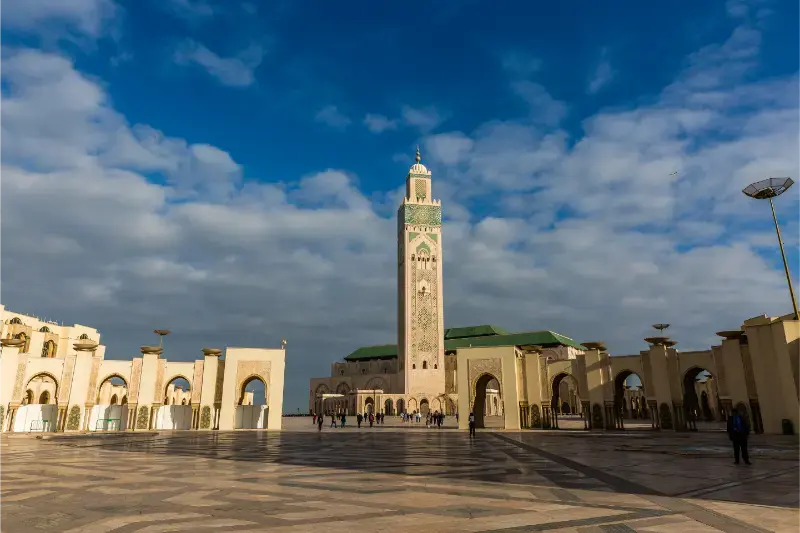
    Make Hassan II Mosque the main anchor and check current visitor-tour arrangements before arriving. Spend time along the nearby waterfront and Corniche rather than leaving immediately after the visit. The scale, ocean setting and modern religious architecture deserve more than a quick photo stop.

    Day 2 – Art Deco centre and city life

    Walk selected central boulevards with attention to façades, arcades and the mix of European and Moroccan design. Add markets, cafés and one cultural site rather than rushing across the metropolis. Casablanca’s urban interest is cumulative: individual buildings matter less than seeing how the city centre fits together.

    Day 3 – Habous and a flexible neighbourhood afternoon

    Explore Habous at a measured pace, combining courtyards, shops and food with nearby points of interest. Use the final afternoon for a museum, another architectural area or the seafront depending on weather and what you missed. If you are continuing to Rabat, protect the train connection rather than adding a distant last stop.

    Best time to visit

    Spring and autumn are comfortable for urban walking, while summer temperatures along the coast can be moderated by the Atlantic compared with inland Morocco. Winter is generally manageable but can bring rain. Religious calendars and local holidays can affect opening patterns, so verify access to major sites before fixing the day order.

    The best month depends on what you value most: comfortable walking, long daylight, low accommodation prices, swimming, festivals, snow, autumn colour or quieter museums. Instead of searching for one universally “best” season, choose the trade-off that matches your trip and then build the daily schedule around those conditions.

    What to book first

    The most important advance check is the current visitor procedure for Hassan II Mosque, including tour times and dress expectations. Book accommodation and any special restaurant that matters to you, but leave ordinary neighbourhood exploration flexible. For onward trains, check schedules directly rather than relying on an old itinerary.

    Before departure, recheck official opening days, transport notices, reservation procedures and any seasonal closures. These operational details change more quickly than the logic of the itinerary. Keep screenshots or confirmations offline, but let the current official source override an old saved timetable.

    Food strategy: make meals part of the route

    Casablanca is a good city for Moroccan classics, seafood and modern dining. Use meals to explore different neighbourhoods rather than searching only around the most famous tourist sites. A market or bakery breakfast, a relaxed Moroccan lunch and an Atlantic seafood dinner can show more range than a sequence of formal restaurants.

    A useful rule is to travel for a special meal only when the meal itself is one of the day’s main experiences. Otherwise, eat well near the area you are already exploring. This reduces backtracking and gives you more time to notice ordinary local places rather than spending the afternoon commuting between recommendations.

    Travelling with children

    Families can enjoy the mosque exterior and guided visit, seaside areas and Habous, but long architecture walks need breaks. Use trams and taxis to reduce unrewarding distance and choose a hotel where a midday reset is possible. The Corniche can provide a useful open-air contrast to dense city streets.

    With children, reduce transitions before reducing highlights. One major attraction plus one flexible outdoor or neighbourhood block is often stronger than three timed entries. Keep snacks, water, toilets and the easy route back to the hotel in mind before starting a long afternoon.

    Travelling at a slower pace or as a senior

    Casablanca is large, so strategic taxis can make a major difference. Choose a central hotel with lifts and simple vehicle access, and avoid planning long cross-city walks merely because attractions appear on the same map. Confirm accessibility for any guided mosque visit or museum that is a priority.

    A slower itinerary should not mean seeing only the first attraction near the hotel. Use transport to remove the least interesting walking and save energy for the historic streets, museums, landscapes and meals that make the destination distinctive. Seating, shade, weather and surface conditions are practical planning factors, not minor details.

    Budget planning

    Casablanca covers a wide range of hotel and dining prices. Transport costs grow when you choose a seafront hotel far from daytime sightseeing, so compare nightly price with daily taxi use. Many of the city’s best urban experiences are walks and neighbourhood observations, leaving room in the budget for one guided architectural or mosque-focused experience.

    Keep a modest daily reserve for an easier taxi, extra water, a weather-driven change, an unexpected admission or a meal when the original plan fails. A resilient budget is more useful than allocating every euro, dollar or local-currency unit before departure. Compare the total daily cost of each accommodation option rather than the room price alone.

    Weather backup plan

    Keep at least one indoor or low-commitment block movable. The best backup is usually in the same part of the city, so a storm, heat wave, strong wind or poor visibility does not force an entirely new transport plan. Put exposed viewpoints, beaches, mountain trips and long walks on days that can swap with museums, markets or neighbourhood time.

    Connectivity, payments and small practical details

    Download the essential map area, hotel address, tickets and the next important transfer before leaving reliable Wi-Fi. Carry a small power bank and keep a backup payment method separate from the main wallet. Cards may be widely accepted without being universal, so a modest amount of local cash can still be useful for small purchases, markets or transport.

    What to pack

    Comfortable shoes matter more than an extra outfit. Add a compact day bag, water, sun protection, a light layer and rain protection appropriate to the season. If the itinerary includes altitude, coast, mountains or exposed viewpoints, pack for the conditions there rather than assuming the city-centre forecast tells the whole story.

    Common mistakes to avoid

    • Expecting Casablanca to feel like the medinas of Marrakech or Fez.
    • Visiting Hassan II Mosque without checking current visitor access and tour procedures.
    • Crossing the city repeatedly instead of grouping neighbourhoods.
    • Spending only one airport night and concluding there is nothing to see.
    • Choosing a seafront hotel without accounting for daily transport to central sights.

    Responsible travel and local etiquette

    Treat markets, places of worship, residential streets and working neighbourhoods as real community spaces rather than scenery. Follow posted instructions, keep entrances and pavements passable, ask before photographing people in sensitive settings and support local businesses when it fits naturally into the day.

    In natural or archaeological settings, stay within marked routes and respect closures even if another visitor appears to ignore them. Barriers often protect fragile places as well as visitors. Good travel behaviour is mostly about paying attention to the space you are entering rather than memorising a list of rules.

    If you have less or more time

    With one day, focus on Hassan II Mosque, the waterfront and a short central walk. Two days adds Art Deco streets and Habous. With four or five days, Casablanca works well as a base for a deliberate Rabat day or deeper architectural exploration, but a broader Morocco itinerary may be better served by moving onward.

    Safety and decision-making on the day

    Use normal big-city awareness, especially around crowded markets, transport hubs and busy roads. Take official or reputable transport, agree on taxi expectations where needed and keep valuables controlled. Respect visitor rules at religious sites and follow current local advice rather than relying on stereotypes about entire districts.

    Set a practical turnaround time on excursion and departure days. Missing a secondary attraction is cheaper than missing a flight, travelling exhausted late at night or forcing an outdoor plan after conditions have changed. Current local advice is more useful than blanket claims that an entire destination is either completely safe or completely unsafe.

    Useful official and planning resources

    Opening hours, fees, transport schedules and access rules change more often than the basic geography. Recheck the official source shortly before departure.

    Final planning checklist

    • Confirm passport, visa, transit and health requirements for your nationality.
    • Reserve the attraction, tour or transport that controls the rest of the itinerary.
    • Save your accommodation address and first-day route offline.
    • Recheck weather, closures and transport notices before each critical day.
    • Keep at least one half-day that can absorb a delay or become simple rest.
    • Leave a generous buffer before flights, trains, ferries and other costly connections.

    A strong trip to Casablanca should feel as though you understood how the place fits together, not merely that you collected its famous names. Protect the fixed reservations that matter, group the rest by geography and remove anything that creates more transit than experience.


  • Museum Days for All Ages: Plan Better Visits With Children, Teens and Seniors

    Museum Days for All Ages: Plan Better Visits With Children, Teens and Seniors

    A museum can be the highlight of a family holiday or the moment when everyone becomes exhausted and impatient. The difference is often the planning, not the quality of the collection. A brilliant institution can feel overwhelming if a group tries to visit every gallery, while a small local museum may create a lasting memory through one memorable exhibit. Multi-age travelers bring different interests, energy levels and access needs. A successful museum day balances curiosity, comfort and the freedom to stop without guilt.

    Quick planning reference

    Decision What to check Useful action
    Priority Two or three collections only Plan a flexible route
    Access Toilets, lifts, benches and quiet areas Use official access guide
    Tickets Timed galleries and family concessions Calculate actual group price

    Choose a museum that suits the group

    History, science, art, natural history, technology and local culture museums offer different visitor experiences. A child fascinated by dinosaurs may enjoy an interactive natural history display, while a teenager might prefer design, photography or a museum connected to a social issue. Grandparents may want comfortable galleries with strong interpretation and opportunities to talk about changes they have witnessed. There is no obligation for everyone to love the same collections equally.

    Start with one primary museum that suits most of the group and add a smaller optional stop. Read the official website for current exhibitions, age recommendations and gallery closures. A large institution can require several hours just to reach the most popular exhibit. Choose two or three priority collections rather than treating the entire floor plan as a checklist. Small local museums can be especially effective at connecting familiar streets to unexpected stories.

    Look beyond the headline attraction

    A famous artwork or skeleton attracts visitors, but the gallery immediately beside it may tell a richer story. Before arriving, read the institution’s introductory material about its collection and communities. Museums are increasingly attentive to the origins of objects, questions of representation and the rights of source communities. The International Council of Museums provides ethical guidance for professional practice, including collection care and responsible interpretation.

    Encourage conversation without turning the visit into a test. Ask children what surprised them; invite teenagers to challenge an exhibition’s perspective respectfully; and listen to older relatives who can connect displays to lived memory. Some topics—including war, migration, colonialism or loss—may require preparation for younger visitors. Explain that a museum presents evidence and interpretations, not a complete and neutral version of every historical event.

    Reserve realistically and avoid queue fatigue

    Popular museums may offer timed entry even when general admission is free. Special exhibitions, planetarium shows and workshops can require separate tickets. Check reservation rules, security screening, prohibited bags and the last admission time. A ticket at 10:00 does not mean your family can arrive at 10:20 without consequences. Leave time for public transport, cloakroom queues and finding the correct entrance.

    Avoid booking another major attraction immediately afterward. Children need time to eat and move, and adults need a break from dense information. A café or outdoor square near the museum can turn a demanding morning into an enjoyable day. If the museum is closed unexpectedly, have a nearby alternative such as a library exhibition, heritage walk or indoor market. The fallback should be genuinely flexible, not another prepaid commitment.

    A museum may provide step-free entry but still have galleries reached by narrow historic stairs, temporary displays with cramped passages or seating only in certain sections. Ask for the accessible route, elevator information, restroom locations and policies on mobility aids. Some institutions have wheelchairs to borrow, but availability may be limited and require reservation. A visitor with pain or fatigue may value a short route with benches more than a technically step-free marathon.

    For people with low vision, ask about audio description, tactile models, large print and permitted handling sessions. Visitors with hearing loss may want captioned media, induction loops or sign-language tours where available. Sensory-friendly sessions can support people who find noise, crowds or intense lighting difficult. Check the exact date and conditions of those offerings; they are not necessarily available throughout normal opening hours.

    Give children agency and manageable tasks

    For a toddler, a short look at bright objects, animals or moving exhibits may be enough. Preschool children often learn through questions and storytelling rather than detailed labels. Provide one simple task, such as spotting a shape or comparing two objects. School-age children may enjoy a scavenger trail or a museum worksheet if it does not become homework. Give them a choice between two galleries so they feel involved.

    Teenagers can use their interests to shape the visit, perhaps selecting a room on fashion, photography, science or music. Allow space for independent observation within agreed boundaries and follow the museum’s rules on devices. Avoid forcing a posed family photograph in front of every famous object. The best outcome is a conversation afterward about what each person noticed, not a record proving that the entire museum was covered.

    Handle crowds, noise and behavior calmly

    Interactive museums can be lively, while art galleries may expect quieter movement. Read conduct rules and explain them in advance. Children should not touch exhibits unless invited, and running can endanger visitors and collections. Some museums permit snacks only in designated areas; do not open food in galleries because a child becomes impatient. Planning breaks early is better than negotiating after everyone is hungry.

    High-profile temporary exhibitions may have dark rooms, loud audio, projections or disturbing content. If sensory needs are relevant, request a visitor guide describing those conditions before buying tickets. Adults can also become overwhelmed by noise and crowds, so consider quieter opening periods and shorter visits. Make it acceptable for a family member to sit out one gallery while others continue, provided everyone has a clear meeting arrangement.

    Budget with the full visit in mind

    Admission policies differ widely. Many museums offer free permanent collections, but special displays can cost extra. Child, student, senior and resident discounts may require identification. Family packages are not always cheaper than individual admission, so compare the actual group composition. Add travel, lockers, lunch and workshops to determine the complete expense. A remote hotel can make a supposedly free museum more costly through transport.

    City passes sometimes include museums, but pass eligibility can be complex. Count the specific institutions you will realistically visit and read the reservation rules. If the main museum is free, paying for an expensive pass just because it appears to include that museum may be poor value. A small museum with a modest admission fee and personalized interpretation can be equally worthwhile as a large national institution.

    Build a flexible morning plan

    A comfortable family visit might begin with an orientation map and a toilet break, followed by the most important gallery. After forty to sixty minutes, depending on ages and energy, pause for a drink or snack in the permitted area. Visit one second collection if enthusiasm remains, then stop while the experience is still positive. Adults who want a longer look can alternate childcare responsibility or arrange a second independent visit.

    For a multigenerational group, agree on a meeting point and time rather than insisting everyone stand together. One person can enjoy a temporary exhibit while another visits the café. A shared lunch becomes a chance to exchange discoveries. If the museum offers a guided tour, confirm its duration and whether seating or step-free routes are available. An excellent tour is less enjoyable when it requires prolonged standing that a participant cannot manage.

    Connect exhibits to the destination beyond the museum

    After a history museum, visit a nearby square or street mentioned in the displays. After a design exhibition, observe local architecture and public transport. A natural history museum can inspire a short botanic garden walk; a maritime collection can lead to an accessible waterfront viewpoint. These connections help turn exhibits into a deeper understanding of place rather than an isolated indoor activity on a rainy day.

    Keep the link manageable. A museum about local industries might suggest a neighborhood café or historic marketplace rather than a complicated journey to a distant factory site. Discuss with children how the objects in a display relate to everyday life. Ask whether the stories of residents, workers and minority communities are represented. Responsible cultural tourism is as much about listening as checking famous institutions off a list.

    Photography and cultural respect

    Rules about photography vary by gallery and exhibition. Flash, tripods, video and commercial use may be restricted even where casual photos are permitted. Some cultural or sacred objects should not be photographed because of community protocols, not merely conservation concerns. Follow the institution’s instructions and do not photograph other visitors or children without permission. Never touch an artifact for a staged image.

    Treat staff and volunteer guides with respect, especially when asking complicated historical questions. If a label seems incomplete or disputed, look for more interpretation and reliable research rather than confronting the nearest attendant. Many museums publish resources or host discussions that explore changing understandings of collections. Curiosity can coexist with care for the people and objects involved.

    Frequently asked questions

    How long should a museum visit last with young children?

    It depends on attention and energy. A short focused visit with breaks may be better than several hours. Select priority galleries before arriving.

    Are free museums always completely free?

    No. Permanent galleries may be free while temporary exhibitions, workshops or special experiences require tickets. Check current official prices.

    Do museums provide wheelchairs and sensory support?

    Some do, but availability differs. Contact the museum for specific services, reservations and accessible routes rather than assuming universal provision.

    How can teenagers enjoy a museum they did not choose?

    Offer a choice of galleries, connect exhibits with their interests and allow independent observation within clear boundaries. Avoid an overly rigid itinerary.

    Can we take photographs everywhere?

    No. Rules vary by collection and may reflect copyright, preservation or cultural concerns. Follow signs and ask staff when unsure.

    The best museum day ends before curiosity turns into exhaustion. Choose carefully, adapt the pace and make room for each person to experience a collection in their own way. A single object that starts a thoughtful conversation can be worth more than an entire afternoon spent rushing through galleries.

    Official and specialist references

    Rules and availability may change. Check current official destination and provider information before booking or making health-related decisions.

  • Flying With a Wheelchair: Airline Assistance, Batteries and Protecting Your Mobility Device

    Flying With a Wheelchair: Airline Assistance, Batteries and Protecting Your Mobility Device

    Flying with a wheelchair requires more precise planning than booking a seat and requesting a generic assistance icon. A wheelchair may be essential mobility equipment, customized to the traveler, and difficult to replace if damaged. Every stage matters: reaching the airport, arranging assistance, moving from personal equipment to the aircraft, storing the device correctly, and receiving it at the destination. Rules differ by country, airline and aircraft, but clear written communication can reduce avoidable risks. This guide is for manual and powered wheelchair users, companions and anyone supporting a journey with reduced mobility, without assuming that all travelers need the same help.

    Quick planning reference

    Decision What to check Useful action
    Before booking Aircraft and mobility-device specifications Ask the operating airline for written details
    At airport Assistance, transfer plan and equipment tags Keep instructions and essential aids nearby
    At arrival Device condition and accessible pickup Report any damage immediately

    Describe the assistance you actually need

    An airline’s booking system may offer broad categories such as help reaching the gate, help with stairs or assistance to the aircraft seat. Those labels are not always sufficient. Explain whether you can walk any distance, use steps, transfer independently, stand briefly or need an aisle chair. Clarify whether the passenger travels with a personal wheelchair, a mobility scooter or both. The more precise the request, the easier it is for the operator to plan equipment and trained staff. You should not be forced into an inappropriate assistance service simply because it is the default menu option.

    Contact every airline operating a segment, including connections and codeshares. Check its accessibility contact process and obtain confirmation of the request on each booking. Within the EU, official guidance advises notifying the airline, agent or tour operator at least 48 hours before travel to help ensure suitable assistance; applicable U.S. rules are different and generally do not require advance notice for ordinary accommodations, subject to specified exceptions. Provide notice as early as practical anyway. Treat the rules of your actual itinerary as the authority.

    Measure and document the mobility equipment

    Create a one-page device information sheet with manufacturer, model, weight, dimensions, folding or dismantling instructions and any limits on how the chair may be handled. Include photographs showing its condition before travel, particularly controls, footrests, armrests and custom supports. Record contact details for the manufacturer or a repair specialist and keep the information offline. Airlines may need to know whether the equipment fits the cargo door and whether the aircraft can safely carry it; answers can change with aircraft type.

    For a powered wheelchair, identify the battery chemistry and how it is installed. Lithium batteries, wet-cell and other battery types can trigger distinct aviation safety requirements. Do not rely on generalized internet posts about a universal battery allowance. Ask the airline what documentation it requires and consult the airline’s current dangerous-goods guidance. Equipment must be secured appropriately, and staff need clear instructions about disconnecting or protecting controls. Never let an untrained traveler dismantle an unfamiliar power system in a hurry.

    Plan for security and the transfer to the aircraft seat

    At the airport, identify yourself to airline or assistance personnel at the point described in your confirmation. Allow extra time for check-in, security screening and device documentation. Discuss whether you can remain in your personal chair until the gate, what alternative chair will be used and how transfers will occur. Many wheelchair users can self-transfer with some arrangements; others require specialized techniques or a lift. Communicate preferences, pain risks, pressure-care needs and any handling that must be avoided.

    Security screening should be conducted respectfully under the rules of the jurisdiction, with appropriate alternatives when standard equipment cannot be used. You can ask staff to explain the procedure and request privacy where supported. Keep essential medicines, transfer items and small accessories in accessible carry-on luggage. Do not let a detachable cushion or critical part disappear into an unlabelled baggage cart. Photograph all tags and make sure the chair is delivered to the agreed aircraft or baggage collection point.

    Cabin needs and companion arrangements

    Aircraft interiors are not identical. Ask about the route from the cabin entrance to the seat, onboard aisle chairs, accessible lavatory features, seat configuration and space for equipment. A traveler who needs to reach the lavatory during a long flight should receive a factual explanation of what is available on that particular aircraft, not a blanket assurance that a flight is accessible. Airlines may not provide hands-on assistance for personal care, medication or meals, so determine in advance whether a companion is necessary for your individual needs.

    Companions can help with preparation, communication and emotional support, but their own tickets, seating and assistance arrangements require attention. Ask about seating accommodations where applicable. Do not assume a companion will automatically fly free; legal obligations differ. For an unaccompanied traveler, establish a precise plan for transfer, belongings and connection assistance without treating independent travel as unusual or inherently unsafe. Dignity and choice should guide each interaction.

    A connection might satisfy the airline’s published minimum time yet be unsuitable when a wheelchair must be returned, inspected or transferred. Check whether assistance is coordinated across airlines and terminals. Ask whether the chair is checked through to the final destination or returned at an intermediate point. Border inspection, re-screening or a change of airport may add steps. Where possible, choose a longer, simpler connection and avoid the last available service of the day if an equipment problem would leave few alternatives.

    At each gate, confirm that the next crew knows your assistance needs. Carry written instructions and show them again rather than assuming the message traveled through all reservation systems. Some travelers prefer direct flights even at a higher cost because they reduce transfers of a personalized device. Others may prioritize an airline with a more suitable aircraft. The best route balances rights, physical needs, fatigue and the risk of delays.

    If the chair is damaged, delayed or returned incorrectly

    Inspect the device as soon as it is delivered and before leaving the airport when possible. Test the brakes, controls, frame, supports and power functions safely. Report damage or missing parts immediately to the responsible airline, request a written case number and photograph the problem. Ask for necessary temporary mobility equipment and the airline’s repair or replacement procedure. Important deadlines and compensation rules vary with applicable law and journey; do not wait until the next day simply because someone verbally promises to call.

    Retain receipts for reasonable emergency expenses and document any medical or mobility consequences. In the United States, airline obligations are explained by the Department of Transportation, although regulatory details can change. In the EU, passenger rights and assistance are addressed by Your Europe and relevant enforcement bodies. The most useful first action is always to document the exact incident and ask for formal assistance through the airline, with escalation to the competent authority if needed.

    Organize the accessible arrival, not just the flight

    Confirm that ground transport can carry the actual wheelchair dimensions and any companions with luggage. An airport shuttle described as accessible may have limited wheelchair places, restrictive lift dimensions or booking requirements. Ask whether hotel reception, room entrance, bathroom and dining areas are step-free and suitable for specific needs. Photos of one adapted bathroom do not prove that the whole property is usable. Get critical measurements in writing and arrange an alternative if uncertainty remains.

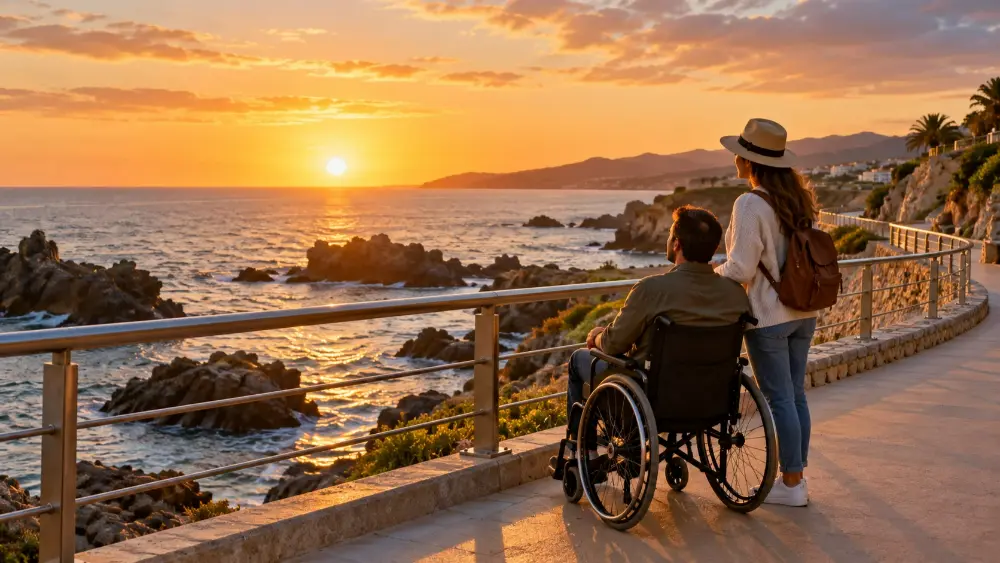
    Illustration of a wheelchair user and companion on a seaside promenade

    Identify local repair options and medical support in the destination, especially on remote islands or in rural regions. Pack essential spare parts permitted by airlines and know who can help if the chair becomes unusable. Travel insurance may exclude pre-existing equipment, offer low compensation limits or require separate cover. Review the actual terms and keep a contingency for unplanned accessible transport rather than counting on a standard taxi being suitable.

    Consider children, seniors and first-time flyers

    For a child who uses a wheelchair, explain the airport process in accessible, age-appropriate language and confirm any child restraint or seating needs with the carrier. Bring familiar comfort items and keep communication open with the child, not solely the adults. An older traveler may need more rest, time for transfer or help with documents. Age does not determine capability; the person’s own preferences and needs should be central. Anyone flying for the first time may find it useful to write down each step, from arrival desk to accessible pickup.

    If the journey includes a group, give one companion responsibility for tickets, another for bags where appropriate, while ensuring the wheelchair user’s own instructions remain authoritative. Never photograph or publish another passenger’s assistive equipment or transfer without consent. A respectful plan protects privacy as well as mobility. Seek formal accessibility support without feeling obliged to disclose a detailed diagnosis to every person involved.

    Practical checklist from booking to arrival

    Before purchase, verify aircraft suitability, equipment limits, seat support and the accessibility of connections. After booking, request assistance on every segment and save confirmation. A week before travel, document the wheelchair’s condition, check battery instructions, arrange accessible airport transfers and download device handling notes. On travel day, arrive with margin, identify yourself at the designated point and confirm the return arrangement. On landing, inspect the device and report any issue promptly.

    Make a second plan for what happens if assistance is late. Know the airline’s support desk and how to contact an airport accessibility team. Keep copies of confirmed requests without assuming that paperwork replaces human communication. Flying is a sequence of linked services: a strong plan covers all of them, not only the seat on the plane.

    Frequently asked questions

    Can I keep my wheelchair until boarding? Often arrangements exist, but the handover process depends on the airport, airline and device. Confirm your preference early.

    Do I need to provide battery details? For powered devices, yes: airlines may need precise information to assess safe carriage.

    Is an accessible bathroom guaranteed on every aircraft? No. Confirm facilities and onboard assistance for the actual aircraft and route.

    What if a wheelchair is damaged? Report it immediately, document the damage, request a case number and ask about suitable temporary equipment.

    Should a companion always be required? Not as a blanket rule. Evaluate individual needs and the lawful safety requirements applicable to the flight.

    Official sources for current requirements

    Information changes across countries and over time. Check these primary resources alongside the rules of your specific destination and travel provider.

  • Southern Arizona in 8 Days: Tucson, Saguaro and Bisbee Without Adding the Grand Canyon

    Southern Arizona in 8 Days: Tucson, Saguaro and Bisbee Without Adding the Grand Canyon

    Arizona travel does not have to revolve around the Grand Canyon. Southern Arizona offers a completely different desert, food culture and borderland history centred on Tucson, Saguaro National Park and the historic mining town of Bisbee.

    This eight-day route uses Tucson as the main base and Bisbee for the final block, with only one hotel change.

    The Visit Arizona Saguaro page notes that Saguaro National Park is split into east and west districts on opposite sides of Tucson. Treat them as separate days or half-days rather than trying to cross the city repeatedly.

    Quick trip summary

    • 5 nights Tucson, 2 nights Bisbee, Day 8 departure.
    • Use a rental car.
    • Treat Saguaro East and West as separate geographic areas.
    • Do desert walks early, especially in warm months.
    • Do not add the Grand Canyon or Sedona to this eight-day Southern Arizona trip.

    Why this route works

    Tucson deserves several nights for Sonoran Desert landscapes, UNESCO-recognised food culture, museums and nearby mountain environments.

    Five nights allow both Saguaro districts without daily cross-city driving.

    Bisbee provides a cooler, walkable historic finale and access to a different southeastern Arizona landscape.

    A realistic itinerary at a glance

    DaysBaseMain focus
    1–5TucsonSaguaro districts, food, museums and desert/mountain day
    6–7Bisbee / southeast ArizonaMining history, borderlands and smaller-town atmosphere
    8DepartureTucson/Phoenix onward

    Day-by-day plan

    Day 1: Tucson arrival

    Stay downtown, near the university or another area tied to your evening plans. Keep the first afternoon to food, streetcar districts or a short sunset stop.

    Day 2: Saguaro National Park West

    Use the Tucson Mountain District, Desert Museum direction and a short desert walk. Start early in hot weather and protect the middle of the day.

    Day 3: Tucson culture and food

    Use Mission San Xavier del Bac, museums, downtown or a food-focused experience. This lower-effort day breaks the desert exposure.

    Day 4: Saguaro National Park East

    Use the Rincon Mountain District scenic loop and one hike suited to conditions. The east side feels different enough to justify a separate day.

    Day 5: Mount Lemmon or flexible Tucson day

    Drive upward into cooler ecological zones, use an observatory/astronomy option or keep a slower city day depending on weather and energy.

    Day 6: Tucson to Bisbee

    Drive southeast, stop in Tombstone only if its history/interpretation genuinely interests you, then settle into Bisbee before evening.

    Day 7: Bisbee and borderlands

    Walk the steep historic town, use a mine/history tour or nearby nature. Avoid packing Tombstone, Bisbee and several border towns into one hurried day.

    Day 8: Departure

    Return toward Tucson or Phoenix with enough road time and no final long desert hike.

    Where to stay and how many hotel changes to make

    Tucson hotel location matters because the city is spread out; choose one side based on dining and the park district you expect to visit most.

    Bisbee is steep, so travellers with mobility limitations should check parking, stairs and the exact route to the room before booking.

    Choose accommodation for geography before décor. A well-positioned room can save an hour every day and often matters more than a small difference in nightly rate.

    Read recent guest reviews for practical details that hotel pages rarely emphasise: stairs, parking, road noise, breakfast hours, heating or air conditioning, and the real walk from transport.

    Transport: what is worth planning in advance

    A car is essential, and Saguaro’s two districts should be grouped with attractions on their respective sides of Tucson.

    Avoid long desert driving at dusk/night when wildlife and fatigue increase risk.

    Measure every move door to door rather than by headline distance. Parking, luggage, road conditions, ferry check-in and the final local transfer can turn a short-looking journey into half a day.

    Save hotel addresses, tickets and maps offline. The places where navigation matters most are often the places where mobile coverage becomes less reliable.

    Food and daily rhythm

    Tucson’s food culture is a major reason to stay several nights, with Sonoran, Mexican and Indigenous influences far beyond a single famous dish.

    Hydration matters more than restaurant ambition on hot hiking days.

    Use meals to shape the rhythm of the day. A long regional lunch can be both an experience and a recovery period after museums, hiking, heat or an early start.

    Do not make every meal another reservation. Mix destination restaurants with bakeries, markets, cafés and simple local places so food improves the trip instead of controlling it.

    Families, children and older travellers

    Desert museums, short park trails and astronomy can be excellent for families.

    Tucson Arizona Desert Highway And Mountains

    Older travellers can use scenic drives and visitor-centre trails; Bisbee’s steep streets require more planning.

    For multigenerational travel, the right pace is the one at which the least mobile member still enjoys the day. That usually creates a better shared trip for everyone.

    When accessibility matters, ask precise questions about steps, trail surfaces, boat boarding, lifts, toilets and vehicle access rather than relying on a generic accessibility label.

    Budget: where the money really goes

    Tucson lodging is often good value outside major events, while specialty astronomy, guided food or mine tours add optional costs.

    Five nights in one Tucson hotel reduce packing and parking uncertainty.

    Compare total trip cost rather than headline prices. Parking, transfers, fuel, tolls, ferries and guided activities can erase an apparent saving.

    The best splurges usually remove friction: a central room, a direct transfer, a good local guide or one extra night that prevents an exhausting move.

    Best time to go

    Late autumn through spring is easiest for desert walking; summer heat requires dawn starts and major midday indoor breaks.

    Higher elevations such as Mount Lemmon can be dramatically cooler and may have winter weather while Tucson is mild.

    Shoulder season often balances weather, crowds and prices well, but rural attractions, ferries, mountain services and seasonal restaurants may run reduced schedules.

    Weather should change the order of the day. Keep indoor or lower-effort alternatives so rain, heat, wind, smoke or cloud does not force you to waste the trip.

    Comfort, accessibility and realistic pacing

    One long Tucson base eliminates most logistics.

    The itinerary alternates exposed desert days with culture and high-elevation options.

    Travel fatigue compounds. One difficult relocation can weaken the following two days, which is why this itinerary avoids one-night bases unless geography genuinely requires them.

    A free half-day is not wasted time. It is insurance for weather, traffic, a tired child or a place you discover only after arriving.

    Small decisions that improve the trip

    Keep the trip southern

    Do not add the Grand Canyon.

    Separate Saguaro East and West

    Tucson sits between them.

    Use heat-aware timing

    The desert dictates the schedule.

    Sleep in Bisbee

    Its evening atmosphere is part of the experience.

    What I would leave out on this length of trip

    Leave Sedona, Grand Canyon and northern Arizona for another road trip.

    Skip long exposed hikes when temperatures are unsafe simply because the trail is famous.

    Mistakes that make this trip harder than it needs to be

    • Treating both Saguaro districts as one quick stop.
    • Hiking at midday in hot weather.
    • Underestimating Tucson’s spread.
    • Booking steep Bisbee lodging without checking access.
    • Adding Tombstone to every southeast-Arizona day.
    • Returning to Phoenix after a long hike with no buffer.

    How I would adapt the itinerary

    With five days, stay in Tucson and make Bisbee a long day only if you tolerate the driving.

    With ten days, add Chiricahua National Monument or another southeast-Arizona block with proper nights.

    Before booking

    • Check NPS weather/trail alerts.
    • Carry far more water than on a city day.
    • Use sun protection.
    • Choose Tucson hotel geography carefully.
    • Check Bisbee mobility/parking details.

    Practical questions

    Which Saguaro district is better?

    West is dense and dramatic around Tucson Mountain landscapes; East has a longer scenic road and Rincon Mountain setting. Both are worth time.

    Do I need to add the Grand Canyon?

    No. Southern Arizona can easily fill eight days.

    Is Bisbee worth two nights?

    Yes if you enjoy historic towns, architecture and slower evenings.

    Final thoughts

    Southern Arizona is a complete destination without borrowing the Grand Canyon’s fame.

    Tucson, two Saguaro districts and Bisbee create eight days of desert, food and history with only one hotel change.

    How to keep the itinerary resilient

    Keep the park districts interchangeable around heat, wind and storms.

    If temperatures spike, move desert walks to dawn and use museums or Mount Lemmon during the hottest hours.

    Who this route suits best

    This itinerary works best for travellers who prefer depth over collecting places. It keeps hotel changes low, protects flexible time and assumes that a good meal, a slower morning or an unexpectedly interesting local stop can be as valuable as another famous attraction. That approach works especially well for first-time visitors, couples, families and multigenerational groups.

    More energetic travellers can add a longer hike, another museum or a second excursion on flexible days. Travellers who prefer an easier pace can remove those extras and still keep the core journey intact. Before booking, identify the two or three experiences that would genuinely disappoint you to miss; those are the ones to reserve first.

  • Bavaria Beyond Munich in 8 Days: Garmisch, Füssen and Berchtesgaden Without a Rushed Castle Tour

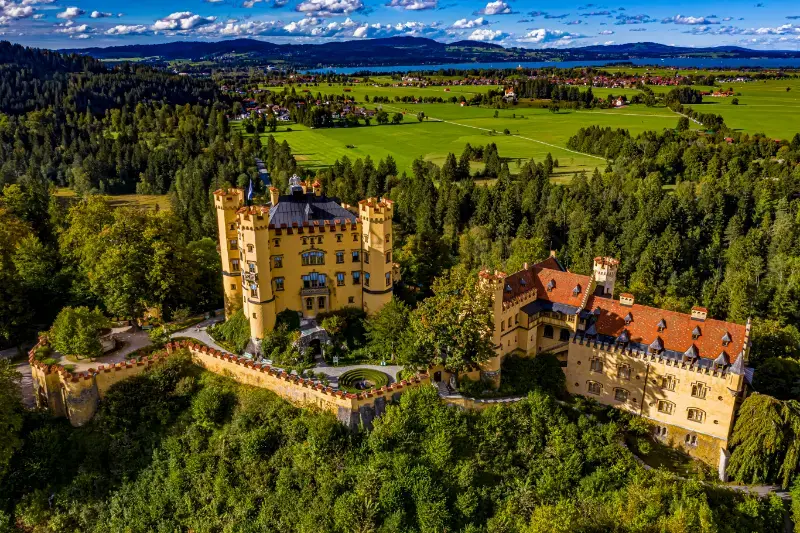
    Bavaria Beyond Munich in 8 Days: Garmisch, Füssen and Berchtesgaden Without a Rushed Castle Tour

    Bavaria is much bigger than Munich and Neuschwanstein. The classic mistake is to use Munich as a base for a series of very long day trips, spending three hours on trains or coaches so that every mountain and castle can be ‘done’ without moving hotels.

    This eight-day route shifts the centre of gravity south. Garmisch-Partenkirchen, Füssen and Berchtesgaden become real bases, while Munich is only the practical gateway. The result is more evening time in the Alps and fewer dawn departures from the city.

    The official Bavaria Travel portal presents Bavaria as a mix of Alps, lakes, castles, cities and regional traditions. That mix is best experienced by staying in the landscapes instead of repeatedly commuting back to Munich.

    Quick trip summary

    • 3 nights Garmisch-Partenkirchen, 2 Füssen, 2 Berchtesgaden, final departure day.
    • Use rail and buses where convenient; a car can simplify the Füssen–Berchtesgaden transition but is not mandatory for every traveller.
    • Treat Neuschwanstein as one part of Füssen, not the whole trip.
    • Keep mountain days weather-flexible.
    • Do not add Nuremberg or Salzburg unless the trip is longer.

    Why this route works

    Garmisch provides mountain access, gorge walks and an alpine town base that works even if the highest cableways are clouded in.

    Füssen gives Neuschwanstein/Hohenschwangau context plus lakes and a pleasant old town, preventing the castle visit from becoming a bus-tour sprint.

    Berchtesgaden closes with a different alpine landscape around Königssee and the national-park area, far enough east to deserve its own stay.

    A realistic itinerary at a glance

    Days Base Main focus
    1–3 Garmisch-Partenkirchen Mountains, gorge and alpine town
    4–5 Füssen Castles, lakes and old town
    6–7 Berchtesgaden Königssee and national-park landscape
    8 Departure Munich/Salzburg-area onward travel

    Day-by-day plan

    Day 1: Travel to Garmisch

    Arrive from Munich and keep the afternoon to the historic areas, cafés and a short local walk. Do not make Zugspitze your arrival-day gamble.

    Day 2: Main mountain day

    Choose Zugspitze or another high-elevation outing only if weather justifies the cost and visibility. If cloud is poor, use lower walks, cableways or town time.

    Day 3: Gorge or valley day

    Partnach Gorge can be the anchor when conditions and access allow, with the rest of the day reserved for a lower-effort valley activity. Families should avoid stacking a long hike after the gorge.

    Day 4: Garmisch to Füssen

    Travel west, check in and enjoy Füssen’s old town and lakeside atmosphere. Saving the castles for tomorrow removes pressure from the transfer day.

    Day 5: Neuschwanstein and Hohenschwangau area

    Use your timed entry exactly as instructed and give yourself time for the walk/shuttle/bus logistics around the castles. If mobility is limited, research the final uphill access before booking.

    Day 6: Füssen to Berchtesgaden

    This is the longest awkward transfer of the route. A car or private transfer can save time; by public transport, accept that the move is the main activity.

    Day 7: Königssee / Berchtesgaden

    Choose the lake, national-park walks or a historical site according to weather. Boat timetables and mountain conditions are seasonal, so avoid promising yourself three major excursions in one day.

    Day 8: Departure

    Continue toward Munich or Salzburg-area transport with a generous buffer. If your long-haul flight is early, move closer to the airport the night before.

    Where to stay and how many hotel changes to make

    In Garmisch, station access is useful if travelling car-free; a central base keeps restaurants walkable.

    In Füssen, staying in town is often more enjoyable than sleeping only for castle proximity.

    In Berchtesgaden, decide whether you value town convenience or a scenic rural guesthouse, then check evening transport/parking.

    On a multi-base trip, location usually matters more than a small difference in room price. A hotel that removes two daily transfers can save more energy than a nicer room on the wrong side of town.

    Read recent reviews for the practical details that booking photos rarely show: stairs, lift size, street noise, parking access, breakfast hours and the final walk from public transport.

    Transport: what is worth planning in advance

    Rail works very well for Munich–Garmisch and many local excursions.

    The cross-Alps connection between Füssen and Berchtesgaden is the route’s least elegant public-transport day; this is where a one-way car rental or private transfer may be worth considering.

    Do not keep a car only to leave it in hotel parking while you use cableways and boats.

    Judge every move door to door rather than by the timetable alone. Checkout, reaching the terminal, waiting, luggage and the final connection to the next hotel can turn a short headline journey into half a day.

    Book the inflexible ticket only when the savings are meaningful and the day is genuinely fixed. Weather-sensitive activities and remote transfers need room to move.

    Food and daily rhythm

    Use mountain huts and bakeries as part of outdoor days rather than carrying a restaurant schedule into every excursion.

    Regional portions can be substantial; a lighter evening meal often feels better after a rich lunch or beer-garden stop.

    Use meals to control the rhythm of the day. A long local lunch can be an experience and a recovery period, especially after exposed archaeological sites, mountain walks or early starts.

    Do not turn every meal into another attraction. Mix regional specialties with simple food, particularly on transfer days when everyone is already tired.

    Families, children and older travellers

    Cableways, lakes and castles make the route naturally varied for children.

    Older travellers should research uphill castle access, boat boarding and gorge conditions instead of assuming every iconic sight is easy.

    Bad-weather days should remain enjoyable; that is why each base has town and cultural alternatives.

    For multigenerational travel, the useful pace is the one at which the least mobile person still enjoys the day. That normally produces a better experience for everyone else too.

    Children often respond better to changes of format than to more attractions: a beach after a museum, a boat after a city walk, or wildlife after a long drive.

    Budget: where the money really goes

    Cableways and castles can make individual days expensive even when rail travel is reasonable.

    Spend on the high mountain lift only when conditions make it worthwhile, and compare regional transport tickets with your exact route.

    Compare total cost instead of headline prices. A cheaper room can become more expensive after transfers, parking, meals and the time lost reaching it.

    The best splurges are usually the ones that remove friction: a central hotel, a reliable private transfer, a direct train, a guide where context matters or one extra night that prevents an exhausting move.

    Best time to go

    Late spring through early autumn is simplest for hiking and lake activities, though alpine weather remains changeable.

    Winter creates a very different ski/snow trip; shoulder-season maintenance can affect some lifts and boats.

    Shoulder season can offer a good balance between weather, demand and comfort, but some boats, mountain services and seasonal restaurants may run less frequently.

    Heat, rain, snow, wind and daylight should change the order of your day. Use the most comfortable hours for exposed outdoor sights and keep indoor or low-effort alternatives available.

    Comfort, accessibility and realistic pacing

    Staying in the Alps removes the pressure to catch the last train back to Munich after every excursion.

    The route needs at least one weather-flexible day because cloud can make expensive mountain viewpoints pointless.

    Travel fatigue accumulates. One difficult transfer can reduce the quality of the next two days, which is why this itinerary avoids one-night bases unless geography genuinely requires them.

    A free half-day is not wasted time. It is insurance for weather, laundry, a delayed journey, a child who needs rest or a place you discover only after arriving.

    Small decisions that improve the trip

    Sleep where you hike

    Morning weather windows are easier to use when you are already in the mountains.

    Give Füssen two nights

    The town and lakes are worth more than a rushed Neuschwanstein coach stop.

    Treat the east-west transfer honestly

    It is long enough to count as the day’s main event.

    Do not chase every summit

    One clear high-mountain day is enough for a first trip.

    What I would leave out on this length of trip

    Leave Nuremberg and northern Bavaria for the broader Germany by train itinerary.

    Skip a Salzburg overnight unless you add at least two more days.

    Mistakes that make this trip harder than it needs to be

    • Using Munich for every alpine day trip.
    • Booking Neuschwanstein without enough access time.
    • Paying for a summit cableway in hopeless weather.
    • Underestimating Füssen–Berchtesgaden transfer time.
    • Adding Salzburg as a one-night trophy stop.
    • Driving to an early Munich flight from the far southeast.

    How I would adapt the itinerary

    With five days, use Garmisch and Füssen.

    With ten days, add two Salzburg nights or a slower Chiemsee stop rather than compressing more mountains.

    Before booking

    • Book castle entries when needed.
    • Check lift/boat seasonal operation.
    • Keep one mountain day flexible.
    • Plan the Füssen–Berchtesgaden transfer before hotels.
    • Protect the final airport connection.

    Practical questions

    Do I need a car?

    No for much of the route, but it can simplify the longest cross-region transfer and rural accommodation.

    Is Neuschwanstein worth it?

    Yes for many first-time visitors, but the overall area is more rewarding when you also allow time for Füssen and the lakes.

    Which base is best for older travellers?

    Garmisch and Füssen are easiest when chosen near stations; check specific mountain/castle access for mobility needs.

    Final thoughts

    Bavaria’s Alps are much more rewarding when they are not reduced to a series of Munich day trips.

    Eight days with three alpine bases create mountain weather flexibility, calmer evenings and a stronger sense of place.

  • Québec City in 4 Days: Old Québec, Petit-Champlain and St. Lawrence Views Without Rushing the Walls

    Québec City in 4 Days: Old Québec, Petit-Champlain and St. Lawrence Views Without Rushing the Walls

    Québec City is compact in geography but dense in atmosphere. Fortifications, steep staircases, stone streets, French Canadian food and views over the St. Lawrence can make the old city feel cinematic, yet the destination becomes much more interesting once you add local neighbourhoods and one outdoor extension. Four days gives that balance without compressing everything into a cruise-port schedule.

    If this stop is part of a wider journey, compare the pacing with Eastern Canada in 12 Days. Use that wider route for country- or region-level decisions and this guide for destination-level detail.

    Quick trip summary

    • Ideal stay: 4 days for a first visit.
    • Best approach: group each day by geography and keep one block flexible.
    • Good for: independent travellers, couples, families and slower-paced trips.
    • Main planning risk: adding too many fixed activities and underestimating local transfers, weather or walking conditions.

    Is this the right trip for you?

    Québec City is excellent for history, food, winter atmosphere, family travel and travellers who enjoy exploring on foot. The steep connection between Upper Town and Lower Town matters, especially in winter or for reduced mobility, but the funicular and taxis can make the core far more manageable.

    Where to stay

    AreaWhy choose it
    Old Québec – Upper TownBest for a first visit, evening walks, historic atmosphere and immediate access to the walls and major sights.
    Petit-Champlain / Lower TownRomantic streets and fast access to the river, but expect stairs or funicular rides to Upper Town.
    Saint-RochA more contemporary food and nightlife base with easy access to the old city.
    MontcalmQuieter residential feel near museums and the Plains of Abraham.

    For a first visit, staying in or near Old Québec makes the evenings especially pleasant. Check whether your hotel is in Upper Town or Lower Town before booking: a short-looking walk on the map may involve a steep climb. In winter, it’s also worth asking about luggage drop-off and how close a vehicle can get to the entrance.

    How to get there

    Québec City has an international airport and rail and coach connections with Montréal and other eastern Canadian cities. If you arrive by train, the station is conveniently placed near the lower edge of the historic centre. Winter conditions can add time to every transfer, so keep the first fixed reservation conservative.

    Save the accommodation name and address offline before travelling. Keep arrival day low-risk and leave extra time for baggage, traffic, platform changes and finding the correct entrance.

    Getting around

    Old Québec is best explored on foot, but hills and stairs are real. The funicular between Lower Town and Dufferin Terrace is useful for conserving energy. Local buses and taxis help for Montmorency Falls, outer neighbourhoods and bad-weather days.

    You can cover much of the old city on foot, but the height difference between Place Royale and Dufferin Terrace changes how far a walk feels. Use the funicular or a taxi when you’d rather save your energy for sightseeing. If you’re visiting in snow or ice, allow extra time even for familiar central routes.

    A realistic day-by-day itinerary

    Spend your first two days around the old town and the river, then look beyond the walls. That way you’re not travelling back and forth between the same streets. Keep the outdoor trip to Montmorency Falls on whichever day has the better conditions, rather than treating the schedule as something that can’t be changed.

    Day 1 – Old Québec, walls and Dufferin Terrace

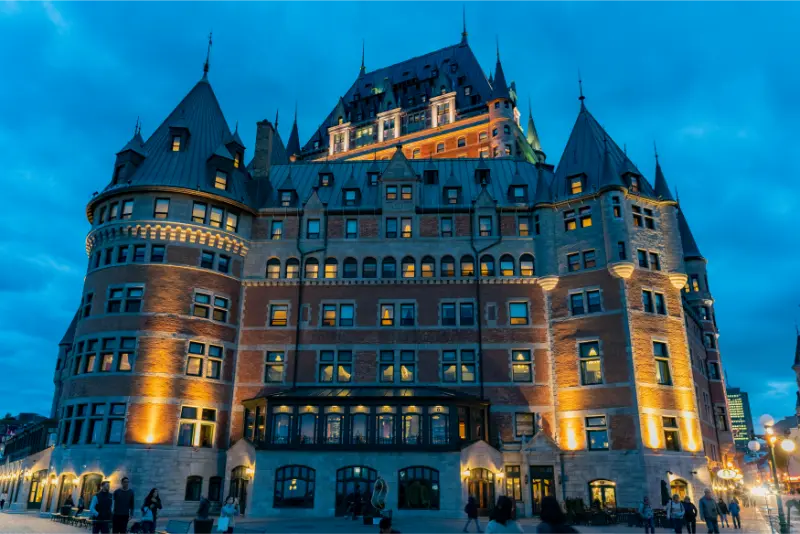
    Start inside the fortified core with a slow walk around major squares, gates and viewpoints. Continue along Dufferin Terrace and around the Château Frontenac area without turning the hotel itself into the entire visit. Keep the evening in the old city so you can see the streets after day-trip crowds thin.

    Day 2 – Petit-Champlain, Place Royale and the river

    Descend to Lower Town for Petit-Champlain and Place Royale. Spend time along the St. Lawrence and Old Port rather than climbing immediately back uphill. This is also a good day for a museum or guided history walk if weather is poor.

    Chateau Frontenac Above Quebec City

    Day 3 – Plains of Abraham, museum time and local neighbourhoods

    Use the Plains of Abraham and nearby museum district to understand the city beyond the postcard streets. Continue into Montcalm or Saint-Jean-Baptiste for cafés and ordinary neighbourhood life. The day should feel more local and less monument-heavy.

    Day 4 – Montmorency Falls or a seasonal outdoor extension

    Visit Montmorency Falls if conditions suit, or choose another seasonal outdoor experience. In deep winter, keep the day flexible around weather; in summer and autumn, the river corridor and nearby nature are easier to combine with the city.

    On the day you leave the centre, check your return journey before setting off. Montmorency Falls deserves time for the views, not a hurried stop between two appointments. If the outing takes longer than expected, enjoy dinner back in town and leave any spare museum visit for another day.

    Best time to visit

    Québec City is genuinely year-round, but the experience changes dramatically. Summer offers festivals and long days; autumn adds colour; winter brings snow, ice and major events but requires proper clothing and slower walking; spring is quieter and more variable. Choose the season for the experience you actually want rather than searching for one universal best month.

    In Québec City, the season shapes the entire trip. Summer brings long evenings and busy terraces; winter offers a very different atmosphere, along with ice, cold and shorter daylight. Festival dates can affect room prices and availability, so choose the experience you want first and check the calendar before booking.

    Food and meal planning

    French Canadian classics, bakeries, maple products and contemporary Québec cooking are all easy to find. Reserve one important dinner if food is central to the trip, then keep the rest flexible so meals fit the neighbourhood you are already exploring.

    Petit-Champlain is a lovely place to stop for lunch while you’re exploring Lower Town. On the day you visit Montcalm or Saint-Jean-Baptiste, eat there rather than heading back to the tourist centre. Save one special restaurant for an evening when you can linger; a good meal shouldn’t require crossing town twice.

    One day trip or regional extension

    Montmorency Falls is the easiest high-value extension. If you have more time, Île d’Orléans or another regional outing adds countryside and food, but do not force multiple outer-area stops into one winter day.

    Montmorency Falls is the straightforward choice if you want a change of scenery from stone streets and museums. Île d’Orléans makes more sense when you have time for a leisurely food-and-countryside day, especially with suitable transport. Don’t try to combine both simply because they look close on a map.

    How many days do you really need?

    With four days you can explore Upper Town, spend a proper afternoon in Petit-Champlain and Place Royale, visit the Plains of Abraham and still get out toward the falls. If you only have two days, stay within the city. A fifth day is best spent taking things slower or exploring Île d’Orléans rather than revisiting the same viewpoints in a hurry.

    Give Lower Town most of a morning or afternoon. You’ll want time to look into shops, stop at Place Royale and wander towards the port without immediately facing the climb back uphill. The same goes for a museum day: one good visit, followed by a café or a neighbourhood stroll, often feels more satisfying than three short stops.

    Travelling with children

    For families, mix the old town’s streets and stories with places where children can move about freely. The Plains of Abraham can provide a welcome break after museums or guided visits. Remember that a steep staircase is much more demanding with a pushchair; the funicular may make the day easier, depending on your needs.

    Old Quebec City Skyline By River

    Carry snacks and water when you’re spending a long stretch in Lower Town, especially if travelling with younger children. Leave room for an unplanned stop by the river and avoid putting two fixed reservations close together. A little spare time matters when someone wants lunch earlier than expected or needs a rest halfway up the hill.

    Senior travellers and a slower pace

    A relaxed Québec City visit is absolutely possible without walking every staircase. Stay close to the area you expect to enjoy most and use the funicular or a taxi for the climb between Upper and Lower Town. Put the museum and the Plains of Abraham on the same day if that reduces unnecessary journeys.

    Old Québec has cobbles, slopes and stretches that can be slippery in winter. If you prefer shorter walks, choose a few viewpoints and squares rather than attempting every section of the fortifications. Check where you can sit, and be realistic about the walk back to the hotel after a full day out.

    Accessibility

    Don’t rely on an ‘accessible room’ label alone, especially in an older hotel. Ask about steps at the entrance, lifts, bathroom layout and the pavement outside. In Québec City a hotel may be close to everything on a map yet require a steep approach, so the exact address is important.

    Before buying tickets, check the access arrangements for the museum or attraction you want to visit. Some entrances are easier than others, and the practical route can change with snow or temporary works. If step-free access or seating is essential, contact the venue directly and plan the day around the confirmed information.

    Budget and booking strategy

    An extra amount spent on a conveniently located hotel can be worthwhile here, particularly in winter when repeated uphill walks become tiring. Decide which paid attractions really matter to you, then enjoy the city’s streets, squares and river views at your own pace. There’s no need to turn every afternoon into another ticket purchase.

    If you’re visiting during a major festival or a popular winter weekend, accommodation is the first thing to secure. Beyond that, keep at least one day flexible for weather. When comparing a trip to the falls or countryside, add the transport cost and time to the advertised ticket price before deciding what works for your budget.

    Money and payments

    You’ll be paying in Canadian dollars. Cards are useful across much of the city, but a little cash can still come in handy for smaller purchases. If you’re arriving from another country, check your bank’s foreign transaction fees and keep a spare payment card somewhere separate from your wallet.

    Safety and situational awareness

    Québec City is comfortable to explore with normal city precautions. Keep an eye on your belongings in crowded areas and take care on steep, icy streets in winter; a slip can be more likely than any dramatic travel mishap. If you’re out late, choose a well-lit route or a short taxi ride rather than a difficult shortcut.

    How to handle bad weather or extreme heat

    Winter weather can change a day’s plans quickly. Keep one indoor option, such as a museum or a leisurely meal, ready for icy or windy conditions. In summer, do your longer walks before the busiest part of the day and make time for the riverfront. Save Montmorency Falls for weather that lets you enjoy the views safely.

    Solo travel

    On your own, Québec City is easy to settle into. Spend a morning exploring the old streets, then join a history walk if you’d like local stories or company. For evenings, choosing accommodation near the areas you enjoy will make the walk home simple. Download a map before you go, especially if your phone plan doesn’t include Canadian data.

    Evenings and nightlife

    The old town is particularly attractive after sunset, when the stone buildings light up and the daytime visitors begin to leave. Have dinner nearby and walk along Dufferin Terrace if the weather allows. In winter, a warm café can be just as memorable; there is no need to force a late-night activity after a full day outdoors.

    Photography without turning the trip into a photo shoot

    For photographs, try the streets around Place Royale when they’re quieter, or look towards the St. Lawrence from Dufferin Terrace. Snow changes the whole scene, but watch your footing before stepping back for a wider shot. Be considerate in narrow streets and ask before photographing people at close range.

    Old Quebec City Historic Waterfront At Sunrise

    Shopping and souvenirs

    Take a little time to browse the small shops in Petit-Champlain or look for Québec-made food and crafts. Maple products make an easy gift, provided you can carry them on the rest of your journey. Check where an item was made rather than assuming every souvenir in the old town is local.

    What to pack

    Pack for the season, not just for a city break. In winter that means warm, grippy footwear, gloves and layers you can adjust when going indoors. Even in summer, comfortable shoes are important for cobbled streets and slopes. A compact bag leaves your hands free on stairways and makes museum visits easier.

    Common planning mistakes

    • Choosing accommodation by headline price without checking the repeated daily journey.
    • Booking a major attraction on arrival day with no margin for delays.
    • Crossing the destination several times because sights were listed by fame rather than geography.
    • Assuming a short map distance means an easy walk regardless of hills, heat, cobbles, weather or queues.
    • Keeping every day full and leaving no space for weather or fatigue.
    • Adding a day trip that duplicates a destination already scheduled later in the wider journey.

    Practical habits that make the trip easier

    • Save offline maps and the exact name of your hotel, station, terminal and meeting points.
    • Download tickets and confirmations before leaving reliable Wi-Fi.
    • Check the last practical return option before starting any excursion.
    • Carry a small amount of local cash even where cards are widely accepted.
    • Recheck opening hours and transport notices on the morning of any fixed reservation.
    • Keep one half-day flexible so a delay does not damage the rest of the trip.

    Final planning checklist

    • Confirm entry, transit and insurance requirements relevant to your nationality.
    • Choose accommodation by location, noise, access and transport as well as price.
    • Reserve only the attractions or excursions that genuinely control the day.
    • Keep offline copies of tickets, hotel details and important contact information.
    • Check the exact station, airport terminal, parking area or pickup point before travel.
    • Leave enough time for meals and unscheduled stops.
    • Recheck official information shortly before departure.

    Planning the days by geography

    Québec City becomes easier when the itinerary is built around neighbourhoods and transport corridors instead of a ranked attraction list. Put sights that share the same streets, transit line or landscape on the same day, then leave the final hours flexible. This reduces repeated transfers and makes it easier to stop for a meal, market, café or viewpoint that was not part of the original plan.

    Choose one thing you especially want from each day: the fortifications, the riverside streets, a museum or a trip to the falls. Everything else can fit around it. That simple choice makes it easier to enjoy an unexpected café or viewpoint without feeling that the whole itinerary has fallen behind.

    Arrival and departure day strategy

    Your arrival and departure days are best kept close to your hotel or transport connection. A gentle walk through Old Québec works well after checking in, but a trip to the falls doesn’t belong between checkout and an afternoon train. Leave time for luggage and for winter journeys that may take longer than planned.

    If your wider route continues elsewhere in Canada, confirm the exact station, terminal or pickup point the evening before. Similar place names, multiple stations and seasonal timetables are common sources of avoidable stress.

    Final thoughts

    Québec City is at its best when you give the streets time to work their charm. Walk through the old town, linger by the river and make room for a neighbourhood outside the walls. You don’t need to see every landmark in four days; you need enough time to enjoy the ones that brought you here.

    Official information to check before you go

    Opening days, transport, weather-sensitive access and event schedules can change. Recheck the details that control fixed reservations shortly before travel, especially during public holidays, festivals or severe weather.

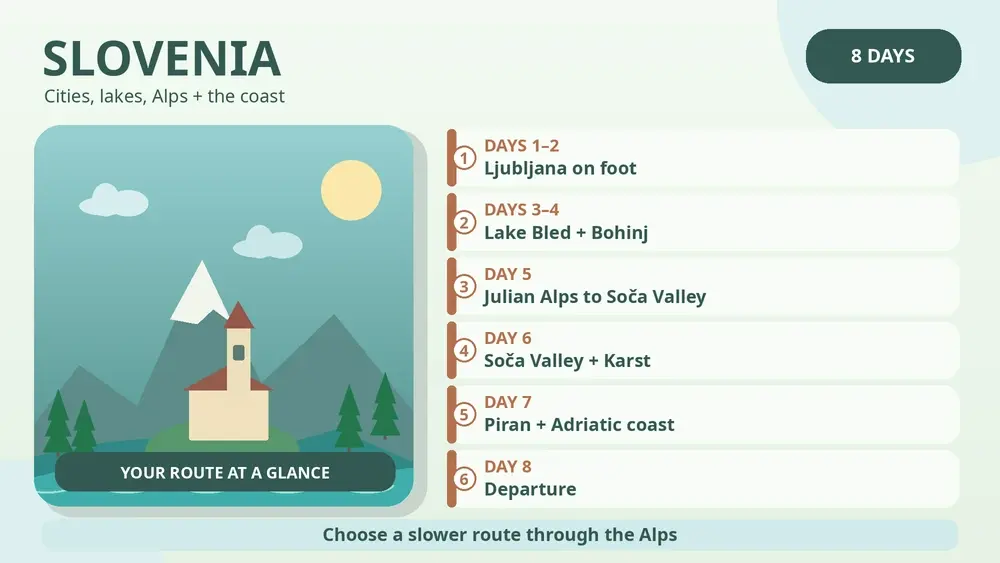
  • Slovenia in 8 Days: Ljubljana, Lake Bled, Soča Valley and the Coast Without Rushing

    Slovenia in 8 Days: Ljubljana, Lake Bled, Soča Valley and the Coast Without Rushing

    Slovenia is small enough to encourage overconfidence. Ljubljana, Lake Bled, Bohinj, the Soča Valley, caves, vineyards and the Adriatic coast all look close, so travellers often build a daily itinerary that zigzags across the country. The better approach is to use the compact geography to reduce stress, not to increase the number of stops.

    Eight days works well with Ljubljana plus one Alpine base and one short coastal/Karst finish. This structure gives you city time, mountain scenery, a weather buffer and a completely different Mediterranean-influenced finale without requiring a new hotel every evening.

    Quick trip summary

    • Use three bases at most: Ljubljana, Julian Alps, and coast/Karst.
    • Do not treat Bled and Bohinj as interchangeable; give the Alps more than a photo stop.
    • Drive the Soča Valley only if mountain-road conditions and weather suit your group.
    • Book caves and the most popular summer accommodation in advance.
    • Keep one mountain day flexible because cloud can change the value of viewpoints and hikes.

    Who this itinerary is for — and when to change it

    This route is designed for a first or early visit with a moderate pace. It assumes that the goal is to understand the destination rather than collect the highest possible number of stops. Couples, solo travellers, families and mixed-age groups can use the same geographic structure, but activity intensity should change with mobility, climate, jet lag and personal interests.

    Before booking every attraction, identify the two experiences you would most regret missing. Protect those first, then build the rest of the trip around them. Weather-dependent beaches, mountains, wildlife, boats and scenic roads should remain movable, while museums, markets and neighbourhood time can often shift more easily.

    Where to stay: choose the base before the hotel

    Accommodation is a transport decision as much as a comfort decision. Check how you will reach the first activity in the morning, what happens after dinner, whether the property has lifts or parking, and how luggage will move on transfer days. A cheaper room that creates two difficult journeys every day can cost more in taxis, time and energy than a slightly more expensive base in the right place.

    Base Why it works — and the trade-off
    Ljubljana centre Walkable, lively and ideal for the first 2 nights; a car is more burden than benefit in the core.
    Bled Convenient for the lake and restaurants, but busy and more expensive in peak season.
    Bohinj Quieter, closer to mountain atmosphere and excellent for hiking; fewer evening choices.
    Piran / Slovenian coast Atmospheric car-light finish; parking is usually easier outside the historic core than at the door of the hotel.

    The four decisions that shape this trip most

    Decision Best default When to change it
    Ljubljana car No Collect it when leaving the capital if the rest of the route is a road trip.
    Alpine base Bohinj or Bled Choose Bled for convenience, Bohinj for nature and a quieter evening.
    Soča route Yes if weather/roads fit Use a simpler highway/Karst route when mountain driving is not appropriate.
    Cave Choose one major cave system Visiting several can crowd out the coast and Alps.

    Make these choices before filling the calendar with attractions. They determine how many hotel changes, early starts and fragile connections the trip contains. Once the structure is right, individual sightseeing choices are much easier to adjust.

    A realistic day-by-day route

    Days 1–2: Ljubljana without a car

    Use arrival day for the riverside centre, market area and castle district.

    On day two, add museums, Tivoli or a food-focused walk rather than a distant excursion.

    Pick up the car only when you are ready to leave the city.

    Days 3–4: Bled and Bohinj

    Move to your Alpine base and spend the first afternoon around Lake Bled or a nearby gorge depending on timing.

    Use the best-weather full day for Bohinj, cable-car views or a hike that fits fitness and trail conditions.

    Do not stack Bled island, castle, Bohinj, Vintgar and a major hike into one day.

    Day 5: Julian Alps to Soča Valley

    Drive a mountain route only if conditions are suitable and everyone is comfortable with winding roads.

    Stop selectively for viewpoints and short walks; the road itself is part of the day.

    Sleep in or near the Soča Valley rather than continuing to the coast after a full mountain day.

    Day 6: Soča Valley and Karst transition

    Choose one river activity, waterfall or historic stop in the morning.

    Then move toward the Karst/coast, possibly adding a cave if timing is realistic.

    Avoid booking a fixed late cave entry after an unpredictable mountain drive.

    Day 7: Piran and the coast

    Park once and enjoy Piran on foot.

    Add a short swim, salt-pan visit or neighbouring coastal town only if it does not turn the day into a parking exercise.

    Use the evening for the seafront rather than driving back inland.

    Day 8: departure

    Travel toward Ljubljana, Trieste, Venice or another departure point according to the wider trip.

    Allow border/traffic and rental-return margin.

    Do not plan a major cave or hike before an early flight.

    Pace check: if this stage runs late, remove the lowest-priority activity rather than stealing time from meals, sleep or the next transfer. A resilient itinerary should become simpler when something changes, not more frantic.

    What is worth booking in advance

    Book the components that are genuinely scarce or that would break the route if unavailable: limited transport, a special accommodation, a high-priority guided activity or a reservation required by a park or attraction. Do not pre-book every hour. Leaving some meals, beaches, short walks and neighbourhood time open gives you somewhere to move when weather or energy changes.

    Keep confirmations offline and note cancellation windows. If two weather-sensitive activities are booked on consecutive days, understand whether either can move. The strongest itinerary is not the one with the most reservations; it is the one that still works when one reservation fails.

    Transport reality: plan door to door

    Slovenia is compact, but mountain roads, parking and border-season traffic can stretch travel times. Ljubljana works well without a car; the Julian Alps and Soča Valley are far easier with one. If you prefer public transport, simplify the route around Ljubljana, Bled/Bohinj and the coast rather than trying to reproduce a road itinerary exactly. The official tourism site provides practical transport and accessibility information that is worth checking close to travel.

    Door-to-door time is the number that matters. Add hotel checkout, reaching the station, airport, ferry or pickup point, waiting, boarding, luggage, local transport at the other end and the possibility that everyone needs food immediately after arrival. This is why a “one-hour flight” or “two-hour drive” can consume half a day. Our guide to building realistic 7-, 10- and 14-day itineraries explains how to treat transfer days honestly.

    Food strategy: make meals part of the route

    Slovenian food changes with geography: Ljubljana offers modern restaurants and markets, Alpine areas bring hearty mountain dishes, the Karst is associated with cured meats and wine, and the coast adds Mediterranean flavours. Use lunch as the flexible meal on driving days and reserve dinner only when staying in a smaller village with limited options.

    One planned meal per day is usually enough. Keep another meal flexible so it can respond to where you actually are, not where an old itinerary expected you to be. With children, older travellers or very hot/cold weather, eating before everyone becomes exhausted is often more important than reaching a restaurant that looked perfect months earlier.

    When to go and how the season changes the plan

    Late spring through early autumn offers the easiest road-trip conditions, but summer crowds and thunderstorms can affect Alpine plans. Winter is a different itinerary and requires winter-driving and mountain-safety planning. Shoulder seasons can be excellent for cities and wine regions while high mountain routes may still have weather constraints.

    Instead of searching for one universal “best month,” decide which compromise you prefer: better weather, fewer visitors, lower prices, longer daylight, beach conditions, snow or wildlife. No period maximises everything. Recheck short-term weather and official access information shortly before each critical outdoor day.

    Budget: where spending actually improves the trip

    Slovenia can be good value compared with some Alpine neighbours, but Bled accommodation, car rental and premium experiences increase the total. Staying in Bohinj or a nearby village can offer better value than the most famous lakefront rooms. Collecting the car after Ljubljana also avoids urban parking costs.

    The most useful upgrades are often logistical rather than luxurious: a hotel that removes a daily transfer, a direct ride after a long flight, a flexible ticket, an additional night in a weather-dependent region or a guide where interpretation genuinely adds value. Cut low-value extras before cutting the pieces that keep the route reliable. Our realistic travel-budget guide can help you account for the smaller costs between headline bookings.

    Common mistakes to avoid

    • Trying to see Ljubljana, Bled, Bohinj, Postojna and Piran in two days.
    • Keeping a rental car in central Ljubljana without needing it.
    • Driving a mountain pass as if it were a normal fast transfer.
    • Visiting Bled only for a photo and missing the surrounding Alpine region.
    • Booking too many caves, castles and viewpoints instead of leaving weather flexibility.

    Most difficult trips are not ruined by one large mistake. They become tiring through a sequence of optimistic assumptions: a transfer that “should” be quick, a famous walk assumed to suit everyone, a meal delayed until everyone is hungry and a departure day with no margin. Leave space before you need it.

    Families, older travellers and mixed-age groups

    Slovenia is strong for families because distances are short and there are lakes, caves, gentle walks and compact towns. Choose trails by actual difficulty rather than social-media popularity. Older travellers can enjoy scenic drives, lake promenades, cable cars and caves, but should confirm steps and underground walking distances before booking.

    For mixed-age groups, agree which experiences everyone will share and which can be optional. Splitting for two hours is often healthier than forcing the whole group through one person’s priority. Build seating, toilets, shade or warm shelter, step-free access and realistic meal times into the plan with the same seriousness as headline attractions. Our guide to travelling with parents and older adults develops this approach in more detail.

    If you have more or less time

    With five days, use Ljubljana + Bled/Bohinj + one cave/coastal day. With ten to twelve days, add wine country, Logar Valley or extra Soča nights rather than simply driving into another country because the border is close.

    When shortening the trip, remove an entire base before cutting every destination to one night. When lengthening it, add depth before distance. An extra morning in a place you already understand often produces a better memory than another multi-hour transfer to a new pin on the map.

    Useful official resources

    Opening hours, transport timetables, road conditions, trail rules, sea conditions and visitor procedures can change. Use official sources for the details that affect your exact travel dates and recheck them shortly before departure.

    Final planning checklist

    • Confirm passport, visa, entry and transit requirements for your nationality and route.
    • Book the genuinely scarce transport or accommodation segment before secondary attractions.
    • Check the exact luggage journey between bases, including stairs, boats, station exits and rental-car rules.
    • Save offline copies of essential reservations, insurance details and each accommodation address.
    • Recheck weather, road, park, trail, sea or transport notices shortly before each critical day.
    • Keep at least one flexible half-day that can absorb rain, fatigue, a delay or a cancellation.
    • Choose clothing and footwear for the actual surfaces and climate, not only for photographs.
    • Leave a generous buffer before international flights and other connections that are expensive to miss.

    The purpose of a good itinerary is not to prove that you covered the maximum distance. It is to make the important experiences easier to enjoy and to leave enough energy for the unexpected parts that become the best memories. Use this route as a framework, then remove anything that does not fit your interests, mobility or travel rhythm.

  • Slow Travel: How to Spend More Time in One Place and Experience It More Deeply

    Slow Travel: How to Spend More Time in One Place and Experience It More Deeply

    Slow travel begins with a small but powerful choice: spend less time moving between places and more time actually being somewhere. Instead of trying to visit five cities in a week, you might choose one neighborhood, take the same morning walk, learn how the local market works and notice changes in daily life. There is no fixed number of nights that makes a trip “slow.” What matters is the relationship between travel time, attention and experience.

    At a glance

    A grounded guide to slow travel: choosing a base, building local routines, budgeting longer stays and traveling with more attention.

    What to check before booking
    Decision What matters
    Stay Fewer bases and useful neighborhood services
    Explore Local rituals and unhurried day trips
    Check Total costs and legal stay limits

    This approach can work for solo travelers, couples, families, remote workers and older adults, but their needs differ. Slow travel is not a luxury reserved for people with months off work. A four-day city break with one hotel and fewer scheduled attractions can be more restorative than an exhausting two-week checklist across several countries. The idea is to make deliberate choices rather than simply travel at a lower speed.

    Understand the difference between slow and inactive travel

    A slow trip can be full of experiences: local cooking classes, neighborhood walks, public markets, museums, train excursions or conversations with people you meet. The difference is that you create enough time for each experience to unfold. You are not running from one photographed landmark to the next because the schedule says you must.

    Consider a familiar example. In seven days, you might visit three major cities, changing hotels twice, or spend the entire week in one city and explore surrounding districts. The first version offers geographic variety; the second offers repetition and depth. Neither is morally superior, but the second can reduce transfers, packing and decision fatigue.

    Write down what you hope to remember after the holiday. If the answer involves understanding local food, architecture or landscape, longer stays can help. Our itinerary planning method offers a useful starting point for removing excessive daily commitments.

    Select a base that supports everyday life

    A beautiful rental is not necessarily a good long-stay base. Look for groceries, pharmacies, cafés, public transport and comfortable walking routes within realistic reach. If you intend to work or study, reliable connectivity and a quiet workspace become essential. If traveling with children, nearby play areas and easy returns for rest may matter more than a dramatic view.

    Research the atmosphere of different neighborhoods, not only average hotel ratings. Staying in a residential district can be rewarding when it has straightforward transport and respectful visitor accommodation, but a remote base may create repeated taxi costs. You want the freedom to take a spontaneous evening walk or buy breakfast without planning an expedition.

    Ask practical questions about kitchens, laundry, heating or cooling, stair access and local waste disposal. Our accommodation comparison guide helps weigh serviced apartments, hotels and rentals without assuming one format always wins.

    Stay long enough to build small rituals

    Meaningful travel often lives in ordinary moments. Find a bakery you like and return twice. Visit a museum in the afternoon when you are not racing to catch a train. Walk a different street each morning and notice the architecture, shopfronts and how residents use public spaces. These experiences can be inexpensive, accessible and memorable.

    Create a flexible weekly rhythm: one major excursion, one cultural visit, one nature experience, one dedicated rest period and plenty of open time. This is not a strict formula. It is a way of avoiding the trap where every free hour becomes an obligation. Local activities sometimes depend on markets, festivals or opening days, so consult current official information before making a fixed plan.

    Returning to the same places does not mean you have run out of ideas. Familiarity changes what you notice. The first day you see a street; by the fifth, you may recognize its sounds, people and routines.

    Use public transport to explore beyond the obvious landmarks

    One base can support several manageable outings by train, bus, ferry or walking. Study a transport map and choose places that are straightforward to reach and return from. A nearby market town or nature reserve may reveal a different side of the region without requiring a new hotel.

    Check service frequency, weekend schedules, seasonal transport and the last return option. Travel time measured in a mapping app is not the same as door-to-door time with station access and waiting. When an excursion requires three connections and an early start, ask whether it truly adds enough to justify the effort.

    Our car-free travel guide explains how to plan journeys around real timetables and resilient connections. One pleasurable rail day can feel more like a holiday than a rental-car itinerary with constant parking decisions.

    Compare the full cost of a longer stay

    A longer stay may reduce transport between destinations and sometimes unlock accommodation discounts, but it also creates everyday spending on groceries, laundry, local services and entertainment. Budget for the full period rather than assuming cost per day drops automatically. Taxes, cleaning fees and deposits can change the economics of a rental significantly.

    A simple budget might separate accommodation, groceries, meals out, local transport, paid attractions and an emergency reserve. Record both fixed costs and discretionary experiences. The benefit of a longer stay is that you can choose fewer high-priced activities and enjoy more ordinary pleasures, but only if the destination’s cost of living fits your finances.

    Do not confuse cheap with responsible. Choose accommodation that operates lawfully and consider its impact on local housing. Our travel budget framework can help compare a seven-night stay in one place with a seven-night multi-city itinerary.

    Learn local etiquette before trying to belong

    Slow travel should encourage respectful curiosity rather than the feeling that a visitor becomes a local simply by staying longer. Learn greeting conventions, market etiquette, public transport habits, photography norms and waste-disposal rules. Try a few useful words in the local language and accept corrections graciously.

    Support independently owned businesses where appropriate, and look for experiences led by qualified local people who are fairly compensated. Respect private neighborhoods and do not treat residents’ doors, homes or religious practices as tourist backdrops. If a community is asking visitors to avoid a fragile site or behave differently, listen.

    A thoughtful trip leaves room for people who live there. Your holiday timetable is flexible; residents’ daily needs are not always. Respecting quiet hours and local rules often makes the stay more pleasant for everyone.

    Balance exploration with work or family responsibilities

    For remote workers, “workation” is not simply a vacation with a laptop. Verify whether the visa or immigration status permits the work you intend to do, and consider tax, employment, data security and insurance implications. Tourist entry does not automatically authorize paid work. Keep work hours realistic so you are not promising both a full working week and a full tourist itinerary.

    For families, slow travel can reduce packing and help children settle into a familiar routine. Plan a few predictable anchors such as breakfast, play time and bedtime, then leave room for the unexpected. Older adults may appreciate fewer transfers, but avoid stereotypes: pace should reflect each traveler’s preference and circumstances.

    The practical question is: what would a good ordinary Tuesday look like here? If the answer includes reliable internet, a safe walk, a good meal and time to rest, the base is doing its job.

    A longer trip can cross visa, registration, tax or residence thresholds. Rules depend on nationality, destination, purpose and duration. Do not rely on a casual statement that you can “stay three months anywhere.” Some regions share entry limits across several countries, and a second visit may count toward the same allowance.

    Confirm entry and stay conditions with official immigration authorities before booking. For example, the European Commission’s Schengen visa policy guide explains a shared short-stay framework for many non-EU visitors, while national rules may govern longer stays. Long-term accommodation arrangements can involve different tenancy or registration rules from a normal short hotel stay. Some destinations may require local visitor registration or tourist taxes, even when you are staying in one home for weeks.

    Keep a record of entry dates and documentation, and check onward tickets or proof-of-funds requirements. A slow trip is more enjoyable when its legal and financial foundations are clear.

    Design a ten-day slow travel example

    Days one and two: arrive, discover your immediate neighborhood, shop for essentials and sleep well. Days three and four: choose one major cultural experience and one unstructured local day. Day five: take a straightforward excursion outside the city, returning before evening. Day six: rest, do laundry or spend time at a neighborhood park and café.

    Days seven and eight: follow an interest that emerged while you were there, perhaps a food workshop, a coastal walk or a smaller museum. Day nine: revisit your favorite area without the pressure to see something new. Day ten: pack calmly and depart without a last-minute race across town.

    This rhythm leaves enough freedom for weather changes and personal discoveries. An itinerary that can absorb a rainy day without collapsing is usually a stronger itinerary.

    Decide when slow travel is not the right fit

    If you have limited time and two destinations are genuinely essential, a well-planned multi-stop trip may be more rewarding than forcing yourself to remain in one place. Similarly, some remote locations simply do not provide enough transport, healthcare access or suitable accommodation for a long stay. Slow travel is a method, not a rule to obey.

    The objective is to reduce unnecessary friction. Sometimes that means one hotel; sometimes it means two thoughtfully chosen bases in a large region. Look honestly at the ratio between transport and enjoyable time, and choose the arrangement that lets you experience the place rather than merely pass through it.

    Travel is wonderful not because you can count the greatest number of stops, but because you can leave with observations, memories and a genuine sense of where you were.

    Frequently asked questions

    Do I need a month abroad to practice slow travel?

    No. Staying in one base and leaving more free time can make even a short break feel slower and more connected.

    Is slow travel always cheaper?

    No. Fewer transfers may save money, but longer accommodation, food and local costs can add up. Compare the full budget.

    Is a rental apartment better than a hotel?

    It depends on location, length of stay, kitchen needs and local rules. Convenience and respectful accommodation choices matter more than labels.

    Can I work remotely on a tourist visa?

    Not automatically. Immigration, tax and employment rules vary. Confirm authorization for your exact activities and destination.

  • Jaisalmer Beyond the Dunes: Living Fort, Carved Havelis and Desert Days

    Jaisalmer Beyond the Dunes: Living Fort, Carved Havelis and Desert Days

    Jaisalmer looks like a mirage when its yellow sandstone fort rises above the Thar Desert, but the city is more than a dramatic skyline and an overnight desert camp. Lanes inside a living fortress, intricately carved merchant houses, Jain temples and the story of desert water systems provide enough material for a thoughtful stay. The hardest choices are practical: how to reach western Rajasthan without losing days in transit, how to handle heat and sand, and which desert activities support responsible local operators. This guide builds a three-day visit with options for active explorers and travellers who prefer a gentler pace, without treating residents of the fort as museum scenery.

    At a glance
    Suggested time3 days
    Getting thereRail or road via Jodhpur; check flights
    Key experiencesLiving fort, havelis and desert landscape
    Plan aheadHot days, uneven paving and ethical operators

    Travelling to Jaisalmer and understanding the long distances

    Jaisalmer sits far west of Rajasthan’s main tourist triangle. Trains, road transport and flights where scheduled can connect it to larger cities, but journey times are substantial and service patterns change. A traveller coming from Jodhpur should evaluate whether the transfer works with hotel check-in, meals and daylight rather than choosing the absolute cheapest option without regard for fatigue. Overnight trains can be useful, yet sleep quality and luggage security vary by class and individual circumstances. Confirm the current timetable, station transfers and cancellation conditions before tying an international flight connection to an optimistic road estimate.

    Within town, auto-rickshaws and taxis help between the railway area, accommodation and sights. The fort’s inner lanes are narrow, crowded and not suitable for assuming that a vehicle can arrive outside every guesthouse. Ask where your luggage will actually be dropped, how many steps lead to your room and whether nighttime access is straightforward. If you plan a desert excursion, avoid hiring a driver on vague promises of a sunset experience; agree in writing on the location, transport, meals, toilet arrangements and pickup time. The more remote the setting, the more important it becomes to know how you will get back safely.

    A living fort and the responsibility of visiting it

    Jaisalmer Fort is one of the hill forts recognised by UNESCO, but it differs from many monumental sites because people continue to live and work within its walls. Historic sandstone architecture surrounds shops, shrines, family homes and guesthouses. Walk slowly through the gates and notice how the fort’s urban functions have evolved. Do not mistake a residential lane for an open-air stage: seek permission before photographing people at close range and avoid blocking doorways. Conserving a living heritage site involves practical questions about drainage, water use and tourism pressure, so consider responsible accommodation choices rather than booking solely for a room with a fort-wall view.

    The fort provides some of the city’s best views over the sandstone roofscape, yet its stairs, irregular paving and crowded passages may be tiring. Visitors who are sensitive to heat should go early and reserve midday for shade. A guide can help place the complex in the history of Rajput trade and defence, but independent visitors can still gain much from carefully chosen interpretive stops. If someone cannot climb high viewpoints, views of the fort from the surrounding town can be equally striking and far easier to reach. The value lies in recognising the site’s continuity, not in reaching every bastion.

    Jain temples, palace details and sacred etiquette

    The fort contains notable Jain temples with delicate stone carving, a powerful contrast to the fortress’s military image. Temple admission rules, shoe removal, photography and entry times can be different from those at ordinary museums. Visitors should check current guidance and dress modestly, keeping food and leather items away where required. Rather than rushing through every shrine, focus on the workmanship and the tradition that produced it. Children can be introduced to the intricate patterns and animals carved into stone without turning the sacred spaces into a scavenger hunt that disturbs worshippers.

    Jaisalmer Golden City Rooftops At Sunset

    The palace and other historic interiors provide further insight into how elites lived and controlled trade. Some have confined stairways, low thresholds and limited ventilation. Someone with impaired balance may choose to see a small portion rather than attempting upper floors, and guides should be informed of such requirements at the beginning. Photography restrictions may protect both the collections and the privacy of staff or worshippers. The fort’s historic architecture becomes more meaningful when considered together with the people who maintain it today. Paying legitimate entry fees and respecting local rules supports a visit founded on interest rather than extraction.

    Havelis, bazaars and the craft of sandstone

    Patwon Ki Haveli is a landmark of merchant wealth, with layered façades and detailed carving that turn a narrow street into a remarkable architectural scene. Other houses, including Nathmal Ki Haveli and Salim Singh Ki Haveli, help explain why Jaisalmer was more than a remote military post. Their surviving structures offer clues to commerce, decoration and changing patronage. Not every historic building permits the same interior access, so check opening arrangements individually. A realistic afternoon might include one interior and exterior views of the others rather than buying multiple tickets in the hottest period of the day.

    Carved sandstone balconies on Salim Singh Ki Haveli in Jaisalmer

    The bazaars contain textiles, leatherwork, jewellery and everyday goods. Buy thoughtfully: ask about materials, how an item was produced and what a quoted price includes. Do not assume every souvenir described as locally handmade comes from the town. Travellers who dislike bargaining can look for fixed-price cooperatives or workshops where price and provenance are clear. Food stops between shopping lanes also give shelter and a chance to drink water. The bustle of the market can be enjoyable for teenagers and adults, while a child or someone who finds crowds tiring may need a quieter route away from the busiest stalls.

    Water engineering, Gadisar Lake and the desert landscape

    In a dry region, water infrastructure was historically central to urban survival. Gadisar Lake is an appealing place to contemplate that relationship and enjoy a different angle on the city’s architecture. Birds, stone structures and reflections make early or late daylight attractive, though water levels and access can change. Keep children away from unguarded edges and follow any rules about boating or feeding wildlife. A slow lake visit is an effective counterpoint to the crowded fort and may suit visitors who cannot manage its steep inner lanes. Do not treat desert water as automatically safe for swimming or drinking.

    The Thar Desert outside town is varied, with villages, rocky stretches and dune landscapes rather than one endless sea of identical sand. A guide who understands local ecology and history can explain the fragile environment and how people adapt to limited rainfall. When choosing excursions, ask operators how they manage waste, drinking water, vehicle routes and local employment. Avoid driving over protected vegetation or treating remote villages as backdrops for unsolicited photographs. A journey outside town should add understanding rather than simply deliver the same sunset image available from hundreds of advertisements.

    Choosing an ethical desert outing or overnight camp

    Sam dunes are frequently marketed for camel rides, jeep experiences and evening entertainment. Different operators offer very different levels of comfort, noise, safety and environmental responsibility. Inspect what a package truly includes: distance travelled, transport type, duration, bathroom availability, meal hygiene, weather cancellation terms and return arrangements. For a camel experience, look at how animals are handled, whether loads are appropriate, and whether rest and water are provided. Declining a ride is always an acceptable choice. Travellers can enjoy the landscape on foot at designated spots or choose a guide-led interpretation activity instead.

    An overnight camp can provide stars and quiet, but not every advertised camp is remote or peaceful. Ask about generator noise, heating or cooling, bed quality, private toilets, safe drinking water and the precise site location. Desert nights may be chilly even when afternoons are hot, while windy conditions can make sand intrusive. A family with a small child may prefer a sunset outing followed by a town hotel rather than an unfamiliar tent. Some older travellers enjoy comfortable fixed accommodation with a scenic excursion more than a late-night programme. Do not purchase a package simply because it promises a cultural performance without explaining who performs and under what conditions.

    Jaisalmer Fort And Golden City At Sunset

    Food, accommodation and seasonal planning

    Jaisalmer’s food scene includes Rajasthani vegetarian dishes, breads and spiced preparations shaped by local ingredients. Ask for spice adjustments and allergen information, and favour establishments with safe food handling and clean drinking water. In the historic fort, properties may have beautiful views but also narrow approaches, steep stairs and water-management concerns. Accommodation below the walls can provide easier vehicle access and potentially more modern bathrooms. Consider how a location works after dark, particularly if your group returns from a long excursion. A quiet, accessible room may be a better luxury than a terrace reached through several difficult staircases.

    Cooler months generally suit urban exploration and desert outings better than the severe heat of late spring and summer, but winter evenings can be surprisingly cold. Wind and sand affect visibility and comfort, especially on exposed dune trips. Pack sun protection, layers for after sunset, closed shoes, hydration and a light scarf for dust. Check local conditions before a remote road journey; extreme heat is a real safety factor, not merely an inconvenience. A strong itinerary deliberately moves intensive walking toward early hours, schedules lunch or rest indoors and keeps enough energy for an enjoyable evening rather than exhaustion.

    A three-day plan for different travel styles and ages

    Day one is for arrival, a modest town circuit and an unhurried view of the fort. Day two works well for the fort’s religious and architectural heritage in the morning and a haveli or lake visit later. On day three, take a responsibly chosen desert excursion, or spend the day discovering local crafts and quieter streets if sand activities are not your preference. Visitors with extra time can explore the wider region using a qualified driver, but journeys should be designed around safe road conditions rather than filling a map with remote stops.

    Travellers with a stroller or wheelchair should investigate paving and room access carefully; a living medieval-style fort cannot be assumed barrier-free. Children need regular shade and water, and seniors may appreciate a taxi between lower-town landmarks. People with breathing difficulties or heat sensitivity should avoid dust-heavy activities during harsh conditions. A balanced Jaisalmer experience has space for people who love architecture, families seeking cultural learning and travellers who simply want the evening silhouette of the golden fort. The city gives its richest rewards when the residents and desert landscape are treated with the same respect as its monuments.

    Frequently asked questions

    How many days does Jaisalmer need?

    Three days allow fort exploration, the havelis and a thoughtfully selected desert outing without rushing long transfers.

    Do people still live inside Jaisalmer Fort?

    Yes. It is a living heritage site containing homes, shops and temples, so respect privacy and heritage conservation needs.

    Must I take a camel ride in the desert?

    No. Choose a responsible outing that suits you, or visit scenic areas on foot or with an authorised guide.

    Is summer a good time to visit?

    Extreme heat can make walking and desert excursions hazardous. Cooler seasons are generally easier, with layers needed on winter nights.

    Where is it easiest to stay?

    Consider the lower town for vehicle access and potentially simpler luggage handling, or assess each fort guesthouse for stairs and conservation impacts.

    More trip ideas from Travel Is Wonderful

    Official travel resources and latest conditions

    Before your visit, confirm opening hours, admission details, transport, conservation rules and safety notices with the official organisations listed below.

    Last reviewed: October 11, 2026.

  • Oxford in 4 Days: Colleges, Museums and River Walks Without Turning the City Into a University Checklist

    Oxford in 4 Days: Colleges, Museums and River Walks Without Turning the City Into a University Checklist

    Oxford is more rewarding when the university is treated as a living city rather than a sequence of gates to photograph. Colleges, libraries and chapels matter, but so do the Covered Market, museums, Jericho, the rivers and the ordinary streets that connect them. Four days give you enough time to see the academic core, choose colleges that genuinely interest you and still experience Oxford beyond the busiest central circuit.

    If this stop is part of a wider trip, compare the pacing with Cotswolds in 6 Days: Cirencester, Stow and Winchcombe Without Chasing Every Pretty Village. Use the broader itinerary for regional logistics and this guide for the details that matter once you actually stay in Oxford.

    Quick trip summary

    • Ideal stay: 4 days for a first visit.
    • Best planning rule: group each day geographically and protect only the reservations that genuinely control the day.
    • Best for: first-time visitors, couples, solo travellers, families, older travellers and mixed-age groups.
    • Main risk: adding so many side trips that the destination itself becomes the least-seen part of the holiday.

    Is Oxford the right trip for you?

    The city suits history lovers, bookish travellers, families with older children and anyone who enjoys walking rather than constant transport. Experience Oxfordshire describes the centre as compact and largely flat, with many major sights close together. The practical challenge is not distance but opening times: colleges and ceremonial buildings can close or restrict visitor access, so a flexible plan beats a rigid checklist.

    The practical test is simple: identify the experiences that would genuinely disappoint you to miss, then build the trip around those priorities. Everything else should fit the same area or improve the day rather than create another transfer. This approach matters even more with children, older relatives or anyone who prefers a slower pace.

    Where to stay in Oxford

    Area Who it suits
    City Centre Best for first-time visitors who want colleges, museums, restaurants and station access within walking distance.
    Jericho Good for independent restaurants, quieter evenings and easy walks to the centre and Port Meadow.
    St Clement’s / East Oxford More local atmosphere, food diversity and convenient access to Magdalen side of the centre.
    Summertown Calmer and more residential; useful for longer stays but less convenient for repeated sightseeing walks.

    Choose accommodation by the journeys you will repeat, not by a map pin alone. Open the walking or transit route to the first morning activity, the likely dinner area and the departure point. A cheaper room can become a false saving if it adds two unnecessary transfers every day.

    A realistic 4-day Oxford itinerary

    Day 1: Radcliffe Square, Bodleian side and first college

    Start around Broad Street and Radcliffe Square before visitor traffic peaks. Choose one college with published visitor access rather than trying to enter every gate. Add the Covered Market and a relaxed central lunch, then use the late afternoon for a short museum or a walk toward Christ Church Meadow.

    Day 2: Ashmolean, university history and Jericho

    Give the Ashmolean real time instead of using it as a bad-weather filler. Continue through university streets, then move toward Jericho for a different side of Oxford and an easier evening. If a library or guided tour is a priority, anchor it here and keep the rest of the day geographically close.

    Day 3: Christ Church side, meadows and the rivers

    Use the morning for Christ Church or another major college when access permits, then walk the meadow edge toward the Thames. In warm weather a punt can be enjoyable, but do not build the day around a perfect boating slot if wind or rain is uncertain. Families may prefer a river walk and picnic to another long interior.

    Day 4: Pitt Rivers, parks and one optional excursion

    Combine the Museum of Natural History and Pitt Rivers if they fit your interests, then use University Parks or Port Meadow for open space. If you want a regional outing, choose one Cotswold town or Blenheim Palace rather than trying to combine several. Keep enough time to return for a final walk through central Oxford after the busiest hours.

    How to plan the pace

    A good city break has one clear priority per half-day, not a reservation every ninety minutes. Start with the experience that would be hardest to move, then add nearby streets, food and smaller sights. The result may look less ambitious on paper, but it survives queues, weather, transport disruption and fatigue far better.

    Count transfers door to door. Add the walk to the station, waiting, platform changes, security where relevant and the final connection. A trip that is advertised as thirty minutes can easily consume an hour of usable holiday time once every stage is included.

    Getting there and getting around

    Oxford is easiest without a car. The railway station is walkable from the centre, buses connect neighbourhoods and park-and-ride systems are designed to reduce central traffic. Many central streets are best experienced on foot. Build extra time around coach arrivals and college opening windows rather than around kilometres.

    Do not judge transport only by price. The right option is the one that fits luggage, mobility, arrival time and the rest of the day. When two routes cost almost the same, the direct one is often worth more because it protects energy for the destination itself.

    Best time to visit

    Spring and early autumn are comfortable for walking and often feel especially atmospheric around gardens and college quads. Summer can be busy and some university spaces operate different visitor schedules outside term. Winter is quieter but daylight is shorter. Always recheck college and library access for the exact date because academic events can override general visitor information.

    Seasonal advice is a planning tool rather than a promise. Recheck the local forecast and any official closure, transport or safety notice shortly before each weather-sensitive day.

    What to book in advance

    Book any Bodleian tour, Christ Church visit or specialist college tour that would disappoint you to miss. Keep museums and outdoor walks flexible. A schedule with three timed academic buildings in one day is fragile because one closure or queue can disrupt everything after it.

    After the anchor reservations are secure, leave ordinary meals, short walks and secondary sights open. One delay should not cause the rest of the day to collapse.

    Food strategy

    Use the Covered Market, cafés and neighbourhood restaurants rather than treating every meal as a formal occasion. Jericho and East Oxford are useful when the central tourist streets feel repetitive. Build lunch around the walking route instead of leaving the centre for a famous venue and then returning an hour later.

    For a mixed-age group, a reliable breakfast and an easy lunch often matter more than one additional attraction. Keep water accessible and avoid waiting until everyone is exhausted before looking for food.

    Travelling with children

    Natural History and Pitt Rivers are strong family choices, especially when balanced with meadows or a river walk. Younger children may not enjoy multiple colleges in succession; one memorable interior is usually better than five similar courtyards.

    Children usually need a different rhythm rather than a simplified version of every adult attraction: movement, shade, snacks, toilets and periods when nobody is asking them to concentrate. Protect those needs and the whole group often sees more, not less.

    Travelling at a slower pace or as a senior

    Oxford’s compact centre is an advantage, but old buildings can involve steps, cobbles and limited lifts. Check accessibility for the specific college or tour and use buses for the return from longer meadow walks. A hotel close to the centre or station can reduce the day’s hidden distance.

    When stamina or mobility is limited, reduce transitions before reducing experiences. One well-located base, a direct transfer and a shorter route preserve more of the memorable parts of the trip than trying to keep an overfilled schedule with longer rest stops.

    Budget: where the money really goes

    Many museums are free to enter, which lets you spend selectively on one college, library tour or river activity. Accommodation can be expensive during events and peak weekends. A central room may cost more but can remove daily taxi or bus trips and make evening walks easier.

    Compare complete days rather than isolated prices. A higher hotel rate can be good value if it removes taxis and wasted time, while a cheaper excursion can be poor value if it requires extra transport, queues or equipment rental.

    Weather fallback plan

    Museums, covered markets and library tours make Oxford resilient in rain. Move riverside walking, punting and parks to the driest part of the forecast. Do not treat rain as a reason to spend an entire day moving between gift shops.

    Keep at least one half-day movable. The best fallback plan is decided before the bad weather arrives, when you can swap activities without losing a prepaid reservation.

    Accessibility and practical comfort

    Accessibility varies by individual building, vehicle and route, especially in historic destinations. Check the exact attraction rather than relying on a general statement that a city is accessible. Lifts can be small, heritage entrances can have unavoidable steps and accessible station exits may be farther from the obvious route.

    If accessibility is central to the trip, contact the hotel and priority attractions directly before paying non-refundable rates. Ask specific questions about step-free entrances, lift dimensions, bathroom layout and the distance from the nearest vehicle drop-off.

    Common mistakes to avoid

    • Trying to enter every famous college rather than choosing a few.
    • Assuming college opening times are fixed throughout the year.
    • Driving into the centre when rail, bus and walking are simpler.
    • Using Oxford only as a brief stop between London and the Cotswolds.

    Most difficult trips are not ruined by one dramatic mistake. They become tiring through a sequence of small optimistic assumptions: a transfer that “should” be quick, a hotel that is “only” a kilometre away and an evening reservation across town after an already long day.

    Official information to check before you go

    For current attraction information, events, transport changes and visitor updates, use Experience Oxfordshire. Recheck anything that affects a fixed reservation shortly before travel, especially opening days, seasonal access, tickets and major transport changes.

    How to adapt the itinerary

    With less time: keep the historic or central day, one specialist district and one outdoor or cultural priority. Remove the longest excursion rather than compressing every day.

    With more time: add a genuinely different neighbourhood, a slower museum day or one regional excursion. More time should make the trip calmer, not simply increase the number of transfers.

    For a multigenerational group: agree on one shared priority each day and allow people to split for specialist interests. It is often better for one person to visit a niche museum while another rests than for the whole group to become tired together.

    Final planning checklist

    • Confirm passport, visa, entry and transit requirements for your nationality.
    • Choose accommodation for location and transport convenience before room size.
    • Reserve only the attractions or events that genuinely control the day.
    • Save offline copies of tickets, hotel details and essential addresses.
    • Check the exact airport, railway station, ferry terminal or border crossing before arranging transfers.
    • Keep one flexible half-day for weather, fatigue or something discovered after arrival.
    • Recheck official opening information and local transport shortly before each fixed day.

    Final thoughts

    Oxford becomes much more rewarding when the itinerary has enough structure to remove friction but not so much structure that every delay feels like failure. 4 days give a first-time visitor room for the essential places, food, neighbourhoods and one or two deeper experiences without racing across the destination. Keep the geography sensible, protect the experiences that matter most and let the rest of the trip breathe.