Category: Asia

Travel guides for Asia with practical itineraries, transport strategies, cultural considerations and realistic advice for different ages.

  • Ayutthaya in 4 Days: Temples, River Life and Thai History Without Making It a Rushed Bangkok Day Trip

    Ayutthaya in 4 Days: Temples, River Life and Thai History Without Making It a Rushed Bangkok Day Trip

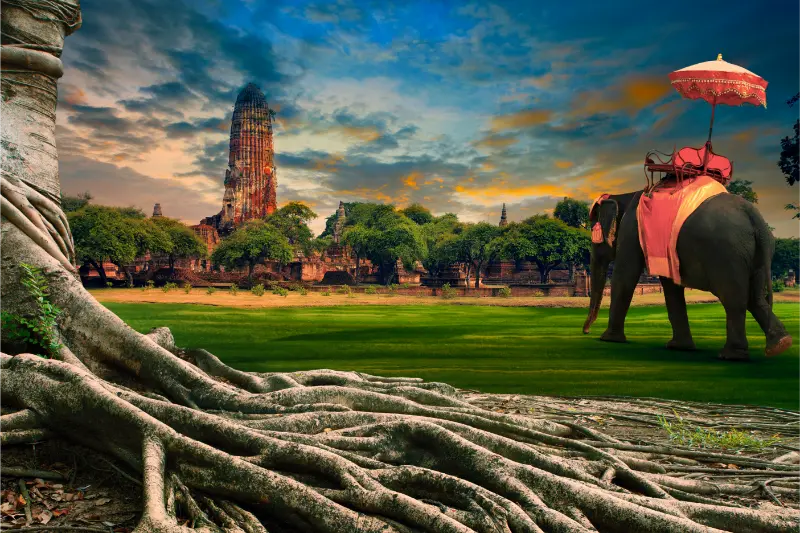
    Ayutthaya is often visited as a fast day trip from Bangkok, which is enough to see several ruins but not enough to understand the old capital’s river geography, temple variety or evening atmosphere. The historical park, active temples, museums, markets and surrounding countryside all become easier when you stay overnight. Four days gives you time to visit the major sites early or late and avoid spending every hour in midday heat.

    If Ayutthaya is part of a wider journey, compare the pace with Bangkok in 4 Days: Temples, Markets, River Travel and Neighbourhood Time. Use that wider article for route decisions; this guide focuses on making Ayutthaya itself work once you arrive.

    Quick trip summary

    • Ideal stay: 4 days for a first visit.
    • Best approach: one major experience per half-day, with one flexible block for weather, fatigue or transport changes.
    • Good for: couples, solo travellers, families, older travellers and mixed-age groups who prefer realistic pacing.
    • Main planning risk: trying to cover the destination as if every transfer, queue and meal took no time.

    Is Ayutthaya the right trip for you?

    Ayutthaya works best for travellers who want more than a quick landmark stop. The strongest four-day plan combines the destination’s headline sights with ordinary neighbourhood time, realistic meals and enough flexibility to respond to weather or fatigue.

    A four-day stay works best when you decide what actually defines the destination and protect those experiences before filling the gaps. Choose two or three priorities you would genuinely regret missing, then let smaller museums, cafés, markets and viewpoints move around them. Count arrival and departure honestly: a late-afternoon arrival is an orientation evening, not a full sightseeing day.

    Where to stay

    Area Why choose it
    Historical Park / island centre Best for cycling or walking to major ruins and enjoying quieter early mornings.
    Riverside Good for atmosphere, boat access and evening views, depending on the exact bank.
    Near the railway station Practical for short stays and arrivals, but less atmospheric than the historic core.
    Off-island near Wat Chaiwatthanaram Useful for travellers with a car or driver who want easier access to western temples.

    Choose accommodation by the journeys you will repeat, not by room price alone. Map the first morning, the area where you are likely to eat dinner and the departure point for any fixed excursion. Families should confirm room layout and cot policy; light sleepers should read recent comments about street noise; travellers with mobility needs should confirm lifts, step-free entrances and bathroom layout directly with the property.

    How to get to Ayutthaya

    Ayutthaya is north of Bangkok and can be reached by train, minivan, bus, private transfer or organised tour. The train can be atmospheric but service times and comfort vary, while road travel depends on Bangkok traffic. If you are staying overnight, prioritise a simple hotel transfer from the station or drop-off point rather than choosing the cheapest option that leaves you carrying luggage in heat.

    Save the hotel address offline and screenshot the first transfer before travelling. The first hour in a new destination is not the best time to experiment with several transport modes while tired. If a station, terminal, airport or ferry port could be confused with another, check the exact location on the ticket before the travel day.

    Getting around

    The historical island is flat but larger than it first appears. Bicycles work well for confident riders in cooler hours, while tuk-tuks, taxis and hired drivers reduce heat exposure and make outer temples easier. Boat trips give a different view of the river temples. Do not use one transport mode for every day simply because it worked for the first morning.

    Do not buy a transport pass automatically. Estimate the journeys you will actually make, including airport or station access and the excursion day, then compare individual fares with any pass. A pass is valuable when it removes decision-making as well as cost; it is poor value when most of the itinerary remains walkable.

    A realistic 4-day itinerary

    The schedule below is a framework rather than a timetable. Opening days, seasonal transport, religious observance, weather and local events should determine the exact order. If a major attraction is closed on the suggested day, move the whole block instead of forcing the rest of the trip to become inefficient.

    Day 1 – Wat Mahathat, Wat Ratchaburana and the central ruins

    Start early in the core historical park with Wat Mahathat and Wat Ratchaburana before heat and larger tour groups build. Continue toward nearby ruins at a measured pace and stop for lunch and shade rather than chaining temples together continuously. Evening is ideal for a riverside meal or short walk once the temperature drops.

    Day 2 – Royal Ayutthaya and museums

    Focus on Wat Phra Si Sanphet, the former royal palace area and one museum that adds historical context. Seeing artefacts and maps after the first day makes the ruins easier to interpret. Keep the afternoon lighter, perhaps with a market or café, then return to a favourite temple area for softer light.

    Day 3 – Wat Chaiwatthanaram, active temples and the river

    Visit Wat Chaiwatthanaram early or late, then add one or two active temples such as Wat Phanan Choeng depending on your interests and dress. A late-afternoon boat circuit can connect the river geography without another long tuk-tuk loop. Be respectful that active temples are religious places, not only archaeological attractions.

    Day 4 – Bang Pa-In or a slower Ayutthaya day

    Bang Pa-In Palace can make a useful excursion when transport is organised in advance. Alternatively, stay in Ayutthaya for a cooking class, cycling route or extra museum and market time. Four days should create breathing room; it does not need to become an excuse to add another distant province.

    Keep margin around lunch and the return journey. If the morning takes longer than expected, remove the lowest-priority afternoon stop rather than turning the rest of the day into a race.

    How many days do you really need?

    Four days is enough for a first visit without pretending you have exhausted the destination. With two days, keep the historical or cultural core and one signature experience. With three days, add the best neighbourhood, nature or museum block. With five or six days, add one regional excursion or a deliberately slow day rather than extending every sightseeing day until dinner becomes another appointment.

    If this stop sits inside a longer trip, the correct number of nights also depends on what comes before and after. A fourth night can be worth more than adding another destination when it prevents two consecutive travel days or gives you flexibility around weather-sensitive plans.

    Best time to visit

    The cooler, drier months are the most comfortable for cycling and long temple days. Hot season requires very early starts, long shaded breaks and realistic hydration. Rainy season can make the landscape greener and crowds lighter but brings sudden downpours and slippery surfaces. Whatever the month, midday sun is a planning factor.

    Do not choose dates from average temperature alone. Check rainfall, daylight, school holidays, major festivals and the seasonal schedule of the experience that matters most to you. A shoulder-season trip is excellent only when the things you actually want to do are operating.

    Where and what to eat

    Ayutthaya is known for river prawns and roti sai mai, a sweet cotton-candy-like filling wrapped in thin pancakes, but local noodle shops and markets are equally useful. Do not plan a heavy seafood meal immediately before cycling in the heat. Spread special dishes across the stay and use lunch as a deliberate cool-down period.

    Use meal planning to reduce unnecessary travel. If a day ends in a particular neighbourhood, eat there instead of crossing the city for a restaurant that looked attractive online. Keep one or two meals unreserved so you can respond to weather, appetite and places discovered after arrival.

    Travelling with children

    Children can enjoy the scale of the ruins, short tuk-tuk rides and boat travel, but temple repetition becomes tiring quickly. Limit the number of major ruins per half-day and add a market, pool break or riverside stop. Bicycles are only appropriate when children are confident and traffic conditions feel safe to the adults responsible for them.

    For younger children, every day works better when it includes one place where they can move freely and one predictable meal. A family trip does not need every attraction to be “for children”; it needs enough breaks that adults and children can enjoy the same destination without constant negotiation.

    For older travellers and mixed-age groups

    Older travellers should use tuk-tuks or a private driver to reduce heat exposure and walking between scattered sites. Many ruins involve steps and uneven brick surfaces. Choose a hotel with easy vehicle access and do not plan the most physically demanding temple immediately after the long journey from Bangkok.

    For older travellers and mixed-age groups, build the day around the person with the lowest comfortable walking or standing tolerance. A central hotel, reserved seats where available and a taxi for the least interesting transfer can be more valuable than saving a small amount of money. Splitting up for two hours is normal: one person can visit a specialist museum while another rests, shops or stays at a café, then everyone can reunite for the main shared experience.

    Accessibility and mobility

    Archaeological sites can be challenging for wheelchairs and limited mobility because of grass, brick, steps and uneven ground. Some viewpoints are inaccessible even when the surrounding grounds are manageable. Contact major sites or use recent official information when accessible routes are essential, and consider a driver to minimise transfers over rough surfaces.

    Accessibility labels can hide important details such as cobbles before the entrance, steep ramps, temporary lifts, inaccessible toilets or a final stair to a viewpoint. Contact the attraction or hotel when a feature is essential, and allow more transfer margin when using mobility equipment.

    Budget: where to spend and where to save

    Spend first on location, one signature experience and transport that removes a genuinely difficult transfer. Save on things that do not materially improve the trip: unnecessary room size, taxis for genuinely walkable journeys or several paid attractions covering the same theme. Compare the total cost of the day, not just the cheapest ticket or hotel rate.

    A realistic daily budget should include local transport, water, small entrance fees, snacks and at least one unplanned expense rather than counting only hotel and dinner. Seasonal price changes matter, so compare the total trip rather than one attractive headline rate.

    Safety and practical awareness

    Use the same layered approach that works in most unfamiliar cities: keep valuables discreet, split cards and cash, save offline copies of essential documents and use transport you understand. Ask accommodation staff about current local conditions rather than relying on a years-old forum post. For any excursion involving water, mountains, wildlife or remote roads, local weather and operator quality matter more than a generic destination label.

    Photography without turning the trip into a photo shoot

    The best light and the quietest streets often overlap with the most comfortable walking hours, so early morning can solve several problems at once. At sacred places, memorials, markets and residential areas, let the setting guide your behaviour. Ask before photographing people closely and accept a no without argument.

    Responsible travel and local rhythm

    Spend some of the trip in businesses that are not designed only for visitors: neighbourhood cafés, local restaurants, markets and independent shops. Follow photography restrictions, dress expectations and rules at religious or memorial sites. In natural areas, stay on marked paths where required and do not turn wildlife encounters into a competition for proximity.

    Responsible travel is usually less about grand gestures and more about not making your convenience someone else’s problem. A slower itinerary helps because it reduces the temptation to ignore local rules simply to keep an overloaded schedule on time.

    Common mistakes to avoid

    • Visiting only at midday on a Bangkok day trip and concluding that every temple feels the same.
    • Cycling in extreme heat without enough water or traffic confidence.
    • Ignoring dress expectations at active temples.
    • Trying to photograph every major ruin instead of spending time understanding a few.
    • Booking a river or excursion plan without a weather alternative.

    Most tiring trips are not ruined by one dramatic mistake. They become difficult through a chain of optimistic assumptions: a transfer that “should” be quick, a hotel that is “only” a kilometre away, a museum that will “probably” stay open and a final reservation across town after an already full day. Add margin before you need it.

    A slower experience worth protecting

    Return to one temple area at a different time of day rather than adding a new site. Morning mist, late light and fewer visitors can change the experience more than another checklist stop.

    What to pack for this trip

    Pack for surfaces and weather rather than photographs. Comfortable shoes matter on museum days and uneven streets; a light waterproof layer can save a day even in warm destinations; sun protection matters whenever much of the itinerary is outdoors. Keep medication in hand luggage, carry a power bank and use a small day bag that closes securely.

    Booking strategy: what deserves advance reservations?

    Reserve the experiences that can genuinely sell out or control the whole day: limited-capacity tours, scarce seasonal transport, major boats or a special restaurant that matters to you. Leave ordinary cafés, neighbourhood walks and flexible museums open. The goal is to protect difficult logistics without turning four days into a chain of appointments.

    For any weather-sensitive reservation, read the cancellation and rescheduling rules before paying. A slightly more flexible fare can be worth the difference when the activity depends on sea, mountain, river, wildlife or storm conditions.

    How to make the four days feel less rushed

    Separate fixed commitments from flexible interests. Put only transport departures, limited-entry attractions and weather-dependent excursions into the fixed category. Keep markets, viewpoints, cafés and small museums movable. Each evening, look at the next day again and remove one low-priority stop early if the group is tired; waiting until late afternoon usually means everyone has already spent the day rushing.

    Finally, distinguish between distance and effort. Two kilometres in cool weather on flat pavements is not the same as two kilometres in tropical humidity, winter ice, steep streets, altitude or crowded markets. Plan by the physical reality of the destination, not only by map distance.

    Official information to check before you go

    Opening days, transport, weather-sensitive access and event schedules can change. Recheck the details that control fixed reservations shortly before travel, especially during public holidays, major festivals or severe weather.

    How to adapt the itinerary

    With less time: keep Day 1 and the single experience from Days 2–3 that matters most to you. Do not compress all four days into two.

    With more time: add one carefully chosen excursion or a slower neighbourhood day rather than extending every sightseeing day.

    For a multigenerational group: agree on one shared priority each day and allow people to split for specialist interests or rest. It is often better for one person to visit a niche museum while another relaxes than for the whole group to become tired together.

    Final planning checklist

    • Confirm passport, visa, entry and transit requirements for your nationality.
    • Choose accommodation for location and repeated journeys before room size alone.
    • Reserve only the attractions or excursions that genuinely control the day.
    • Save offline copies of tickets, hotel details, insurance information and essential addresses.
    • Check the exact airport, station, bus terminal, pier or pickup point before arranging transfers.
    • Keep one flexible half-day for weather, fatigue or something discovered after arrival.
    • Recheck official opening information and local transport shortly before each fixed day.
    • Carry clothing and footwear for the real climate and walking surfaces, not only the average forecast.

    Final thoughts

    Ayutthaya works best when you give its main experiences enough space and allow the rest of the destination to appear between them. Four days are long enough to understand the place without pretending that every surrounding attraction belongs in the same trip.
  • Miyazaki City, Japan: Aoshima Shrine, Pacific Coast and a Slower Kyushu Stay

    Miyazaki City, Japan: Aoshima Shrine, Pacific Coast and a Slower Kyushu Stay

    Miyazaki City sits on Japan’s southern island of Kyushu, where a subtropical-looking coast, seaside shrines and a laid-back urban center make a refreshing contrast to Japan’s largest cities. It is not a destination where every attraction is connected by a frequent subway. The best approach is to choose a city base, visit Aoshima with care, and reserve additional time for coastal viewpoints or inland excursions that require more transport planning. Three days can feel generous if you combine culture, food and sea air; two days still work well if you focus on the city and Aoshima instead of trying to reach every famous point on the prefectural map.

    Miyazaki City or Miyazaki Prefecture: an important distinction

    Before booking, check whether an attraction is in the city or elsewhere in the prefecture. Photos of Takachiho Gorge, Cape Toi and other extraordinary landscapes are frequently associated with ‘Miyazaki,’ but distances are substantial and public transport can be limited. Staying in Miyazaki City does not make every prefectural attraction a short taxi ride away. Aoshima, by contrast, lies in the wider city area and is a realistic excursion by train or bus when schedules align. This distinction can save money and prevent an itinerary dominated by driving rather than sightseeing.

    The city itself has restaurants, shops, transit connections and a calmer pace than major Japanese hubs. Staying close to Miyazaki Station is practical if you plan to use public transport. If your priority is mornings by the ocean, consider an Aoshima-area stay and accept that evening restaurants and onward trips will work differently. Decide what kind of trip you want before choosing a hotel: a rail-based cultural break, a surfing holiday and a driving itinerary through southern Kyushu require different bases.

    Aoshima Island, the shrine and the Devil’s Washboard

    Aoshima is the clearest reason many visitors fall in love with the Miyazaki coast. A short walkway connects the mainland to a small island surrounded by unusual wave-shaped rock formations popularly called the Devil’s Washboard. The official city guide identifies the rocks as a protected natural feature, and the island is home to Aoshima Shrine. Walk across with enough time to notice the shoreline rather than heading straight for the shrine gates. The formations change appearance with tides and light; stay within safe areas and avoid slippery rock edges or water conditions you cannot assess.

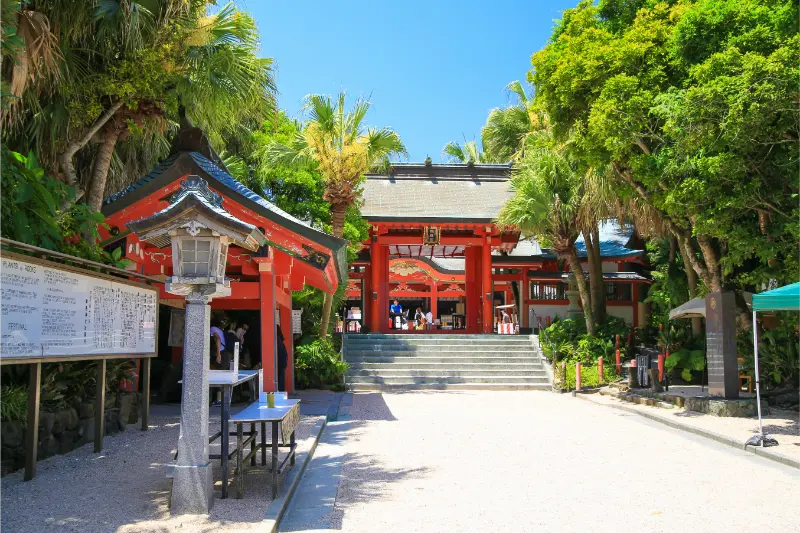
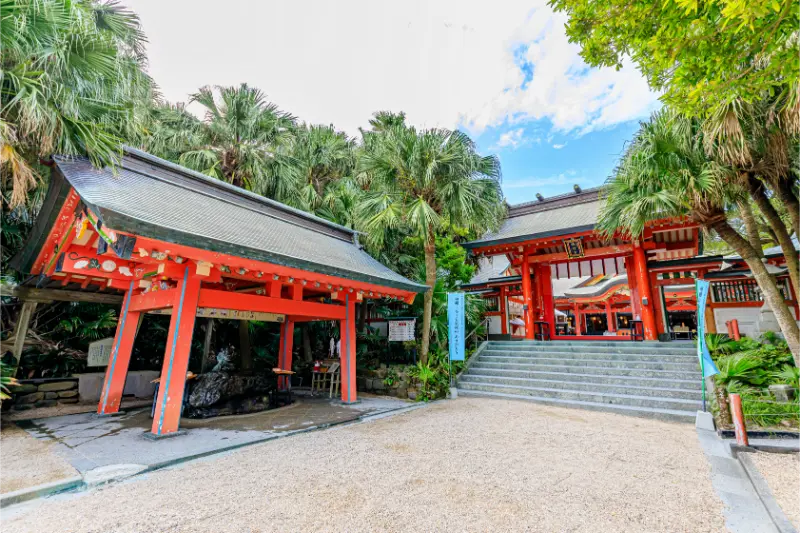
    The buildings of Aoshima Shrine surrounded by palms in Miyazaki

    Aoshima Shrine is a working religious place, not simply a photo backdrop. Visitors can observe its architecture and setting while respecting prayer and ritual areas. There are traditional practices associated with wishes and relationships, but participation is optional. The palm-rich vegetation around the island gives the visit a distinctive character. If traveling with young children, hold hands near the water and plan a snack break afterward. The island is small, yet heat and humidity can make a slow walk tiring. Comfortable footwear is important, as is sunscreen even when clouds make the day seem mild.

    Spending time on Aoshima Beach

    The mainland around Aoshima offers beaches, casual food stops and a different pace from the shrine. Surfing is a recognized part of the area, and lessons or rentals may be available, but ocean conditions and beach safety rules should decide whether you enter the water. Never assume a beach is supervised because it appears in travel photographs. Check flags, weather, local advice and swimming areas, especially after storms or during strong swell. Families may find the shore enjoyable simply for a walk and a relaxed meal, with no need to schedule watersports.

    ExperienceGood forPlan ahead
    AoshimaCoast and shrineTides, sun and return train
    Miyazaki JinguCultural visitRespect worshippers
    Heiwadai ParkPark and historyRead memorial context
    Nichinan coastScenic driveCheck road and stairs

    For a half-day excursion, visit the island first while energy is high, then stay on the mainland for lunch and beach time. Public transport back to the city should be checked before you settle in for the afternoon; infrequent services can turn an easy visit into an expensive taxi journey. A small daypack with water, sun protection, a towel and dry clothing is sufficient for most visitors. If someone in your group uses a wheelchair or mobility aid, confirm walkway surfaces and the shrine’s specific access restrictions with local tourism staff rather than assuming the whole route is step-free.

    Miyazaki Shrine and the city’s quieter cultural side

    Miyazaki Jingu is an important Shinto shrine set among trees, offering a very different atmosphere from the seaside shrine at Aoshima. Its significance is tied to traditions surrounding Japan’s imperial origins. Visit respectfully, watch for ceremony signs and remember that photographing worshippers is intrusive without permission. For visitors interested in Japanese religious practices, this is an opportunity to observe an active place of worship with a quieter rhythm than many famous urban shrines. Keep an eye on transport connections so the visit is not rushed by an awkward return route.

    Heiwadai Park is another option for people who enjoy landscaped spaces and history, though the monument and the park’s wartime associations deserve careful interpretation. The site is not merely a scenic overlook. Read historical background, including the meaning of memorials, rather than treating every monument as a neutral symbol. Families who prefer open-air time can appreciate the park without completing a long circuit. A combination of one shrine, a park and a good lunch can fill an enjoyable city day. It is not necessary to chase several distant temples to gain an impression of local culture.

    Nichinan Coast: Udo Shrine and Obi as longer excursions

    South of Miyazaki, the Nichinan coast has dramatic shorelines, scenic roads and culturally important sites such as Udo Shrine. Its setting within a coastal cave is striking, but the approach includes steps and uneven routes. This makes it a poor spontaneous addition for travelers who cannot manage stairs. Check current access, transport and weather before leaving the city. Coastal winds and rain can change the comfort of a visit, and a driving day should have a clear endpoint rather than a series of vague stops along the highway.

    Obi, a historic castle town farther south, suits visitors interested in traditional townscapes and local heritage. Combining Obi and Udo Shrine on one day may be possible with carefully planned driving, but public-transport visitors should verify individual connections and choose fewer stops if necessary. Families and older travelers might prefer just one of these destinations with a relaxed lunch. If you lack a car, research an organized excursion or build an overnight stay into the region rather than forcing multiple low-frequency bus transfers into a narrow schedule. The most enjoyable coastal day leaves enough time to stop safely for the views.

    A well-paced three-day Miyazaki plan

    On day one, settle near the station, eat lunch in the city and visit one cultural site such as Miyazaki Jingu or Heiwadai Park. Keep the evening open for local restaurants rather than embarking on a distant excursion after travel. Day two belongs to Aoshima: take public transport to the island, visit the shrine, walk the coast and have a long seafood or local specialty lunch. If beach conditions are favorable and appropriate for your group, add supervised swimming or a surf lesson. Return before the last convenient connection rather than relying on an uncertain late service.

    Day three offers a choice. Travelers with a car and good mobility might drive a section of the Nichinan coast, keeping the number of stops reasonable. Without a car, take a simpler city day, visit shops or a museum, and spend time in cafés. Travelers especially interested in Takachiho should consider a separate overnight plan rather than trying to insert it between Aoshima and an evening flight. If you have only two days, drop the third-day drive and focus on getting to know the city and coast well. This is one place where doing less can produce a fuller experience.

    How to reach Miyazaki and travel locally

    Miyazaki has an airport with domestic connections, and rail travel links it to parts of Kyushu, although routes may take longer than a glance at a national map suggests. From elsewhere in Japan, compare a flight with the full rail journey, including transfer time and luggage needs. Within the city, trains and buses can reach some major sights, but frequency and operating hours vary. Save the address of your accommodation in Japanese and check the final evening connection before dining far from your hotel.

    For Aoshima, the official guide notes that the island is within walking distance of Aoshima Station. A short station-to-island walk is useful, but travelers with reduced mobility should still verify the exact walking surface and route. A rental car is valuable for the Nichinan coast or multiple rural stops, not essential for everyone staying in the city. Driving in Japan requires valid documentation and adherence to local rules. Check parking restrictions and avoid using a vehicle when tired after a long flight. For solo travelers, a simple rail-based itinerary is often both economical and relaxing.

    Where to sleep: station convenience or seaside calm?

    Staying near Miyazaki Station makes sense when arriving by rail, traveling without a car or planning dinners in the urban area. You will have easier access to shops, restaurants and transport information. Check how far the hotel actually is from your departure platform, and whether late check-in is permitted. Japanese rooms can be smaller than international visitors expect; look at floor area and bed configuration rather than judging only by photographs. Families may need two connected rooms or a larger apartment, while travelers with mobility needs should verify bathroom dimensions and step-free access.

    Aoshima offers a different experience, with coastal mornings and the possibility of beach-focused accommodation. It is attractive for surfers and visitors who want sea air, but services and transport may be less frequent outside busy periods. If staying here without a car, choose a property near practical food options and check your travel connections. For a three-day first visit, changing hotels halfway may be more trouble than it is worth. Select one base and make day trips. A hotel with flexible cancellation can be particularly valuable during periods when storms or heavy rain might disrupt coastal plans.

    Food: chicken nanban, local produce and easy meals

    Miyazaki is known for regional cuisine including chicken nanban, a fried chicken dish served with a sweet-sour sauce and often tartar sauce. It is a satisfying introduction to local flavors, though the usual preparation may not suit people avoiding eggs, gluten or meat. Charcoal-grilled chicken and regional fruit also appear widely in the area’s food culture. Look for ordinary restaurants frequented by local residents, but choose places where menus and dietary information are understandable to you. Translation apps help; they cannot guarantee that ingredients or allergens are accurately communicated.

    Breakfast near a station can be simple and inexpensive, with cafés, bakeries or convenience stores providing flexible options before an early train. Near the coast, allow enough time for a sit-down lunch rather than rushing between the beach and a distant bus stop. Travelers with children should carry snacks, particularly on longer drives. If you want to try several Miyazaki specialties, share smaller dishes where practical and avoid arranging a formal restaurant meal every evening. Good local food is part of the trip, not a contest to complete a checklist.

    When to visit and what weather changes

    Miyazaki’s coastal climate can be warm and humid, while the rainy season and typhoon activity affect some periods. Spring and autumn can offer comfortable sightseeing, but no month guarantees beach conditions or uninterrupted travel. Summer may appeal to water-sports enthusiasts, yet heat, strong sun and storms can complicate family trips. Use official forecasts and advisories for the specific dates and the specific part of the prefecture you plan to visit. The coast may feel windy while inland areas are hot and still.

    Pack breathable clothing, a rain layer, sun protection and shoes suited to shrine approaches as well as city pavements. Carry a small towel in humid weather and a refillable bottle on long outings. Aoshima rock surfaces can be slick even on bright days, so choose sensible footwear rather than smooth-soled sandals for every activity. If a typhoon threatens, avoid coastal sightseeing and prioritize safety over a prepaid excursion. Check train and flight disruption notices, and keep accommodation details available offline. Flexibility is particularly valuable in a destination where much of the enjoyment comes from being outdoors.

    Families, older travelers and accessibility choices

    Miyazaki can suit mixed-age groups if the plan stays geographically modest. Young children often enjoy the beach and the short adventure of crossing to Aoshima; teens may prefer surf lessons or a scenic drive. Older visitors can appreciate shrine grounds, gardens and regional food without a difficult hike. The main limitation is uneven terrain and long transfer distances on rural outings. Udo Shrine, for example, is not an ideal accessible substitute for Aoshima because its approach is more demanding.

    Ask individual attractions for step-free information and accessible facilities, including whether the main route, bathrooms and parking are suitable. A hotel advertising an elevator does not automatically provide a fully accessible bathroom. For neurodivergent travelers or anyone sensitive to crowds, plan beach visits outside peak periods and leave a quiet afternoon between busier outings. Some famous landscapes are best admired through photographs if reaching them would exhaust the group. A Miyazaki visit is successful when people can enjoy the city and ocean at their own pace rather than proving how far they can travel each day.

    Budgeting without underestimating distances

    Costs depend heavily on whether you need a car. For an urban stay, budget accommodation, regional trains or buses, meals, small shrine contributions and perhaps one organized activity. A driving itinerary adds rental fees, insurance, parking and fuel, while a remote excursion may require more time than the activity itself. Estimate travel by the actual road or transit schedule rather than straight-line distance. Booking a coastal hotel at a low rate is less attractive if you then spend heavily on taxis every evening.

    Confirm ticket prices and opening hours from official sources shortly before travel, especially for seasonal activities. Consider travel insurance that suits your planned watersports and verify what is excluded. Leave a small reserve for weather-related plan changes. Travelers who spend a whole day around Aoshima and another in the city can often enjoy a memorable trip with fewer admissions than visitors chasing distant attractions. Miyazaki’s charm is in the contrast between its everyday neighborhoods and the open Pacific coast, which needs time more than money.

    More ideas for a Kyushu journey

    Useful official information and map

    Frequently asked questions

    Is Aoshima close to Miyazaki City?

    Aoshima is part of the wider city area, with rail or bus access and a short approach from Aoshima Station.

    Do you need a car in Miyazaki?

    Not for a modest city-and-Aoshima itinerary. A car becomes more useful for multiple remote coastal or rural destinations.

    Can Miyazaki be visited in the rainy season?

    Yes, with flexible plans. Monitor official weather alerts and avoid coastal activities in dangerous conditions.

  • Toyama, Japan: Glass Art, Coastal Food and a Gateway to the Tateyama Alps

    Toyama, Japan: Glass Art, Coastal Food and a Gateway to the Tateyama Alps

    Toyama rarely receives the same international attention as Kyoto or Kanazawa, but it combines a very manageable city with some of Japan’s most dramatic mountain access. Around the station are contemporary museums, trams and places to eat seafood from Toyama Bay. Beyond the city, the Tateyama Kurobe Alpine Route creates an entirely different trip among high-altitude landscapes, seasonal snow walls and engineering landmarks. The important distinction is that a pleasant Toyama city break and a full Alpine Route excursion are not the same day’s activity for most travelers.

    Toyama is best approached as a base with options. Visitors who have two nights can appreciate the city itself and choose one ambitious excursion based on weather. Travelers continuing toward Kanazawa or Nagano may fit Toyama into a regional train itinerary, although the Alpine Route requires its own transport and ticket planning. Families will find several gentle city attractions; mountain visitors need more clothing, more time and a greater tolerance for changes. The route below explains what is in the center, what lies beyond it and where extra planning is genuinely worthwhile.

    At a glance
    • Best length: Three days or longer if adding remote excursions
    • Best for: Culture, nature and flexible mixed-age travel
    • Before you go: Check seasonal access, transport and any booking requirements

    Start with the city and its useful station area

    Toyama Station is a practical arrival point, served by Hokuriku Shinkansen services and connected to a local tram network. This matters because the city is compact enough for a relaxed visit without hiring a car. You can arrive, leave your bag at accommodation or appropriate storage, and explore nearby streets rather than spending the afternoon searching for a parking space. The most comfortable plan is to cluster central attractions, eat a proper meal and treat longer excursions as separate outings.

    The city’s modern appearance should not be mistaken for a lack of history. Toyama has experienced major changes, including wartime destruction and reconstruction, so historic and contemporary elements sit side by side. Walking through the center reveals civic spaces, shopping streets and quiet residential areas beyond the principal attractions. Use trams for longer gaps and walking for the final streets. Check current services on the local transport operator’s website; tram lines and stops are simple once you identify your destination, but an incorrect direction can waste time.

    Toyama Glass Art Museum: a compelling city highlight

    The Toyama Glass Art Museum occupies the striking TOYAMA KIRARI building, associated with architect Kengo Kuma’s design. The glass collections and changing exhibitions create a distinctly different experience from a traditional castle museum. Even travelers who do not ordinarily seek out glass art can enjoy the relationship between material, light and space. Check which displays require admission and which building areas are publicly accessible; temporary exhibitions may have separate ticket rules or photography restrictions.

    The museum works particularly well during heat or rain, and its central location makes it easy to combine with cafés and an unhurried city walk. Children can find the visual displays absorbing, although touch restrictions must be respected. For visitors with limited mobility, confirm lift access, exhibition layouts and any temporary closures. The building itself rewards time, so rushing between floors simply to complete a checklist misses much of the appeal. Allow room for a short break after the visit rather than stacking another major museum immediately afterward.

    Toyama Castle Park and the surrounding neighborhoods

    Toyama Castle Park provides a central green space and a visual reminder of the area’s feudal past. The reconstructed castle tower is a landmark, but it should not be mistaken for an untouched original fortification. Museum displays and opening arrangements can change, making an exterior view plus a walk through the grounds a useful option even without a ticket. The park also provides a good pause for families who need some outdoor time between indoor attractions.

    The surrounding city streets are more rewarding when explored slowly. Look for local restaurants, small shops and river or canal-side views along an easy loop back toward transport. Cherry blossoms can make certain central areas particularly attractive in spring, but timing varies with each year’s weather. If photography is a priority, you may prefer the softer light of early morning or late afternoon. If traveling with a stroller, stay on accessible paths rather than seeking every raised viewpoint in the gardens.

    Taste Toyama Bay's seafood thoughtfully

    Toyama Bay is known for distinctive seafood, including seasonal specialties such as firefly squid and white shrimp. What appears on a menu depends on fishing seasons, weather and restaurant sourcing. Ask about preparation and whether a dish is served cooked or raw; travelers with dietary restrictions should not rely on the English name alone. Sushi, rice bowls and simple local meals are convenient ways to sample regional produce without committing to an elaborate tasting menu.

    A market or restaurant lunch is a useful anchor to a city day. It helps families avoid late-afternoon hunger and gives older travelers a scheduled break in a comfortable seat. Seafood lovers may enjoy comparing a casual lunch with a more formal dinner, but you do not need two expensive reservations to experience the city’s food culture. Check restaurant opening days, especially in quieter neighborhoods, and carry a translation tool for ingredients if you have allergies. Remember that some specialties are seasonal, so menu photographs from past years are not promises.

    The Tateyama Kurobe Alpine Route is a separate journey

    The Tateyama Kurobe Alpine Route crosses a spectacular mountainous area using a coordinated series of transport modes. From the Toyama side, travelers usually take the local railway toward Tateyama Station before continuing by the route’s mountain transport network. The high-altitude Murodo area and, farther on, Kurobe Dam are major sights. A full traverse toward the Nagano side involves additional changes and is far more than a simple museum excursion. Decide whether you want a return trip to a selected mountain point or a through-journey before purchasing tickets.

    The operating season usually runs from mid-April to late November, with closure through winter. The famous snow walls are a spring feature, generally most impressive from the opening period into early summer. They are not available year-round, and weather can affect routes and visibility even during the operating period. Murodo is around 2,450 meters above sea level, so expect conditions dramatically cooler than downtown Toyama. Choose layers, waterproof protection and suitable shoes rather than assuming a mild city forecast applies on the mountain.

    Kurobe Dam and the difference between viewing and hiking

    Kurobe Dam is an important engineering landmark, while the surrounding alpine scenery creates excellent viewpoints. Visiting does not automatically mean undertaking a long mountain hike; the transport system brings many travelers to panoramic areas without trekking across steep terrain. Nevertheless, stairs, exposed walkways and changes in elevation can still be demanding. Review official accessibility information for every segment, especially if someone in your group uses a wheelchair or has difficulty managing steps.

    For active travelers, trails and mountain viewpoints offer further choices, but route conditions depend on snow, wind and the season. Do not improvise off marked paths or interpret a visible summit as an easy walk. A family outing may be best focused on the transport experience, a few viewpoints and a substantial lunch break. Photographers may want additional time for changing light. If your only available day has poor mountain weather, staying in Toyama city can be a better use of time than committing to a costly low-visibility excursion.

    Other possibilities beyond Toyama city

    Toyama Prefecture includes coastal towns, the Gokayama historic villages and landscapes farther from the station. These outings differ greatly in transport requirements. The UNESCO-listed gassho-style villages in Gokayama are compelling for their traditional houses and mountain setting, but they are not simply an extra stop on the Tateyama Alpine Route. If you wish to visit them, plan a different excursion day with confirmed bus connections or a suitable car arrangement.

    Takaoka is another regional option with historic crafts and its Great Buddha, while the broader Hokuriku region invites itineraries including Kanazawa. Travelers with three or four nights could combine a city day, one mountain day and one smaller-town excursion. Those with two nights should choose based on the season and their interests. Attempting an alpine traverse and multiple craft villages in the same day would consume most of the experience in transit. Toyama’s strength is a choice of contrasting landscapes, not the ability to see them all instantly.

    How to reach Toyama and move around

    Shinkansen routes make Toyama accessible from major cities on the Hokuriku line, but journey times and connections depend on your starting point. Check official JR timetables and confirm whether a rail pass covers your chosen services; not every ticket or pass is interchangeable. Travelers flying into Japan may prefer to approach Toyama after an initial city stay rather than plan a tight same-day international-flight connection to an alpine excursion. Winter and summer weather can also influence regional services.

    Central Toyama is straightforward by tram and on foot, with buses and regional rail serving selected outlying attractions. For the Alpine Route, however, use the operator’s dedicated fare and schedule information; ordinary city transport advice is not enough. Some legs require reservations in busy periods or have strict service cutoffs. Carry a portable power bank, keep an offline copy of tickets and leave a cushion before the final return service. The most expensive mistake is assuming there will always be one more mountain connection at the end of the day.

    Where to stay and how to budget

    Accommodation near Toyama Station is convenient if arriving late, leaving early or planning a mountain departure. A hotel closer to the central shopping district or museum area may feel livelier in the evening, but measure the actual distance to the transit you will use. A room with a large suitcase-friendly elevator can be more helpful than an elegant property above a narrow staircase. Families may prefer connecting rooms or a compact apartment-style setup, depending on availability and group size.

    Budget for city museums, meals and transport separately from the Alpine Route, which can be a substantial expense. Compare the full ticket for a through-journey with a return itinerary that ends at a particular viewing point; the cheapest ticket is not necessarily suited to your goal. Mountain cafés and meals can cost more than an ordinary city lunch, so carry snacks within the operator’s rules. Avoid promising yourself several prepaid excursions in uncertain mountain weather unless their cancellation policies are acceptable.

    A two-day itinerary with space for weather

    On day one, arrive in Toyama, visit the Glass Art Museum, explore Toyama Castle Park and finish with a seafood meal. Check the forecast and the Alpine Route service status that evening. On day two, use an early departure for a selected Alpine Route journey, allowing the full day for connections and the return. If mountain weather is poor, swap the days when possible or choose a museum, Takaoka or another lower-elevation option instead. The city itself should not be treated merely as a place to sleep.

    With a third day, add a regional excursion such as Gokayama rather than extending a single day until everyone is exhausted. Travelers moving toward Nagano can consider a through-journey with luggage arranged appropriately; others will find returning to Toyama less stressful. The route is especially rewarding when you know what you are not trying to do. One well-planned mountain experience and a meaningful city day create more memories than a series of missed connections.

    Children, senior travelers and high-altitude comfort

    Toyama city can accommodate visitors with very different energy levels, but the mountain route requires extra care. Babies, young children, older adults and people with heart or respiratory conditions may need medical advice before visiting high altitude. The effects of elevation and cold are different from ordinary sightseeing fatigue. Allow rest, avoid pushing strenuous hikes immediately on arrival, and be prepared to descend if someone develops concerning symptoms. Never promise that mechanized transport makes altitude irrelevant.

    For wheelchair or stroller access, examine each Alpine Route transport segment and viewpoint, not only the operator’s overall accessibility summary. The number of transfers can make an otherwise short outing tiring. In the city, choose museums with lifts and use trams to minimize unnecessary walking. Families might assign a slower city day before or after the mountain trip. If the group has mixed interests, some can visit a museum while others explore outdoors; just set a clear meeting point and return time.

    Seasons and official checks that make a real difference

    Toyama’s city attractions are useful throughout the year, while the mountains follow a defined seasonal calendar. Spring features snow walls, summer opens a wider choice of walking possibilities and autumn brings changing leaves at different elevations. Winter can be beautiful in the region, but the Alpine Route itself is normally closed. Check the operator for current opening dates, ticket rules, live service information and weather restrictions. Never use a previous year’s snow-wall photograph as evidence that the same scene is available on a particular date.

    Also confirm museum opening hours, any exhibition closures and special event dates. Typhoons, heavy snow or other conditions can affect regional transport. Keep your first plan simple enough to rearrange and your expectations specific enough to avoid disappointment. Toyama rewards travelers who appreciate both the precision of its cultural attractions and the unpredictability of the mountains, without expecting the two to work on an identical timetable.

    Practical questions

    Can I visit the Alpine Route in winter?

    Usually not: the complete Tateyama Kurobe Alpine Route typically operates from mid-April to late November. Check current dates.

    Is Toyama worth visiting without a mountain trip?

    Yes. The Glass Art Museum, city park, trams and seafood scene create an enjoyable city visit.

    Can young children do the Alpine Route?

    Some transportation and viewpoints suit families, but high altitude, cold, transfers and segment accessibility require individual planning.

    Continue planning with these related guides:

    • Japan Alps in 8 Days: Kanazawa, Takayama and Matsumoto Without a Rental Car
    • Kanazawa in 4 Days: Kenrokuen, Samurai Districts and Food Without Treating the City as a Train Stop
    • Nagano in 4 Days: Zenko-ji, Togakushi and Snow Monkeys Without Treating the City as a Transit Stop

    Official sources and latest updates

    Check these sources before booking, particularly for operating schedules, transport and access restrictions:

  • Tokyo for First-Time Visitors: A 5-Day Plan That Makes the City Feel Manageable

    Tokyo for First-Time Visitors: A 5-Day Plan That Makes the City Feel Manageable

    Tokyo feels intimidating before arrival because its rail map is dense and its neighbourhood names arrive all at once. Once you stop trying to understand the entire network and plan one or two connected districts per day, the city becomes surprisingly manageable. Shibuya, Shinjuku, Asakusa, Ueno, Ginza and the bay area each offer enough to justify focused time.

    This five-day plan is designed for a first visit that mixes modern Tokyo, traditional districts, food, parks and observation points. It assumes you will use trains and subways extensively but avoids unnecessary cross-city zigzags. The official GO TOKYO and Tokyo Metro resources are especially useful because service details and ticket products can change over time.

    Quick trip summary

    • Stay near a useful station, but choose the neighbourhood atmosphere you want at night.
    • Use an IC card or appropriate pass according to your journeys rather than buying every tourist pass automatically.
    • Group districts: Shibuya/Harajuku, Asakusa/Ueno and Tokyo Station/Ginza pair naturally.
    • Expect a surprising amount of walking inside stations and between platforms.
    • Leave space for food, shopping and small discoveries; Tokyo rewards unstructured neighbourhood time.

    How many days do you really need?

    For Tokyo for First-Time Visitors, the itinerary below is a starting structure rather than a contract. The number of useful days depends on arrival time, jet lag, season, mobility and how strongly you prefer museums, food, nightlife or outdoor time. If your first or last day is mostly a flight day, do not count it as a full sightseeing day. This guide to building realistic itineraries explains why transfer and arrival days need their own category.

    A reliable rule is to identify the two experiences you would genuinely regret missing, then protect time around them. Everything else should remain adjustable. That prevents a delayed train, rainstorm or tired child from turning the whole trip into a sequence of missed reservations.

    Where to stay: choose logistics before decoration

    The best neighbourhood is the one that supports the trip you actually plan to take. Look at the first journey of the morning, the final journey at night, airport access, restaurant options, hills or stairs and how easy it will be to return for a midday break. A beautiful hotel becomes less attractive if reaching it requires an awkward transfer every day.

    Crowded Tokyo Shibuya Shopping Street
    AreaWhy it works — and the trade-off
    ShinjukuExcellent transport and a huge range of hotels, food and nightlife. Major stations are very large, so learn the exact exit closest to your hotel.
    ShibuyaIdeal for modern Tokyo, shopping and evening energy. It is convenient but busy, especially around the famous crossing.
    Ueno / AsakusaGood for a more traditional atmosphere, museums and easier access to the east side. Some travellers find it calmer than Shinjuku.
    Tokyo Station / GinzaCentral, polished and extremely convenient for rail connections. Accommodation can be expensive, but it simplifies day trips and onward travel.

    A realistic day-by-day plan

    Day 1: Shibuya and Harajuku

    Begin with Shibuya as an orientation to modern Tokyo. The crossing is only one moment; the surrounding streets, viewpoints, department stores and food halls can fill several hours.

    Walk or ride toward Harajuku and Meiji Jingu. The contrast between commercial streets and the shrine grounds gives the day variety without a long transfer.

    Finish in Shibuya or Omotesando. Avoid adding Shinjuku just because it is nearby on the rail map; it deserves a separate evening or day.

    Day 2: Asakusa, Ueno and old Tokyo contrasts

    Start around Senso-ji and the streets of Asakusa. Earlier hours can be calmer, and the district is enjoyable beyond the temple itself.

    Continue toward Ueno for the park, museums or Ameyoko depending on your interests. Choose one museum if you want indoor time.

    A river or Skytree-area detour is optional. The day is already complete without it, which helps families and travellers sensitive to long walking days.

    Day 3: Tokyo Station, Imperial Palace edge and Ginza

    Explore Marunouchi and the Tokyo Station area, then walk part of the Imperial Palace perimeter or gardens according to access and opening information.

    Continue to Ginza for architecture, shops and food. This is a good day to use department-store basements for an easy lunch or picnic-style dinner selection.

    If you want a traditional performance or special dinner, this central location works well for a reserved evening.

    Tokyo Station’s illuminated red-brick Marunouchi building

    Day 4: Shinjuku and your chosen Tokyo subculture

    Use Shinjuku for viewpoints, gardens, shopping or entertainment. The station is a destination in logistical terms, so note exit numbers and landmarks before you arrive.

    Add a focused interest: Nakano for pop culture, Kichijoji for a neighbourhood feel, or another western district. Do not try to combine all of them.

    Keep the evening flexible. Shinjuku after dark feels different enough that staying in the same area is not repetitive.

    Day 5: Odaiba, teamLab-style experience or a day trip decision

    Use the last day for Tokyo Bay, a booked immersive attraction, Toyosu/Tsukiji food areas or a short day trip. The correct choice depends on the rest of your Japan itinerary.

    If you are leaving Tokyo the next morning, avoid a distant excursion that returns late and complicates packing.

    Tokyo always leaves unfinished possibilities. A good first trip accepts that rather than trying to eliminate it.

    Pace check: if the morning takes longer than expected, remove the lowest-priority stop rather than compressing meals and transport. A good itinerary should become simpler under pressure, not more frantic.

    Getting around without wasting the day

    Tokyo’s transport system involves multiple operators, but travellers do not need to master every company. GO TOKYO recommends prepaid IC cards, travel passes or individual tickets depending on the journey, while Tokyo Metro provides multilingual guidance, station numbering and tourist information. Station numbers are particularly useful when pronunciation or similar names feel confusing. Large stations can add ten to twenty minutes between arriving on a train and reaching the correct street exit, so build this hidden time into reservations.

    When comparing routes, use door-to-door time rather than the minutes shown for the train, Metro or taxi itself. Walking to the platform, waiting, transfers, finding the correct exit and reaching the attraction can easily double a “short” journey. Travellers with luggage, a stroller or limited mobility should prioritize fewer transfers even when the route is slightly longer on paper.

    Food strategy: protect the trip, not just the restaurant list

    Tokyo makes spontaneous eating easy if you are comfortable choosing from what you see. Department stores, station buildings, small noodle shops, sushi counters, bakeries and convenience stores all solve different travel problems. Reserve only experiences that matter, because overbooking restaurants can make sightseeing rigid. Families can use food halls to let everyone choose something different; travellers with dietary restrictions should research key phrases and suitable chains before arrival.

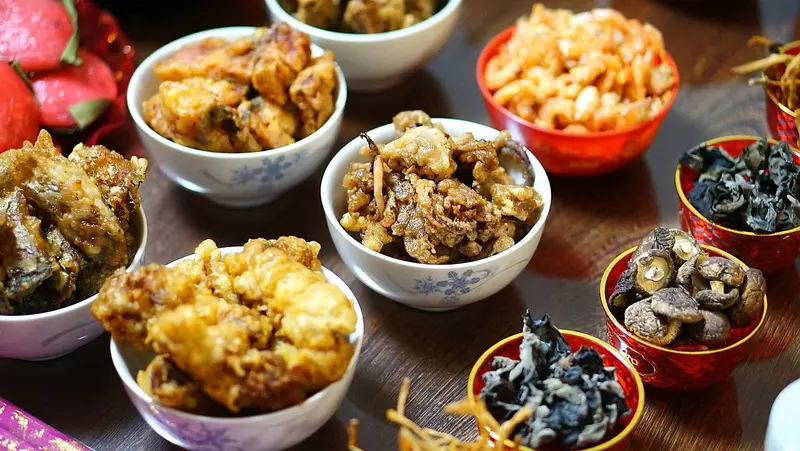
    Bowls and plates of assorted food on a shared table

    A useful rhythm is one planned meal and one flexible meal per day. This gives you a reason to explore but still lets the itinerary respond to hunger, weather and energy. Keep a backup option near the hotel for the evening when everyone is too tired to cross the city for a reservation that seemed exciting months earlier.

    When to go and how the season changes the itinerary

    Spring cherry-blossom periods and autumn foliage are famous, but they also increase demand in popular areas. Summer is hot and humid, requiring a slower pace and more indoor breaks. Winter is generally cooler and can offer clear days, while rainy periods require flexible outdoor planning. Tokyo’s density makes weather adaptation easy: shopping complexes, museums and underground connections can replace exposed walking without abandoning the district.

    Instead of asking only for the “best month,” decide which compromise you prefer: better weather, smaller crowds, longer daylight, lower prices or a particular event. No season maximizes all five. The itinerary should change with daylight and temperature, especially when major parts of the day are outdoors.

    Budget: where spending makes the biggest difference

    Tokyo can be less expensive day-to-day than some travellers expect because excellent casual food and public transport are widely available, while hotels and long-distance rail can be major costs. Evaluate rail passes against your actual route; a pass is not automatically a bargain. A well-located smaller room may be a better trade than a larger hotel requiring multiple transfers. Use our itinerary-building guide if Tokyo is part of a longer Japan trip.

    The smartest upgrades are usually the ones that buy time or remove friction: a better-located hotel, a direct airport transfer after an overnight flight, a timed ticket that prevents a wasted queue or a taxi at the end of an exhausting day. Cut costs on low-value extras before cutting the parts that make the route workable.

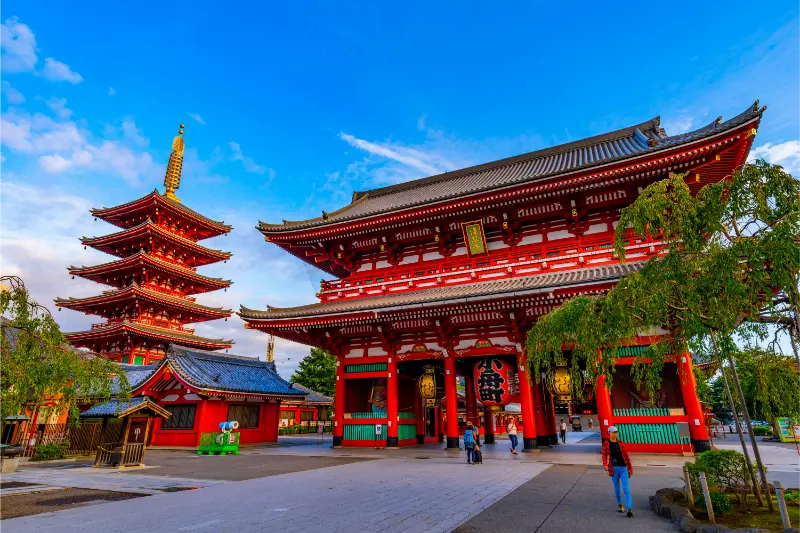
    Sensoji Temple Pagoda And Hozomon Gate Asakusa Tokyo Japan

    Common mistakes that make the trip harder

    • Trying to understand the entire rail network before arrival instead of learning the lines you actually need.
    • Planning Shibuya, Asakusa, Odaiba and Shinjuku in one day simply because trains are fast.
    • Underestimating the walking inside major stations and shopping complexes.
    • Buying a transport pass without comparing it with the journeys you will really take.
    • Filling every evening with reservations and leaving no room for Tokyo’s spontaneous food and neighbourhood discoveries.

    None of these mistakes is catastrophic, but several together can make a trip feel much more tiring than necessary. The solution is usually to remove one commitment, shorten one transfer or move one attraction to a future visit.

    Families, older travellers and mixed-age groups

    Tokyo is highly workable for families, but rush-hour trains, large stations and long transfers can be tiring with small children. Travel outside peak commuter periods when possible and keep one simple activity after a major attraction. Older travellers should choose hotels with straightforward station access and use station elevators when available rather than following the shortest stair-heavy route. Luggage forwarding can also simplify multi-city Japan journeys.

    For mixed-age groups, decide in advance which experiences are “everyone together” moments and which are optional. It is often better to split for two hours and meet for lunch than to force every traveller through an activity that only part of the group enjoys. Build seating, toilets, shade and simple transport into the plan with the same seriousness as the famous sights.

    Useful official resources

    Opening hours, transport rules, closures and visitor procedures can change. Before the trip, confirm the details that affect your dates through official sources rather than relying only on an old screenshot or social-media post.

    Final planning checklist

    • Confirm entry requirements and travel documents for your nationality and transit route.
    • Book only the scarce or high-priority attractions first; keep lower-priority activities flexible.
    • Check the exact door-to-door route from your accommodation to the first two morning activities.
    • Save offline copies of essential bookings and the hotel address.
    • Build a weather alternative for at least one half-day.
    • Leave a realistic buffer before flights, long-distance trains and non-refundable reservations.
    • Pack for the walking and climate the itinerary actually involves, not only for photographs.
    • Recheck official transport and attraction information shortly before travel.

    The best first visit is not the one that proves you saw everything. It is the one that gives you a clear sense of place, enough energy to notice what is around you and at least one reason to come back. Use this itinerary as a framework, then remove anything that does not match your own interests, mobility or travel rhythm.

  • Hong Kong in 6 Days: City, Islands and Hiking Without Changing Hotels

    Hong Kong in 6 Days: City, Islands and Hiking Without Changing Hotels

    Hong Kong is one of the rare destinations where a six-day trip can move from dense high-rise neighbourhoods to beaches and hiking trails without changing hotels. The mistake is spending every day underground in the MTR between shopping districts.

    This itinerary keeps one base and uses ferries, MTR, buses and walking to create very different days: Hong Kong Island, Kowloon, a car-free island, and one outdoor escape around Sai Kung or Dragon’s Back.

    The official Hong Kong Tourism Board transport guide describes Octopus as an essential travel card for major public transport and many everyday purchases. The same tourism board emphasises how quickly ferries and MTR can connect the city to islands and trails.

    Quick trip summary

    • Keep one hotel for all 6 days.
    • Use Octopus and public transport instead of taxis for most journeys.
    • Choose one island day: Lamma or Cheung Chau are easy first options.
    • Choose one outdoor day and move it according to weather.
    • Do not add Macau unless you genuinely want to sacrifice a Hong Kong day.

    Why this route works

    One hotel is a major advantage. Hong Kong’s transport lets you move between districts quickly while your luggage stays put.

    An island day prevents the trip from becoming six days of malls, markets and skylines. Official tourism information notes ferries from Central can reach Lamma in about 30 minutes and Cheung Chau in about 35 minutes.

    An outdoor day shows another side of Hong Kong. Trails such as Dragon’s Back or the High Island area are close enough to the city to fit naturally into a short visit.

    A realistic itinerary at a glance

    DaysBaseMain focus
    1–2Hong Kong Island / Kowloon baseHarbour, Central, old neighbourhoods
    3KowloonMarkets, museums and local districts
    4Outlying islandLamma or Cheung Chau
    5Outdoor dayDragon’s Back or Sai Kung/High Island
    6Flexible city dayWeather buffer and departure

    Day-by-day plan

    Day 1: Harbour orientation

    Use the Star Ferry and harbourfront as your introduction rather than disappearing immediately into shopping malls. See the skyline from both sides and stop when travel fatigue catches up.

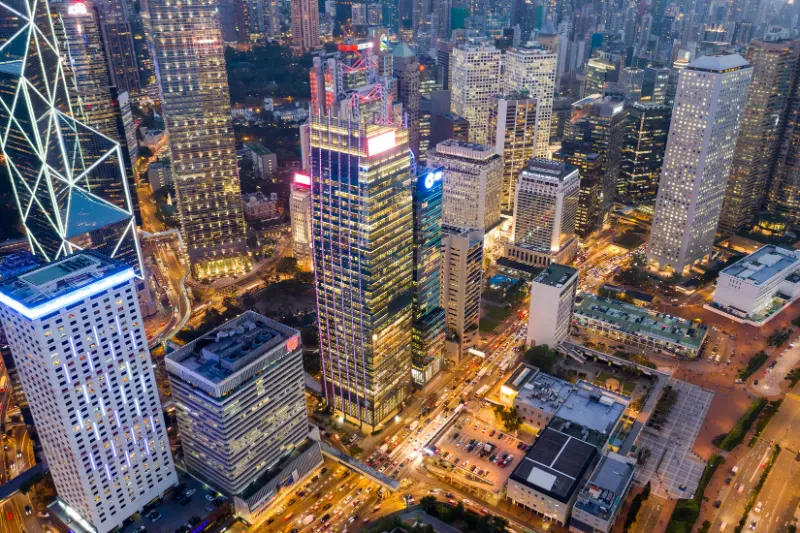
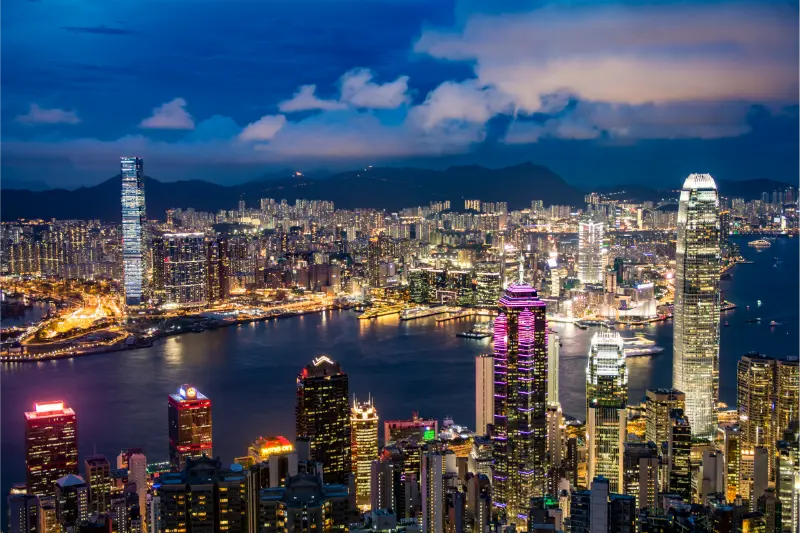
    Hong Kong Victoria Harbour Skyline At Night

    Day 2: Hong Kong Island

    Build the day around Central, Sheung Wan and one hillside/viewpoint experience. Use trams or MTR to reduce uphill walking, especially in heat and humidity.

    Day 3: Kowloon

    Choose a museum, Sham Shui Po, Mong Kok or another neighbourhood cluster and move north gradually. Night markets are more enjoyable when they are not the sixth stop of an exhausting day.

    Day 4: Lamma or Cheung Chau

    Take an early ferry from Central. Lamma works well for a paved cross-island walk and seafood; Cheung Chau offers compact village streets, beaches and easy cycling/walking. Choose one island, not both.

    Day 5: Outdoor Hong Kong

    Choose Dragon’s Back for an accessible ridge-and-beach day or Sai Kung/High Island for geology and more transport logistics. Start early in warm months and check current trail/access notices.

    Day 6: Flexible city day

    Use the last day for what weather blocked earlier: Victoria Peak, museum time, shopping, another neighbourhood or a slow dim sum meal. Keep the airport transfer uncomplicated.

    Where to stay and how many hotel changes to make

    Central/Sheung Wan are excellent for ferries and urban access but can be expensive and hilly.

    Tsim Sha Tsui is convenient for harbour views and Kowloon exploration; Jordan/Yau Ma Tei can offer a more local feel and good MTR access.

    Choose the hotel by MTR proximity and room practicality rather than only by skyline photographs; Hong Kong rooms can be compact.

    On a multi-base trip, location usually matters more than a small difference in room price. A hotel that removes two daily transfers can save more energy than a nicer room on the wrong side of town.

    Hong Kong Victoria Harbour At Night

    Read recent reviews for the practical details that booking photos rarely show: stairs, lift size, street noise, parking access, breakfast hours and the final walk from public transport.

    Transport: what is worth planning in advance

    Octopus is the easiest default for MTR, buses, ferries and many small purchases.

    The Airport Express is fast, but compare it with bus/taxi options for your exact hotel and group size.

    For hiking days, save the return route and last practical bus/ferry details before leaving urban coverage.

    Judge every move door to door rather than by the timetable alone. Checkout, reaching the terminal, waiting, luggage and the final connection to the next hotel can turn a short headline journey into half a day.

    Book the inflexible ticket only when the savings are meaningful and the day is genuinely fixed. Weather-sensitive activities and remote transfers need room to move.

    Food and daily rhythm

    Dim sum, cha chaan teng breakfasts, roast meats, noodles and neighbourhood bakeries should be spread through the trip rather than compressed into a food tour.

    Queues can be part of famous restaurants; a very good local alternative nearby is often a better use of a short holiday.

    Use meals to control the rhythm of the day. A long local lunch can be an experience and a recovery period, especially after exposed archaeological sites, mountain walks or early starts.

    Do not turn every meal into another attraction. Mix regional specialties with simple food, particularly on transfer days when everyone is already tired.

    Families, children and older travellers

    Ferries, trams and islands are often more memorable for children than observation decks.

    Older travellers can use MTR lifts, taxis and the Mid-Levels system to reduce steep walking, but station corridors can still be long.

    In summer heat, an indoor museum or long lunch is a legitimate midday plan.

    For multigenerational travel, the useful pace is the one at which the least mobile person still enjoys the day. That normally produces a better experience for everyone else too.

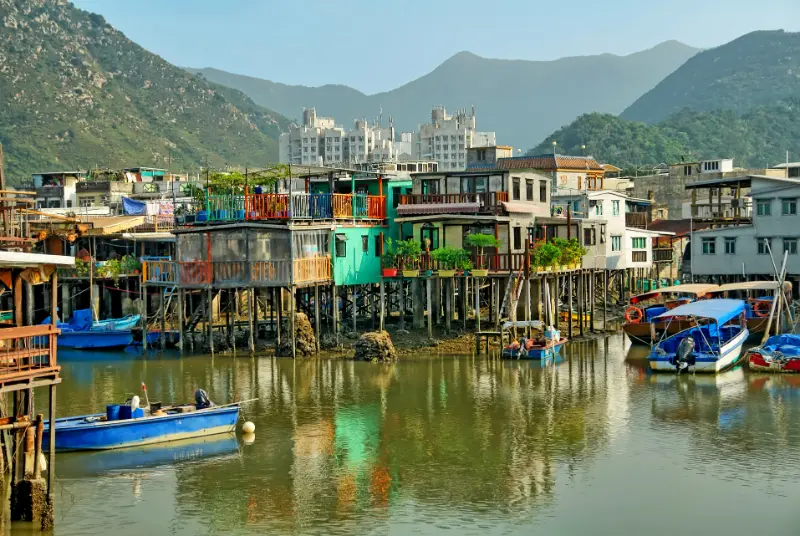
    Hong Kong Traditional Fishing Village Waterfront

    Children often respond better to changes of format than to more attractions: a beach after a museum, a boat after a city walk, or wildlife after a long drive.

    Budget: where the money really goes

    Hotels are the biggest expense; public transport is efficient enough that paying more for location can still be worthwhile.

    Viewpoints, ferries and neighbourhood walks provide excellent value compared with filling every day with ticketed attractions.

    Compare total cost instead of headline prices. A cheaper room can become more expensive after transfers, parking, meals and the time lost reaching it.

    The best splurges are usually the ones that remove friction: a central hotel, a reliable private transfer, a direct train, a guide where context matters or one extra night that prevents an exhausting move.

    Best time to go

    Autumn and cooler winter periods are comfortable for walking, while summer is hot, humid and affected by heavy rain/typhoon conditions.

    Outdoor plans should move around the forecast. Never force a ridge hike during unsafe weather.

    Shoulder season can offer a good balance between weather, demand and comfort, but some boats, mountain services and seasonal restaurants may run less frequently.

    Heat, rain, snow, wind and daylight should change the order of your day. Use the most comfortable hours for exposed outdoor sights and keep indoor or low-effort alternatives available.

    Comfort, accessibility and realistic pacing

    One hotel eliminates packing and lets the itinerary react quickly to weather.

    Alternate urban and outdoor days so that heat, crowds and long station walks do not accumulate.

    Travel fatigue accumulates. One difficult transfer can reduce the quality of the next two days, which is why this itinerary avoids one-night bases unless geography genuinely requires them.

    A free half-day is not wasted time. It is insurance for weather, laundry, a delayed journey, a child who needs rest or a place you discover only after arriving.

    Small decisions that improve the trip

    Use one base

    Hong Kong’s transport network removes almost every reason to change hotels.

    Hong Kong Skyline With Illuminated Bridge

    Choose one island

    A full island day feels slower and more local than collecting ferry terminals.

    Keep the hike flexible

    Weather and heat should decide which day you go.

    Skip Macau if Hong Kong itself is the priority

    A border-crossing day has a real opportunity cost on a six-day trip.

    What I would leave out on this length of trip

    Leave Disneyland, Ocean Park or Macau out unless they are genuinely important to your group.

    Skip trying to see every famous market; choose neighbourhoods with a reason to be there.

    Mistakes that make this trip harder than it needs to be

    • Spending six days only in Central, Tsim Sha Tsui and malls.
    • Underestimating summer heat on hiking trails.
    • Forgetting that MTR stations can involve long internal walks.
    • Taking an island ferry without checking return frequency.
    • Booking a hotel far from MTR to save a small amount.
    • Using the final day for a complicated cross-boundary excursion.

    How I would adapt the itinerary

    With three days, focus on harbour, Hong Kong Island and Kowloon.

    With eight days, add both an island and Sai Kung day plus one low-key neighbourhood day.

    Before booking

    • Get Octopus or set up a visitor-compatible mobile option.
    • Check weather before hiking.
    • Save ferry schedules.
    • Choose a hotel close to MTR.
    • Keep a rain/typhoon alternative.

    Practical questions

    Do I need a car?

    No. Public transport is one of Hong Kong’s biggest advantages.

    Lamma or Cheung Chau?

    Lamma suits a simple walk-and-seafood day; Cheung Chau feels more compact and beach/village focused.

    Is six days too long?

    No. Once you include islands and outdoors, six days feels balanced rather than excessive.

    Final thoughts

    Hong Kong becomes a much richer destination when the skyline is only one part of the trip.

    Six days with one hotel can contain ferries, food, neighbourhoods, beaches and hiking without the logistical cost of changing bases.

  • Osaka in 4 Days: Food, Castle District and Neighbourhoods Without Treating It as a Kyoto Add-On

    Osaka in 4 Days: Food, Castle District and Neighbourhoods Without Treating It as a Kyoto Add-On

    Osaka deserves a trip built around geography and real travel time rather than a checklist. Osaka is often reduced to one evening of food between Kyoto and another city, but it becomes much more rewarding when you give its neighbourhoods, riverfronts and different urban centres time to develop. Four days is enough for Namba, the castle area, Umeda and one flexible outer-city or day-trip block without repeating long rail journeys.

    If this destination is part of a longer journey, compare the pacing with Japan Beyond Tokyo in 10 Days: Kyoto, Nara, Hiroshima and Osaka Without Constant Packing. The useful question is not how many famous names fit on the map, but how much usable holiday time remains after transfers, check-in, meals, weather and rest.

    Quick trip summary

    • Recommended time: 4 days.
    • Best planning principle: group each day by geography and protect only the reservations that control access.
    • Best for: independent travellers, couples, families and slower-paced visitors who prefer a realistic rhythm.
    • Keep flexible: at least one half-day or one major activity that can move with weather, traffic or energy.
    • Book first: the accommodation location, scarce transport and any permit, timed entry or signature experience that shapes the rest of the trip.

    Is Osaka the right trip for you?

    Osaka works well for travellers who enjoy food, urban energy, shopping, casual nightlife and efficient public transport. Families can build around aquariums, parks and observation decks, while slower-paced visitors benefit from elevators and dense rail coverage. The city is less about one monumental list and more about contrasting districts.

    The practical test is simple: decide what would make you disappointed if you missed it, then build the trip around that one or two priorities. Everything else should earn its place by fitting the same area of the day. This is especially important when travelling with children, older relatives or anyone who enjoys a slower pace.

    Where to stay: choose location before hotel style

    BaseWhy choose it
    Namba / ShinsaibashiBest for food, nightlife and first-time atmosphere with strong transport connections.
    Umeda / Osaka StationBest for regional rail, department stores and day trips to Kyoto, Kobe or Himeji.
    TennojiBest for a slightly calmer base with good transport and access to southern districts.

    A more attractive room is not always a better travel decision. Before booking, map the first activity of the morning, the likely dinner area and the departure route. If the hotel adds two unnecessary transfers every day, the hidden cost is time as well as money.

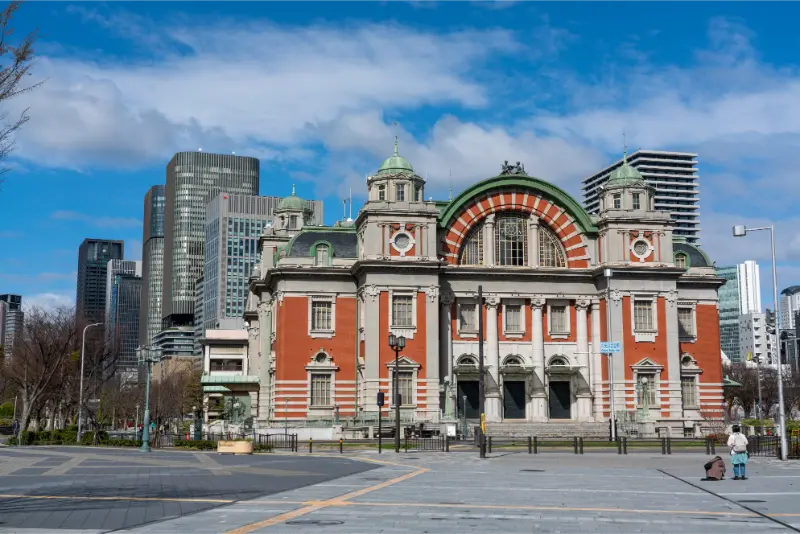
    Osaka Central Public Hall Historic Building

    A realistic 4-day itinerary

    Day 1: Namba, Dotonbori and Shinsaibashi

    Start with the southern centre, markets and canal area, but do not spend the entire day under neon signs. Add Hozenji, side streets and a slower meal, then return after dark when the district changes character.

    Day 2: Osaka Castle, riverside and central districts

    Visit the castle park and decide whether the interior is important to you, then continue through nearby riverside or museum areas. Finish in a different central district instead of returning immediately to Namba.

    Day 3: Umeda, north Osaka and city views

    Explore Osaka Station City, Umeda and one observation deck or cultural site. The northern centre has a different rhythm from Namba and deserves its own half-day or more.

    Day 4: bay area, Shinsekai or one regional day trip

    Choose based on interests: aquarium and bay area, Shinsekai and Tennoji, or one simple excursion such as Kobe. If Kyoto is already part of your wider trip, resist using Osaka days to commute back there repeatedly.

    How to move around without wasting the day

    Osaka has several rail and metro operators, so route apps are extremely useful. Choose the fastest practical route rather than insisting on one pass or one company. Walking inside large stations can add significant time, so allow extra minutes for platform changes and exits.

    Do not judge a journey only by kilometres. A short distance can include traffic, security, parking, boat boarding, luggage handling or a long final walk. For every important transfer, think in door-to-door time and keep a margin before anything expensive or difficult to replace.

    Best time to visit

    Spring and autumn are comfortable for walking, summer is hot and humid, and winter is cool but generally manageable. Rainy periods are easy to adapt because Osaka has extensive indoor shopping, stations and food areas. In peak blossom or holiday periods, expect heavier demand.

    Seasonal advice should guide the style of the trip, not become a promise. Climate averages cannot tell you the exact conditions on your dates. Check the local forecast and any official closure, transport or safety notice again shortly before each weather-sensitive day.

    What to book first

    Reserve the hotel first and any high-demand themed attraction, observation experience or restaurant that truly requires it. Most ordinary food exploration should remain spontaneous. If using Osaka as a regional base, book only the day trips that have a real capacity or timing constraint.

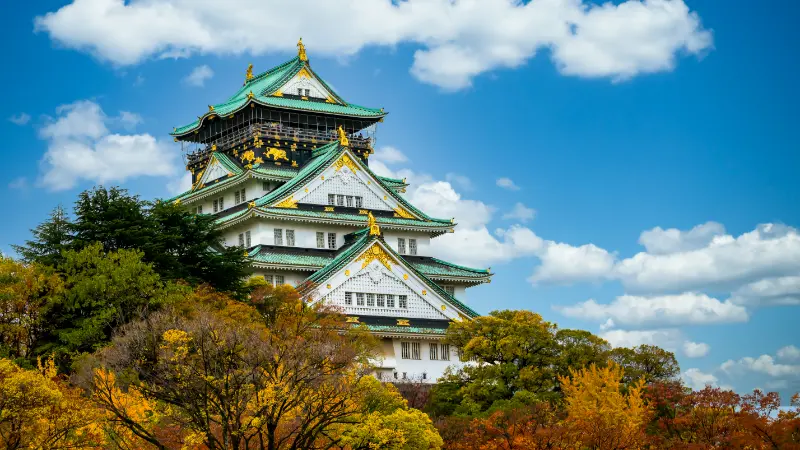
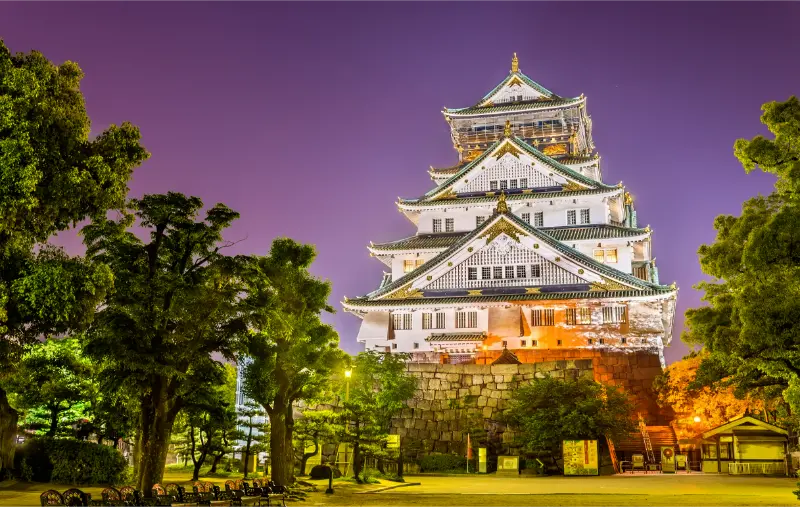
    Osaka Castle Moat And Stone Walls Japan

    After those anchors are secure, leave ordinary meals, short walks and secondary sights open. A timetable with every hour reserved is fragile: one delay turns the rest of the day into a sequence of apologies and missed slots.

    Food strategy: eat well without scheduling every meal

    Osaka is a place to eat often but not necessarily formally. Build the day around neighbourhoods with multiple choices and share smaller dishes when possible. Avoid spending an hour crossing the city for one famous stall when excellent alternatives exist in the district you are already visiting.

    For a multi-age group, a reliable breakfast and an easy lunch often matter more than one additional attraction. Keep water accessible, avoid waiting until everyone is exhausted to look for food and use meal stops as genuine rest rather than another item to complete quickly.

    Travelling with children

    Aquariums, trains, observation decks, parks and casual food make Osaka easy for children. Big stations can be overwhelming, so keep meeting points clear and avoid excessive transfers with tired children. Use department-store food floors for simple meal options when everyone wants something different.

    Children do not need a simplified version of every adult attraction. They usually need a different rhythm: movement, shade, snacks, toilets and periods when nobody is asking them to pay attention. Protect those needs and the whole group usually sees more, not less.

    Travelling at a slower pace or as a senior

    Stay near a major station with lifts and direct lines, and use rail to reduce unnecessary walking. Stations themselves are large, so a hotel described as five minutes from a station may still involve long internal walking. Schedule one major district per half-day.

    When mobility or stamina is limited, reduce transitions before reducing experiences. One well-located base, a direct transfer and a shorter route often preserve the most memorable parts of a trip far better than trying to keep the original schedule with longer rest stops.

    Budget: where the money really goes

    Transport is efficient but multiple short journeys can accumulate. Compare individual fares with passes only after your route is known. Food can range from inexpensive casual meals to high-end dining, so the city is easy to adapt to different budgets without sacrificing local character.

    Track the total cost of each planning choice. A lower hotel rate can be false economy after taxis, parking or long transfers, while a more expensive excursion may be reasonable if it replaces a rental car, guide and separate admission fees. Compare complete days rather than isolated prices.

    Osaka Castle Illuminated At Night Osaka Japan

    Weather fallback plan

    Rain is rarely a reason to lose a day because stations, arcades, malls and museums provide strong indoor alternatives. In summer, move between air-conditioned stops and protect the middle of the day from long exposed walks.

    The useful fallback is not a list of random indoor attractions. It is one realistic substitute that fits the same area or preserves the next day. Keep at least one activity movable so a poor forecast does not force you to choose between losing money and doing something unsafe.

    Connectivity, cash and small practical details

    Use a transport card or mobile option where compatible, keep cash for smaller venues and save the Japanese name or map pin of your hotel. Large station complexes have multiple exits, so follow the exit number rather than only the station name.

    Save hotel addresses, tickets, permits, insurance details and the next transfer outside your email app. Offline access matters most precisely when the network is weak, your battery is low or you are trying to solve a delay.

    What to pack

    Comfortable walking shoes, a small umbrella, breathable clothing in warm months and a light layer in winter are enough for most city days. Leave luggage compact if travelling onward by train.

    A small day bag should hold water, medication, sun or rain protection and the layer you are most likely to need. The goal is not to carry everything; it is to avoid having the useful items locked in a suitcase or parked car when conditions change.

    Common mistakes to avoid

    • Treating Osaka as only a dinner stop from Kyoto.
    • Crossing the city for one viral food stall.
    • Underestimating walking time inside Umeda and Namba stations.
    • Buying an expensive transport pass without checking the actual journeys.
    • Scheduling several distant day trips and never seeing Osaka beyond the station areas.

    Responsible travel and local etiquette

    Queue neatly, keep station pathways clear and follow local rules for eating and waste. In residential streets, avoid loud late-night behaviour and treat small food businesses as working spaces rather than photo sets.

    The best rule is to treat the destination as a real place rather than a stage built for visitors. Follow staff and ranger instructions, respect residential space and protected environments, and spend with businesses that add genuine local value instead of rewarding the most aggressive sales pitch.

    If you have less or more time

    With two days, focus on Namba and one castle/Umeda day. Three days adds Tennoji, Shinsekai or the bay area. With five days, add one regional excursion while keeping at least three full days for Osaka itself.

    Osaka Castle And Osaka Business Park Towers Japan

    Extra days are most useful when they reduce pressure. Before adding another distant stop, ask whether the trip improves more by sleeping in the same place, repeating a favourite beach or neighbourhood, waiting for better weather or enjoying a late breakfast without watching the clock.

    How to choose between similar experiences

    Choose Kobe for an easy urban-and-harbour excursion, Himeji for a major historic castle, and the Osaka bay area for a low-logistics family day. If Kyoto is already on the main itinerary, another Osaka neighbourhood often adds more variety than a repeat commute.

    When two options offer a similar experience, choose the one that fits the geography and energy of the day. The extra hour of transfer rarely creates an extra hour of enjoyment, especially in heat, traffic, rough water or at altitude.

    Safety and decision-making on the day

    Osaka is straightforward for most visitors, but crowded stations, nightlife districts and bicycle traffic deserve normal awareness. The bigger practical risk is missing a train or getting separated in large stations, so establish clear meeting points.

    Local warnings, ranger instructions and transport operators have more value than an itinerary written months earlier. Set a practical turnaround time for hikes, drives and water days, and change the plan when conditions deteriorate rather than trying to complete the original checklist.

    Useful official and planning resources

    Opening hours, protected-area rules, transport schedules, fees and visitor procedures change more often than the landscape. Recheck the source below shortly before departure.

    Final planning checklist

    • Confirm passport, visa, transit and health requirements for your nationality.
    • Reserve the transport, permit or timed entry that controls the rest of the itinerary.
    • Check how luggage moves between airport, road transfer, ferry, train or accommodation.
    • Download offline maps and save key tickets outside your email app.
    • Recheck weather, sea, road, trail or park notices before each critical day.
    • Keep at least one half-day that can absorb a delay or become simple rest.
    • Leave a generous buffer before international flights and other costly connections.

    A good trip to Osaka should feel like you understood the place, not merely that you passed through it. Keep the transport anchors fixed, leave room for conditions to change, and remove anything that does not fit your interests, mobility or energy. The result is usually more enjoyable than the most ambitious version of the same route.

  • Taiwan in 10 Days by Train: Taipei, Tainan and Kaohsiung Without Rushing the Island

    Taiwan in 10 Days by Train: Taipei, Tainan and Kaohsiung Without Rushing the Island

    Taiwan is one of the easiest places in Asia to overplan because the transport is so good. A map encourages you to add Taichung, Sun Moon Lake, Alishan and the east coast until a ten-day holiday becomes a sequence of departures.

    This route uses Taipei, Tainan and Kaohsiung. Taipei gets four nights, Tainan slows the pace through history and food, and Kaohsiung provides a more spacious southern finale.

    Taiwan High Speed Rail serves the western corridor from Taipei through Tainan to Zuoying in Kaohsiung. Check the official THSR site for current schedules, fares and pass products.

    Quick trip summary

    • Spend 4 nights Taipei, 3 Tainan and 2 Kaohsiung, with the tenth day for departure.
    • Use high-speed rail for the long north–south moves.
    • Remember that some HSR stations are outside the historic centre.
    • Choose only one substantial Taipei day trip.
    • Build food into the itinerary as a destination.

    Why this route works

    Taipei changes block by block and needs enough time for temples, museums, neighbourhoods, food and one weather-dependent day trip.

    Tainan provides historical depth and rewards slow street exploration rather than a rapid attraction list.

    Kaohsiung feels broader and more open, with harbour areas, art districts and light rail, creating a clear contrast with the capital.

    A realistic itinerary at a glance

    Days Base Main focus
    1–4 Taipei Neighbourhoods, food, museums and one day trip
    5–7 Tainan History, temples and markets
    8–9 Kaohsiung Harbour and southern city life
    10 Departure Southbound flight or return north with buffer

    Day-by-day plan

    Day 1: Taipei arrival

    Stay near the metro and keep the evening to one district, dinner and a short walk.

    Day 2: Historic Taipei

    Choose Longshan Temple and nearby traditional streets or another compact heritage cluster.

    Day 3: Modern Taipei

    Use one major museum/viewpoint plus a contemporary district; cloudy weather does not ruin the city.

    Day 4: One day trip

    Choose one excursion rather than combining several famous stops into a long bus circuit.

    Day 5: HSR to Tainan

    Travel south, then account for the local transfer from the high-speed station to the historic core.

    Day 6: Tainan history

    Use Anping plus one central heritage cluster and protect midday energy in hot weather.

    Day 7: Tainan food and neighbourhoods

    Return to the areas you liked or explore markets and smaller temples instead of adding a long Alishan detour.

    Day 8: Tainan to Kaohsiung

    Choose local or high-speed rail according to hotel locations and spend the first evening around the harbour/Pier-2 area.

    Day 9: Kaohsiung

    Choose one of Lotus Pond, Shoushan, Cijin or another area based on weather and mobility rather than doing everything.

    Day 10: Departure

    If the long-haul flight leaves from Taoyuan near Taipei, position north with enough time to absorb a rail disruption.

    Where to stay and how many hotel changes to make

    Taipei: choose a metro-connected district according to nightlife and sleep priorities. On a short itinerary, this is not a minor detail: a well-located hotel can save several transfers and make evenings feel spontaneous instead of logistical.

    Tainan: central accommodation reduces dependence on taxis, but older buildings may have limited lift access. Recent reviews matter because noise, stairs, lift access and the final walk from public transport can affect comfort more than an extra star on the hotel description.

    Kaohsiung: stay near MRT/light rail and remember Zuoying HSR is not the waterfront centre. For families and older travellers, paying slightly more for a practical location is often better value than compensating every day with taxis and longer walks.

    Transport: what is worth planning in advance

    THSR is best for the long western-corridor moves, but conventional rail may be more convenient for shorter segments. Treat the published journey time as only the moving part of the transfer. Add checkout, station access, luggage handling and the final connection to the hotel.

    Taipei and Kaohsiung have strong metro systems; Tainan relies more on buses, taxis and walking. Schedules, ticket products and operating rules can change, so the live official source should always win over an old screenshot or a blog post copied from a previous season.

    Keep some cash because not every market or small eatery will fit your preferred card/mobile-payment setup. The goal is not to use the fastest mode every time; it is to reduce the number of stressful transitions while keeping enough flexibility for weather and fatigue.

    Food and daily rhythm

    Do not make every dinner a night market; breakfast shops, tea, noodles and regional Tainan specialties matter just as much. Use meals to slow the day rather than treating them as gaps between attractions. One memorable local lunch can add more to the trip than another rushed ticketed sight.

    At fast-paced local venues, observe ordering systems and use translation tools politely rather than turning every meal into a challenge. Busy local places are often excellent, but a first trip is more enjoyable when you mix regional specialties with simpler meals instead of forcing every breakfast, lunch and dinner to become a culinary project.

    Families, children and older travellers

    Public transport and convenience stores make Taiwan practical for families; heat and station walking are the bigger challenges. For multigenerational travel, the useful question is not whether everyone can technically do the activity, but whether the day still feels pleasant for the slowest member of the group.

    Older travellers should use elevators and taxis strategically, especially in Tainan. Build one strong shared experience into the day, then allow optional extras. That avoids turning the itinerary into a test of endurance for children or older adults.

    High-speed rail reduces long road transfers and works very well for multigenerational groups. Transport shortcuts, elevators, taxis and rest breaks are not failures of independent travel; they are tools that preserve energy for the parts of the destination that matter.

    Budget: where the money really goes

    Food and local transport can be excellent value, while high-end hotels and famous attractions raise the spend quickly. Compare total cost rather than headline price. A cheaper room or ticket can become more expensive once extra transfers, meals, luggage storage or lost time are added.

    Compare a rail pass with your actual number of long-distance journeys before buying it automatically. The most useful splurges on this route are usually those that remove friction: a better-located hotel, a safer transfer, a guide where context matters or a comfortable seat on a long journey.

    Best time to go

    Heat, humidity, heavy rain and typhoons can affect the route at different times of year. Weather should change the order and pace of the itinerary, not automatically cancel the destination. Keep at least one flexible day or half-day in every longer base.

    Winter may be pleasant in the south while Taipei feels damp and cool, so pack for the whole route rather than one forecast. Shoulder seasons can improve comfort and accommodation value, but they may also bring shorter opening hours or reduced boat and excursion schedules.

    Comfort, accessibility and realistic pacing

    Reducing city changes is the biggest comfort improvement: four Taipei nights let you recover and move activities around weather. This is especially important on a trip with several bases because fatigue compounds: a difficult transfer on Day 3 can reduce enjoyment on Days 4 and 5 as well.

    Major stations are efficient but can involve long walks; know which exit is nearest the hotel when mobility matters. A slower day is not lost time. It is often what allows the next major experience to feel memorable rather than becoming another item photographed while tired.

    Small decisions that improve the trip

    Use HSR for long moves

    That is where the time savings are meaningful. This is the kind of small planning choice that rarely appears in a list of attractions, yet it can change how the whole trip feels.

    Give Tainan three nights

    Food and heritage are better when the city is not reduced to one hot afternoon. This is the kind of small planning choice that rarely appears in a list of attractions, yet it can change how the whole trip feels.

    Choose one Taipei day trip

    The capital deserves real city time too. This is the kind of small planning choice that rarely appears in a list of attractions, yet it can change how the whole trip feels.

    Protect the long-haul flight

    Return north the previous night if an early Taoyuan departure makes the same-day plan fragile. This is the kind of small planning choice that rarely appears in a list of attractions, yet it can change how the whole trip feels.

    What I would leave out on this length of trip

    Leave the east coast, Alishan and a full island loop for another trip unless you add several days. Leaving it for another trip is not a compromise; it protects the route you have already chosen from becoming a sequence of hurried arrivals.

    Skip trying to ‘complete’ Taiwan in ten days just because the rail system is efficient. Leaving it for another trip is not a compromise; it protects the route you have already chosen from becoming a sequence of hurried arrivals.

    Mistakes that make this trip harder than it needs to be

    • Assuming every HSR station is downtown.
    • Adding too many Taipei day trips.
    • Sightseeing continuously through midday heat.
    • Treating night markets as the only food experience.
    • Buying a rail pass without doing the arithmetic.
    • Keeping a tight Kaohsiung-to-Taoyuan connection before a long-haul flight.

    How I would adapt the itinerary

    With seven days, use Taipei plus Tainan or Kaohsiung. The important principle is to add nights before adding destinations.

    With two weeks, add Taichung, Alishan or part of the east coast depending on weather and transport conditions. The important principle is to add nights before adding destinations.

    Before booking the trip

    • Check THSR schedules/products.
    • Map the Tainan HSR transfer.
    • Keep one Taipei day weather-flexible.
    • Carry cash plus cards.
    • Protect the final airport connection.

    Practical questions before you go

    Do I need a car?

    Not for this route. Rail, metro, buses and occasional taxis cover the three cities well.

    Is Tainan worth three nights?

    Yes for food, temples and street-level history.

    Can I fly home from Kaohsiung?

    Sometimes; if your ticket departs from Taoyuan, position north conservatively.

    A few extra planning notes

    Convenience stores are genuinely useful travel infrastructure, but do not let convenience replace local breakfast shops and markets.

    Humidity can make clothing dry slowly; laundry access is often more useful than carrying a larger suitcase.

    Taiwan’s transport quality makes it easy to move quickly, but the best use of that efficiency is to move less often.

    Taipei, Tainan and Kaohsiung already show three distinct urban personalities in ten days.

  • Himeji Castle, Japan: A Beautiful Visit With or Without the Tower Climb

    Himeji Castle, Japan: A Beautiful Visit With or Without the Tower Climb

    Himeji is best known for its spectacular white castle, but an enjoyable visit involves much more than climbing to the top. The broad approach from the station, the free outer grounds, Koko-en garden and the surrounding city offer different ways to understand this remarkable Japanese fortress. The official castle website makes an essential point: reaching the main keep involves slopes and steep, narrow stairs, and the keep itself has no elevators. This guide distinguishes the famous tower climb from satisfying lower-effort alternatives and explains how to build a thoughtful day trip or overnight stay.

    At a glance
    Suggested time1 full day or 1 night
    Getting thereRail from Osaka, Kobe or Okayama
    Key experiencesWhite castle, outer bailey and Koko-en
    Plan aheadNo elevators in the main keep; steep stairs

    See the castle long before reaching the ticket office

    From JR Himeji Station, the castle’s pale roofs form the visual destination at the end of Otemae-dori. Walking the broad boulevard is part of the experience, and it lets you appreciate how the castle dominates the town’s layout. The distance may be manageable for many travelers, but not every person wants to walk it with luggage or on a hot afternoon. Local buses run toward Otemon-mae; verify current stops, service and boarding access. Photographing from the station area or the boulevard can be rewarding without paying for admission.

    The main Otemon Gate leads toward San-no-maru, a large outer enclosure. The Japan National Tourism Organization describes this area as accessible before the paid inner section. It provides views of the layered white roofs and stone ramparts that are impressive even if you never enter the keep. During cherry-blossom season, the grounds attract crowds, so an early arrival can help with space and photographs. Keep paths clear for local residents and do not climb onto restricted walls for a better angle.

    Decide whether the main keep climb suits you

    Himeji Castle’s main keep is an extraordinary surviving wooden structure, with a sequence of gates, defensive approaches and increasingly elevated interior floors. You can see how the design channels visitors through narrow passages, but these features also create physical challenges. The official site warns about steep stairs, slopes and the absence of elevators inside the keep and turrets. This is not an attraction where every paying visitor can automatically reach every level. Socks or safe footwear requirements may apply on interior flooring.

    Before entering, assess whether everyone in your party can manage long stair sequences, tight turns and standing in queues. Ask staff about the sections currently open and whether a partial visit is possible. A toddler cannot safely navigate all ladders independently; someone with vertigo, poor balance or knee problems may be happier outside. Never pressure an older relative to continue upward merely because admission has been paid. The engineering can be appreciated from the lower grounds and interpretive material without ascending to the top floor.

    Look beyond the white silhouette and study the defenses

    Himeji’s beauty tends to dominate photographs, yet the stone bases, angled routes, loopholes and numerous gates reveal its military purpose. From the inner approaches, notice how the path twists instead of leading directly to the heart of the fortress. The white plaster is part of a historic fire-resistant exterior finish, not simply decoration. Interpretive signs help explain which buildings and passages belong to the early seventeenth-century complex. The castle has UNESCO World Heritage status, and preservation involves continual care rather than a static monument.

    Set a modest observation goal for children: find a gate, stone wall, opening and roof feature rather than demanding that they absorb every historical date. Photographers should check restrictions on tripods and drones. Wheelchair users need venue-specific access advice because outer approaches and interiors differ substantially; the official site’s assistance guidance should be read before booking. Avoid claiming that a paved outer area guarantees step-free movement throughout the paid enclosure. A shorter visit with focused observation often generates better memories than a tiring climb.

    Balance the castle with Koko-en Garden

    Koko-en is a landscaped garden near the castle and an excellent companion for visitors who enjoy plants, ponds and quiet seasonal design. Its sections provide a contrast to the fortress’s enclosed passages. Garden access may be more comfortable than the main tower, but bridges, gravel paths and stepping surfaces still need checking. A combined admission option may exist, although prices and eligibility have changed; consult official sources for current ticket arrangements rather than relying on an old blog’s figures.

    If traveling with a person who cannot climb, consider dividing the group: one person explores the upper keep while the others visit appropriate outer grounds or selected garden areas. Agree on a realistic meeting point and time so no one has to wait standing in heat. A garden visit works especially well in the afternoon when castle queues may be longer. Seasonal flowers and foliage change the atmosphere, but a quieter winter garden can be appealing too. Photography should respect planted areas and posted pathways.

    Himeji Castle Hyogo Japan Above City Avenue

    Add a neighborhood stop without overloading the day

    Himeji’s station area has shops, dining choices and services that simplify a day trip. Instead of rushing onto the first train after the castle, walk a few streets away from the busiest route to enjoy a meal or find a local café. Some visitors add a museum or shrine visit, but check opening times and travel distances before committing. The pleasure of a Japanese city outside the country’s most famous hubs often lies in everyday streets and an unhurried lunch as much as a headline monument.

    For families, a predictable food stop after the grounds prevents an afternoon of tired children and queue frustration. Vegetarians and travelers with allergies should request ingredient information and keep an explanatory translation ready. Restaurants near the station may be easier for wheelchair users than upper-floor establishments in older buildings, though entrances still need checking. Store bulky luggage at an appropriate station facility rather than attempting to carry suitcases through castle grounds. Keep your rail return flexible if possible.

    Reach Himeji by rail from Osaka, Kobe or Okayama

    Himeji is a convenient rail destination on routes across western Honshu, including services from Osaka, Kobe and Okayama. Which train is best depends on whether you have a rail pass, prefer speed, or need fewer transfers. A Shinkansen journey may save time but cost more than conventional services. Confirm your exact departure station and train type, especially if traveling from a hotel far from a major hub. Check railway accessibility services and reserve assistance where appropriate rather than assuming every transfer is effortless.

    For a same-day excursion, make the castle your main booking and leave room for the garden. Arriving as the gates open may help in busy seasons, but account for school groups and temporary conservation works. Drivers should use designated parking and expect traffic restrictions around major events. Overnight visitors can stay close to Himeji Station for restaurants and onward travel, then tour the castle at a gentler pace the following morning. A short overnight stop is especially useful for travelers who cannot stand in queues for hours.

    Read the current admission rules, not yesterday’s prices

    Castle admission policies can change. By October 2026, the castle’s own English website lists different adult and under-eighteen arrangements from older tourism pages, so copying a past fee is risky. Check the official castle website on the booking day for admission bands, combined tickets, last entry time and scheduled closures. Also review crowd notices and any temporary alterations to the interior route. The official information states that the last entry is earlier than closing time; allow enough time to finish before the gates close.

    Parents should look at stroller storage guidance because wheeled equipment is not suited to the keep. Visitors who require support should contact the castle about current arrangements before purchasing; the published accessibility explanation is unusually specific about steep stairs. Heat, heavy rain and crowds can make even the approach tiring. Pack water, comfortable shoes and a plan for where someone can rest. Do not base a tightly timed onward connection on finishing a full keep circuit in exactly one hour.

    Build two itineraries for different abilities

    For a more active day, walk from the station, explore San-no-maru, purchase the appropriate ticket for the inner enclosure, climb the keep if safe, then visit Koko-en and eat before returning. The sequence introduces the building from the outside before exposing its defensive interior. A calm overnight version divides the garden and outer grounds from the keep, allowing more time for the city’s ordinary life. Either route can be shortened if the weather changes or queues become uncomfortable.

    For a low-stair day, use a bus or taxi closer to the gate, enjoy the lower views, select accessible garden paths after confirmation and return to the station for lunch. This is not a lesser version of Himeji: the exterior architecture is an essential part of its significance. Families with babies, travelers with limited mobility and those simply uninterested in castle stairs can still have an excellent visit. The central principle is to respect the building’s physical reality while enjoying what it reveals from many angles.

    Frequently asked questions

    Is Himeji Castle wheelchair accessible?

    Its outer areas differ from the keep. The main keep and turrets have no elevators; consult official accessibility guidance before purchasing tickets.

    Can I enjoy the castle without climbing?

    Yes. Exterior views and the outer enclosure reveal the monument’s appearance and defensive layout without requiring the complete tower route.

    How far is the castle from the station?

    The main approach is around a twenty-minute walk for many adults, while buses also serve the castle vicinity.

    Should I book Koko-en with the castle?

    It can be an excellent combination, but check the current combined admission offer and access conditions.

    Are old ticket prices reliable?

    No. Pricing changed in 2026; use the castle’s official website for current visitor categories and admissions.

    More trip ideas from Travel Is Wonderful

    Travel resources and latest official conditions

    Before your visit, confirm opening hours, admission details, transport, conservation rules and safety notices with the official organisations listed below.

    Last reviewed: October 11, 2026.

  • India Golden Triangle in 10 Days: Delhi, Agra and Jaipur Without Rushing the First Trip

    India Golden Triangle in 10 Days: Delhi, Agra and Jaipur Without Rushing the First Trip

    India can be overwhelming before you arrive because every route seems to connect another essential place. For a first ten-day trip, Delhi–Agra–Jaipur remains useful not because it ‘covers India’ but because it creates a manageable introduction to northern history, food and urban life.

    The mistake is compressing the route into five days. Delhi alone can absorb several days, Agra deserves more than a rushed Taj transfer, and Jaipur needs a full fort day plus city time.

    India’s official tourism platform Incredible India describes Agra as one point of the Golden Triangle with Delhi and Jaipur and highlights its major Mughal sites beyond the Taj Mahal.

    Quick trip summary

    • Spend 3 nights Delhi, 2 Agra and 4 Jaipur, with the tenth day for departure/return.
    • Use trains or a reputable private driver according to each leg.
    • Schedule major monuments early in hot months.
    • Build in traffic/security-check time.
    • Do not add Varanasi, Udaipur or another flight just because ten days looks long.

    Why this route works

    Delhi is not one city; Old Delhi, New Delhi and major monument clusters need separate blocks of time.

    Agra Fort and other Mughal sites provide context for the Taj, so two nights are far more useful than a rushed transfer.

    Jaipur’s forts sit outside the old-city core and traffic can be slow; four nights protect both sightseeing and rest.

    A realistic itinerary at a glance

    DaysBaseMain focus
    1–3DelhiOld/New Delhi and heritage clusters
    4–5AgraTaj Mahal and Mughal context
    6–9JaipurForts, Pink City, crafts and flexible time
    10Departure / DelhiOnward flight or return buffer

    Day-by-day plan

    Day 1: Delhi arrival

    Use a reliable transfer and keep the first day to one neighbourhood, dinner and rest.

    Day 2: Old Delhi

    Use a clear route or a good guide and focus on one compact cluster rather than crossing the city repeatedly.

    Day 3: New Delhi

    Choose one or two major monument clusters and use metro/car strategically because traffic matters more than map distance.

    Day 4: Travel to Agra

    Take a suitable train or private transfer and keep the arrival afternoon light.

    Agrasen Ki Baoli Stepwell New Delhi

    Day 5: Taj Mahal and Agra

    Visit the Taj according to current opening rules and weather, then pause before giving Agra Fort real time.

    Day 6: Agra to Jaipur

    Use train or private car; if driving, one meaningful stop such as Fatehpur Sikri is enough.

    Day 7: Amber and forts

    Start early and pace ramps, stairs and sun exposure according to the least mobile member of the group.

    Day 8: Jaipur city

    Use a compact route for City Palace, Jantar Mantar, bazaars and the Pink City rather than constant cross-town driving.

    Day 9: Flexible Jaipur

    Use this for crafts, food, cooking, another monument or simply recovery from heat or delayed transfers.

    Day 10: Departure

    Fly from Jaipur when practical or return to Delhi with a generous buffer rather than timing a long road transfer to check-in.

    Where to stay and how many hotel changes to make

    Delhi: location can save hours, so choose secure transport access near your priority areas. On a short itinerary, this is not a minor detail: a well-located hotel can save several transfers and make evenings feel spontaneous instead of logistical.

    Agra: two nights near convenient monument access reduce repeated cross-city driving. Recent reviews matter because noise, stairs, lift access and the final walk from public transport can affect comfort more than an extra star on the hotel description.

    Jaipur: heritage hotels can be atmospheric, but check noise, lifts, hot water and room layout. For families and older travellers, paying slightly more for a practical location is often better value than compensating every day with taxis and longer walks.

    Transport: what is worth planning in advance

    Trains can be efficient, but stations are busy and ticket classes vary; book through reliable channels. Treat the published journey time as only the moving part of the transfer. Add checkout, station access, luggage handling and the final connection to the hotel.

    A private driver can simplify luggage and en-route stops, especially for families. Schedules, ticket products and operating rules can change, so the live official source should always win over an old screenshot or a blog post copied from a previous season.

    Central Secretariat Building Raisina Hill New Delhi

    Within cities, combine metro, drivers and app rides according to safety, time and comfort. The goal is not to use the fastest mode every time; it is to reduce the number of stressful transitions while keeping enough flexibility for weather and fatigue.

    Food and daily rhythm

    Delhi, Agra and Jaipur have distinct regional/historical food traditions, but stomach comfort matters more than proving adventurousness. Use meals to slow the day rather than treating them as gaps between attractions. One memorable local lunch can add more to the trip than another rushed ticketed sight.

    Choose busy reputable places, safe water and sensible hygiene, especially before long drives. Busy local places are often excellent, but a first trip is more enjoyable when you mix regional specialties with simpler meals instead of forcing every breakfast, lunch and dinner to become a culinary project.

    Families, children and older travellers

    Children often enjoy forts, markets and colourful architecture but tire quickly in heat and traffic. For multigenerational travel, the useful question is not whether everyone can technically do the activity, but whether the day still feels pleasant for the slowest member of the group.

    Older travellers should ask guides about easier routes at forts and monuments. Build one strong shared experience into the day, then allow optional extras. That avoids turning the itinerary into a test of endurance for children or older adults.

    A private driver can be one of the best multigenerational comfort investments. Transport shortcuts, elevators, taxis and rest breaks are not failures of independent travel; they are tools that preserve energy for the parts of the destination that matter.

    Budget: where the money really goes

    A comfortable first India trip with good hotels, drivers and guides costs more than simplistic ‘India is cheap’ advice suggests. Compare total cost rather than headline price. A cheaper room or ticket can become more expensive once extra transfers, meals, luggage storage or lost time are added.

    Spend on reliable transport and location before luxury extras; a distant cheap room can create hours of traffic. The most useful splurges on this route are usually those that remove friction: a better-located hotel, a safer transfer, a guide where context matters or a comfortable seat on a long journey.

    Elephant Entering Amer Fort Jaipur

    Best time to go

    Cooler months are popular because walking is easier; hot season and monsoon conditions require a different daily rhythm. Weather should change the order and pace of the itinerary, not automatically cancel the destination. Keep at least one flexible day or half-day in every longer base.

    Delhi air quality can vary seasonally, so keep strenuous outdoor plans flexible when conditions are poor. Shoulder seasons can improve comfort and accommodation value, but they may also bring shorter opening hours or reduced boat and excursion schedules.

    Comfort, accessibility and realistic pacing

    A slower Golden Triangle gives the body time to adjust to food, climate, crowds and time-zone change. This is especially important on a trip with several bases because fatigue compounds: a difficult transfer on Day 3 can reduce enjoyment on Days 4 and 5 as well.

    A midday hotel break is often a strategic choice in heat rather than lost sightseeing time. A slower day is not lost time. It is often what allows the next major experience to feel memorable rather than becoming another item photographed while tired.

    Small decisions that improve the trip

    Give Delhi real time

    Flying in and leaving the next morning reduces the capital to airport and traffic. This is the kind of small planning choice that rarely appears in a list of attractions, yet it can change how the whole trip feels.

    Sleep two nights in Agra

    This protects the Taj visit from delays and gives Agra Fort proper context. This is the kind of small planning choice that rarely appears in a list of attractions, yet it can change how the whole trip feels.

    Use guides selectively

    A knowledgeable guide adds value where history or religious practice needs explanation. This is the kind of small planning choice that rarely appears in a list of attractions, yet it can change how the whole trip feels.

    Keep Jaipur flexible

    The long final stay absorbs delays and lets the group adjust to energy and heat. This is the kind of small planning choice that rarely appears in a list of attractions, yet it can change how the whole trip feels.

    Nahargarh Fort overlooking a hillside above Jaipur

    What I would leave out on this length of trip

    Leave Varanasi, Udaipur, Jodhpur and Ranthambore for a longer trip. Leaving it for another trip is not a compromise; it protects the route you have already chosen from becoming a sequence of hurried arrivals.

    Skip overnight buses simply to save a hotel night on a short first journey. Leaving it for another trip is not a compromise; it protects the route you have already chosen from becoming a sequence of hurried arrivals.

    Mistakes that make this trip harder than it needs to be

    • Compressing the Golden Triangle into five days.
    • Booking distant hotels to save a little money.
    • Scheduling all-day monuments through peak heat.
    • Using unverified drivers or guides.
    • Ignoring closure days/current monument rules.
    • Planning a long road transfer immediately before an international flight.

    How I would adapt the itinerary

    With seven days, keep the same three cities but remove flexible days. The important principle is to add nights before adding destinations.

    With two weeks, add only one additional region rather than several. The important principle is to add nights before adding destinations.

    Before booking the trip

    • Check official monument opening days.
    • Book reputable trains/drivers.
    • Confirm station/airport names.
    • Carry safe water and personal medication.
    • Protect the international departure with a buffer.

    Practical questions before you go

    Is the Golden Triangle too touristy?

    It is popular because the sites are important and the route is practical; travelling slowly keeps it from feeling like a package-tour checklist.

    Train or private driver?

    Both work. Trains save time on some legs; a driver simplifies luggage and flexible stops.

    How many days does Jaipur need?

    Three full days is comfortable for forts, old city and one flexible craft/food day.

    A few extra planning notes

    India’s sensory intensity does not need to be continuous. Quiet hotels and planned rest help first-time visitors appreciate crowded places rather than simply endure them.

    Keep digital copies of tickets and addresses, but carry physical documents required by current rules and save key hotel details offline.

    The Golden Triangle is not India in miniature; it is simply a strong first route through three historically connected cities.

    Ten days let you arrive, adjust and actually look around instead of turning a first visit into a transit challenge.

  • Kamakura from Tokyo: Great Buddha, Temples and the Coastal Railway

    Kamakura from Tokyo: Great Buddha, Temples and the Coastal Railway

    Kamakura offers a remarkable change of rhythm from Tokyo. Forested hills surround temples and shrines, the great bronze Buddha sits quietly outdoors, and a local railway links the old capital to a coastal strip where everyday beach life meets centuries of religious history. The city is close enough for a day trip, but its attractions are spread across different districts. Trying to visit every famous gate, temple and viewpoint in one day leaves more time spent moving than observing. This guide builds a workable Kamakura route, explains when an overnight stay is worthwhile and addresses crowded trains, temple etiquette, seasonal weather and accessibility for travellers of many ages.

    At a glance
    Suggested time1 day or overnight
    Getting thereJR trains from Tokyo, Enoden for Hase
    Key experiencesGreat Buddha and shrine district
    Plan aheadTemple steps and busy weekend trains

    Start with Kamakura’s history rather than the biggest checklist

    Kamakura once served as a centre of political power under Japan’s first shogunate, and its religious buildings still reflect its long historical importance. The city is not simply Kyoto in miniature: wooded hills, coastal geography and local neighbourhoods give it a distinctive character. The Japan National Tourism Organization highlights its temples, Great Buddha, Komachi-dori street and nearby coast. Decide whether your main interest is Buddhist art, shrines, small gardens or a mixed day that includes the sea. This single decision will prevent an exhausting zigzag between sites on opposite sides of town.

    A useful approach is to group the central station area and Tsurugaoka Hachimangu separately from the Hase district, home to the Great Buddha and Hasedera. Each cluster can support a leisurely half-day with lunch and photo stops. Adding northern Zen temples or a hiking trail needs more time and often more walking. A child can enjoy a temple visit if it includes a concrete visual story; a senior visitor may appreciate one lovely garden rather than a sequence of steep staircases. Kamakura rewards careful attention to place, not the longest temple count.

    Tsurugaoka Hachimangu and the heart of town

    Tsurugaoka Hachimangu is a major shrine closely connected to Kamakura’s historical development. Approaching from the town’s central area helps visitors understand the formal axis linking street, gate and sacred precinct. Respect the shrine as an active religious setting: watch how worshippers use the space, keep photography discreet and follow posted instructions at prayer areas. Festivals can significantly change crowd patterns and access. In busy periods, a calm walk around the edges may be preferable to joining every queue for a photo.

    The shrine area pairs naturally with Komachi-dori, a lively shopping street close to Kamakura Station. It is an appealing place to browse snacks, sweets and small crafts, yet it can be very crowded and is not a substitute for a real lunch break. Do not block narrow shopfronts or eat while moving where signs discourage it. With young children, establish a meeting point and keep them close in the busiest stretches. Travellers seeking a quieter visit can make the shrine the primary activity and explore the shopping street only briefly rather than spending their best morning hour in a dense flow of people.

    Great Buddha and Hasedera in the Hase district

    Kotoku-in’s Great Buddha, a bronze seated Amida statue dating from the thirteenth century, is Kamakura’s instantly recognisable sight. The Japan National Tourism Organization describes a visit via Hase Station on the Enoden line, followed by a short walk. The statue is remarkable in scale but not an enormous museum programme. Allow enough time to see it respectfully, learn about the history of its former hall and experience the atmosphere without a crowd-induced hurry. Admission and any permitted entry inside the statue are subject to current arrangements, which should be checked with the temple.

    Hasedera, nearby, adds gardens, religious sculpture and coastal views, but its different levels mean that not everyone can comfortably visit every part. Treat it as a separate attraction with its own admission and access constraints. During seasonal flower displays, lines and visitor management measures may be significant. A family can choose a short focus—one statue, one viewpoint and a snack—rather than dragging tired children through every garden path. Travellers who use a mobility aid should verify current accessible routes and whether specific terraces require stair climbs. Neither temple is improved by rushing from one to the next for a quick photograph.

    The Enoden railway and Kamakura’s coastal side

    The Enoden electric railway connects the Kamakura area with Hase and routes toward Enoshima, moving between built-up streets and views of the coast. Riding it is part of the experience, especially if you enjoy small local trains, but it can be crowded on fine-weather weekends. Check whether a transport pass makes sense for the number of rides you will actually take. Standing on a packed train with a stroller or mobility limitation is not always pleasant; consider off-peak hours, local buses or a taxi for particular legs.

    The nearby beaches, including the Yuigahama area, offer another side of Kamakura. Conditions and official swimming zones are seasonal, so do not interpret the presence of sand as a guarantee of supervised swimming. Watch currents, surf and posted lifeguard information. A gentle seaside stroll is valuable even when entering the water is inadvisable. If combining temples with Enoshima, remember that the island’s paths and stair-heavy viewpoints can turn a modest day into a lengthy outing. Choose coast or additional temples as the afternoon focus rather than attempting both without adequate time.

    Hasedera Temple Main Gate With Red Lantern And Pine Tree Kamakura Japan

    Northern Zen temples and hiking routes are optional

    Kita-Kamakura and the northern temple area can appeal to travellers interested in Zen architecture, quiet gardens and a more reflective pace. A separate half-day here is usually better than squeezing it into the middle of the Great Buddha route. Nearby forest paths and hill walks provide another perspective on the city, but trails can be muddy, steep or temporarily closed after storms. Consult local notices before beginning and never follow an old travel post into a restricted area. Wear real walking shoes if you are leaving paved city streets.

    These trails are not suitable for every age or mobility level, and that does not diminish the quality of a Kamakura visit. Someone travelling with a toddler can enjoy a courtyard and café while keen hikers explore a marked route separately. Decide on a clear meeting point and time rather than expecting instant mobile coverage on wooded slopes. In humid summer weather, insects, slippery roots and heat are practical concerns. In winter, shorter daylight changes what counts as a sensible late-afternoon start. The right trail is the one your group can complete safely with energy to spare.

    Trains from Tokyo and how to group your stops

    Direct rail services connect Tokyo and Kamakura, with journey times depending on the station and service. JNTO describes Kamakura as less than an hour from central Tokyo on a typical route, but door-to-door time is longer once you include the platform, transfer and final walk. For a classic first visit, arrive at Kamakura Station, see the central shrine area, eat lunch and take the Enoden to Hase for the Great Buddha and Hasedera. Return directly after the temples if everyone is tired, or add a modest coastal walk if conditions are pleasant.

    Visitors staying overnight can reverse the order and start with Hase early before day-trip trains become busy. Check train frequency and any disruptions rather than assuming all Japanese local lines operate exactly like a Tokyo metro line. On major holidays and weekends, queue management may change boarding and sightseeing patterns. Do not bring bulky luggage to temples if you can leave it at your hotel or an available station locker, remembering that lockers can fill. Travellers who cannot stand for long periods should consider quieter departure times and breaks between transport legs.

    Stay overnight or return to Tokyo?

    A day trip works well if you keep the plan to two clusters. Overnight accommodation is valuable for visitors who want early temple hours, an unhurried coastal dinner or a separate morning for northern temples. Staying near Kamakura Station makes transport simple; Hase or the coast may feel more relaxed but involves different access to the railway network. Check actual walking distances, noise, stairs and the availability of lifts. Traditional-style accommodation can be atmospheric, yet futon bedding or bathrooms with a high step may not be appropriate for everybody.

    Families should ask about room size and whether a baby cot can be provided, while older travellers may prioritise a conventional bed and an elevator. Couples wanting the quietest evening should choose a location away from the busiest restaurant strips. Food costs vary widely, so mix casual noodle meals or set lunches with a special dinner only if it interests you. Japanese dining establishments may have narrow entries and steps; confirm accessibility and dietary suitability when necessary. A hotel chosen for comfort often has greater impact than another attraction added to the itinerary.

    Seasons, etiquette and accessibility reality

    Kamakura is attractive in many seasons: spring blossoms, hydrangeas around early summer, autumn leaves and quiet winter days each change the experience. Seasonal highlights also concentrate crowds. Summer can be hot and humid, and heavy rain may reduce the appeal of outdoor temple paths. Carry water, sun protection and a small towel, and avoid scheduling a long exposed walk during the hottest hours. Check major events and opening hours directly because an attractive seasonal photograph does not tell you how crowded a temple will be on your date.

    Accessibility varies substantially among temples, gardens and historic stairways. Ask the specific site about wheelchairs, entrance surfaces, restrooms and any lift or alternative route before relying on general tourism claims. For a multigenerational group, one temple with comfortable transport and adequate rest can be more enjoyable than visiting five. Respect photography restrictions, do not enter private or sacred areas, and avoid feeding wildlife. Kamakura is most memorable when its religious character, everyday life and coastal scenery are treated as parts of the same living city.

    Frequently asked questions

    Is Kamakura a day trip from Tokyo?

    Yes. Group the central shrine district and Hase temples and avoid cramming northern temples and Enoshima into the same day.

    How do I reach the Great Buddha?

    Travel to Kamakura, then use the local Enoden toward Hase Station and walk to Kotoku-in; check current transport routes.

    Should I also visit Enoshima?

    It can be added, but it makes a fuller day and involves additional transport and walking. Consider a separate excursion or overnight stay.

    Are Kamakura temples accessible to everyone?

    Access varies. Some terraces and gardens have significant stairs, so verify individual temple arrangements before travel.

    Is there a good time to avoid crowds?

    Weekdays outside major holidays can be calmer. Early visits to major temples may help, but flowering seasons can be very busy.

    More trip ideas from Travel Is Wonderful

    Official resources and latest conditions

    Opening hours, prices, transport and safety restrictions may change. Use these official resources for current information before booking and follow local staff and government notices when travelling.

    Last reviewed: October 11, 2026.